I was going to start this post with, “Do you read the papers?” But of course you don’t. Nobody does. But you watch TikTok for news, or see clips of a shouty man on LBC. Something like that. And, if you’re aware of the world around you, you’ll know that things aren’t going well. Unless you are a billionaire with stakes in Artificial Intelligence. Then, well, you are pretty much treated like some kind of God. If this were ancient Rome, you wouldn’t be another minor deity. You would be a figure of cold, calculated logic and immense influence. You will be called ‘Algorithmus’, or something like that.
If you were Algorithmus, you’d look down at the lesser gods on Mount Olympus and enjoy all the excitement around AI. The hype would be your strength. Meanwhile, ordinary people sacrifice their privacy for your benefit.
The Romans didn’t have AI, but they would understand hype. That’s what’s happening with AI today. I’m not ancient Rome old, but I do remember the internet buzz in the early 2000s. The internet was overhyped and in a bubble, but after the excitement faded, people found real uses for it. It’s similar to how Roman roads were built for armies to destroy villages, but ended up helping everyone.
My memories of the internet hype, more than Roman roads, shape how I view today’s AI tools. AI and machine learning are clearly useful. The chatbot trend will likely become something practical for society, hopefully in a positive way. Lots of people already use basic AI tools to be more productive. Still, I wanted to try it myself. I was curious about “vibe coding”—the idea that you can build complex software just by giving prompts to an AI coding tool. Could I really create working software just by chatting?
I’ve worked in technology my whole career, but I’m not a coder. I did take a computer studies O-level back when that existed, long after the Roman Empire, just to be clear. So I have a basic grasp of coding. As a product manager, I understand the challenges and limitations engineers face. I once worked with a senior developer who thought anything could be built with software if you had enough time. Now, I’m not so sure, since deadlines and delivery dates matter just as much as what’s possible in theory.
Software development has changed a lot in my lifetime. It wasn’t really a formal field when I was in school, but now it’s central to millions of jobs. Some companies only build software, and everyone else relies on it to run their business. Engineers have always turned ideas from people like me into real systems. Now, the question is how much of that work AI can do, and what skills you need to guide it well.
A small experiment at work a few weeks ago got me started. I needed to make sense of one of our system logs, which are tough to read. Online tools can make them look nicer, but without context, they’re not very helpful. I built a simple tool and provided enough context to organise the log output in a way that made sense for us. That experience inspired me.
A big part of being a product manager is turning business or market needs into things engineers can build. That challenge doesn’t disappear with AI. In fact, you might need to be even clearer about what you want. Human engineers usually have some background knowledge, but AI agents don’t, no matter how much training they get. They’ll improve, but for now, they really need clear instructions.
Recently, OpenAI added more features to its coding tool as part of my plan, so I decided to try something personal and see if I could “vibe code.”
The project
Back in the early 2000s, when blogging was at its peak, I wrote often and hosted my own site. It’s still online. About ten years ago, I added a feature that shows me posts I wrote on this day in past years. Usually, that’s two or three posts.
I’ve long wanted a small app that could pull up those posts each day so I can review them and decide if they should stay as they are. Part of that depends on whether the links still work. I see those posts as a time capsule and don’t really want to delete them. But blogging was fast-paced, and I didn’t always check spelling or proofread. I want to fix that, but not all at once. I need something I can run occasionally, fix a few posts, and move on.
So I described a tool that would pull the right pages, find each post, check spelling and grammar, and look for broken links. It needed to run on my computer and create a report with suggested fixes and any links that didn’t work.
Ramblings to working software
I told the coding agent to assume I didn’t know how to code and to guide me through the process. Within an hour, I had a working prototype. I was surprised at how quickly I could go from a prompt to something that worked. I could test it, provide feedback, and request changes. The next day, I added more features, and the AI even found a list of over 2 million UK place names to improve the spellchecker.
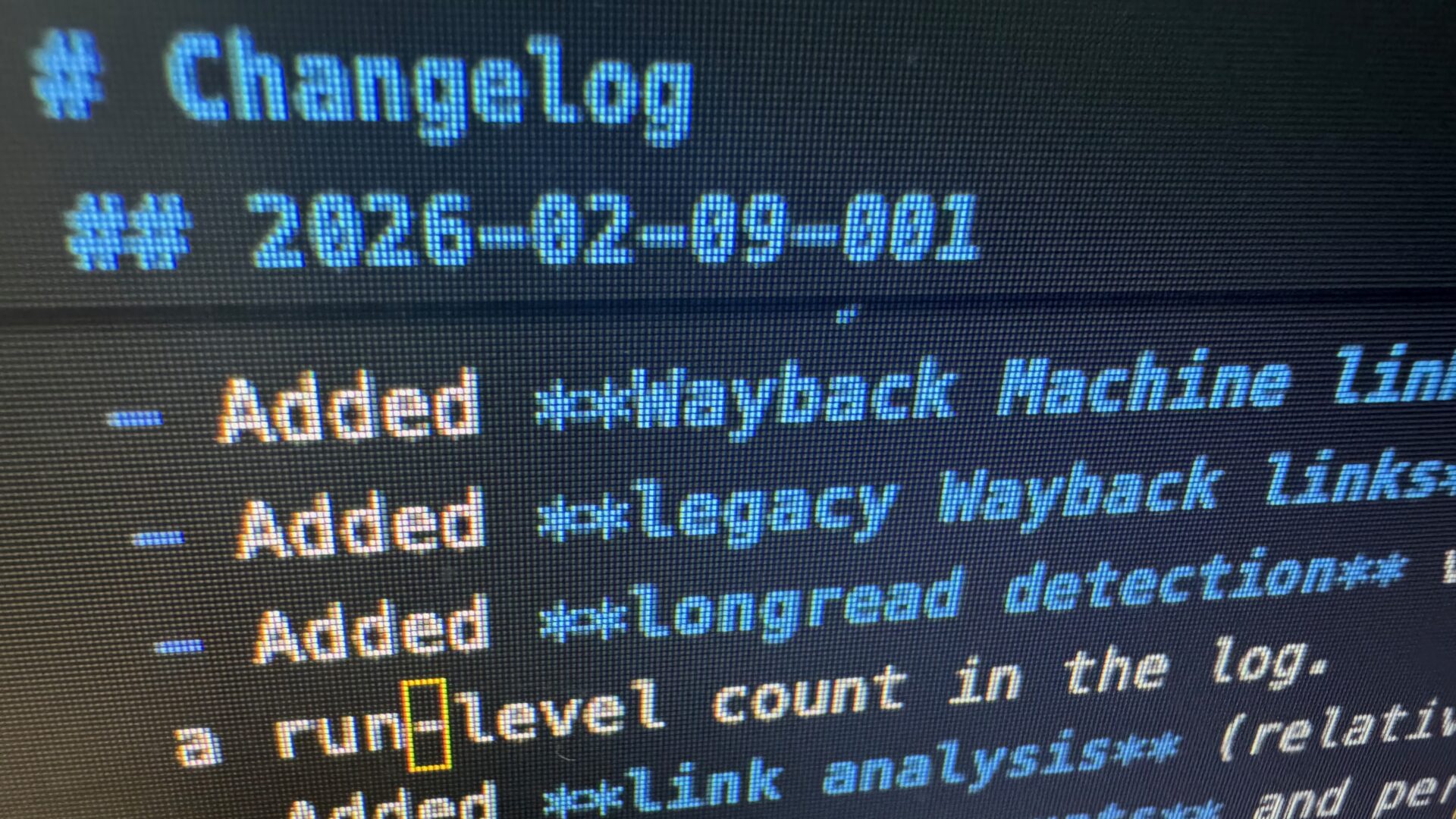
Now, I have a daily web page that links to my old posts from that date, each one checked for spelling and links, with a log file that explains what the system did. It’s not commercial software, and there’s no extra interface beyond what I asked for. But it does exactly what I need.
Encouraged by that success, I tried building a second tool. This one would download any of those blog pages, reformat the text, and let me paste the result somewhere else. The AI suggested making a Safari extension, so I needed extra build tools and had to connect it with software already on my computer.
This project was more complicated and a bit frustrating. I probably could have guided the AI better if I understood the build tools more. I wanted it to work with an existing app that has a command-line interface. The AI kept suggesting solutions that didn’t work on my setup, even though I explained what I was using. That’s when my limited coding experience became obvious.
After some compromises, I got a working version. It runs on my computer and does what I wanted. During the process, the AI just waited while I went to meetings and came back hours later. It picked up right where we left off. Since language models don’t exist between chats, there’s no one waiting impatiently. I just came back when I had time.
I can see how a skilled engineer, who knows when to step in on complex parts, could get much more done with this kind of help. But my experience shows that even someone with limited coding skills, as long as they can describe the problem clearly, can quickly build useful software and solid prototypes.
There were other small surprises, too. I asked the tool to write a user-friendly description of the software’s functionality. In less than a minute, it came up with something better than I could have written in hours. With a few more tries, it could have made full documentation. The log file it created explains each step in plain language, which I’ve always liked for systems that need to be clear to non-coders.
So, where am I on the hype cycle now? I don’t think AI will replace engineers. You still need someone to turn ideas into working solutions. Clear requirements and context are still important. But I do think that for people who understand technology, AI makes it much easier to build small, useful tools. It lets you try things that might have stayed as just ideas before. For experienced engineers, it’s definitely a superpower.
The hysteria may fade. The Roman invaders will leave. Algorithmus might end up in jail. But the useful things will stick around.