We got to Porto with a sightseeing ticket, a last-minute book club, and no clue about how many hills we’d end up walking over the next few days.
In Porto, it felt like everything involved going uphill at some point. Even after a downhill walk, there was always another climb. There were steps, steep streets, and plenty of moments when I had to stop and catch my breath. I wondered if anyone actually lives in the centre and manages all that climbing. Did I mention the hills? At least the good wine and, of course, the port made all the effort worth it.
Besides the hills and the port, two other things really stood out: the bridges and the river they cross. The Douro runs through the centre of Porto, separating the city from the area across the river, which is actually Vila Nova de Gaia, though most tourists probably just call it Porto. We crossed the river by bus and on foot, sat by it eating pastel de nata, watched local kids jump in, took a tourist cruise, and eventually followed it all the way into the Douro Valley, though we did that part in a Mercedes minibus.
Our first proper view of the water came by accident. We had pre-bought tickets for the hop-on hop-off buses and, after finally finding the right first stop, promptly forgot to check which route it was running on and got on the wrong one.
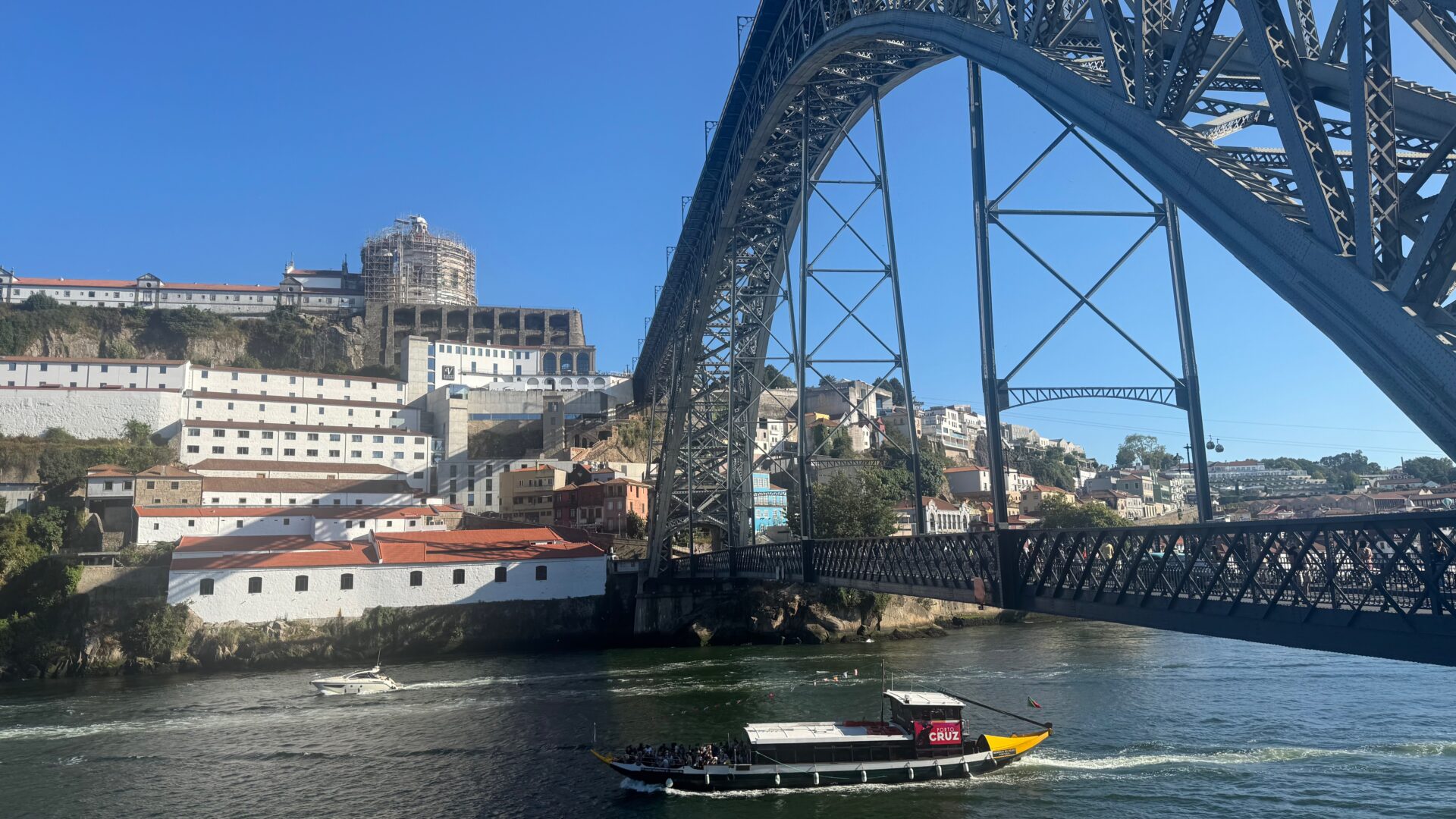
The bus crossed the Ponte do Infante Dom Henrique, which gave us our first look at the Dom Luís I Bridge. On one side, colourful buildings and terracotta roofs climbed the hills, while on the other side were the port lodges of Gaia. We drove down roads that seemed too narrow for a double-decker bus, passed the cable car and port houses, and eventually ended up back where we started.
After that, we found the right bus and took the longer route past the Palácio de Cristal before reaching the Atlantic at Castelo do Queijo. Near Matosinhos, the smell of sardines grilling outside the fish restaurants was overwhelming. I wanted to get off and eat, but we didn’t. Still, it made me want to find a place serving fish right away.
The stereotypically touristy sightseeing bus is an excellent introduction to any city, and that was the case here. Thoroughly recommended.
The Dom Luís I Bridge is one of those landmarks you can’t escape. We saw it from many different angles. Opened in 1886 and designed by an engineer who had worked with Gustave Eiffel, also a man no stranger to inescapable city icons, it’s no wonder you think of the Eiffel Tower when you look closely at the ironwork. Whatever way you bump into it, it’s impressive.
One of my favourite views came from an unexpected spot. We had lunch at Ponte de Ferro, on top of the Vincci hotel on the Gaia side. The name should have been a clue, but I didn’t realise where we were eating until we arrived. We sat by a window, right next to the bridge, looking down at boats and jet skis on the river. The restaurant was nearly empty, even though the setting was amazing, and the €25 set lunch was a great deal, even without the view.
We saw the bridge again, this time from the water during the Six Bridges Cruise. The trip lasts about fifty minutes and supposedly goes under six bridges, though I didn’t count to check. Since it’s a popular tourist activity, I assume the number is right; otherwise, people would complain online. Dom Luís I is the most famous, but the newer bridges further along the river also look impressive from the boat.
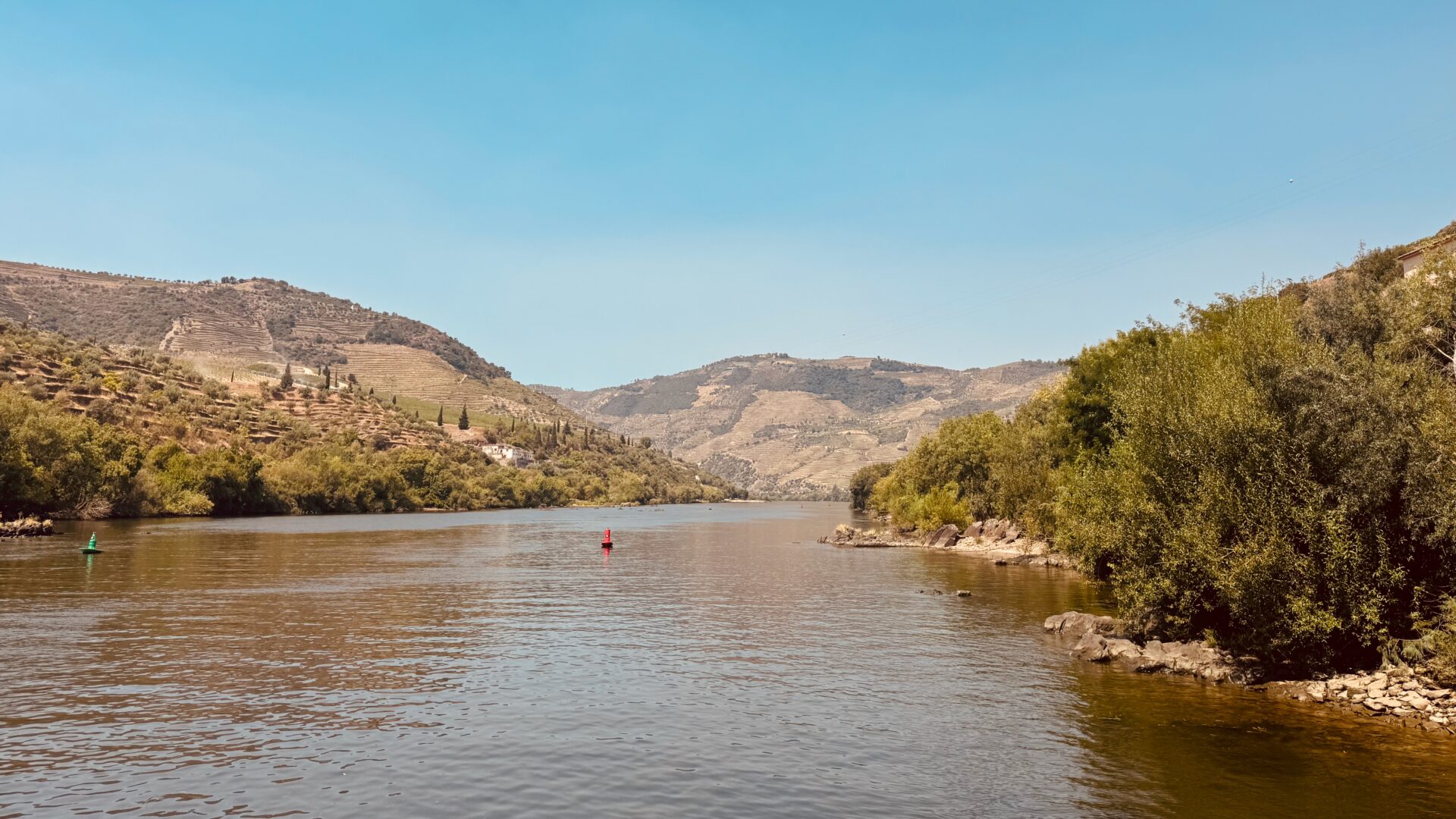
On Wednesday, we were back on the Douro, but the scenery was completely different. Locals sometimes call it hell valley because it can reach 50 degrees, but our day trip to Quinta da Roêda wasn’t quite that hot. At the Croft wine estate, rows of vines climb up terraces from the river. Winemaking has shaped the Alto Douro for centuries. UNESCO says wine has been made here for about 2,000 years, and port production has been regulated since 1756. That made me wonder what Croft were doing between 1588, when they started, and when they began in the Douro. All I know is they weren’t making sherry, and they made sure to point out they’re not the same business. Apparently, the port company uses a bigger ‘C’.
After walking through the vineyard and sampling some of its ports, we took a short train journey through the valley and then boarded another boat. This time there were no city buildings or iron bridges. Instead, vineyards climbed up both banks as we travelled along the river for about an hour, being served Prosecco, which in hindsight seemed like a bit of an insult to all those vines that we were looking up at, or were looking down on us, depending on your point of view.
Of course, following the Douro upstream was really just the next step in a journey that started in the dark, sweet-smelling, cool port warehouses. I’m not sure they’d call them that back in Vila Nova de Gaia, or Porto, as most of us say.
Our first tasting was at Burmester, almost underneath the Dom Luís I Bridge. We walked through the cellars, saw the barrels where wine from the aforementioned valley ages and, naturally, finished with a tasting. It was our first proper introduction to port on the trip, and it was all delicious.
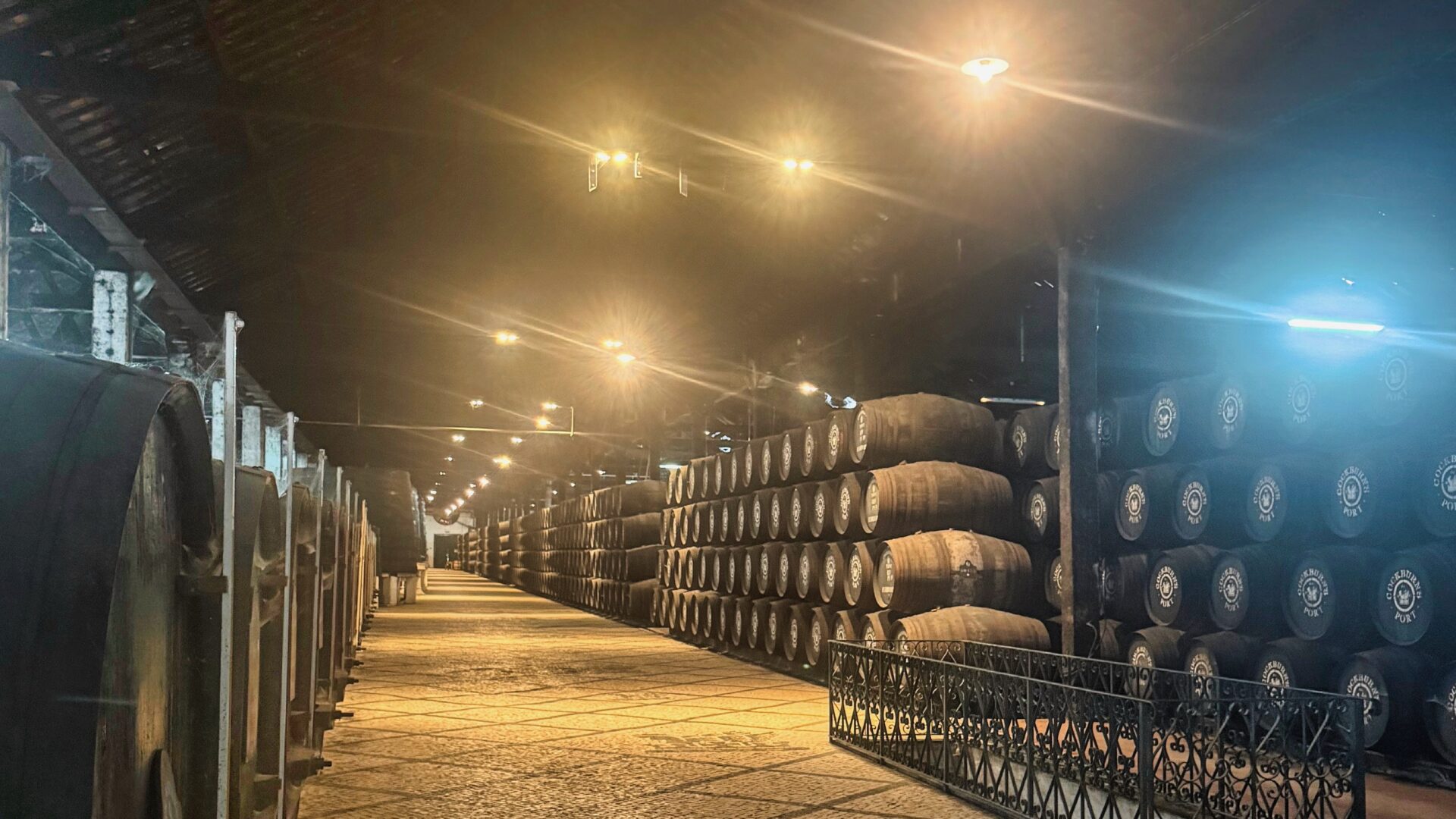
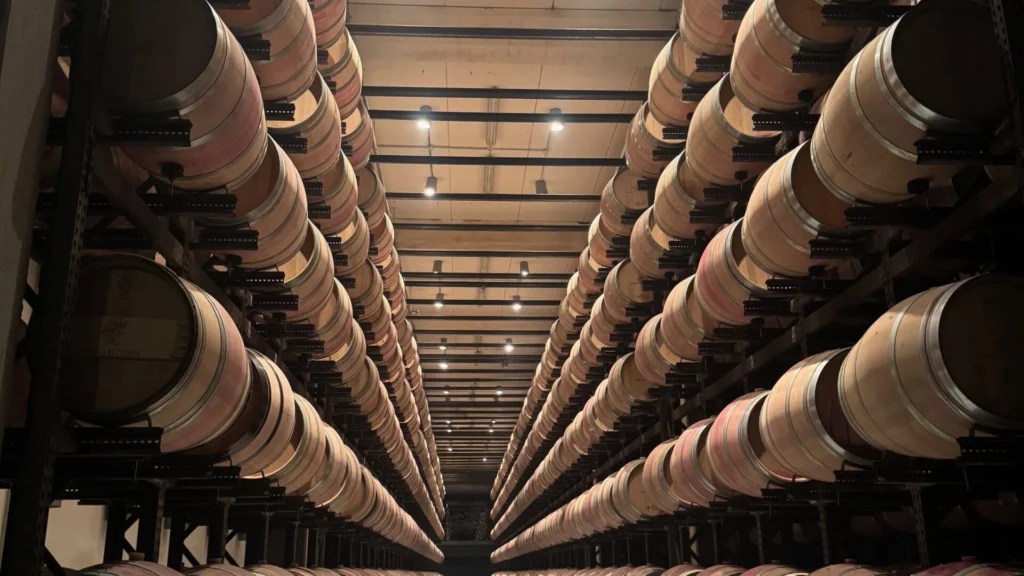
Cockburn’s was a bigger experience. We walked through more halls filled with oak casks and enormous vats, with the smell of port hanging in the air. There is a working cooperage too, although unfortunately nobody was repairing barrels while we were there. The tasting list I photographed featured a fine white, a 20-year-old Tawny, and Quinta dos Canais Vintage, each paired with a different chocolate. Passion fruit, yuzu and cinnamon, and raspberry made the whole thing feel considerably more sophisticated than simply drinking three glasses of port before lunch.
Quinta da Roêda was our third tasting, and it took us to where the grapes actually grow. The tasting itself was the least impressive of the three, but honestly, by this stage, I’m not sure I could have told the difference between the ports.
That wasn’t our last glass of port, though. On our final afternoon, we sat by a first-floor window near the hotel with another glass, watching tourists walk by below. I have no idea what the port was, but it felt like the perfect way to toast the holiday.
Of course, what’s a holiday without putting on a little weight? Plenty of eating went with all the drinking.
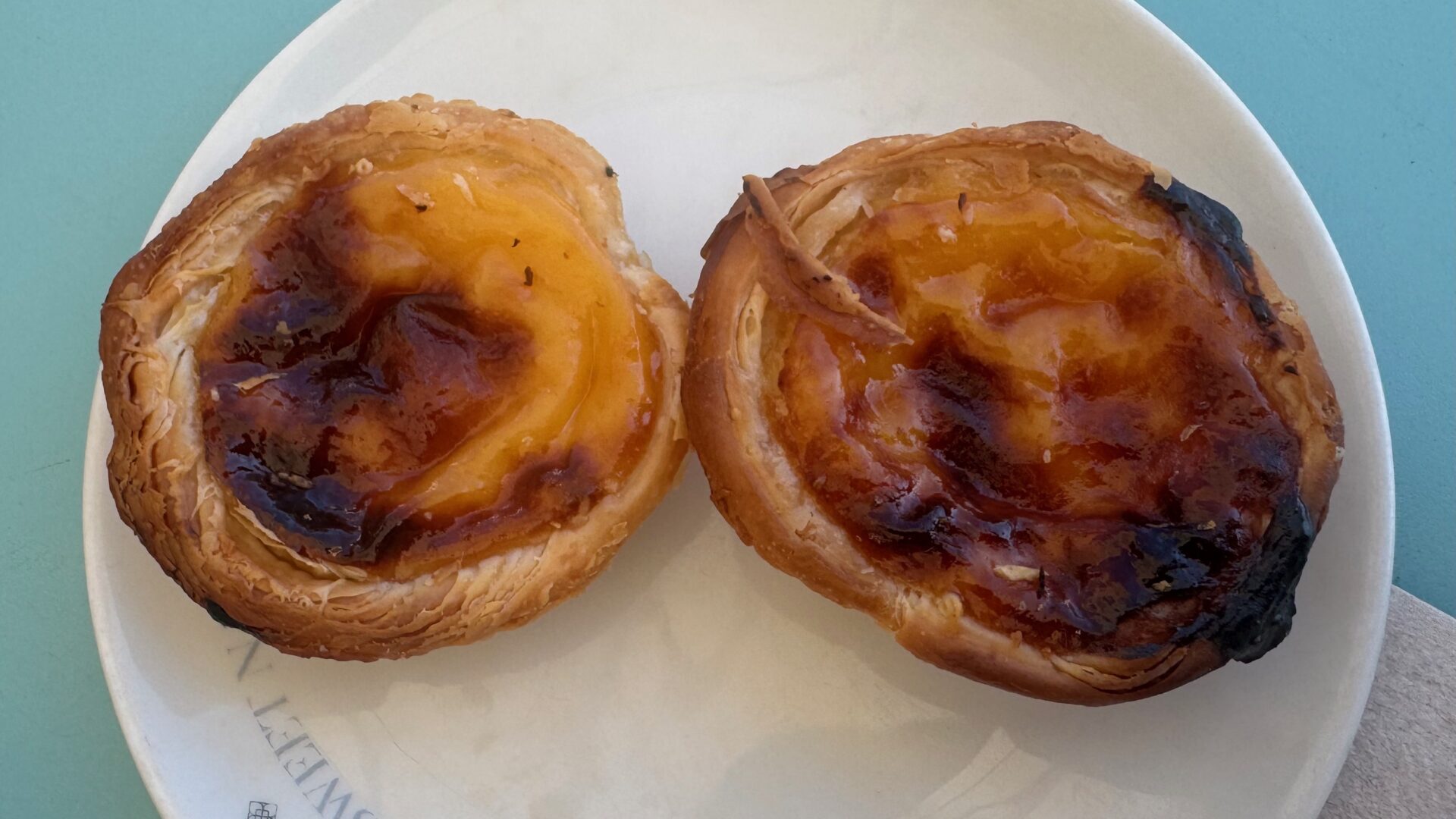
At breakfast on our first morning, I found pastel de nata on the buffet and joked that I could have a custard tart with every meal. I didn’t quite manage that, but I did have another by the river after lunch, and then orange and chocolate versions at a café in Gaia.
The biggest hit to my holiday diet was the francesinha at the Time Out Market. Porto’s famous sandwich stretches the meaning of sandwich in a way the Earl may not have intended: bread stacked with meat, ham, sausage, and linguiça, all covered in melted cheese and surrounded by a rich sauce. It reminded me of a lasagne made with bread. It was delicious, but definitely not a light lunch.
On the other hand, Porto also has some surprisingly cosy restaurants. Bartolomeu Bistro & Wine had fewer than thirty seats and served sharing dishes as they were ready. My favourite was the burrata with roasted aubergine, though the cheese and spicy sausage fondue was less subtle and more of a flavour punch.
At Gruta, hidden down an alley, we started with oysters topped with shallot and jalapeño vinaigrette, then moved on to fish. Wild croaker for me and cured codfish for PY. Cod was everywhere, which was something that I hadn’t really thought about before arriving.
In the Douro Valley, the duck-and-rice lunch also came with codfish. I ended up talking for much of the meal stop to a medical artist sitting beside me, who taught student doctors how to draw. At one point she produced a crayon and gave me an impromptu lesson in drawing three-dimensional shapes on the paper tablecloth.
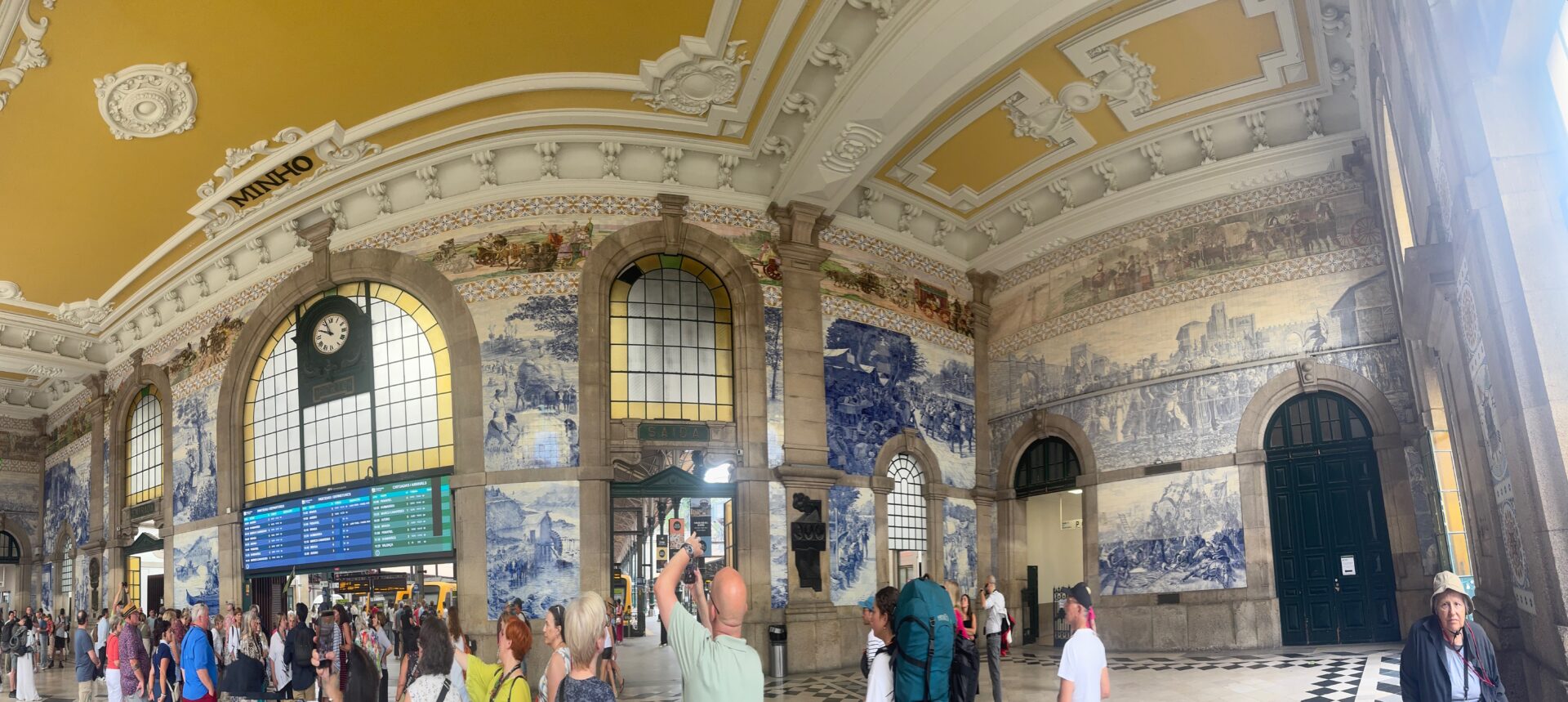
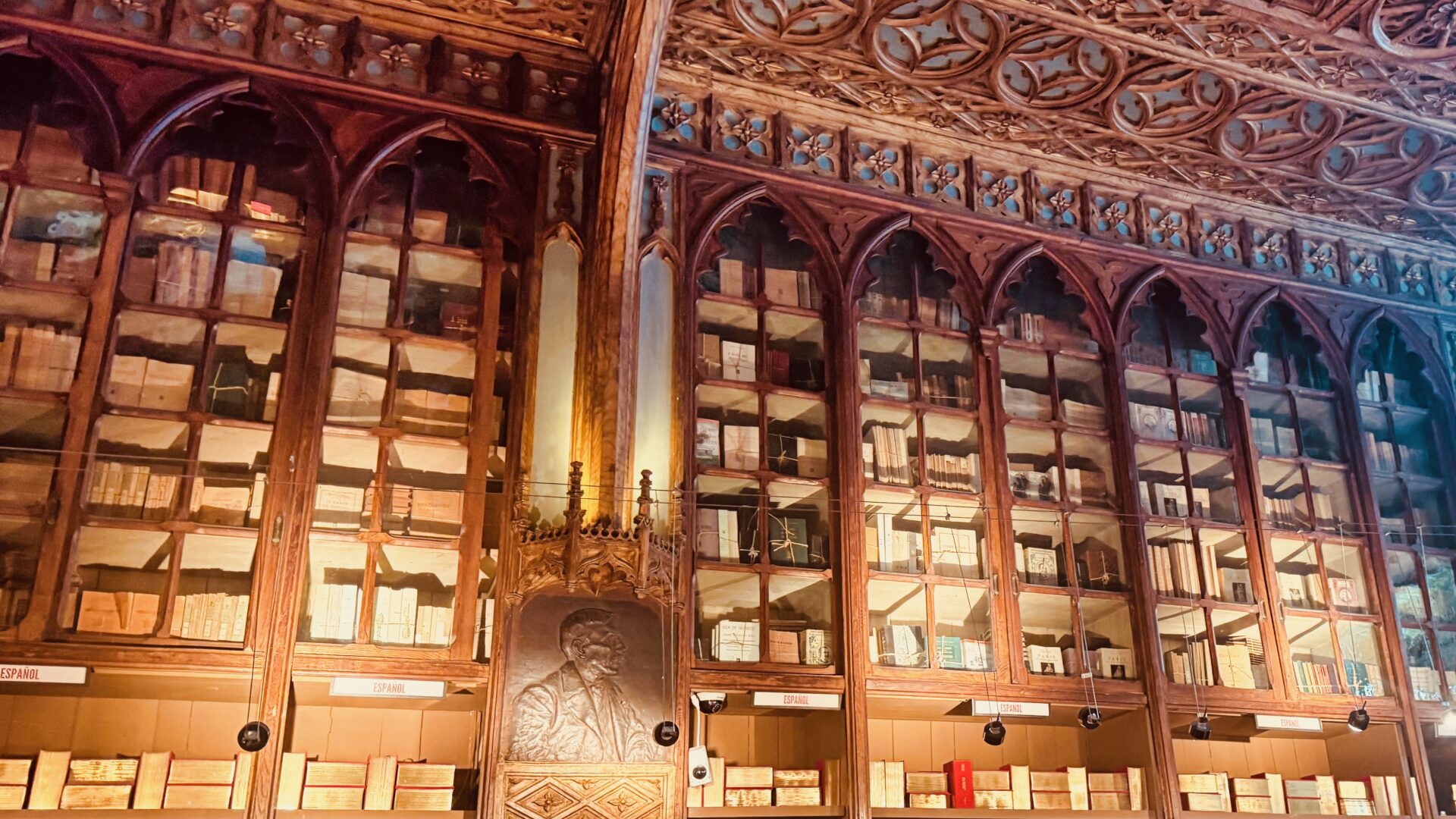
What else did we see? São Bento Railway Station was just a short walk from our hotel, but its tiled interior made it unlike any station I’ve seen at home. You need a timed ticket to get into Livraria Lello, the famous bookshop, which sounds silly until you see the crowds. The current building opened in 1906 and, according to what you can read online, mixes Neo-Gothic architecture with Art Nouveau details. Its stained-glass ceiling and central staircase have made it a big attraction. The entry fee can go toward a book, so at least you can leave as a customer, not just another tourist taking photos of the stairs.
Speaking of books, we started the holiday at Gatwick by deciding to read the same one. PY went to the airport bookshop and picked out Adam Kay’s A Particularly Nasty Case, which gave us something else to talk about between all the sightseeing, eating, and drinking port. I finished it on the flight home. It’s a funny murder-mystery farce I’d recommend if you want something light to read. You don’t have to visit Porto to enjoy it.
Porto turned out to be a great city for a short holiday. Four days were enough to get a feel for the place, but not enough to get used to all those hills.