After breakfast, we got in the car and drove to Blists Hill Victorian Town, which was a step back in time in more ways than one. Many years ago, when we first moved to Shropshire, the Ironbridge Gorge Museums were regularly on the list of places we would take visitors who came to see us in our new home. I am not sure if any of those visits were quite as sweltering as the sun we had today. We spent a great deal of our day pacing ourselves, darting from one pocket of shade to the next just to keep cool beneath the blazing sun. Did the sun bake down on the Victorians like this?
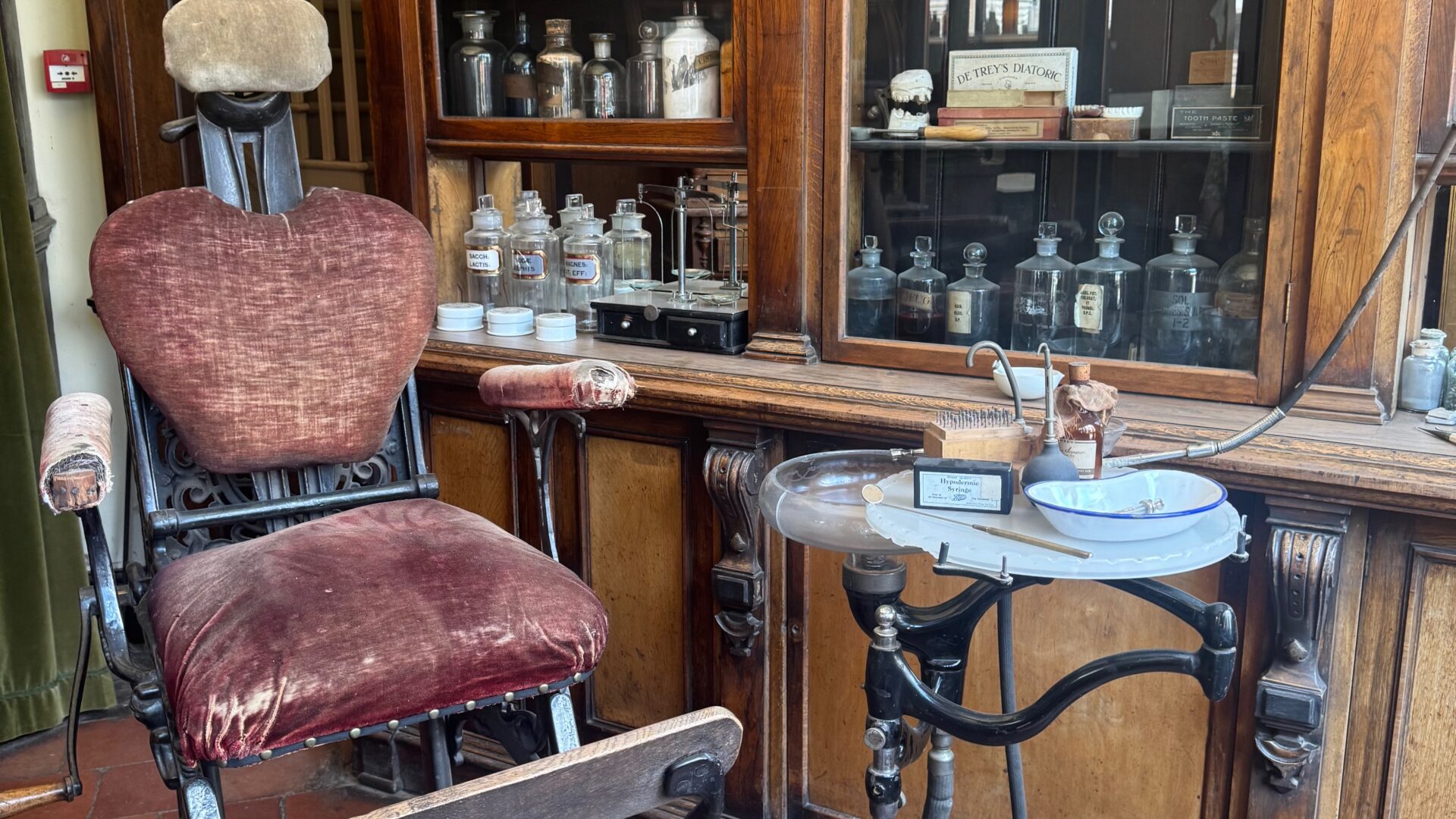
The sweltering weather made us look at the heavy machinery in a whole new light. After looking into the bank, without converting anything to old money, fascinated by the capabilities of the antique cash register in the grocery shop, and thanking whoever that we didn’t have to endure Victorian dentistry, we stopped by the impressive Mine Winding Engine, but the massive mechanism was completely quiet. The demonstrators explained that it actually hasn’t worked for a few years now, though the team remains hopeful that they will be able to return it to full, steam-powered working order one day. Looking at the iron framing in the heat and the boiler room next door, I couldn’t help but think the staff were secretly relieved it wasn’t running today; stoking a furnace in this weather would have been absolutely punishing, although it was suggested there wasn’t really that much steam in the winding room itself. Such an important job the machine operator would have had that he would have been locked in during his shift, to stop distractions.
Amidst the shade-seeking, we also got a look at the town’s new era following the recent National Trust takeover. It was fascinating to read about how the independent Ironbridge Gorge Museum Trust recently handed the reins over to secure the site’s future. According to reports from Museums + Heritage Advisor, the transition was backed by a £9 million government grant to offset rising post-pandemic financial pressures. It feels like a monumental shift for British heritage, and being able to scan in with a National Trust membership certainly made the entry seamless, and so perhaps we’ll be back to the other museums in the group when they reopen under NT stewardship.
At the candle shop, not as pleasantly fragrant as a modern one would be, nor as terrible smelling as this would have been in its day, we watched the fascinating process of hand-dipping two-wick candles. Learning how those double wicks were engineered to survive damp, draughty mine shafts and prevent the tallow from drowning out the flame was brilliant. Who knew you could wave a candle in a draught and it would stay alight?
We didn’t get to do the whole site; it was too warm, and there was too much walking. But NT membership allows us to come back. We ended our day sitting in the shade in the café, with lunch, an ice cream, and tea.