Yearnotes 2025: reflections and revisiting

Personal year review: travel, music, writing

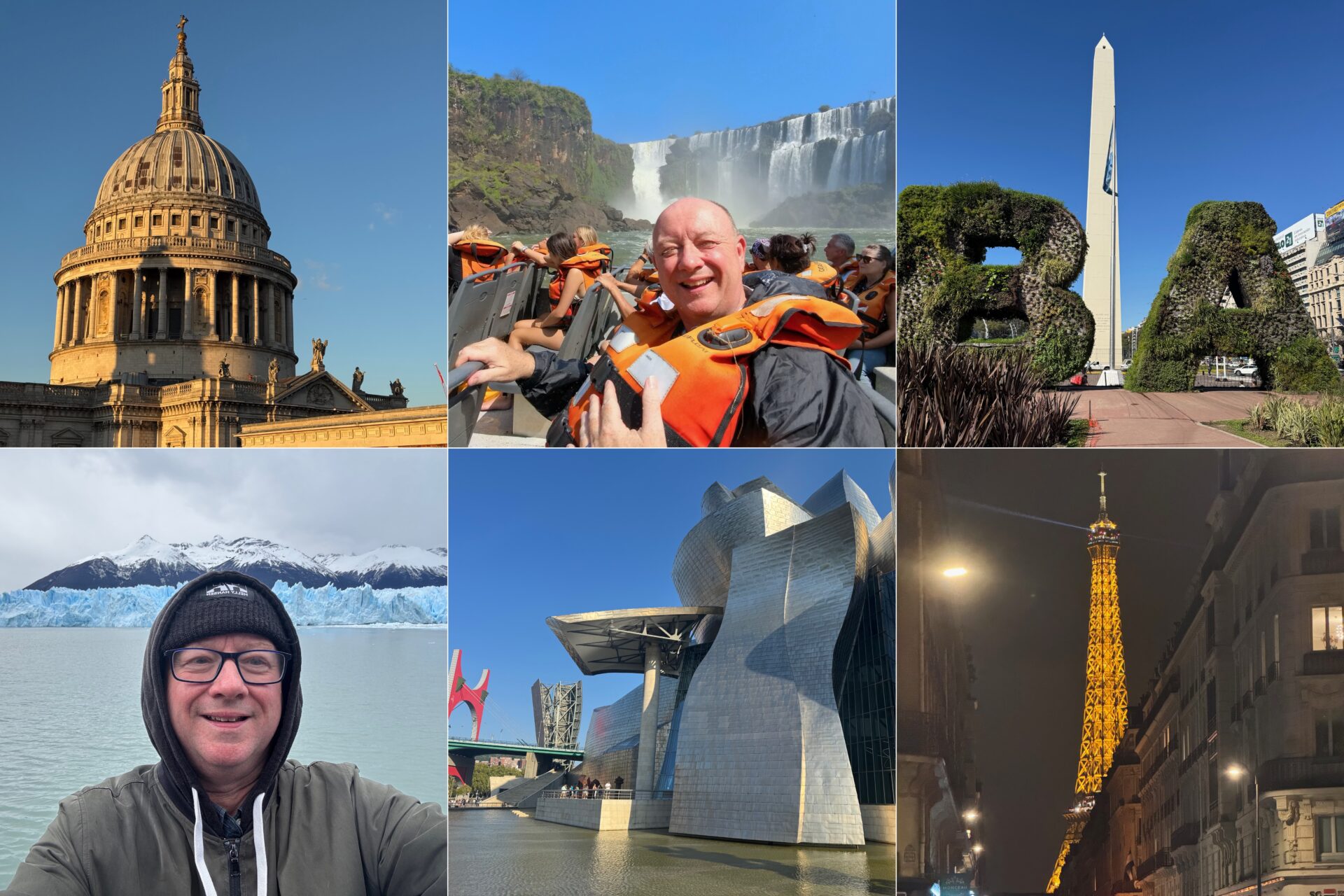
A six-image collage from 2025 showing travel moments across Europe and South America: St Paul’s Cathedral in London at golden hour; a smiling man in a life jacket on a speedboat near Iguazú Falls; the Buenos Aires Obelisk framed by large green letters; a bundled-up selfie in front of a glacier in Argentina; the Guggenheim Museum Bilbao beside the river under a clear blue sky; and the Eiffel Tower glowing at night in Paris.
Snapshots from Paris, Spain and Argentina, 2025

Where do I begin when looking back at 2025? I try to summarise the year as a way of celebrating the good stuff. Daily or weekly writing is often weighed down by the minutiae of life; summarising a longer period can pick out themes or big moments.

My Instagram feed has often been a good summary of the year. At the end of December, I briefly talked about my Instagram Top Nine for 2025, but this time around, I don’t think the feed is representative of the year as it has been in the past. Maybe the Stories highlights are better, but the thirty stories are only a little improvement.

So, in the main, I am sticking to the same format as last year because I have not yet found a more inventive way to present it.

Moving

I have to face reality. I have lost a lot of motivation to exercise, and as I’m ageing, that is bad. My step count was down 11% from last year (and 15% from the year before), and I moved 1,225.5 miles (256,482 kcal). I am trying to do better in 2026. I want all those numbers to be up in next year’s report.

Places

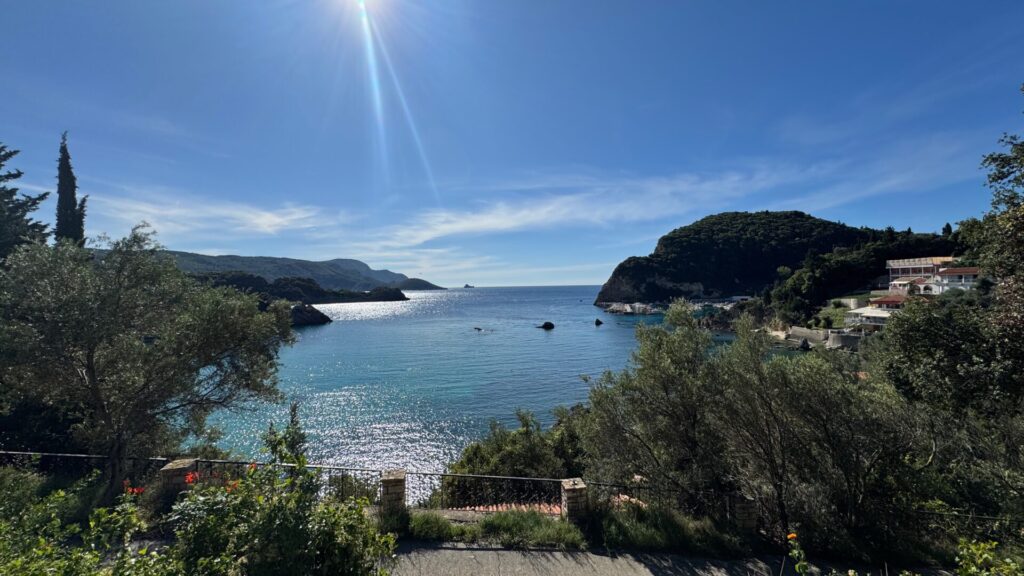
Yes, I am the person still checking in on Swarm. The year in review isn’t great. But I did get to Paris, Spain (and the Guggenheim Museum), and Argentina, where I had one of the best meals ever at Fogón Asado.

2025 in music

This year, I discovered that Apple Music does not count music played via its Sonos integration. That’s a lot of music Apple’s not reporting on, nor featuring in my recommendations. Somebody should tell Tim Apple that you can’t have a music service making recommendations based on historic listening without knowing everything I listened to from that service. He probably doesn’t care. I guess ‘Money, Money, Money’ is top on his recommendations.

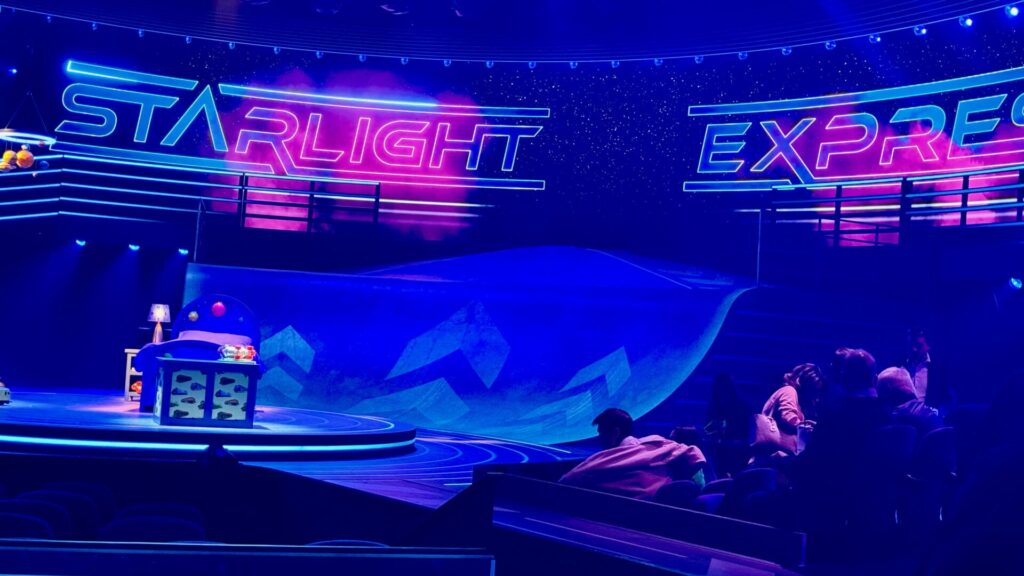
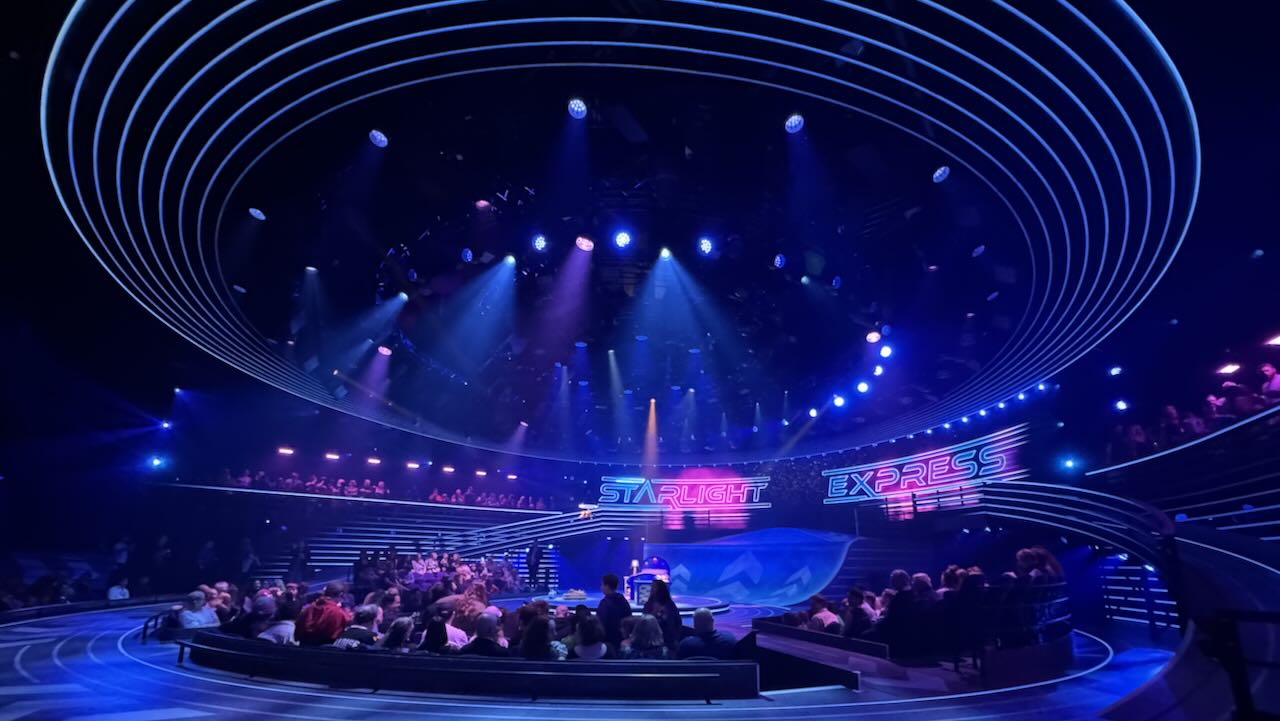
While I suspect it’s the classification of country as my most listened-to genre is right, 15,464 minutes and 1,304 songs are likely off the mark. And marking the Starlight Express album as my favourite because it’s long, and I listened to it before we watched the show again in November, is just off.

So, to Last.fm, we go. 5,287 tracks recorded; the most listened-to artist is Johnny Mathis; the most listened-to album is Breland’s Cross Country. I’m so disappointed I was too ill to see him in concert earlier this year. Apparently, Ella Langley’s Weren’t For The Wind is my top track. That’s algorithmic playlists for you: I can’t hum that tune, but I’ll put it on as I write and confirm at the end if I recognise it.

All the socials

I’ve already mentioned Instagram, and what I said last year for other networks:

I (still) have a Mastodon account, but I have yet to pontificate there. Ditto Bluesky, although I keep promising myself I’ll move to a custom domain.

There are now over 100 feeds in my NetNewsWire reader, but many of them remain silent. London Centric and The London Minute are still very much on my reading list, as are Diamond Geezer, It Just Gets Stranger, and Daring Fireball, and I regularly read them. I added a bunch of radio-related feeds this year. And I read about the lives of people I don’t know via their weeknotes.

Books, TV and Cinema

I failed my reading challenge: on 12 of 15 books read. At least it’s the equivalent of one a month. I’ve dedicated a whole post to that this year.

There’s always so much good telly that I don’t know which shows to call out. We started the year watching The White Lotus, which was recommended, but it didn’t quite work for me, and we never progressed to the second season.

A conspiracy thriller with a mathematician as the central character might not sound gripping, but I liked Prime Target, and similarly, Slow Horses and Down Cemetery Road both had me hooked. The new Bergerac was, perhaps, not as gripping as those other shows, but we stuck with it. The Åre Murders was a crime in another language, which I thought was great. I started rewatching The Blacklist at the start of the year, but after a couple of binge evenings, I seem to have lost interest again.

I always think I don’t watch much reality television, but watching Race Across the World, plus the celebrity version, and The Celebrity Traitors, suggests otherwise.

I should note The Residence, Murderbot, and The War Between the Land and the Sea, so I can remind myself to look out for follow-ups, as I enjoyed them all.

I went to the cinema three times in 2025. Queer was hard work, especially on New Year’s Day. Bridget Jones: Mad About The Boy was quite fun, and The Phoenician Scheme was a wonderful Wes Anderson movie.

I watched The Salt Path and The Amateur on a plane, Conclave, Wonka, The Accountant 2 and A Very Jonas Christmas Movie from my sofa. The last two were far-fetched, but fun for Christmas, and I do recommend the other two.

Gigs and shows

We started the year in Birmingham watching The City of Birmingham Symphony Orchestra – CBSO Explores: Friends in Love and War, and then a complete contrast with a big, glossy Palladium panto with Julian Clary and Jane McDonald, which, as always, was an absolutely brilliant spectacle.

I never thought I’d like watching dance, but a contemporary dance piece at Sadler’s Wells East, Birdboy, proved that thought wrong.

We supported a couple of new musicals, The Rise and Fall of Vinnie and Paul and Stiletto, and very glad we did. But also big theatre musical moments with laughter at Titanique, memories at Just For One Day: The Live Aid Musical, a return to ever-energetic Starlight Express and Jamie Lloyd’s marvellous Evita revival. I am not sure why October was such a theatre fest, but that got its own post.

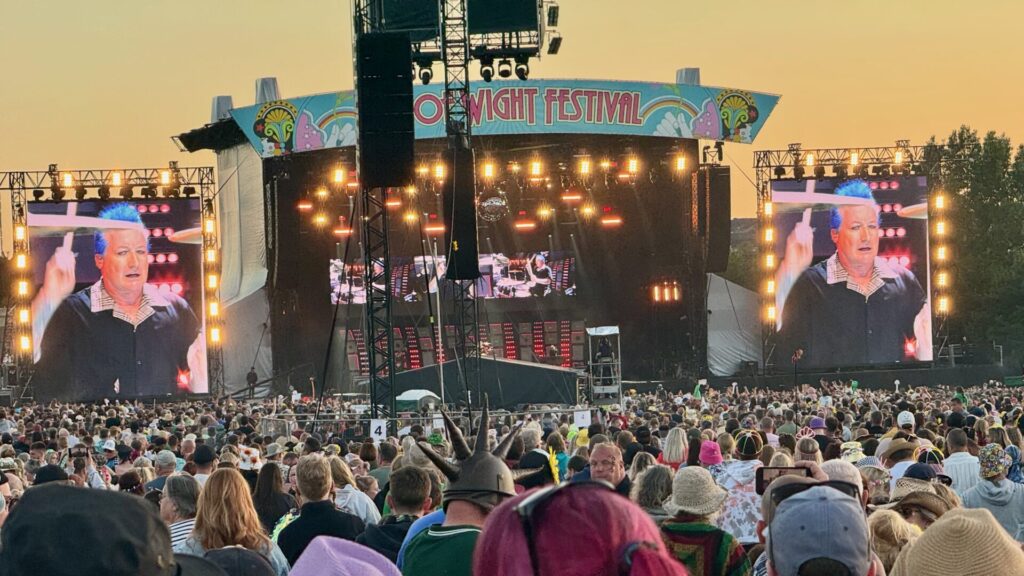
The Isle of Wight festival was again packed with great music, and Patti LuPone, The Hidden Cameras, Suzanne Vega, Toyah and Adam Ant, among others. The Crazy Coqs had a great year with nights themed around Céline Dion and Genesis & Phil Collins, as well as a James Bond night and a Christmas night.

Audio

I spent most of my 2025 podcast time with the Game Changers Radio trio. Radio-related, Happy Place with Greg James and Fearne Cotton was also good. The Shipping Forecast: A Beginner’s Guide was a lovely listen, and that might also be about ‘radio’.

Ed Miliband: Why Blair & Farage Are Wrong About Net Zero is a video podcast, so it’s living here and recommended. Also in politics, LBC presenter Iain Dale talked to former Scottish First Minister Nicola Sturgeon about her new book, and Mishal Husain talked to Mark Carney about the world.

Great to hear from Russell Tovey on Dinner’s On Me.

I keep trying to make dietary changes. As a result, I listen to quite a bit of the Zoe science and nutrition podcast, but I think I am still eating the wrong things.

Other writing

In 2025, I published fifteen blog-like pieces on my site, from the frictions of everyday life to open skies and festival fields. I started asking what we hold on to and why in Usable, but only just, struggling with my ageing AirPods. Modern life was the subject of my second post last year, the fatigue of headlines in All the news. Back to tech writing with High bar for tech, where I talked about how the Meta Portal is both a device and a memory frame, and, even though it’s by Meta, I really wish they still made it.

Summer arrived, I planned for the festival and wrote a run of pieces from the fields in Festival Diaries 2025: Day One, Day Two and Day Three, before shifting to a different kind of spectacle in Grease Immersive Cinema Experience, where film, performance and some Olivia Newton-John nostalgia collided.

Travel shaped the next phase of the year in Buenos Aires: Four Days, Four Stories and Four Days Between Sky and Water, both describing my South American adventure, while questions of self surfaced back home in A New Identity and Counting from the start.

As we headed through autumn and into winter, theatre and seasonality came into view in Curtains up on October, followed by a moment to take a whistle-stop trip north to reflect on sounds from my teenage years in Piccadilly Magic and, finally, a photographic review of the year in Top Nine 2025 that I’ve already mentioned.

I am not sure what, when taken together, these tell you. But I always enjoy writing them. Because some of these pieces can get lost amongst the weeknotes, I have started a new archive page just for my more recent words.

Other counts

Let’s look at what else I’ve counted. I did 355 TfL London transport journeys, 42 of them on buses. That’s down on trips from last year, but more buses. JetLovers, once again, counted my flights. There were 9 (7 of which related to my Argentine holiday). I kept my AWS fees under £5 in 2025, but over £140 was spent on postage. And, last year, I woke 2% of the time in Shrewsbury.

Previously

Oh, and if you’ve read all these words, yes, I recognised the song.

All my previous attempts at summarising my year are grouped under the yearnotes tag.
Reading Challenge 2025

A reflective review of the books I read in 2025.

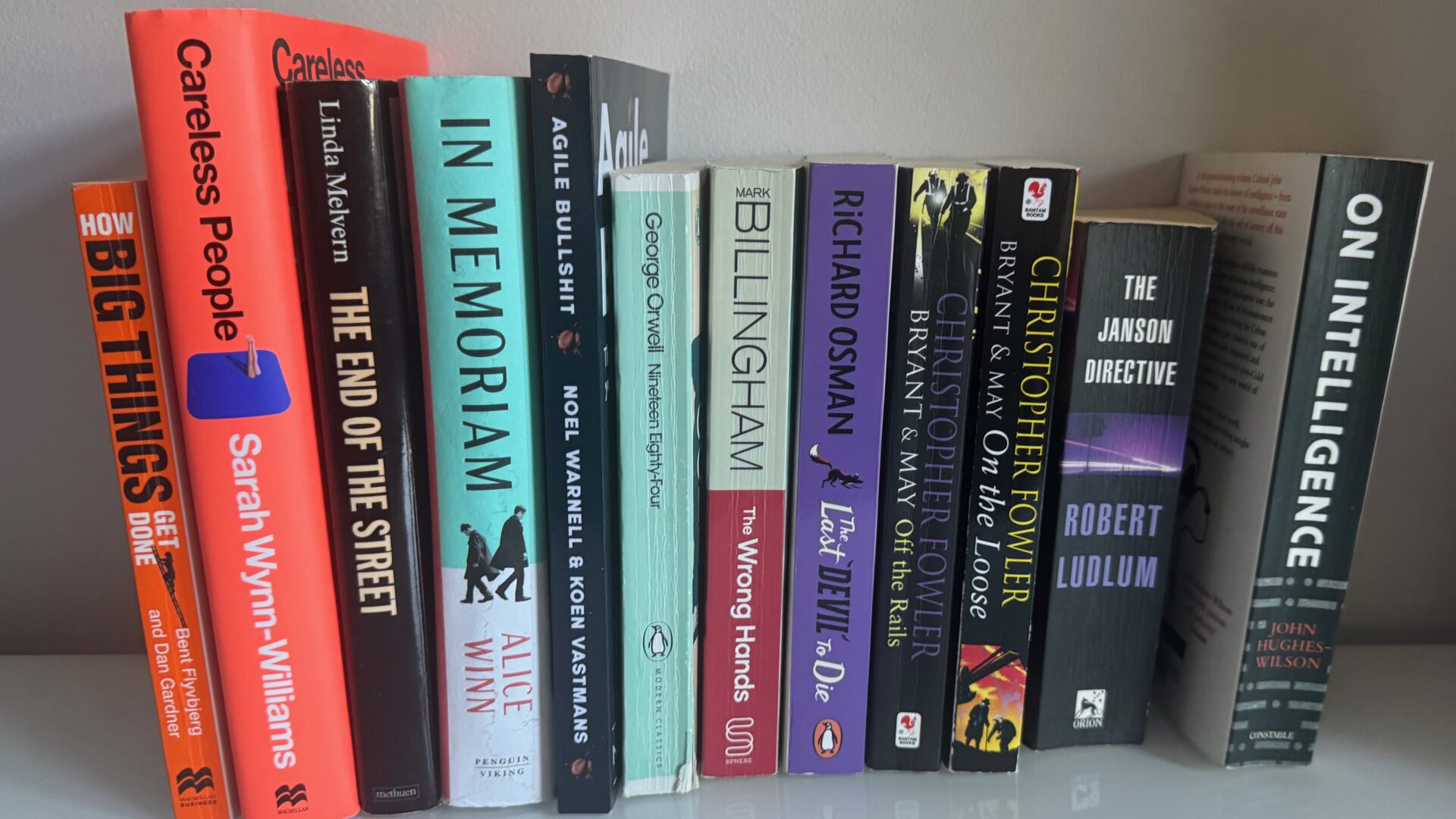
Row of thriller and spy novels on a bookshelf including titles by Sarah Vaughan-Williams, Linda Meiklem, Alice Winn, Noel Warrell, George Orwell, Mark Billingham, Richard Osman, Christopher Fowler, and Robert Ludlum, displaying varied spine colours from orange to black,
Thriller collection: where plot twists live in rainbow order.

Last week, I finally got around to photographing the books I read last year. They can go to a charity at the weekend. I know I am unlikely to re-read them. I failed my reading challenge: on 12 of 15 books read. At least it’s the equivalent of one a month.

As always, there’s a mix of books that I think are interesting and detective stories, which are a guilty pleasure and, when on holiday, I can read in a day or two.

I started the year reading Bent Flyvbjerg’s How Big Things Get Done. Does it contain the secret to delivering large-scale projects on time and on budget? Maybe. Get your team right and plan to the tiniest degree. Don’t be the Sydney Opera House, be Frank Gehry. I read it because we have a large-scale project coming up at work; not sure how much I actually took away.

I spent a few years working at Facebook and was interested in Sarah Wynn-Williams’ Careless People: A Story of Where I Used to Work, as she was at the company when I was, working at very different layers of the business. I wondered how much of the company she writes about I’d recognise. I think what’s most scary about this book is that, for most of the people I worked with and me, we wouldn’t recognise this from our experiences, yet it rang weirdly true. The villain is very one-sided in this story.

The villain in the next book is a bit less clear, although at the time, the world would have pointed to Rupert Murdoch. The End of the Street by Linda Melvern might have been my favourite book that I read last year. It’s the tale of how the Fleet Street unions were defeated and how the newspaper industry changed forever. There was passion for the newspaper business from both sides. News Corp. felt it couldn’t change the business incrementally, so it adopted an extreme modernisation approach. Perhaps newspapers survived a little longer because of it, perhaps not. Given where the newspaper industry is today, it feels like a historical story. But the innovator’s dilemma is real. Whether this was the right approach remains unclear.

In Memoriam by Alice Winn is a very well-regarded novel, but this was my second attempt to read it. I am glad I stuck with it. Gaunt and Ellwood, at a public school and in the trenches. All their friends are dying all around them. Eventually, I was hooked. I really enjoyed this even though it’s not the kind of novel I’d usually read.

Another book I tried to read before is Orwell’s Nineteen Eighty-Four. And I nearly gave up this time, too, but somewhere along the line, I got hooked. Is the Ministry of Truth even more real today than it was when it was imagined?

Warnell & Vastmans’ Agile Bullshit was another book I read because of work. Agile ways of working are a nice theory, and I’ve seen them successfully implemented in practice, but when the process generates more discussion than the outcome, then something is wrong. I thought this book would back up some of my thinking. It didn’t. And I still think the word ‘ceremonies’ to mean meetings is one of the most pompous things about agile.

The next four books are all detective-based and a cracking good read. Mark Billingham’s The Wrong Hands is the second of his books that I read. An easy read, with a decent plot, if you don’t mind severed hands in a briefcase. Next, it’s back to The Thursday Murder Club in The Last Devil to Die. This time, the case leads the team into the antiques business, which practically screams ‘cosy murder mystery’, and this gives you exactly that, with Richard Osman’s brilliant, engaging style.

I believe one of my great discoveries of the past few years is Christopher Fowler’s Bryant & May series. They always seem to be on the verge of the Peculiar Crimes Unit being closed. In Off the Rails, they have a week to find a killer, with the twist that they’ve caught this killer before. In On the Loose, the unit is closed, yet the case must be solved. I love this series and wholeheartedly recommend it to anyone. The intricate London details are phenomenally woven into all the stories without seeming out of place.

As a fan of Robert Ludlum’s Bourne series, I found The Janson Directive at the back of the shelf featuring a new character. Paul Janson, a former undercover agent for a deniable government agency known as Consular Operations, is asked to do one last job: rescue the billionaire Peter Novak. Today, we know just how bad the world’s billionaire class can be, and their views on reshaping the world are best ignored. I don’t think it was written as a manual for bored rich people to do bad in the world, but 13 years after its writing, bits of it are strangely contemporary. Also, another cracking good action adventure.

I ended the year by completing On Intelligence: The History of Espionage and the Secret World, which somehow got recommended after Nineteen Eighty-Four. There’s a lot in this book, and it offers fascinating insights into how intelligence works, with real examples from throughout history. If you want to know how intelligence (on both sides) ensured a successful D-Day landing, then that’s in one of the chapters. It’s an accessible telling of the espionage world, but as with all things secretive, you can’t help but wonder what’s not being told.

Daniel’s Husband

A spoiler-light theatre review of Daniel’s Husband, where a cosy dinner party becomes something far more urgent.

Theatre poster for 'Daniel's Husband' showing five people in black clothing posed together against a dark background, with production details including playwright Michael McKeever and director Alan Souza, displayed at Marylebone Theatre for performances from 4 December 2025 to 10 January 2026
Daniel’s Husband at the Marylebone Theatre, January 2026

I’ve been to see a play. I may as well make this the week of three reviews. My verboseness won’t continue for the year (although I secretly hope it will).

I try to enforce a personal rule — if not a philosophy — when it comes to theatre: the less I know about the plot beforehand, the better. When invited to a performance, I almost never want to know the plot or what the reviewers said. People had said Daniel’s Husband was good, but that’s about it, and I am delighted to have kept to my rule because this play benefits from that lack of pre-knowledge. Not only was I walking into this story completely blind, but it was also my first time visiting the Marylebone Theatre. So the whole thing felt new.

Almost no spoilers here, but stop now if you are going to see it and want the real experience.

Because I knew nothing of the plot, the play’s structure caught me completely off guard. It is very clearly a “play of two halves”. The first act is a witty comedy in which we are invited into the stylish home of Daniel and Mitchell for a dinner party.

If I’m honest, after a while I did wonder if that was it: an evening of light-hearted comedy, with a few intellectual arguments thrown in to amuse — in this case, about the heteronormative state of marriage. It’s light and breezy. Even when ‘mother’ arrives, it’s humorous, if a little awkward.

And then, the shift happens.

The second half is a dramatic illustration of the brutal reality of the legal status of unmarried partners when a crisis hits. It is emotionally quite powerful; laughter subsides, and maybe your heart breaks. It took me a while to process the second part.

The moment the play shifts from scene-setting humour to high-stakes drama is one of the most effective mood changes I’ve seen on stage. This transition is anchored by a monologue delivered by Daniel (Joel Harper-Jackson), perfectly pitched off the back of the first part.

Looking back, it’s clear what’s being set up in the first half. In hindsight, the basis of the conflict that’s so essential for drama becomes obvious, but it is nicely masked in the warm tones of a cosy life.

The cast is flawless across the board. Luke Fetherston is heartbreaking as Mitchell, watching his belief crumble in the face of a cold legal reality. Liza Sadovy, as Daniel’s mother Lydia, is equally brilliant; she starts as the basis for some of the laughs but transforms into a formidable force. I don’t think you can love her; you might hate her, but one of the smart achievements of this play is that you understand her even when you want to scream “no” at her.

I don’t want to spoil the plot, but the message is clear: don’t procrastinate life’s admin.

Review: Palladium Panto 2026

A gloriously smutty, nostalgic spectacle, irresistibly entertaining.

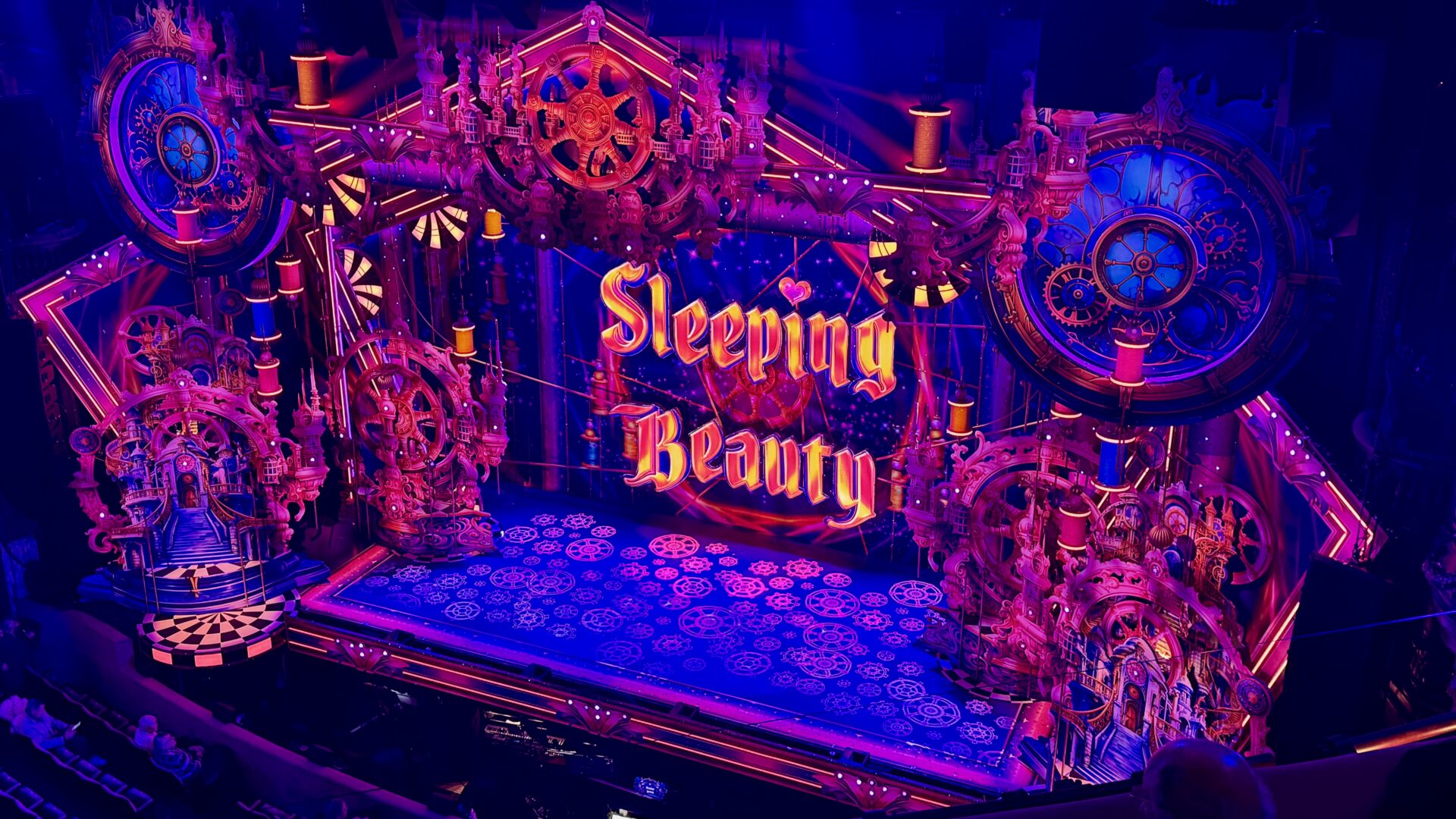
Elaborate theatrical stage set for 'Sleeping Beauty' pantomime illuminated in vibrant pink, purple, and blue lighting, featuring ornate spinning wheels, clock towers, thread spools, gears, and Gothic architectural elements
When Sleeping Beauty’s Castle Gets a Steampunk Makeover

It seems like I am in the mood to write reviews this week. So here comes another one. I do not expect this trend to continue all year.

Sleeping Beauty at the London Palladium – A 10th Anniversary

If you’re heading to the London Palladium expecting a sweet, Disney-fied retelling of Sleeping Beauty, you’ve clearly missed the memo of the last decade. Now in its 10th anniversary year, the Palladium pantomime (this year there’s a Sleeping Beauty plot somewhere) has faced a wave of headlines from outlets like Metro, branding it a “smut-fest” after reports of families walking out. But let’s be honest: if people are still shocked by the innuendo after ten years of this specific brand of comedy, that’s on them. This isn’t just a panto; it’s an institution with a well-established “adults-first” policy. Do your research. I really don’t have much sympathy for people who don’t know what this is. Although I do expect news outlets to run with and embellish this story every year.

What makes this year feel different is how self-referential the show has become. It’s been heading this way for a while, but this year’s opening retrospective is a masterclass in nostalgia, setting a tone that feels less like a fairy tale and more like the series finale of a beloved sitcom. Like the best long-running comedies, the jokes here are funnier because we’ve come to know the characters: we know Nigel Havers will be the charming punching bag, and we know Julian Clary will have a new, increasingly ridiculous entrance, and make a gag about somebody’s hand on it.

This “insider” feel is probably the secret to its enduring appeal for the regulars, but it does make me wonder: what do the newbies think? If you haven’t been along for several of the last nine years of lore, you might feel like you’ve crashed a private party.

Amidst this whirlwind, the show’s ringmaster is Rob Madge as the Diva of Dreams. While the rest of the cast seems content to let the plot drift out of the stage door in favour of sketches, Madge is the one who keeps the show flowing. They act as the essential “glue,” holding onto the limited plot and preventing the evening from devolving into a disjointed series of routines. Madge brings a modern, theatrical energy that bridges the gap between the “old guard” and the new.

The big draw this year is Catherine Tate as the boo-able Carabosse. While she delivers exactly what the crowd wants (including a show-stopping appearance of “Nan”), I had a nagging sense that she is underused. Tate is a comedy powerhouse, yet she often feels relegated to “special guest” status. Between the impressions and the sketches, you can’t help but feel she could have given even more if the script allowed her to go beyond her “greatest hits” reel.

There is no denying that Julian Clary is the heart of this machine. However, this year feels more like “The Julian Clary Show” than a balanced ensemble piece. In years past, the magic came from a heavyweight team; the presence of the late Paul O’Grady, the charm – and songs – of Gary Wilmot, or the triple-threat energy of Charlie Stemp provided a balance that kept the show from relying too heavily on one person. While Clary holds it all together with effortless camp, the absence of those contrasting “anchors” is felt.

Visually, the staging is bigger, better, glitzier, and (probably) more expensive than ever. From the neon sets to the “forest of thorns” in Act 1, the production values are impressive. However, some elements are starting to feel familiar. Paul Zerdin remains a master ventriloquist, but after a decade, his routine lacks “newness.” When a show becomes this self-referential, there’s a fine line between a “classic callback” and just running out of fresh material.

It’s still a 5-star spectacle with heights of staging wizardry. It’s loud, it’s proud, and it’s very, very blue. If you want a plot, go elsewhere. If you want to see the most expensive variety show in London anchored by the King of Innuendo, there’s no better place to be. It helps if you’ve watched the “previous seasons” to get the most out of the jokes.

I loved it (again).

Marty Supreme

A stylish look at the world of competitive ping-pong, with a lack of likeable characters.

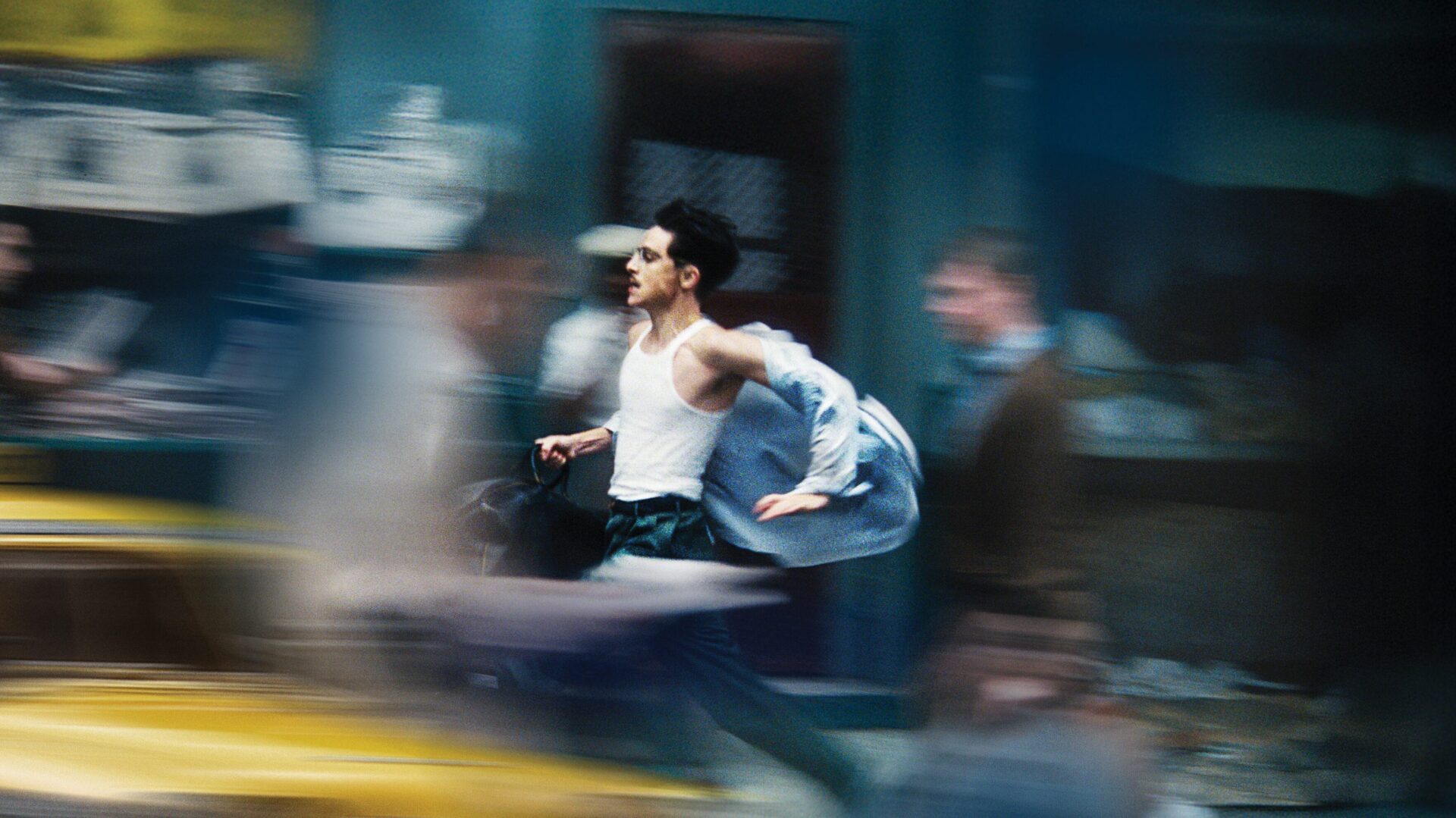
Motion-blurred photograph of a young man in a white vest and dark trousers mid-leap on an urban street, carrying a light blue jacket, with blurred vehicles and buildings in the background creating a sense of rapid movement © A24
Marty Supreme / © A24

The New Year is a season where it’s acceptable to simultaneously be looking forward with hope and dreams for the year ahead and look backwards at the year, or years, gone with a bit of nostalgia. Earlier in the week, I was looking back through my blog archives and rereading a few of my old film reviews. And, today, I thought, “let’s write a review of the film I just saw: Marty Supreme.  The problem is, I have quite mixed feelings about it.

Marty Supreme Review

I get a bit of a block when writing about films this complex.  Marty Supreme is a fascinating, stylish look at the world of competitive ping-pong. Who knew we cared about that in 2026? But by the time the credits rolled, I felt as exhausted as a player in a five-set match. 

See what I did there?

When the movie starts, you really want to see Marty succeed in his dreams of being a world champion table tennis player. It’s not an unrealistic ambition; he has the talent and is playing in the right contests.  Unfortunately, he has no backers and no money of his own. Competing for him is a challenge, not of talent, but of resources.

As the story progresses, however, any sympathy I had for his predicament starts to evaporate. Marty doesn’t just have a “win-at-all-costs” attitude; he becomes genuinely dislikable. The story turns from an underdog tale to that of a man who is his own worst enemy. He treats the people around him like tools to further his dreams rather than as humans, and I found myself less interested in whether he won the game and more annoyed by how he treated others.  Which, in itself, is a bit of a feat as none of the others are likeable either.

The biggest hurdle for me was the ending. After two hours of Marty being a selfish narcissist, we are expected to believe he’s changed because of a choice he makes. But was it really a choice? Marty’s apparent growth feels forced by circumstance. If he hadn’t been kicked out of the tournament in Japan, would he have ever gone to that hospital? Probably not. It feels less like a man finding his true self and more like a man who ran out of other options.

The film is also filled with characters who feel as if they belong in a different movie, or at least, not in this one. The dog-owning gangster and his dog, Moses, felt particularly unnecessary.  I am not sure how much the story needed their presence; the same impact could have come from other, underused, characters. Characters pop in and vanish without a trace. Maybe that’s the intention, but it feels disconcerting. Oh, and what’s the orange ping-pong ball bit meant to convey? 

I generally enjoyed the film, but the length became an issue for me. Because there were no likeable characters to root for, the latter half of the movie started to drag. When you don’t care if the lead character wins or loses, you start to feel every minute of the runtime. I wonder if it would have been a better experience to have had a little bit less of it. 

That said, the performances are superb; Chalamet conveys Marty’s ambition brilliantly.  Gwyneth Paltrow’s portrayal of a trophy wife in a marriage she hates is similarly wonderful, but it doesn’t mean I’m rooting for her. 

See it for the style and the performances, but make sure you have a comfy seat and don’t expect to fall in love with the hero.

Curtains up on October

A busy October of theatre visits: five very different productions, each a reminder of London’s endless stage creativity.

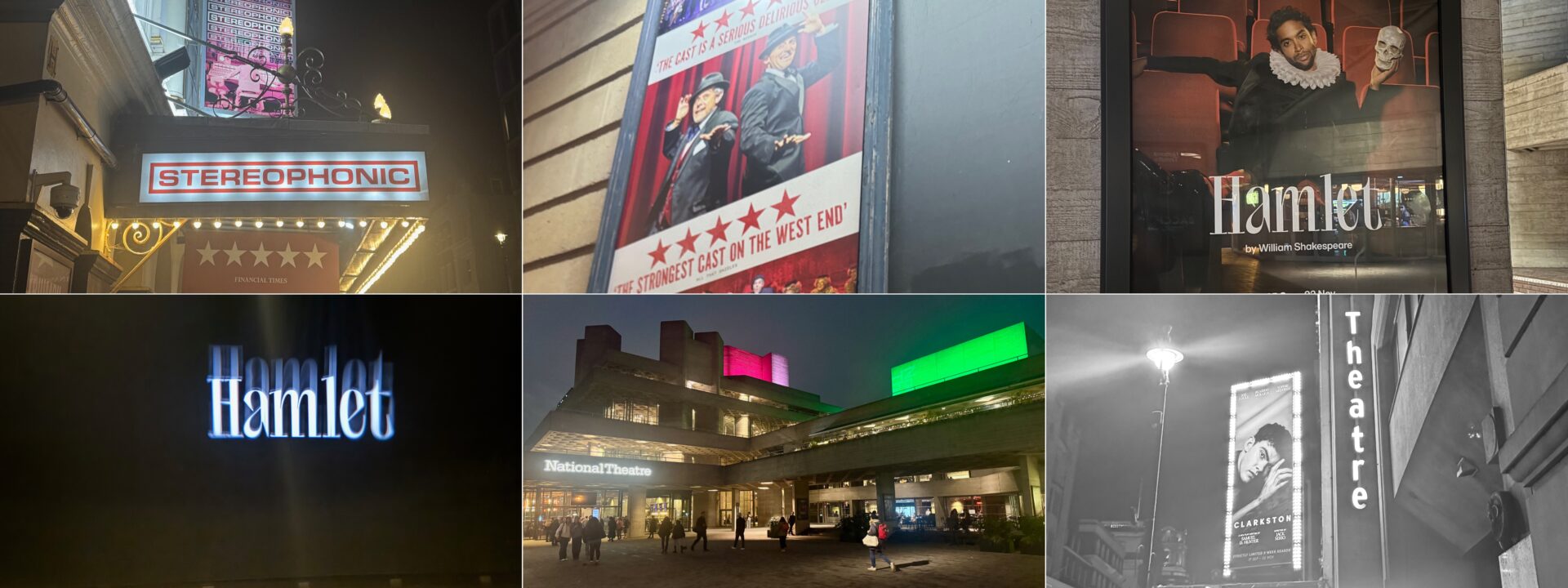
A collage of six photographs showing London's West End and National Theatre at night. Top row from left: the illuminated Stereophonic theatre marquee with decorative scrollwork and stars; a promotional poster advertising "the strongest cast on the West End"; signage for Hamlet by William Shakespeare. Bottom row from left: neon blue "Hamlet" title illuminated against darkness; the National Theatre's iconic Brutalist architecture with pink and green lighting on its terraces and evening crowds outside; a vertical theatre banner and signage visible in low light.
To see a show or not to see a show? (The answer is always yes)

For some reason, October turned out to be a fantastic month for theatre visits. Some of these were planned months in advance, a couple, very last minute, which meant that I saw five very different productions, from quiet intimacy to loud, inventive spectacle.

Clarkston — 8 October, Trafalgar Theatre

Joe Locke, best known from Heartstopper, starred in the UK premiere of Clarkston, a tender three-hander about two lost souls working the night shift in a Costco warehouse.

Jake, newly employed in the warehouse, is tracing the route of his ancestor, the explorer William Clark, while facing a recent Huntington’s diagnosis; the other lost soul, Chris, is bound to his small-town life by a chaotic mother, Trisha.

It’s beautifully acted — Locke is excellent, but Ruaridh Mollica quietly steals the show with a performance full of tension. I must mention Chris’s mother, played by Sophie Melville, who is also magnificent, injecting unstable energy just as the plot might slow. Overall, a simple setup with quite powerful performances.

It clearly brought a good number of Heartstopper fans to Whitehall for a mid-week performance, which must be a good thing. The Guardian’s review, perhaps less enthusiastic than I would have been.

Still playing, until 22 November 2025.

The Bacchae — 13 October, National Theatre (Olivier)

Euripides reimagined for the modern age: loud, kinetic, and full of swagger. This Bacchae mixed rap, spoken word and pounding beats, transforming the ancient tragedy into something fast-paced and streetwise. King Pentheus branding Dionysus and his followers “terrorists” added a touch of contemporary relevance.

The set — unadorned movable platforms — opened with an unforgettable image: a blood-soaked white horse’s head looming over the stage. It was visceral, fast-moving and utterly gripping. One hundred minutes without an interval flew by.

Time Out gave this one fewer stars than I would have, questioning whether it even works as a tragedy. I would have definitely suggested you go to see this, but sadly, it ended last weekend.

Hamlet — 15 October, National Theatre (Lyttelton)

Two nights later, another National Theatre production — but a different energy entirely. Hiran Abeysekera’s Hamlet bounded across the stage in beanie hats and oversized jumpers, his performance full of humour and restless energy. The costume might have been modern, the setting aiming for some period between then and now, though the language stayed pure Shakespeare.

Francesca Mills’s Ophelia was brilliant, her descent into madness raw and unflinching. The production never quite found a political edge, and I christened it “bouncy”, which feels like the right word.

The Observer, who don’t seem to be giving out stars these days, said what a lot of the reviews have commented on, that soliloquies are gabbled and that rather spoils the effect. Despite the pace of this performance, I think it felt slow. But it was certainly worth watching.

This one is still running, also until 22 November 2025.

The Producers — 24 October, Garrick Theatre

After so much tragedy, The Producers was an amusing tonic. Mel Brooks’s gloriously tasteless musical, now revived from its Menier Chocolate Factory run, remains, IMHO, one of the funniest shows ever written.

Bialystock and Bloom’s plan to profit from the world’s worst musical — Springtime for Hitler — is still hilarious and, surprisingly, hasn’t been cancelled. It’s satire at its sharpest, making me wonder what today’s equivalent might be.

The Evening Standard gave this one five stars; “The line Bialystok quotes from a review of Springtime for Hitler also sums up The Producers: ‘It was shocking, outrageous and insulting – and I loved every minute of it.’”

Stereophonic — 27 October, Duke of York’s Theatre

Finally, Stereophonic: a fly-on-the-wall drama about a 1970s rock band recording an album. It’s definitely not Fleetwood Mac — though the parallels are obvious. The “play with music” cleverly blends dialogue and original songs by Will Butler of Arcade Fire, capturing both the tedium and the magic of studio life.

It’s long, occasionally exhausting, but the second half finds its rhythm. I wasn’t entirely convinced it merited its thirteen Tony nominations, but it’s smart, stylish and very well performed.

WhatsOnStage gave this five stars, as did a number of others, but I agree with The Times, a little editing (in my view of the first half) would have helped.

Another production that finishes on 22 November 2025. I wonder what’s happening after that?

I don’t know when I’ve seen so many shows in such a short time. That’s five shows in one month, showcasing the varied nature of London theatre. Yes, I enjoyed some more than others, but I’m glad I went to them all and would recommend you see any of them (just get into a comfortable position for Stereophonic). There’s so much talent out there, it’s amazing.

Yearnotes 2024

As the new year allows these moments of self-reflection, here comes my 2024 Yearnotes: a way to look back and be grateful for the interesting things I was able to do.

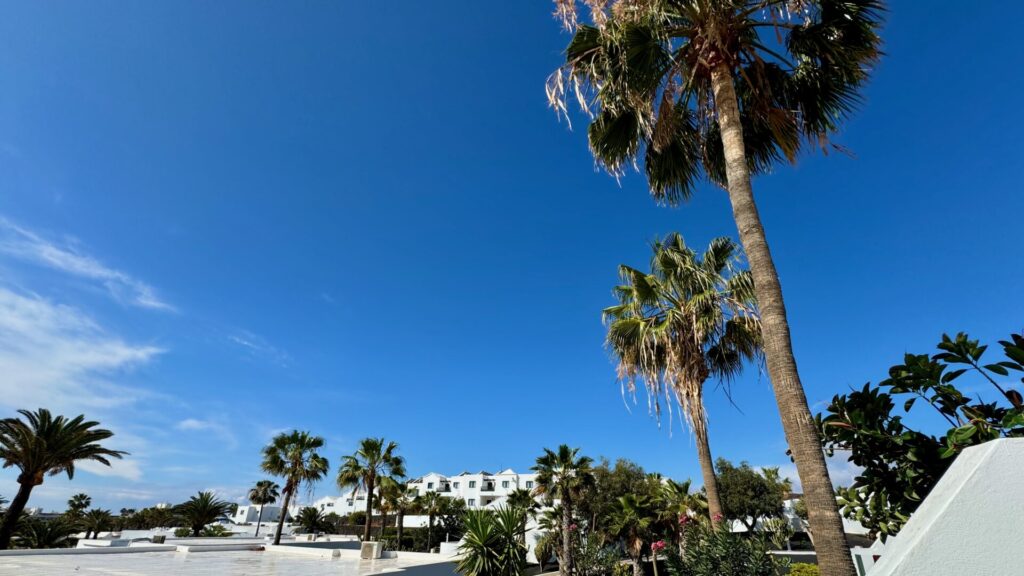
  • The image shows a typical Mediterranean resort setting with white-washed buildings arranged on a hillside. Several tall palm trees frame the scene against a vivid blue sky. The architecture appears to be in the traditional Mediterranean style with flat roofs and cubic forms. The foreground shows a paved area with tropical landscaping including palms and other greenery.
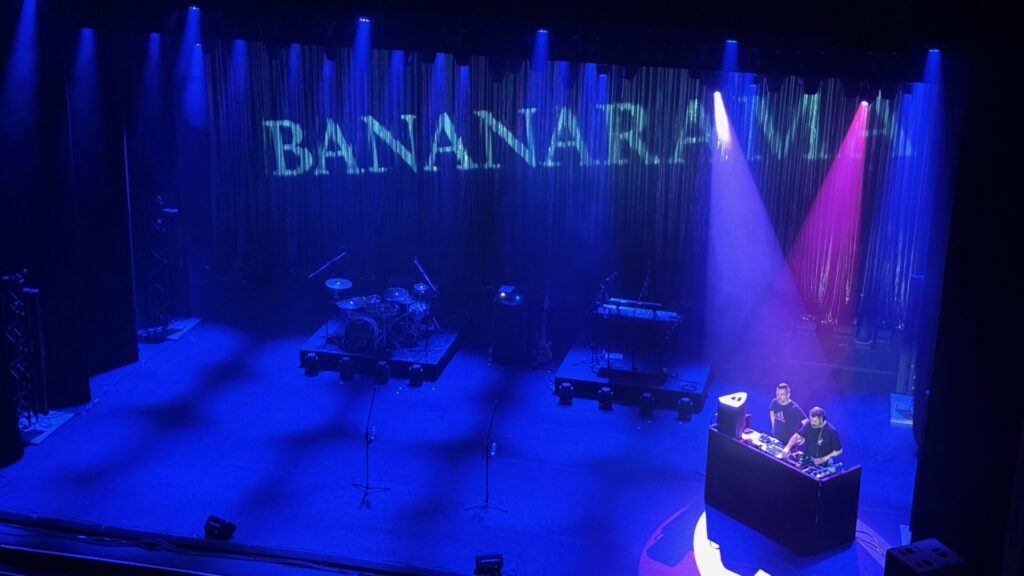
  • The image shows a theatre stage illuminated in deep blue lighting, with "BANANARAMA" visible in turquoise lettering above. The stage is set up with a drum kit on a riser in the centre background and various other instruments and equipment positioned around the stage. Two DJs are visible at a control desk on the right side, lit by purple and pink spotlights. The theatre's curtains create a dramatic backdrop with vertical striping effects from the lighting.
  • The image shows a theatrical stage for "Starlight Express" illuminated in blue and pink neon lighting. The title "STARLIGHT EXPRESS" appears in bright neon lettering across the top. The set features curved racing tracks and geometric mountain shapes in the background. The lighting creates a starry night effect, and some audience members are visible in the foreground.
  • This image shows a large outdoor festival stage with two large video screens displaying the band, Green Day The stage has a colourful "ISLE OF WIGHT FESTIVAL" banner at the top and is lit with numerous bright stage lights. The crowd is very dense, with festivalgoers wearing various hats and summer clothing. The photo appears to be taken at sunset or dusk, giving the sky a golden hue.
  • This is a scenic Mediterranean coastal view from Corfu, showing a sheltered bay with turquoise waters surrounded by green hills and cliffs. There are a few houses visible on the hillside, typical Mediterranean architecture with white walls. The foreground features olive trees and flowering plants, with a low stone wall or barrier. The bright sunlight creates sparkles on the water's surface, and the sky is a clear blue with wispy clouds.
  • This image shows a sports venue with Paralympic Games branding visible on turquoise barriers with the Paralympic symbol. The main focus is a large red mascot character with big blue eyes and a friendly smile, likely Phryge, the official mascot of Paris 2024. The mascot is interacting with spectators in stadium seating filled with a diverse crowd.

I didn’t do my yearly self-review at the end of 2023. I have no recollection why. When I restarted the weeknotes in mid-2023, I allowed myself the flexibility to be late publishing, and I think that enabled me to keep the streak going. I hadn’t considered that one of the consequences would be I’d write something every month of the year in 2024, something that hasn’t happened here since 2005. I think the weekly writing habit was good for me as I wrote a whole bunch of other things alongside the weeknotes. As the new year allows these moments of self-reflection, here comes my 2024 Yearnotes: a way to look back and be grateful for the interesting things I was able to do.

Two of the things I am happiest about this year don’t fit neatly into the categories I use here. I am delighted that we were able to keep our monthly Pub Quiz attendance going; it’s such a nice way to see friends regularly. And, a random comment in the summer led to the discovery of €25 tickets for the Paralympics and a hastily booked train. It was wonderful to immerse myself in some sport for a day. Even the power cut at the hotel the night before our early-start departure couldn’t spoil the joy of the event.

And there was a sixth wedding anniversary, an eightieth birthday celebration, a fiftieth birthday party, and a King’s Garden Party that I haven’t written about but must be highlights.

Moving

At the end of ’23, I started to suffer with a frozen shoulder. It went through its most painful period in the first quarter of 2024. As a result, I didn’t even cross my gym’s doorstep for the first seven months of the year. And then I only went 6 times between then and now. I should insert the usual new year wish to do better. But, who am I kidding?

If I look at the amount of exercise I actually took, irrespective of time in a gym, my trackers say I took 3,131,527 steps for a cumulative distance of 1,407 miles (and burning 268,888 in the process). That’s 12 days and 17 hours of exercise-like exertion.

2024 in music

I try to make Last.fm the source for this data, but Apple Music’s failure to natively sync means I am dubious about the numbers. Last.fm says I scrobbled 5,170 tracks (down 24% on 2023). Of those, there were 3,093 unique tracks compared to the 2,906 songs that Apple says I played. While Last.fm thinks Lainey Wilson’s Wildflowers and Wild Horses was my top track, Apple says it was No Caller ID by Megan Moroney. To be fair, they both have the same count at Last.fm, so I am unsure why one was picked above the other. They’re both great songs.

Last.fm says Breland’s Cross Country was the most listened to album, Apple says that was number 3, while Beyoncé’s Cowboy Carter was top. Are you spotting the trend is country music again?

All of that is somewhere between 12 days and 14 days listening in 2024. I think that was pretty good. I just wish somebody did the same for podcasts.

All the socials

I (still) have a Mastodon account but I have yet to pontificate there. Ditto Bluesky, although I keep promising myself I’ll move to a custom domain.

There were 28 Instagram grid pictures. There were 84 stories. It still remains my favourite format, but that’s a 42% decrease on 2023. There is a highlight selection from 2024 stories. Also, although it’s not social media, it is photos, I posted a collection of pictures from God’s Own Junkyard, the warehouse tribute to neon: All lit up.

There are now 98 feeds in NetNewsWire, notably new in 2024 are London-themed newsletters that I read via RSS. London Centric has just published a ’best of’ and The London Minute is becoming a daily read. London Spy, The Londoner and, nearer home, The Wimble are all worth some time. Given that London’s newspaper, the Evening Standard, had to drop the ‘evening’ portion of its name this year because it’s become weekly, these are more than the name ‘newsletter’ might imply, and are all recommended reading if you live – or are interested in goings-on in – the Capital.

Books, TV and Cinema

I failed my reading challenge, managing only 9 of the promised 15. However, they were all excellent and I don’t know which to call out as my favourite.

I saw a few more things at the cinema than in recent years: Poor Things (weird, horrific and compelling), Die Hard (yes, I’d never seen it), Beetlejuice Beetlejuice and Wicked.

I also saw All of Us Strangers, but skipped the cinema to watch it from the comfort of my living room. It takes time to work out the timeline of the characters, but I loved it.

Mr Bates vs The Post Office was the first big television show I watched this year. Slow Horses remained excellent and Lost Boys & Fairies was brilliant. Other highlights included Dead Boy Detectives, Ludwig, Heartstopper and The Jetty. I really enjoyed Celebrity Race Across the World, possibly the nearest to reality TV I’ve watched all year, and we watched Shardlake on Disney+ even though I couldn’t get Cadfael out of my head while watching.

Gigs and shows

Many of the things I’ve posted about here are tracked in some app or other, or I’ve been able to use my own weeknotes as a reminder. I’ve tried using setlist.fm as a gig tracker. And, while it’s great, there’s no easy way to see 2024, and every artist at a festival is a separate entry, which is fair but, perhaps, does not enable an easy count of gigs. I enjoyed the Isle of Wight festival, Bananarama, Grace Jones, Stevie Nicks and even Bucks Fizz. At the Stevie Nicks gig, I saw Brandi Carlile and am now a fan of the music. In mid-December, I saw both the Lightning Seeds and Paul Heaton; two fantastic evenings.

I’ve not used anything to track theatre shows, so I am reliant on my own notes. Aside from Starlight Express, mentioned below, the best theatre included the immersive Guys and Dolls, Stranger Things: The First Shadow (which can be watched even if you don’t know the Netflix show); new musical Operation Mincemeat (inventive and hilarious) and The National’s Coriolanus was great: I surprised myself following the plot, having never read the play.

I only watched the film the week before we saw Heathers The Musical, glad I did. Never seen a play set in a gents’ toilet before? Boys on the Verge of Tears was such a play and, as a result, was really odd. The Time Travellers Wife wasn’t the greatest, but I am intrigued and might read the book. Closer to Heaven made another comeback at the, sadly closed, Turbine Theatre. Two Strangers Carry a Cake Across New York and Next To Normal were OK, Why Am I So Single needed some cuts to make it work.

Audio

I’ve always loved listening to the radio. This year, however, I found more and more podcasts to keep me entertained. My current favourite is the cooking-interview show, Dish, but I caught up on a lot of Kirsty Young’s Young Again, which is also great.

Broadcaster Steve Wright died at the beginning of the year. There were plenty of wonderful tributes, but I particularly liked Steve Wright in his own words.

There were a couple of things that surprised me this year; I tuned into Test Match Special while Mum and Dad were at Lord’s for the first day and really liked the company. Timmy Mallett’s Radio Oxford show from back when John Lennon’s died was a nice bit of retro audio.

James O’Brien’s Full Disclosure is one of my favourite podcasts. It’s hard to pick favourite episodes, but I went back in time to the Andy Burnham episode (which was great). Full Disclosure hired an actor to voice The Secret Barrister, and that was an excellent episode.

Other writing

Possibly inspired by the forced regularity of weeknotes, I found myself posting a lot more to my blog. In On diary writing, I talk about how I want to improve my ability to articulate feelings and emotions in writing, which is a goal for this year. That was a follow-up to something from earlier in the year, My digital history, where I think of my personal website as a historical record of my life.

In a year of change for the BBC’s local radio network, I found some material I’d had stored in a box for decades and thought it would be interesting to make sure it’s archived somewhere: From the 1985 archive: Background To BBC Local Radio and BBC Tuning Guides for Shropshire. Let’s hope the mention here gets them some Google juice!

Another blast from the past was ‘Mine is the last voice you will ever hear’, a bit of a wander down memory lane reminiscing about “Two Tribes” by Frankie Goes to Hollywood and how, when we played the song repeatedly at school, we thought it was a form of rebellion.

I also blogged about a couple of events I’d been to this year: Hidden Holborn was another in the Hidden London series where the public is able to go to areas of the London Underground that are usually off-limits. Once again, I went to the Isle of Wight Festival, this year keeping a record of what I did: day one, day two and day three. And, earlier in the year, I was lucky to get tickets for the first real public performance of the new-look Starlight Express and I wrote up my thoughts.

Other counts

I am always fascinated by the stories people who count things in their lives can tell. There are 2,518 photos in this year’s album, but only 15 made their way to Flickr. Thanks to TFL, I know I made 373 journeys on the London transport network, 30 of them were buses. They didn’t tell me I took 6 flights this year, JetLovers did. And on 1% of my mornings in 2024, I woke up in Edinburgh.

Previously

All my previous attempts at summarising my year are grouped under the yearnotes tag.

Starlight Express

Starlight Express: nostalgic, immersive, impressive cast, mixed responses.

The Starlight Auditorium in Wembley.
Starlight Auditorium

Small disclaimer: I bought tickets to a preview show. Shows can change while previewing, so what officially ‘opens’ could be different.

Last year, when they released tickets for the new Starlight Express (London, 2024), I bought a couple without realising they were for the first preview night. Effectively, we were part of one of the first paying audiences to see the show. However, quite how many people had paid would be interesting to know as we were surrounded by people who had something to do with the production (lanyards, notebooks and “see you at the drinks”). Lord Lloyd Webber was at the back. I’m curious to see if the presence of insiders impacted how the audience responded. More on that below. The Producer and Director introduced the performance. I wanted to get my thoughts down quickly so that, when the real reviews come out, I can see if they agree or disagree with what I initially thought.

Before diving into the review, it’s important to provide some context. I was a fan of Starlight’s 1992 reworking at the Apollo Victoria, having seen it multiple times and even catching the touring production. The soundtrack was a regular on my playlist. This fondness for the earlier version undoubtedly influenced my expectations and, I suspect, will colour many of the reviews.

Nonetheless, it was time for the show to be updated. That is neither good nor bad; it’s inevitable. And, if you want to stage a big comeback production, you’ll need to sell a lot of tickets and appeal to more than the nostalgia crowd. Starlight Express is a family show, and today’s kids are not as enthralled by trains as previous generations. This version is updated with new and revised characters and songs (both new and rewritten). You won’t see the Starlight of 1995. This is, however, still Starlight Express. It has not changed beyond recognition. There weren’t many kids in tonight’s auditorium, but there were some, so it’s a small sample to comment on below.

There’s good and disappointing (maybe, bad).

The new Starlight Autotrium is stunning. It’s a wonderful place to see the show. Like the Apollo Victoria, the skaters are out amidst a portion of the audience. We sat in a central-ish area they called Platforms, and the races happened all around us. The video screens are still there, and adding race position scoreboards (new to me) is a nice touch. The introductions peddled the line that the original was one of the first immersive shows. Maybe, but by today’s immersive experiences, this is still a theatre show: you must stay in your seats, and there’s no interaction. That may be nitpicking, but it felt like bandwagon jumping to me. But, I can reassure anybody that, in the right seats, you are up close to the action, and that’s part of the Starlight experience that’s been maintained.

In the intro, somebody said there were twelve professional debuts among the performers. They were all incredible. I have no idea how you could skate, dance, and sing for two hours while maintaining the needed control. And our seats were up close. I’d like to think I’d notice the pain if they were suffering. To a player, they looked like they were loving it. And that remains as infectious as it was the first time I saw it.

The inclusion of new songs is relatively seamless. The score has been reworked to fit: at times, I sat trying to work out if I was hearing something new or revised. And the new songs are good: they’re not as familiar but they’re good (although at least one has played in the German production for years). The sound system remains as epic and theatre-filling as I remember from other productions. It makes it feel like an experience.

The reworked songs are more complex to comment on because, in my head, you sing along to words that are not there anymore and that must influence my thoughts. I’m delighted they still work, even rewritten. Somewhere along the way, they sing “going faster than the limits allow,” which (and I had to look it up) is lifted from Tire Tracks and Broken Hearts from Whistle Down The Wind, but immediately made me think of Meatloaf. I’m curious if Jim Steinman gets credit (assuming it’s his lyric).

It’s more than just the songs that have been updated. Engines are no longer named after countries: the German, Russian, French and Italian trains have generic ‘Golden Eagle’ or ‘Orange Flash’ style names. The British train, which never appeared due to leaves on the line, is still referenced. I trust that’s a nod to earlier productions rather than somebody thinking it’s still an original joke. Ashley, the smoking car, is replaced with a ‘quiet car’. The freight ‘Rustys’ are now named after their loads: Lumber for wood, Slick for oil, etc. There’s an additional freight wagon, Hydra, named after the hydrogen it transports. It’s an important introduction to the story. Greaseball is a female character, Electra a non-binary, “they”. Poppa is Momma. None of this matters, although it’s harder to distinguish between the engines. But the stereotypes of the older versions would jar. The trains have always been about the characters they represent, which works, just as it has always done. One of the criticisms of the 90s reworking was that the villain of the original, the Caboose, was removed, and the bad guy’s deeds spread across other characters. In this version, the baddie is restored.

The child controller plays a much more significant part in the reworked show and is a central character. It’s probably one of the better changes.

I wish I could end there because, to this point, I can wholeheartedly recommend that people go and see the show. Fantastic staging, performances, and additive, non-destructive updates would be an excellent place to stop.

But, there is a change, and that’s with how the story gels. The tale has changed over other incarnations, and so there’s no reason why the story should not evolve again. At its heart, it was, and is, the story of the underdog steam engine you’re rooting for to win the race and couple with his love, Pearl. It’s all still there. But, in this production, the subplots drown out the core story.

If something like Starlight were written today, Electra would be the hero engine, and Steam would be relegated to the evil characters. That would be too big a rewrite for Starlight. So we have Hydra, the hydrogen truck that propels Rusty to the win. But there’s now a new storyline of the good fuel that weaved amongst the others. ‘He Whistled At Me’ has Rusty questioning if whistling at a carriage was appropriate, which takes some of the meaning away from the ‘whistling’ references: it can’t be seen in the same context as before. These don’t sound like significant issues; perhaps they are not. But they blurred the central premise that the audience cheers on Rusty because why wouldn’t you cheer on Hydra or the carriages?

I headed to the interval bar, commenting that the show didn’t feel like it had the pace it should have. It’s about something other than speed skating: who knows if the track is faster or slower? This should be an energy-filled extravaganza. It has the setting, the music, and the cast, but somehow, it’s not. What felt modern, fast, and upbeat 40 years ago needs a turbo-boost to feel the same today. And Starlight 2024 doesn’t have it.

You want the audience to cheer when the races start, but they’re not. Applause is played as sound effects. When the cast tried to get the audience to clap along, they succeeded with a portion of the audience, but I observed a lot who didn’t join in, most notably to my eyes, the Producer sitting at the other end of the row where I was seated. Maybe it’s all those insiders I mentioned earlier, but if they can’t be upbeat at the first public performance, why should anybody else?

And to my aforementioned sample of children. Just three in my eye line, so, probably, unrepresentative. But they didn’t seem involved, one even resting their head on a parent’s shoulder as if to sleep. I don’t know what was missing for them, but the show needs to win kids to succeed. Truthfully, as we were leaving, another child was wide-eyed and singing Starlight. An auditorium with more children might have more energy: it’s not pantomime, but it needs that level of engagement. I hope my experience was an exception, not a crystal-ball view of the future.

I wanted to love it. That could be part of my problem. I didn’t. But I didn’t hate it either: far from it. I enjoyed it. There’s much to be in awe of, notably staging and casting. But I want a new generation to love Starlight as I do, and I fear this production lacks the pace, excitement, and clarity of who to root for to make it a winner with people unfamiliar. The nostalgia crowd will go, and it might be a profitable undertaking on that alone. Abba Voyage proves there’s a market, but I wonder if it’s enough.

I have my fingers crossed. Maybe I’ll even go again to see if I revise my thinking. I will, no doubt, think about it for days to come. We’ll see.

Yearnotes 2022

I decided to give the Weeknotes format another go in the middle of 2022 but it was, ultimately, unsuccessful. My hypothesis is that I don’t tend to sit at a computer on a Sunday evening and, therefore, writing something at that point in the week isn’t natural. I may play with the idea later this year but – maybe – generating 15 blogs for 2022 isn’t that bad.

There were two major events this year: I started a new job and bought a flat but those are not the kind of things I can track year-on-year.

Moving

Apparently, I went to the gym 38 times which is nowhere near where it should be but also much better than I imagined it would be. I was monitored taking 3,652,508 steps. My cumulative exercise distance is 1,721 miles (burning 253,432 kcal) and exercising for 16 days and 9 minutes in total. But, I still ended up putting on a little bit of weight I lost last year. Not all of it, but some. I’m just glad I didn’t count all the calories that I consumed.

2022 in music

As last year, I have three different services that track some version of my music consumption but I am not really sure how accurate any of them are monitoring my listening.

  • Last FM should aggregate everything I listen to (they claim 6,663 listens) and say Bananarama was my top artist of 2022 (which may be right, I did see them twice), their latest album, Masquerade, was the most played album but they didn’t get the most played track honour, that went to Cody Johnson’s ‘Til You Can’t.
  • Apple Music, the main way I play my own music, says I listened to 3,202 tracks and reckons Miranda Lambert was my top artist this year, if I ignore the Christmas Chill album that they say was my number one, Apple also thinks Masquerade was my top listened to album but claims Circles Around This Town, (Maren Morris) is the most listened to individual track. ‘Til You Can’t was down at 6 on Apple’s count.
  • I don’t really use Spotify for much except some chill-out sounds on a connected speaker. So, to discover that, of the 2672 minutes tracked, the top song was Thomas Newman’s Any Other Name from the American Beauty soundtrack was not a surprise (nor was it that Thomas Newman also tracked as my most played to artist.) Spotify said Maren Morris was my third most listened to artist.

The basic rule here, I shouldn’t rely on a system to synthesise my musical year.

All the socials

Who really knows what’s happening at Twitter? In the last couple months the main reason I’ve logged on to Twitter is to read about Twitter. I have a Mastodon account but I have yet to pontificate there.

In 2022 there were more tweets that last year, mainly generated because of a bit of a rant at noted Apple Commentator, John Gruber, for his mischaracterisation of the European market for NFC payments.

But before Apple Pay, NFC was hardly used, even though Android had supported it since 2011

In the UK, which was definitely part of Europe for most of the period in question, that statement is just plain wrong. Just one example, Contactless payments were introduced by TfL before Apple Pay was launched here and they quickly accounted fro 30% of all travel payments. I don’t agree with some of the EU’s decisions around technology but, equally, the American tendency to assume behaviours in the US reflect the rest of the world is frustrating.

37 grid pictures on Instagram this year. I re-counted last year and I have no idea why last year’s review claimed 16 when it seems there were 45. There were 145 stories in 2022. I really prefer the story format and the 2022 highlights are a great summary of the year but I retain a soft spot for the grid format as a more permeant memory bank. Even though I posted more pictures this year, I relegated most of my social apps to a folder off my phone’s Home Screen and I have found myself endless scrolling a lot less. I am reading more blogs again. At the moment I have around 40 feeds tracked in my NetNewsWire and it’s a much better that all the all the Twitter angst and argument.

Since I started using Instagram all those years ago I have tried to keep it to contemporary pictures and not use it to post old images. There are a couple of exceptions and World Radio Day 2022 was one of them. The post on that day included one of my favourite paragraphs that I wrote this year, which I did repeat on Twitter,

Tomorrow morning, why not ‘turn up the feel good’ with ‘more of the songs you love’ that are probably ‘the biggest hits and the biggest throwbacks’ on the ‘UK’s No.1 Hit Music Station’ or, my current choice, ‘The UK’s Country Station’.

I thought it was a nice way of merging all those big radio marketing slogans I am not sure anybody else did.

I tried to compete a full year of journal entries on Blipfoto but, I failed. Because I tend to write them in another app through the day, I have found cross-posting them a slow and uninspiring process. I thought it would be easier to write in a Journal app which could be used to create a daily Blipfoto diary and weeknotes but it didn’t work out. I’m trying again for 2023.

Books, TV and Cinema

I did manage to complete my Reading Challenge this year, I read 13 books (more than the anticipated 12) which is a great improvement on the pandemic years. For me, reading has always gone hand-in-hand with travel and so, during the COVID years when I neither commuted or travelled, I had no muscle-memory of picking up a book and reading at home.

In 2022 we started to travel a little more and I found that, as I started reading I was able to find a bit of time at home. And so I managed the twelve books. Two of the twelve introduced me to Arthur Bryant and John May, described as “Golden Age Detectives in a modern world” and I found them a lovely read. I look forward to reading more this year.

I read a kind-of love letter to radio, Last Train to Hilversum, which was a fascinating, and two books by radio presenters: No One Listens to Your Dad’s Show, Christian O’Connell’s autobiography and Mark Radcliffe’s Thank You for the Days. I still enjoy reading about radio – such a wonderful medium. But, I didn’t leave TV out this year. I read a couple of histories of ITV (where I was working at the time): Raymond Fitzwalter’s The Dream That Died and ITV Cultures: Independent Television Over Fifty Years which was a bit academic and heavy going.

Perhaps the most influential book was Giles Turnbull‘s The agile comms handbook which has resulted in me keeping up at least one weeknotes habit: my weekly work report.

My favourite anecdote came from Grace Dent’s Hungry where she is telling a story about when she learned enough about wine in eleven short minutes to prepare for a lifetime. What happens if a sommelier wants to talk to you?

Oh, he doesn’t want to talk to you, Hector said. ‘He wants to talk at you. It’s just a game. The sommelier’s job is to know everything about the bottles on the list. Your only job is to drink it. The winning tactic,’ he continued, is to seem genuinely interested when they harp on. It’s simple, really.’

I didn’t get to the cinema in 2022. I actually got to the cinema in both of the pandemic years so this year was very much an exception. But there are some great series on the streaming services. I didn’t get into the new Tiger King but I can thoroughly recommend Apple TV’s Slow Horses, Only Murders in The Building on Netflix and Hacks on Amazon Prime. I did enjoy catching up on 2017’s The Hitman’s Bodyguard and, of course, I sang along about Bruno with the rest of the world while watching Encanto.

Let’s hang out in the blogosphere

On January 2nd this year, Matt Mullenweg encouraged people to get blogging,

Write for a single person. Share something cool you found. Summarize your year. Set a blogging goal with reminders. Get a Gutenberg-native theme and play around with building richer posts. Start a nom de plume. Answer daily prompts on Day One. Forget the metaverse, let’s hang out in the blogosphere. Get your own domain!

Reading that reminded me that I haven’t written on curnow.org for some time. I used to ‘summarise my year’ pretty regularly – albeit in different ways – on here. In 2021, I tried the weeknotes format, but it didn’t really work for me. In December 2020, I posted a 10-Year Instagram retrospective and, earlier that year, looked back on the handful of tweets I posted in 2019.

I wrote 2018’s Annual Report at the start of 2019 and took a moment to look back on my 2017 Reading Challenge the year before. Previous annual(ish) reviews were photography-based; the last one of those was My 15 for 2015, posted at the end of December 2015.

In the spirit of ‘hanging out in the blogosphere’ and because I have previous writing to point to, on January 4th this year, I gave myself 27 days to compose something to summarise 2021. Clearly, I missed my own deadline, but these are the words I’ve put together since then.

2021

2021 was an odd year. Like many others, I began the year in a London COVID-19 lockdown, dreaming of springtime freedom. I took part in a virtual escape room in March, which was fun but not as much as the real thing. And nowhere near as fun as the summer of normality, which followed a few months later.

I got my first vaccine shot in the early part of the year, but it wasn’t until April 15th that I could go out and see people. I met some friends for an outside meal. I have two memories of that evening: that it was fun to be able to talk to people across a table, but it was cold. I bought a jacket with an in-built, battery-powered heating element to get me through that – and a couple of similar evenings.

This year, I continued a trend from the first months of lockdown in 2020: going on local history walks. On one of them, we tried to find the site of the Craig Telescope, but I am not convinced we ever did.

The year opened up from June, and I was able to get to the Isle of Wight for a holiday, and there was a family trip to the Lake District. Later in the summer, I got to see AFC Wimbledon’s new Plough Lane stadium, which was fun, and I hope to see a few more games this year. By the time the weather was getting colder again, there was a trip on the Caledonian Sleeper to Fort William, which was wonderful, but my overriding memory is of rain.

All the socials

I didn’t really tweet much in 2021. I think I was trying to avoid doom-scrolling about the pandemic. I appear to have enjoyed The Masked Singer last year (as I am this year). I also noted that I finally killed off a couple of experiments I had been running for 10 years on local tweeting. The local engagement was fun, but it was time-consuming. When I moved house, I gave up, and a couple of accounts just became automatic retweeters. I don’t think it’s a good use of Twitter. I had always planned to write more about those experiments, but I think their time has been and gone. Still, it was a fun side project for several years, but I am glad it’s been put to sleep.

https://twitter.com/curns/status/1423618875007148040

I ended 2021 tweeting about Stretchy Pants, which is a much more relevant topic for this time of year.

On Instagram, there were 16 grid pictures vs 104 stories. So I guess the story format wins. Yet again, the algorithm chose my Top Nine, but I got to pick my story highlights.

If I had to pick my favourite photographs, I’m not sure what I would pick, but I do like these three night shots; my favourite photo didn’t make it to Instagram.

I tried quite hard to complete a full year’s photo journal with Blipfoto. It’s an excellent and, I think, unknown photo-sharing site that I briefly used many years ago but came back to during the pandemic. I started 2021 strongly, but my continuous burst really ended in September. I’m not sure what killed it off, but I am back trying again in 2022.

As a result of working at home, I probably listened to more music than I have in previous years. Last.fm says there were 9,456 scrobbles. Contemporary country music is the genre I am listening to most at the moment. It’s interesting to see what the various services say about my top artists:

  • Last FM says Miranda Lambert was my top artist of 2021, while Famous Friends ” by Chris Young & Kane Brown was my top track. They also say that 59% of my listening was new tracks, which I found surprising.
  • On Spotify, I apparently played more Luke Combs, while “If I Didn’t Love You” was the most-played song for 3 and a half minutes.
  • Apple Music agrees that Famous Friends is my most-played song, but makes it way too hard to figure out who my most-played artist is, so I don’t bother with this post.

My 2021 Media Diet only included three films. I can’t choose between them because they were all perfectly passable ways to spend a couple of hours. So, in the order that I saw them (with a short review):

  1. In the Heights (Good, but I preferred the stage show)
  2. Free Guy (Good, but felt a bit familiar)
  3. No Time To Die (Good, but some of the action scenes went on for too long)

Of the films watched on a TV screen, I am finding it hard to pick a favourite. Perhaps honourable mentions for The Map of Tiny Perfect Things, Ma Rainey’s Black Bottom, Wonder Woman, My Octopus Teacher, and Never Surrender: A Galaxy Quest Documentary.

I went to the theatre five times, but two visits were to see things I’d seen before. I saw Declan Bennett twice; once in his one-man show, Boy Out of the City and once in Carousel at the Regent’s Park Open Air Theatre in August. Both were excellent.

I did write about my failure to meet my GoodReads Reading Challenge as an end-of-year post to Blipfoto. I read two books, 767 pages and listened to five audiobooks. I’m pretty disappointed with that, and I aim to do better this year.

This year, I started listening to the Strangerville storytelling podcast. There are over a hundred episodes to catch up on. It’s really great.

Out and about

Swarm, by Foursquare, doesn’t give me stats anymore about the number of check-ins. I’m guessing it’s way down because of the pandemic, but I’d be interested in comparisons with previous years. If anybody knows of simple tools to query my data, let me know. On the other hand, Google tells me that the total amount of travel in 2021 was equivalent to 19% around the world. I find that quite a surprising number (or perhaps my sense of the distance around the world is skewed). Mind you, Google says I walked a total of 783 miles this year, while Apple thinks that was 1008 miles. The lesson here might be to not trust the trackers.

The pandemic has changed the ways a lot of us have been working. In November, we tried an experiment and spent a month working from an Airbnb on the Isle of Wight to see how well that would work (turned out pretty well, really). I hope to do that again this year.

The Prom

The Prom is a joy-filled song fest that works to keep the spirits up in these in-between Christmas and New Year days

I’ve spent a few hours re-reading entries from this time of year on my blog. I realise I wrote a lot of film reviews when I was blogging. As a result, I’ve been reevaluating what I thought about House Of Flying Daggers, Napoleon Dynamite, Love Actually and The Lord of The Rings. The main problem with this, of course, is that blogging is stuck in the early 2000s. So, what about a more contemporary review?

It’s December 2020 and London is in COVID-19 lockdown tier 4 which means that cinemas are closed and, thus, a film review may be hard. Having said that, streaming is the new cinema and tonight we watched The Prom on Netflix.

I do not come with preconceptions of the film based on any prior knowledge of the musical on which this is based. The film was recommended by my friend Rob and my Dad which suggests a broad appeal. The adaption is by Ryan Murphy, who I know as creator of Glee and one of my lockdown highlights, Netflix’s Hollywood.

The movie is set in world where ‘Eleanor: The Eleanor Roosevelt Story’ closes after first-night terrible reviews that tag the stars (played by Meryl Streep and James Corden) as the worst of self-obsessed celebrity. Somehow (and here my memory of any plot is gone), characters played by Nicole Kidman and Andrew Rannells become part of their ‘Broadway liberals’ gang.

Meanwhile, in Indiana a school’s PTA cancels the school prom because a female student – Emma – wants to take a girl to the dance. The schools head teacher seems to be the only supportive character in the town of Edgewater. Thus, a cause is created for the New York performers to prove they’re not as self-obsessed as the reviewers said. They all get on a bus to head to Indiana. This is not a Priscilla road trip movie and, before you know it, Broadway’s stars are trying to check into a Holiday Inn Express. Or something like that.

You do have to suspend disbelief here – in spite of the real-life roots of the story – because it’s a musical and the story is advanced in song. The premise manages to be both a big-old cliche and remarkably well-done at the same time. If you can work with the idea that an entire town’s moral compass can be re-pointed by an Andrew Rannells’ song and dance routine set in a shopping mall and using the water feature fountains as a central prop, performing a song called Love Thy Neighbor, then you’re going love this film. And, if you think you’re not going to find that concept remotely appealing, you probably should still watch this film because it’s funny, with the right amount of musical theatre camp to keep it rooted in a joyful place even when the story, inevitably has it’s downbeat moments. And at this point in 2020 we all need a bit of cheering-up.

The musical numbers are more Legally Blonde than Hamilton (although a pinch of Chicago, with all the associated jazz hands, is added for flavour) but they’re good fun and, in true Andrew Lloyd Webber style, move the plot on at a decent pace.

Two different story lines – the prom story and the redemption plot – work together so well that they can conjure up Tracey Ullman (but saying as who and why would be too much of a spoiler). Supporting cast, Kerry Washington, Jo Ellen Pellman, Keegan-Michael Key and Ariana DeBose are all excellent but we tuned in for the A-listers, didn’t we?

Meryl Streep is a pure joy to watch as Dee Dee Allen (she has two Tony awards, you know). A really solid, believable performance and you could watch an entire movie based on her character. James Corden, as Barry, manages to hold the camp to right side of funny – and tragic, when it matters – while walking a tightrope where he could, at any moment, fall into the offensive side. I think he handles it well. For me, Nicole Kidman playing a Chicago chorus girl is under used, especially at the start because she manages to be the only Broadway liberal to manage empathy and, I think, that provides the thread that holds the story together. Andrew Rannells’ character doesn’t quite have the depth of the others to make him quite so real but it’s a great perforamance and, after all, manages to convince an entire shopping mall that same-sex relationships are not an abomination in under 4 minutes. It’s a work of genius.

The Prom is a joy-filled song fest that works to keep the spirits up in these in-between Christmas and New Year days. And it’s on Netflix so, if you have a subscription, you can spend a couple of hours laughing for no extra cash. An actual New Year bargain

Polar Express Revisited

Does The Polar Express stand-up to a viewing 21 years later?

Back in January 2005 I wrote about the Polar Express on my blog (because film reviews were a thing I seemed to do quite a bit back then). I said that I could see the film enduring.

Almost 21 years later we watched it again, streaming from Amazon Prime. It was £4.99 – I wonder what we paid the first time? In 2005 I really enjoyed it and I did on this viewing too. I may have seen it once in the intervening years but, unlike The Nightmare before Christmas, it’s not a Christmas staple in my life so there were many things I didn’t remember (and that’s no criticism because I don’t remember the detail of many films that I have seen).

I saw the original in it’s big screen 3D glory and noted that the filmmakers “used the 3D format to full-effect” but I don’t think it lost much on my 2D television.

I said I thought this film would ‘endure’ – meaning it would last – and I think it has lasted well. In my opinion, Tom Hanks is still brilliant as the main voice of this movie. Glad I watched it again.

Tweetless or Tweet Less?

I realised I only tweeted 10 times in 2019 so I wondered (to myself) what I had written about.

My morning routine, after I have arrived in the office, usually entails eating breakfast while reading a couple of blog posts before diving into my email. This morning, I thought about some content I used to follow on Twitter and decided to look it up. It’s still there: but that’s not the point of this post. Then I thought I would write something to welcome the new decade as, although a day late, I thought it worth marking in my timeline.

That’s when I realised I only tweeted 10 times in 2019. That’s pretty terrible really. I used to use Twitter a lot. Sadly, I find it a pretty depressing place most of the time which – I think – is why I have generally shied away from the platform recently. I’m pretty certain if I had the time I could curate a list that was much more positive to read.

Nonetheless, I decided to look at the topics I did tweet about in 2019 – my logic being that if I use the platform so rarely then what I did tweet about must have been worth the effort of opening the app and might be interesting to see what I cared about in 2019. Sadly not. Here’s my ranking:

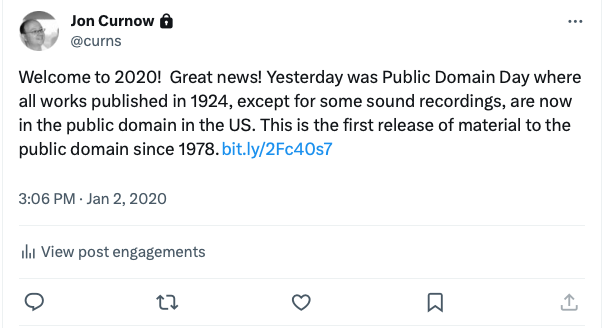
So, here’s the tweet I went with:my first of the new decade. I thought about something I’d seen earlier in the day which seemed like positive news:

I locked my Twitter account so this screenshot will have to do

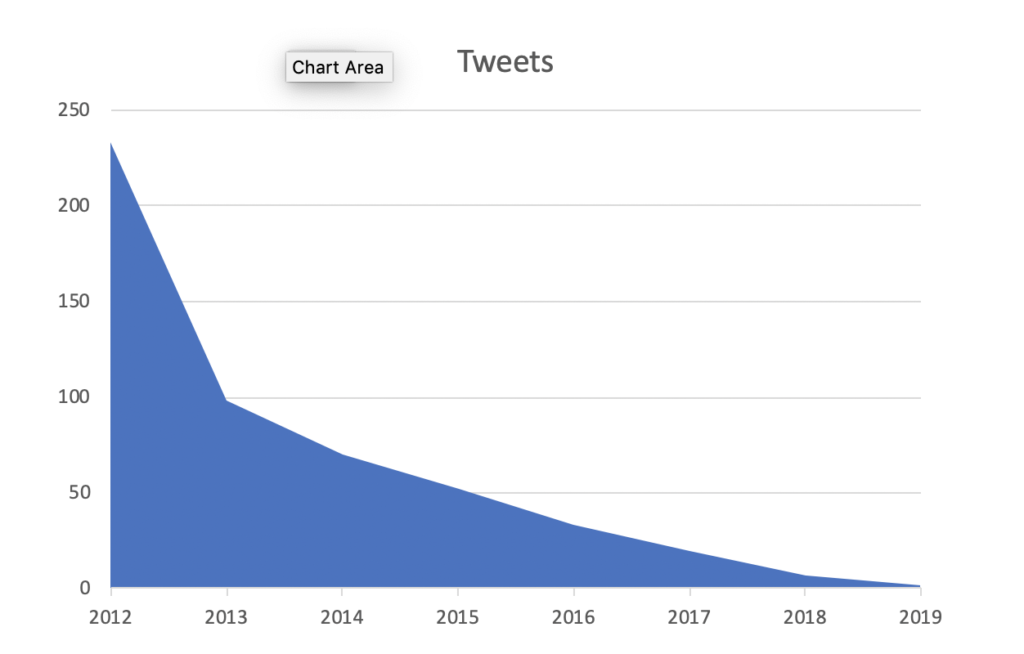
Give this is my 11th tweet in just over a year, I thought I would look at my posting trends. Using TweetStats and picking July as the sample month for no real reason except it was the first month on TweetStats’ graph, my tweet trend is not looking good. Maybe I should do better.

Currently, I am better at Instagram. Come join me there. As an aside, if Twitter made curating lists and generally managing your feed easier then maybe I would spend time creating the view I want.

In another ten years’ time Who can say what we’ll find

Looking back is fun. Futurology is exciting too. Let’s mix them in a big pot of pointless predictions!

On Christmas Eve I wrote a follow-up to my 2009 piece, ‘Looking Back 10 Years‘. So, now, if I was going to create a new list, what would I add?

Time to ring in with the new …

Video Conferencing Still Doesn’t Work

I admit it’s highly correlated with my comments on business travel but over the last ten years more and more of the office spaces where I have been working come pre-equipped with video conference facilities in every meeting room. And, almost universally, people find them difficult to use, difficult to hear the other side of the conversation and incompatible with the facilities the people on the other end of the call use. I’ll admit that over the last few years colleagues have become more and more comfortable with the idea of running a meeting where one or more people are on screen but I think that’s due to how easy it is to call family on Skype, FaceTime or Facebook Messenger. The fact that most office systems are incompatible with each other means that all that expensive in-room equipment is often wasted. Currently, I work in a office equipped with Google Meeting but work closely with a company that uses the BlueJeans conference service. And so, only one side can ever use the cameras in the room they are sitting in. I have worked in a company where it worked well but they had spent a lot of money equipping the space and it was still only useful when other people were on the same system. And don’t get me started on people trying to hook-up to share a presentation.  Still, it’s better than those awful conference calls.

Music Has Vanished From The Workplace

Even in the last ten years, I have worked in places where we put music on in the background. Communal music adds atmosphere to the workplace and can create a positive mood. It’s true that, often, you end up with an easy listening sound (we loved Magic in one place I worked) but I find silence quite oppressive. But, thanks to streaming music services everybody now has their own music library on-demand and we all don headphones all day. That has changed the office atmosphere and, I don’t think it’s for the better.

Streaming Is Everywhere

Streaming music has changed the workspace and I predict that streaming television will do the same. The iPlayer maybe 12 years old tomorrow (having launched Christmas Day 2007) and, at home, we may have more choices than ever (Apple TV+ and Britbox have arrived in the last month alone) but outside of the home I think streaming video content will change the workplace. Aside from streamed conferences, streamed training courses and streamed meetings, we will move from the above-mentioned video conferences to connecting offices and home workers via a streamed camera, always connected all day long. And where streaming video comes it is closely followed by addressable TV advertising so, at work or at play, brands will be able to target us more effectively.

Voice Control Is Coming

In the last decade, three new people moved into your house. Alexa, Siri and the one who only responds to the phrase ‘OK Google’. And they want to follow us into the office too. I have been surprised about how easy it has been to shout commands to the box in the corner of the kitchen or to dictate a message into my phone without having to type on the keyboard. I’ve observed the way children have taken to talking to machines without any of the awkward feelings adults have. It’s bound to come to the office at some point very soon although I am not sure, exactly, in what form. But if they could take minutes in a meeting to remind us of our decisions (because in this day and age no human does), it would be a great help.

We Are All Storytellers Now

If one of the big trends of the last decade, that I didn’t really mention in the 2009 piece, involved the rise of the social platforms in our personal (Facebook) and work (LinkedIn) spaces (or both, Twitter) then the rise of the Story format across platforms (and, into messaging apps) is the social trend of the late 2010s. Inevitably, that will come into the workplace in some way. We’ve already seen the arrival of the work chat and social tools (Yammer, Teams, Slack and Workplace) and the visual – and temporary – nature of the Story format will invade the workplace in the next few years. As a company’s marketing team embrace the format for promotion and advertising then it will arrive as a corporate communication tool as well at as team level. A fun picture of your CEO ahead of a board meeting with a flashing ‘yaaasss’ label – it’s bound to happen!

Of course, in many ways, these are fairly minor changes to the way in which we work and the spaces in which we work today. We are undoubtedly going to see more and more automation in all aspects of our lives and, I suspect, we’ve only just started with the impact of ‘Big Data’ on all aspects of our lives. Workplaces, especially in customer-facing spaces, will finish the transition to cashless and all of us will be working in more environmentally friendly ways over the next few years – we have no choice in the latter and, I suspect, the same goes for the former.

As I said at the end of the last one, “If I am lucky enough to remain employed for the next ten years, I wonder what changes will appear?” – hopefully, I will around to update you.

(thanks to Abba for the title)

Looking Back on Looking Back

We’re playing the nostalgia game again. This time looking back to the last look back.

Life is full of repeating moments, isn’t it? This morning I got up at the usual (weekday) time. I went to the station, tapped-in and got on a train. Pretty much the same as every other working day this year. But somethings repeat themselves on a lesser frequency. Say, once a decade.

I wrote these words on Christmas Eve 2009:

It’s not unknown for me to state the obvious, so here goes. Today is the last working day before Christmas. And for many, including me, it was the last working day of the year. It has also dawned on me that it’s the last working day of the decade.

curnow.org, 24 December 2009

As I haven’t written very much on this site in 2019, I thought I’d look back at my comments from the end of the last decade and see if they still ring true to me and my experience working in the last ten years. And, next week, I want to see if I can come up with any new observations on workplace trends that may see us through until 2029. 

First, out with the old …

Internet Access Is Ubiquitous In The Workplace

The first one is not really worth discussing: almost every job has been impacted by the internet and not just those who work in offices. Is there an industry in 2019 that is not, somehow, connected? And who would have predicted that I’d be walking around with access to 25GB of mobile data every month. Also, how do I end up using most of it?

Digital Connectivity Hasn’t Cut Travel

I stand by the comments that travel has not been cut; I probably travelled more for work in the second half of the decade than I did in the first. The planes were marginally more energy efficient – but not that much more comfortable – but that ubiquitous connectivity I mentioned isn’t ubiquitous in the sky, thankfully. Nobody really needs to answer emails 35,000 feet up in the air, but when you do it is kind-of fun.

Business Travel Still Sucks

Even when I wrote those words ten years ago, I had a disclaimer: “But, as long as you know it sucks, then it’s still a great deal of fun”. And, as I travelled more for work I really did enjoy it more. My general travel mood was improved by my self-imposed rule that 4am starts should be avoided at all costs and – at the very least – travel to arrive the evening before you need to start rather than on the day itself, even for short distances. For work, this decade, I travelled further than I ever had done before for a business meeting (11,400 miles) to Auckland, New Zealand where I really did have to avoid traveling all that way for just one meeting.

Constant Connections Means No Off Time

We have even less downtime that we did. Who’s answering Slack messages at 10pm? Now, that is a sentence that would not have been written ten years ago but the development of more of these productivity tools has meant we can answer questions everywhere. If you’re in the right job that can be empowering but, anecdotally, I know people who feel their employers abuse it. So, nothing changes here and maybe improved connectivity has made it worse. Still, it’s acceptable to use emojis in work messages now.

Companies Haven’t Embraced Remote Working Opportunities

Of all the items on my 2009 list, this is probably the one that had changed the most. I think many more companies are embracing some kind of flexible working even if it’s not totally remote. I did spend about 18 months working from home in the last decade and I thought I would enjoy it but, in the end, I didn’t. I found it isolating and – at times – quite lonely. When the staff of my local Starbucks started to become my only connection to other people during the working day I knew it was time to find an office again. In doing so, I ended up working in some incredible offices spaces for people who were less concerned about the 9-to-5 than getting the job done (although they all adored instant messages and so my previous point stands). I think many workplaces have improved over the past ten years: I learned that stand-up desks are one of the most productivity-enhancing improvements for office-based workers but I also learned that almost no companies want to pay for them. A desk that could be raised really did work for me when I access to one. Maybe I should talk to my current boss (but maybe a raise of the pay type is a better first ask in a new decade).

So, I think my big five from ten years ago have more-or-less continued and have become workplace norms. Perhaps they were already quite well embedded in the way we had been working by the time I wrote that piece. I didn’t talk about the rise of the social platforms in our personal lives and the impact they would have on our professional lives but they did impact working life and I think there’s a lot more to come on that.

I’m going to save my thoughts on trends of the last ten years until after Christmas. I won’t be working on Friday but it is, officially, a working day so I’ll aim for then. They say you should always tease your audience, don’t they?

In the meantime, Happy Christmas.