Love Actually

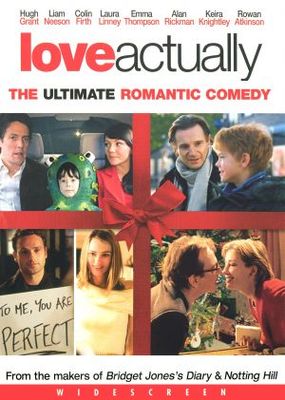
This is really an inoffensive, somewhat amusing, light-hearted, feel-good British comedy.

Love Actually
Love Actually is not the film I imagined it to be. I guess you can call it a romantic comedy and it seemed like a sensible film to watch on New Year’s Day. The cinema was packed which suggests we wen’t the only ones with that idea.
I should say from the beginning, it’s sentimental and feel-good. If those words put you off then you shouldn’t really see this film. I do think, however, that if you have ever (even once) got a little lovey-dovey then could go and see this movie and get something out of it.

It’s weaves a whole stack of separate stories together about people in love or finding love (and even out of love) with the backdrop of Christmas in London. Richard Curtis (of Four Weddings And A Funeral fame) makes his directorial debut and provides a very well-shot image of 21st Century London at Christmas. There are some really well-done sequences around the city which gives somebody like me – who thinks he’s seen all he wants to of London – something to smile at.

Having said it’s well-shot it is not without problems. Too many stories are intertwined leaving too many questions unanswered. When you leave a cinema questioning some of your understanding about who was who and where things were set you know that at some point this film failed. Why have the whole Wisconsin sequence, for example? And what happened to the Laura Linney parts – I suspect there is something on a cutting room floor that explains all that somewhere.

But don’t let that put you off. Liam Neeson’s storyline is great (even if it stretched believability a little), Emma Thompson is superb (and you will feel for her as she opens a Christmas present) as Alan Rickman‘s wife (he too stands out with a great, typical Rickman performance). Even Hugh Grant is believable as a Prime Minister who falls for his tea lady (Martine McCutcheon).

What I liked, although I have no idea if they will translate to the US, are the really British touches. Ant and Dec are the kid’s TV presenters; Jo Wiley is a DJ and Wes Butters does the chart run down for the Christmas Number One. And there wasn’t an over abundance of red London busses – which must be a first for British films.

This is really an inoffensive, somewhat amusing, light-hearted, feel-good British comedy and I hope it does well. If you read the message boards over at the Internet Movie Database you’ll read about people walking out in shock and disgust – which, if you’ve seen the film, is just as amusing.
The Quiet American

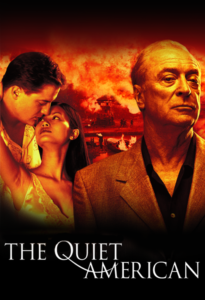
Michael Caine is excellent in The Quiet American.

The Quiet American

Thanks to the joy of dvdsontap, I have just watched Michael Caine in The Quiet American, the adaption of Graham Greene’s novel about an American spy, Alden Pyle (Brendan Fraser).

Pyle is a US agent who is backing an anti-communist force in Vietnam and befriends British journalist Thomas Fowler (Caine) before ending up part of a love triangle with a local Vietnamese girl, Phuong (Do Thi Hai Yen).

Caine was superb as the Saigon-based reporter – an understated performance that steals the show. The movie is well produced, and the atmosphere of the Far East is brilliantly portrayed. I would never have gone to the movies to see this, but I am so glad that I added it to the DVD list.

Downsize This!

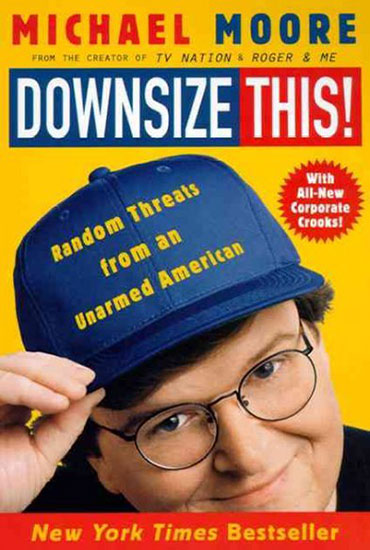
Inspired by Stupid White Men to read another of Michael Moore‘s books, I came away thinking that Downsize This was actually a better work. Sure, some of the scenarios are silly (‘What America Needs Is A Makeover’) and many of the examples a little dated (some have been overtaken by world events). It’s also true that some of humour doesn’t seem to sit well with the subjects but it is, nonetheless, a very welcome voice in the sea of opinions.

Moore does attempt to be humorous with his staple subjects: corporate greed and accountability, right to freedom/life and social and environmental responsibility. Like Stupid White Men the book makes subjects accessible that are often not covered by mainstream media.

If Stupid White Men has made you think about reading more then this is a good start if you’re happy to have many more American examples as the main topic. If you’re looking for something a little more British then this is not the book for you.

Read other people’s opinions at Amazon UK.

Stupid White Men

Probably the most famous of America Liberal thinkers at the moment, Michael Moore is a US treasure and they should treat him as such. Instead, the land of free speech tried to prevent this book being published following the attacks on the World Trade Centre.

Thankfully, this book made it out. It’s certainly very US centric (it was, after all written for that market) but many of the points apply too much of the western world. While suggesting that “we live in a society that rewards and honours corporate gangsters”, Moore does it with a humour that’s accessible and easily read.

Much political writing is hard to read whereas this written in small chunks and is easily digested. For those familiar with liberal writings much of Moore’s work may appear superficial but that’s to do with the style rather than the content. It is Moore’s style that has made this book number one on so many book lists but it’s the content that people will remember. For the British reader the challenge is to see where our democracy is following the US lead.

Why should you read this book? Because it puts the greed of the consumption society into perspective and genuinely makes you think about the society in which we live.

You can read other people’s opinions of the book at Amazon UK

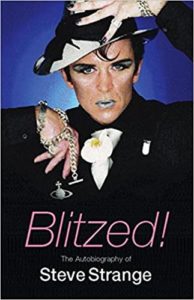
Elsewhere: Blitzed! The Autobiography of Steve Strange

In some respects it’s a fascinating tale of fame and hedonism. If, however, you’ve read biographies of other Eighties pop stars then you’ve heard a lot of it before. The story seems to have been repeated: humble beginnings drive creativity which lead to fame and then there is a some-kind of fa

I’ve just finished Blitzed! The autobiography of Steve Strange and posted my review to Amazon:

Steve Strange was an icon of the Eighties music scene, a visionary and a leader. I suspect he’s often over-looked but his contribution was vital. His clubs kick-started a movement and the band he fronted, Visage, were pioneers of – what became – the New Romantics: make-up, big hair, big hats and even bigger shirt lapels and cuffs. From the beginning of the decade, and out of the punk movement, came the classic Fade To Gray. Visage and Steve Strange were combining fashion and music in a radical new way.

Blitzed Book CoverBlitzed has an informal style which makes it quite readable. Strange name-drops his way through a decade and apologises quite a lot for his behaviour. It’s a cautionary tale of a rise to fame, money mis-management and drug addiction. It’s the story of London squats and club-land rivalry and of a community who knew they were changing nightclubs, the fashion scene and music – and doing it all in a few short years. It is a struggle to stop a man falling over the edge and trying to make sense of a life where once his name was in lights but the money is long gone.

In some respects it’s a fascinating tale of fame and hedonism. If, however, you’ve read biographies of other Eighties pop stars then you’ve heard a lot of it before. The story seems to have been repeated: humble beginnings drive creativity which lead to fame and then there is a some-kind of fall (usually, drink or drug induced). Blitzed is an enjoyable read but Boy George will give you more and Marc Almond will take you further. If you knew the club scene of the time there’s a insight into the door policies of the new breed of Eighties clubs and how they worked. If you are looking for the story of Visage then, obviously, it’s covered here and this will be a valuable reference – but it’s more about the man than the band.

If you remember the decade then you’ll read this book regardless but, sadly, I felt there could have been a little more. Nonetheless, Blitzed reinforces Steve Strange’s rightful place as a leader of a movement who’s certainly not about to fade away.

You can buy Blitzed!: The Autobiography of Steve Strange at Amazon now.

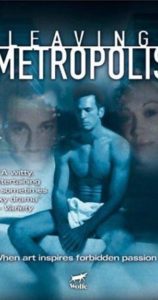
Leaving Metropolis

Sometimes, I get a block when trying to write about the films I have seen. Usually, that just means I end up with quite a short entry. However, with Leaving Metropolis, I am going to sum up the film in the words of a reviewer at IMDb:

This film is basically a gay love triangle. David is a famous painter with “painter’s block.” He has a live-in, HIV-positive, pre-op transsexual black live-in friend, Shannon. He has a famous-newspaper-columnist fag-hag friend, Kryla. To get his muse back, David decides to become a waiter again. He ends up waiting tables at a small diner owned by Matt and Violet, a married couple (recently married? it’s not clear). David is immediately attracted to Matt. Soon, as David encourages Matt’s secret talent for drawing comic-book characters and boosting Matt’s self-esteem, Matt begins to fall for David. David then paints a series of erotic images of Matt. The film ends predictably enough: Lots of tragedy (divorce, death, friends falling out, etc.) but also a “hopeful ending” (everyone starts over anew).[Source]

It’s an enjoyable fantasy ride of a film, well-made with interesting characters. Matt (Vince Corazza) holds the screen well and is certainly worth seeing.

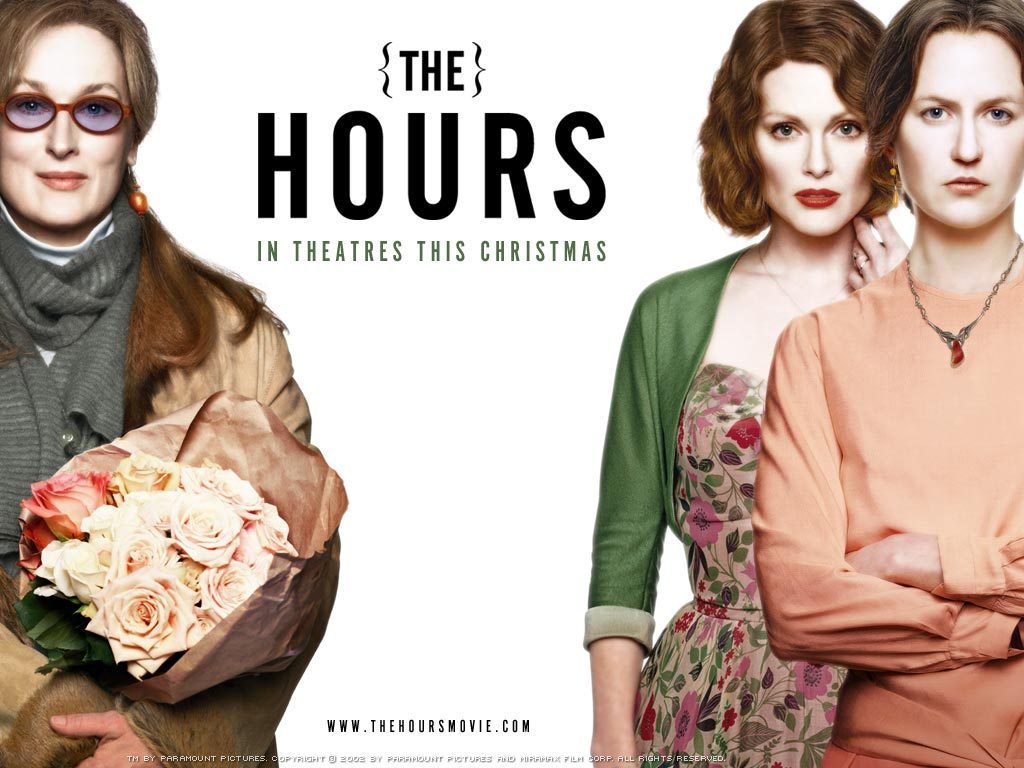
The Hours

The Hours

I came out of The Hours somewhat stunned. This is a remarkable film and I thoroughly enjoyed it. Nicole Kidman, Meryl Streep and Julianne Moore are all superb and utterly believable. The link between the three (Kidman as Virginia Woolf, Moore as a 1950s depressed housewife and Streep as a confident modern woman) are seemingly only linked by a book – Mrs Dalloway.

The lives of the three are crumbling in various ways and this conveyed well on screen. Kidman –hardly recognisable thanks to great make-up –is superb and going slowly mad in 1920s Richmond. Moore’’s character appears to have feelings of worthlessness while Streep is coping with modern day New York while her relationship seems to be going nowhere and a good friends suffers with AIDS.

This isn’t a happy film. Many of the scenarios are quite sad but it isn’t really a depressing film either. It’s engrossing and engaging and even the supporting characters are played brilliantly.

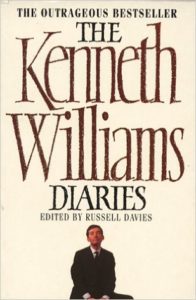
Elsewhere: The Kenneth Williams Diaries

The diaries are very well written and Davies’ editing not intrusive. Williams certainly didn’t appear to edit himself and the result is a frank and articulate book.

In my quest to ensure that I review every book that I read for Amazon (because I find other people’s reviews very useful) I’ve added my latest. It’s for the Kenneth Williams Diaries. I seemed to be reading them for ages – there are forty years worth of entries. It’s interesting for me because, during the time I was reading them I have also been maintaining this blog. While this isn’t quite a diary, the process is very similar and one paragraph in the diaries struck me as interesting:

The preoccupation with diary writing is caused by various things: the desire to keep a record which can be useful later, and committing to paper what can’t be communicated to a mentor … oh! all kinds of reasons, but fundamentally it is about loneliness.

Is it? Maybe it is. Who knows?

The Kenneth Williams Diaries, Edited by Russell Davies (Harper Collins, 1993)

Kenneth Williams DiariesI honestly think Kenneth Williams was unique. He certainly seemed to hate much about himself and didn’t have a great deal of time for a lot of other people. Sadly, the Diaries’ reputation precedes them and I expected more of the bitchiness that he is – supposedly – famed for. Despite that, there is plenty of Kenneth’s acid tongue in this book. His barbs are aimed squarely at his fans, his colleagues and the shows he felt obliged to work in. Some of the most intriguing insights are those that relate to the Carry On film series. Before Carry On made him famous, he was a well-respected stage actor. The Carry On films made him legendary (and wealthy) but he often felt they were beneath him.

Kenneth is well aware of his own nature. On 20 March 1987, he writes, “Everyone was v. nice to me … it is extraordinary that I’m so liked because I’m invariably rude & tetchy”, and that sums up much of the book. You get a sense of love for the theatre, plays, and poetry and even for some of the work. However, he is also offensive to many and seemed to have few good words for much of British Theatre. Much of the hate stems from inner turmoil over the lack of companionship in his life (“Never to speak of my love for a man”) and from the frustrations of his nature. Obsessed by noise and cleanliness, the very act of living seems painful – and in the end, his illness and genuine pain appear to get too much for him.

The diaries are very well written and Davies’s editing is not intrusive. Williams certainly didn’t appear to edit himself and the result is a frank and articulate book. Words seem to flow easily which is, perhaps, not surprising for a man who made a living in the final years of his life from his large collection of humorous anecdotes. Spanning over forty years it’s hard to keep track of the players in Kenneth’s life and at 800 pages it’s not a light read. Nevertheless, the diaries are a vivid, malicious and (at times) very funny read into the world of a man who, in his day, was considered outrageous.

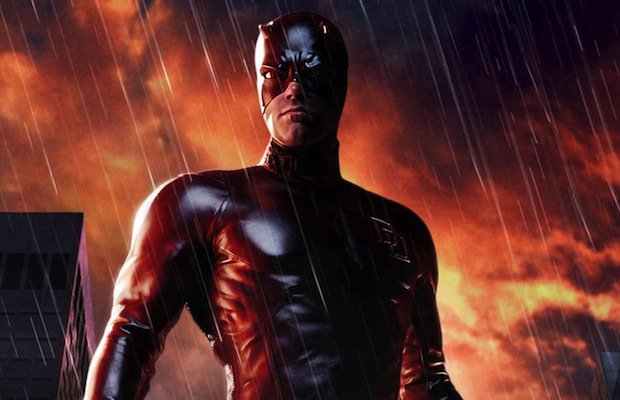
Film: Daredevil

I really can’t be sure what made this film fail for me. Maybe it was too dark for a super-hero flick or maybe that the story was not compelling. Maybe it was the fact that at least one villain survived for a sequel in a far too obvious fashion.

I was very surprised that I did not enjoy Daredevil more. It’s darker and more disturbing than many a super-hero flick and while this, for some, may be the appeal, it just didn’t do it for me. It’s also oddly constructed. We first meet the superhero as he collapses on the floor of a church. Why? Well, he’s halfway through a battle with one of the villains – Bullseye (an Irish hitman capable of killing talkative old ladies on planes with nothing more than his finger and a peanut).

And so the film lurches backwards as we are told Matt Murdoch/Daredevil’s story. He grew up with his father -a boxer – and singled out for the bully treatment when he was a kid. Blinded in a dockside accident by a hazardous chemical, Daredevil’s face remains remarkably unmarked as he matures in the talented pro bono lawyer played by Ben Affleck.

Once the Flashback sequence is over we return to our hero in mid-Organ scaling (as in church organ) battle. Who considered the middle of the narrative a sensible place for us to join? I guess it has worked before, but not here. In true super-hero style, our almost dead star rises and battles to the end. Of course, as in all such movies one wonders why the world hasn’t worked out that Matt Murdoch and Daredevil are the same. They are Ben Affleck in red leather.

Ah, dear Ben. I appear to be in the minority who were not convinced by his portrayal of a superhero. He was too “leading man in a romantic comedy” for me, despite the tight leather gear, which didn’t seem to turn him into the sex-hunk that I thought it might – Chris O’Donnell looks better in tight leather in Batman and Robin. Colin Farrell tries hard to be brutish with sex appeal, and he almost pulls it off, especially considering the target on his forehead isn’t really that great to look at.

I really can’t be sure what made this film fail for me. Maybe it was too dark for a superhero flick, or maybe the story was not compelling. Maybe it was the fact that at least one villain survived for a sequel in a far too obvious fashion. Daredevil may be a comic hero, but you don’t have a super-hero “thing” to latch on to (Superman flies, Spider-Man has a web, and Batman has a utility belt). Daredevil’s other senses are enhanced. Big wow. Maybe it was the violence that felt too real and not comic-book enough, or maybe it was that the supporting characters never really moved from being one-dimensional support.

I guess, in the end, I would have been disappointed if this crime-fighter had come to my rescue. I’d have been happy with Batman, thrilled if it was Superman and delighted if Spider-Man liberated me. If Ben turned up in red leather, I just might have laughed.

Pop

I am currently listening to pop. This is a difficult thing to write. Pop is not considered to be a credible music genre by people who listen to lots of music. Pop is considered the home of the boy band. Pop is the cheap and nasty side of music.

I am currently listening to pop. This is a difficult thing to write. Pop is not considered to be a credible music genre by people who listen to lots of music. Pop is considered the home of the boy band. Pop is the cheap and nasty side of music. People, especially people of my age, should have grown out of pop, but I have not. I enjoy the throw-away nature of it. The three-minute perfect pop song can take you away from your day and, if this week’s other entries are to be believed, away from your fellow commuters.

Actually, I hope, the current music I am listening to is considered the good side of pop (see, I am joining in the criticism of the genre). Not for me the sounds of the Cheeky Girls or S Club Juniors. No, I hope my current selection is a little more discerning.

I own a reasonable amount of music but I don’t purchase CDs weekly like some people. But I am listening to three recent albums which must be the first time that has happened to me in a long while. My current favourite is Justin Timerlake’s Justified. That is followed closely by Erasure’s new release (just last Monday), Other People’s Songs. Finally, I been unable to resist Will Young’s From Now On. Yes, unable to resist!

Continue reading “Pop”

Film: 8 Mile

I have no idea if this in any way reflects real life in downtown Detroit. I have no clue if rap culture is, in any way, well served by his film but it is a great movie which I thoroughly recommend.

I walked out of the Odeon loving Eminem’s 8 Mile. On reflection, I still think this is a great movie. Who cares if it’s Saturday Night Fever or Karate Kid for a new generation? Does Eminem’s apparent turn around about all things gay worry me? Not at all. This is an excellent film. I do, however, have one question, where are all the guns?

I have never visited Detroit nor any of its downtown neighbourhoods. Fortunately, I’ve never been in the middle of any kind of big gang culture. But in this movie, there were two guns (three if you count the paint-ball). One is pulled on Jimmy (Eminem) and one is waved around by Cheddar Bob, who promptly shoots himself while those involved in the gang fight around him look on like they’d never seen a gun. If I were to believe the news media, this place would have been crawling with weapons and Jimmy would have probably pulled several on his attackers. A movie for nice liberal sensibilities? It just struck me as odd. Perhaps it’s real, but it seemed wrong.

That is, however, but a small gripe. Like yesterday’s film, The Good Girl, we have a central character with an apparently dead-end life but dreams of something better. This time, the lead is surrounded by people who believe in him although he doesn’t believe in himself. The final battle, where Jimmy – or Rabbit – proves himself to be great, is a freestyle rap event that is so far removed from anything in my life or frame of reference that I have no idea if it’s believable, amusing or insulting. Having said that, it is a great conclusion to the movie and had me hooked.

Surprisingly, Eminem’s music doesn’t dominate the movie. I was slightly disappointed there wasn’t more. We first hear his musical talents when he sings a lullaby to his sister. A repositioning of man whose music has been the centre of controversy for years? So, if we don’t get to hear much of his music, how does he stand up as an actor? Pretty well, I would have said. His baseball-cap (and hood) mask much of him revealing only a cool, moody, brooding man writing rap lyrics on scraps of paper to music pumped into his head through headphones. As the movies is apparently based on some of his own life, I suspect this wasn’t a great leap for him to play. He does pull it off with conviction and you can take the journey into Jimmy’s world and lose sight of Eminem. I’d be interested to see if he acts again and with the huge box office takings predicted, most will bet he will.

I have no idea if this in any way reflects real life in downtown Detroit. I have no clue if rap culture is, in any way, well served by this film but it is a great movie which I thoroughly recommend even if you are asked to believe that, when life hits rock bottom, you’ll win on the bingo.

Film: The Good Girl

Good. But not good enough. While Aniston is good, she is not great. It seems much of the praise is due to the fact that she is playing against the Friends Rachel-type. She an actress for goodness sake, if she only has that one role she has no career. This role proves she can play against type and, I guess, that means she is an actress.

What has surprised me about Miguel Arteta’s The Good Girl, starring Jennifer Aniston, are the generally positive (if not glowing glowing) reviews for this film.

Admittedly this is not quite the Jennifer Aniston vehicle that you would expect from Hollywood right now. It’s no romantic comedy, rather a drama following Justine (Aniston), a woman in a dead-end job in a dead end town, who falls for Jake ‘Donnie Darko’ Gyllenhaal’s Holden Worther. Not much to it so far and certainly not enough reason for the praise.

So, to the plot. Problem one for our lead, Justine is married to a full time stoner (part time painter) played with conviction by John C. Reilly. Problem two, Holden seems to think he is Holden Caulfield, the central character in Catcher in The Rye. If I was to say he was “unhinged” I’d be playing it down. So, cue a crisis of conscience for her and a serious infatuation/breakdown for him.

While Aniston is good, she is not great. It seems much of the praise is due to the fact that she is playing against the Friends Rachel-type. She an actress for goodness sake, if she only has that one role she has no career. This role proves she can play against type and, I guess, that means she is an actress. Her narration is okay but somewhat draining to listen to. Gyllenhaal’s good but, given the characters are odd-balls not a million miles apart, he is not as engaging as he was in Donnie Darko.

I guess it hangs on the believability of the adulterous relationship and, for me, it was not that credible. Perhaps it hangs on the ability for Aniston and Reilly to be a couple at the end, but it’s not convincing. There were words unspoken which should have been spoken. Where are the sparks? Where was the fire and the passion between any of the characters?

Sadly, it lacked the ability to engage me for the one and three-quarter hours. Which meant I started to feel the cinema seat beneath me. At that point, I knew this wasn’t going to be added to my “greatest films” list. Which is a shame. Good. But not good enough.

The Lord of The Rings

There are, perhaps predictably, few surprises in this second film. However, it remains a stunning piece of cinema and one that I will certainly see again and again.

Being New Year’s Eve I decided to hide away from some excessive partying and see Lord of the Rings: The Two Towers in central London.

The second cinematic instalment starts more-or-less at the point we left of with Frodo dreaming of Gandalf’s fall. I began by thinking we were in for a decent length of re-worked footage from the first film but, of course, I was wrong.

If you haven’t seen the first film and haven’t read the books you will need to do one of them before seeing this film for no concession is made to explain the previous tale. Thus, we must accept that the Fellowship is now split into three and we have three stories.

Frodo and Sam’s tale gets darker as the film progresses as Frodo comes under the influence of the ring. They are joined by Gollum which is a superb character despite being a computer-generated image.

The second group of Aragorn, Gimli and Legolas go in search of Merry and Pippin only to find themselves rushing to the aid of King Theoden of Rohan and featuring some amazing battles sequences. Merry and Pippin themselves find the company of the Ents whose role seems to have been played down in the film. The Ents are my favourite characters from the books and I had been waiting to see if they could be brought to life convincingly on the screen. Peter Jackson has done an amazing job on them and I was only saddened that they didn’t appear more.

There are, perhaps predictably, few surprises in this second film. There is little to discover in the central characters and, with perhaps the exception of Gollum, very little seems to be learnt about newer characters. However, it remains a stunning piece of cinema and one that I will certainly see again and again.

The Guardian has a summary of the main players. Other reviews can be found at Empire Online and Teletext.

Die Another Day

Bond has been around for 40 years. Is he sill up to it?

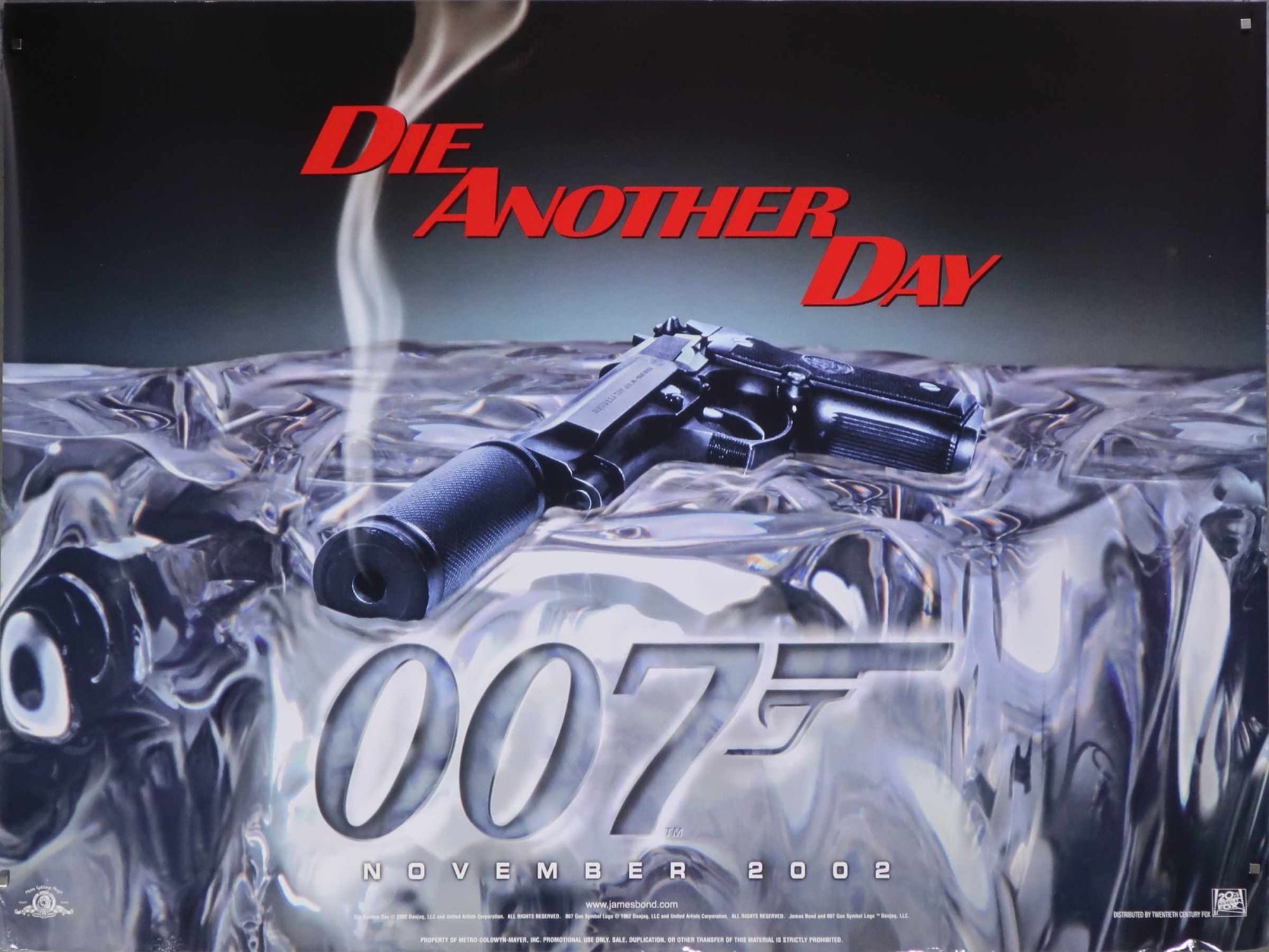
Die Another Day film poster

I saw the new James Bond film today. Apparently, Bond is 40 – which means the formula has been around for a while. Die Another Day is as cheesy as many a Bond, yet it remains an entertaining cinema experience. I’m sure, however, that it won’t be voted a classic. It’s less secret-agent more agent-detective and the Bond-girls are now more MI5-partners (or more accurately NSA-partners). There are some fantastic scenes on the ice (using The Eden Project as a backdrop) and gadgets galore. If I had any complaints about the film it would be the quality of some of the effects which is, to say the least, not up to standard. [Official Site]

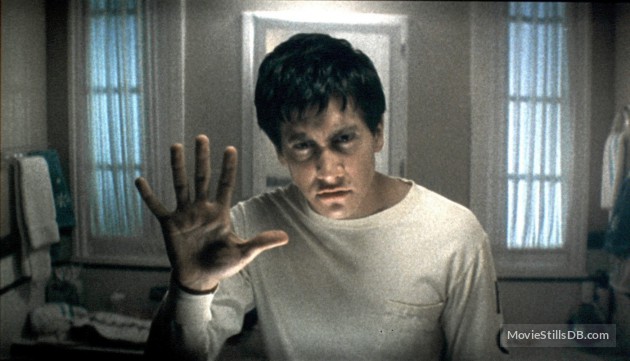
Donnie Darko

The Guardian said, Is it a horror film? A black comic parable of Generation X angst? A teen drama with a psycho edge? If not, what the hell is it?

Possibly the strangest and most compelling film I have seen all year and it’s not had a great deal of coverage. Donnie Darko’s website is very wierd and I am not sure you’ll get much from that. Tom, on the other hand, raves about it. You can read more reviews here or at The Guardian. I can’t explain it. Go see it.