Hidden Holborn

Holborn is the only London Underground station with two hidden closed platforms, unnoticed by passing travelers.

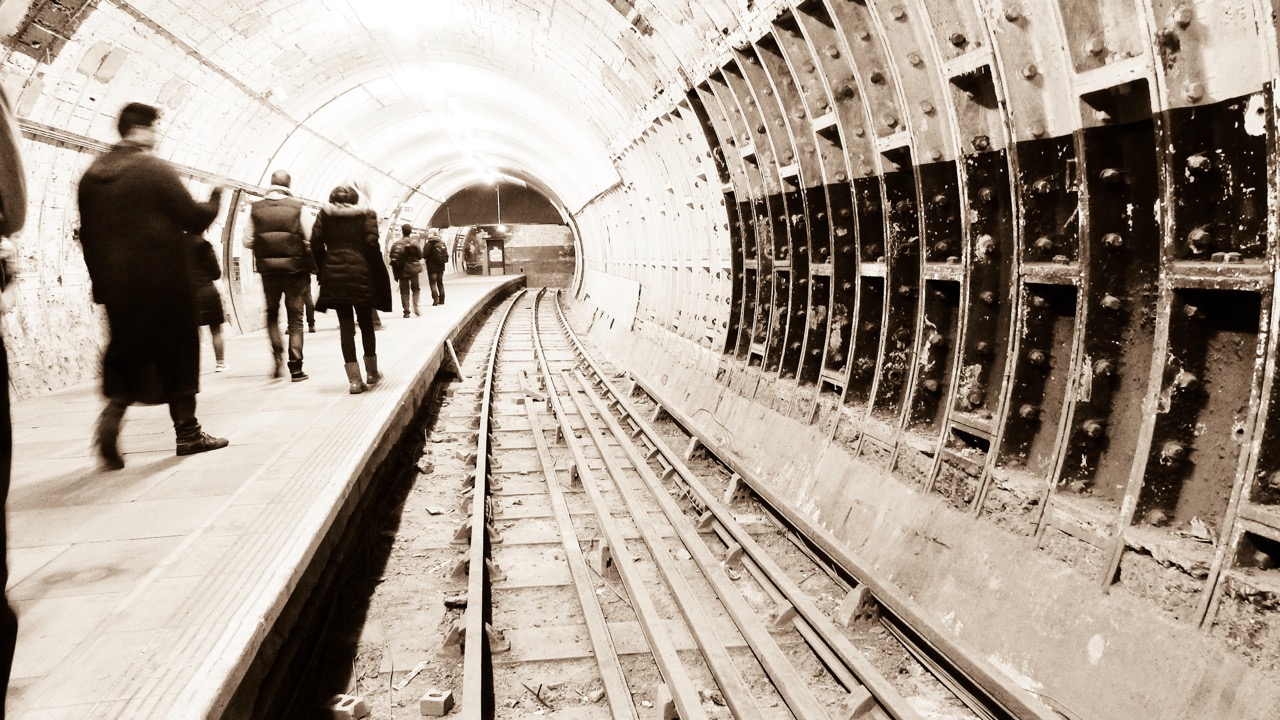
Looking down the illuminated tunnel to Aldwych
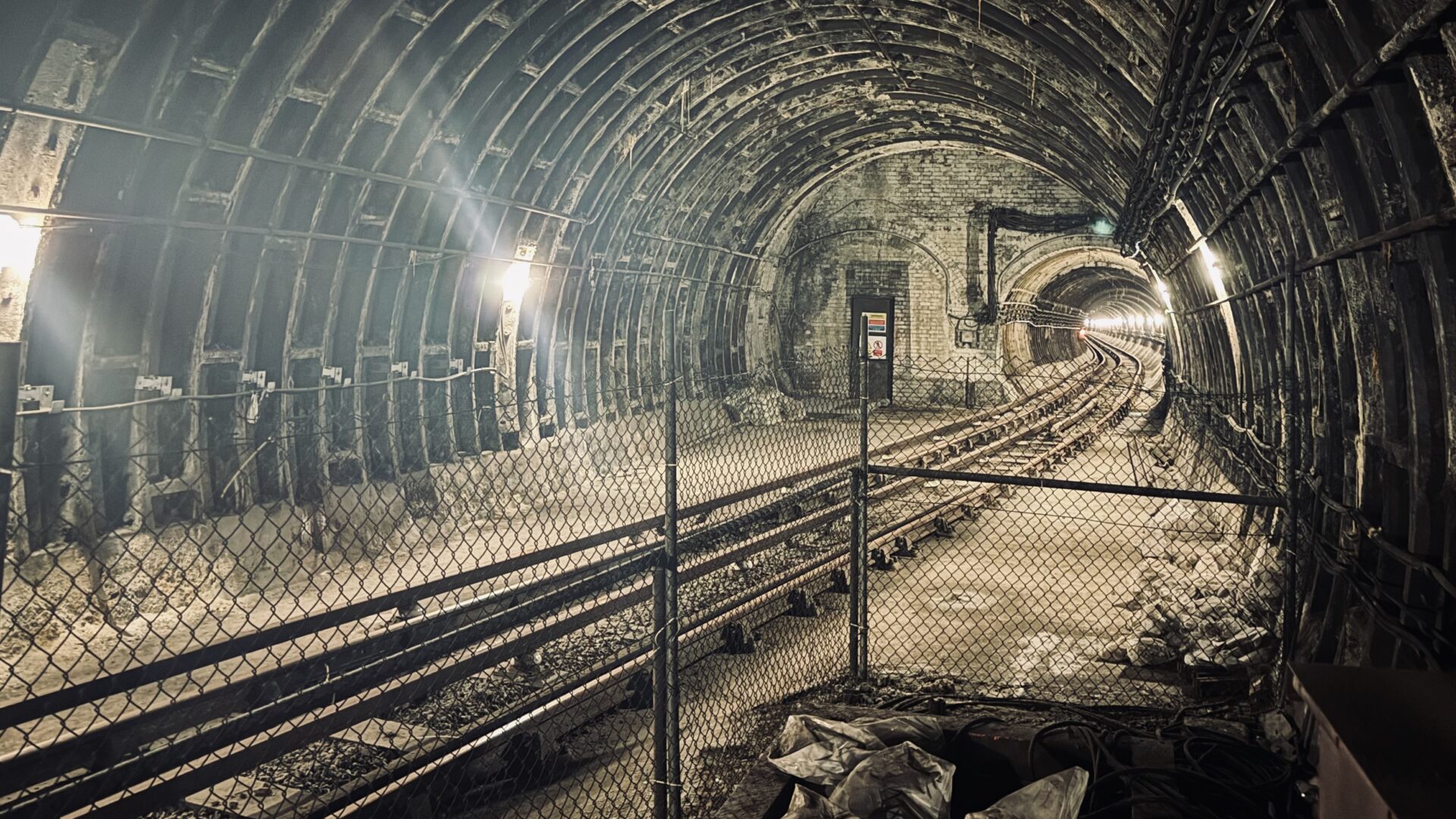
Branch line to Aldwych

In 2015, we embarked on our first ‘Hidden London’ tour, exploring the former Jubilee Line platforms at Charing Cross. It was fascinating to see these platforms, now hidden from public use, preserved in a time warp. It felt surreal to stand just beyond a ventilation grille, watching passengers and trains in the active station while feeling like both a spy and an archaeologist. The knowledgeable guides, who shared the rich history of London’s underground, made the experience even more engaging.

Since then, we’ve followed up with tours of other disused stations, such as Aldwych and Down Street, as well as behind-the-scenes visits to LU headquarters at 55 Broadway and unused parts of stations like Euston, Piccadilly Circus, Moorgate, Highgate, and Shepherd’s Bush. During the lockdown, we even took a virtual tour of the former tram tunnels under Kingsway.

During one of these tours, we learned that, at the end of the nineteenth century, London County Council initiated a redevelopment scheme in the Aldwych and Kingsway areas. This project aimed to clear slums, stimulate development, and create broad boulevards, which ultimately led to significant changes in the area. As part of this redevelopment, the Great Northern Railway management extended their planned railway to the Strand, naming it the Great Northern & Strand Railway. However, construction was delayed due to insufficient funds. When the plans finally materialised, Holborn station opened on 15 December 1906 on the Great Northern, Piccadilly, and Brompton Railway. The extension to the Strand came later and was eventually constructed as a branch line rather than a terminating station on what is now known as the Piccadilly Line.

Earlier this year, the London Transport Museum advertised a Hidden London tour of Holborn station, and I eagerly signed up. Today, we met a group of fellow enthusiasts around 10 am outside the station. It seemed everyone in our group had previously been on one of the ‘Hidden’ tours.

During the Aldwych tour, we learned that the branch line closed on 30 September 1994 due to the estimated £7 million upgrade costs, which would have supported just 450 trips a day. As the system was considered to be in managed decline, the expense couldn’t be justified. This closure left two platforms unused, and we had the opportunity to explore them.
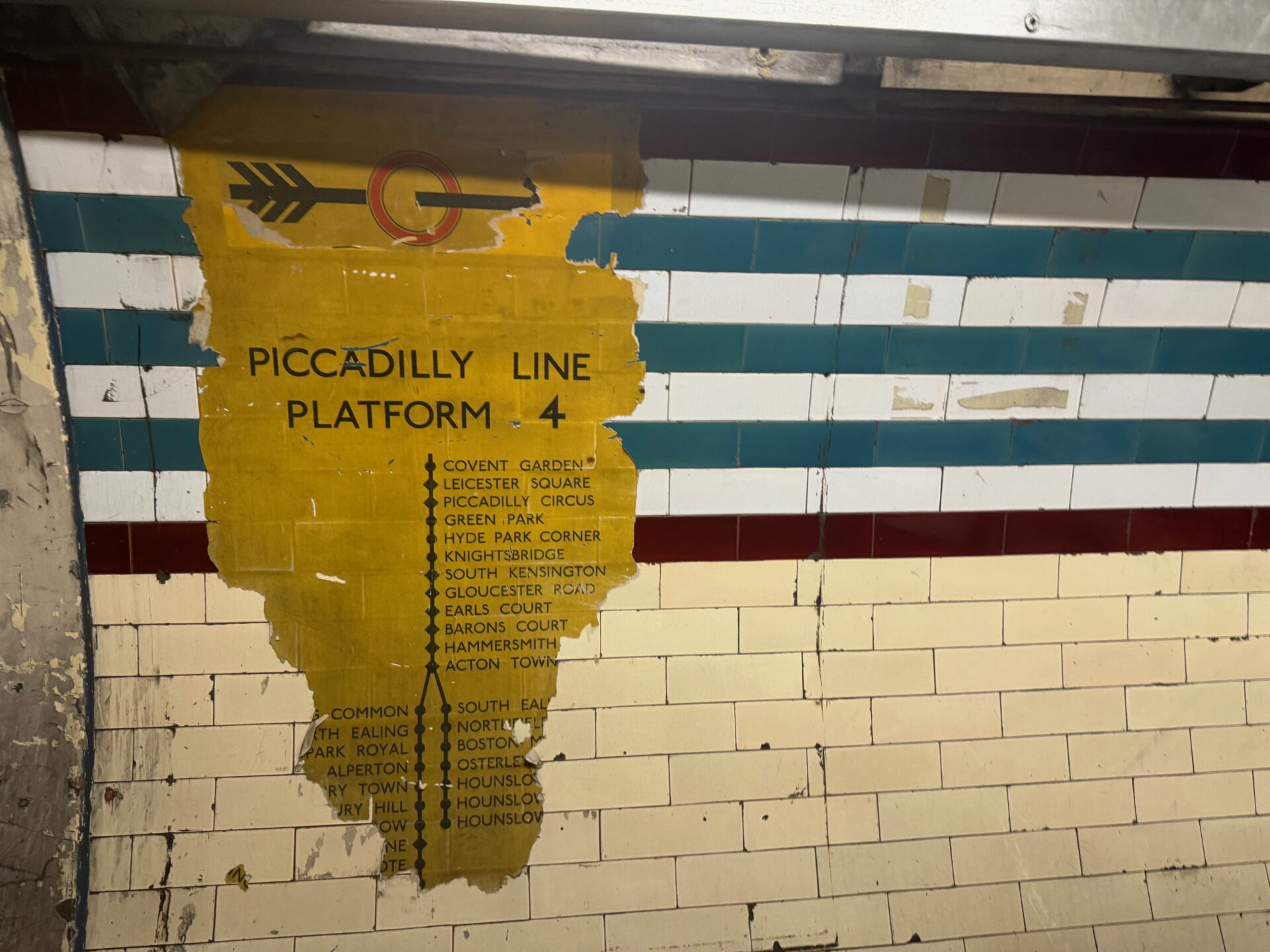
A poster featuring a list of Piccadilly Line stations from before World War 2
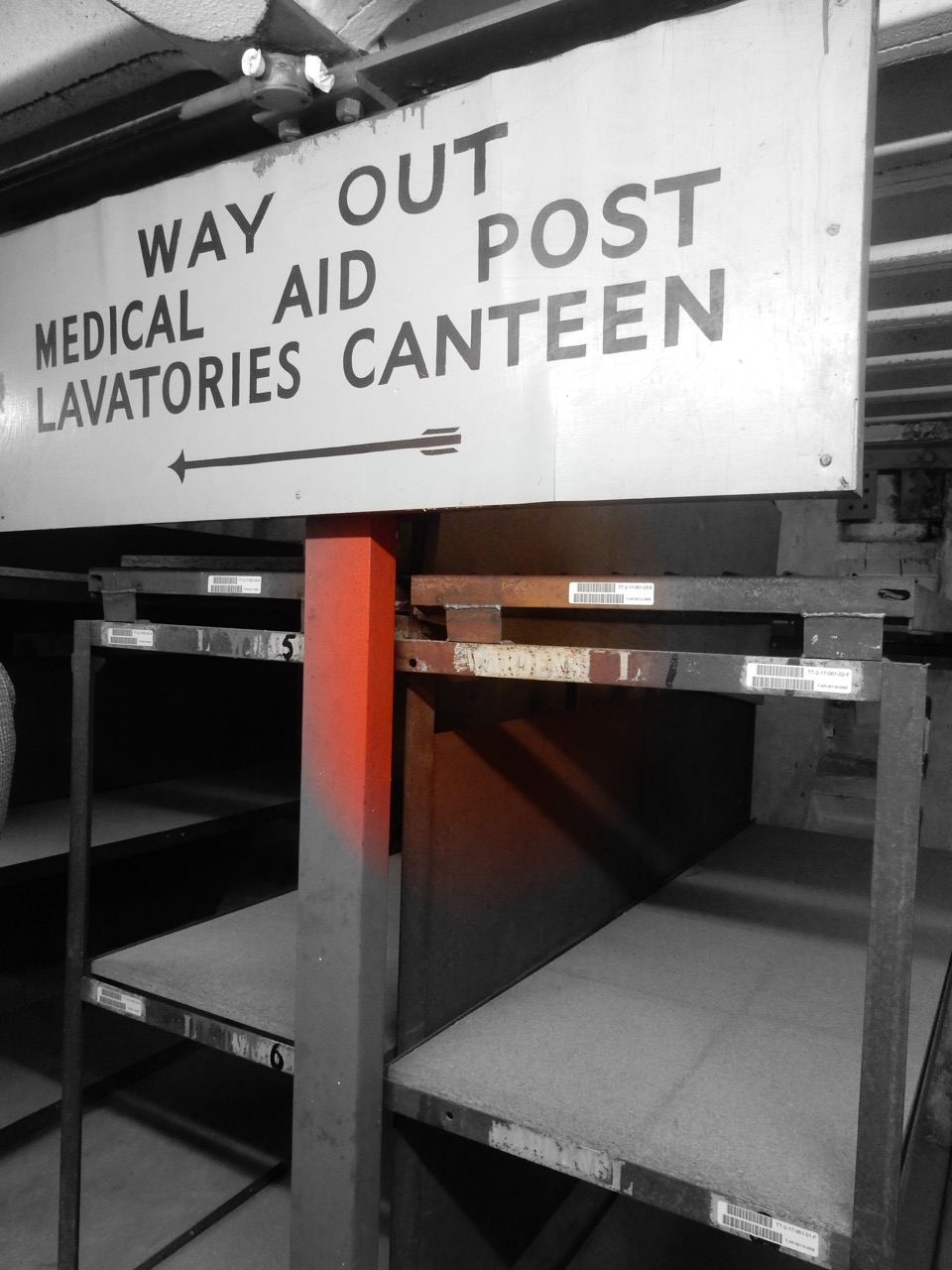
Pre-war Wayfinding on the Piccadilly Line

One of the platforms remains recognisable, featuring the sole remaining ‘Holborn (Kingsway)’ roundel attached to the wall. Like other disused platforms we’ve visited, it occasionally serves as a mock-up for experimental equipment and signage. After its closure, it was also used as a filming location, notably for the music video of the 80s classic “New Song” by Howard Jones.

We also learned about an experiment involving water pipes to cool the underground and saw test signage showing a ‘St Paul’s’ platform edge sign above the familiar Holborn roundel. Pre-war Piccadilly Line wayfinding signs were also on display, and we peered down the still-lit line to Aldwych. Sadly, the station’s ‘bird’s nest’ control room, once used for early CCTV tests, is no longer there.
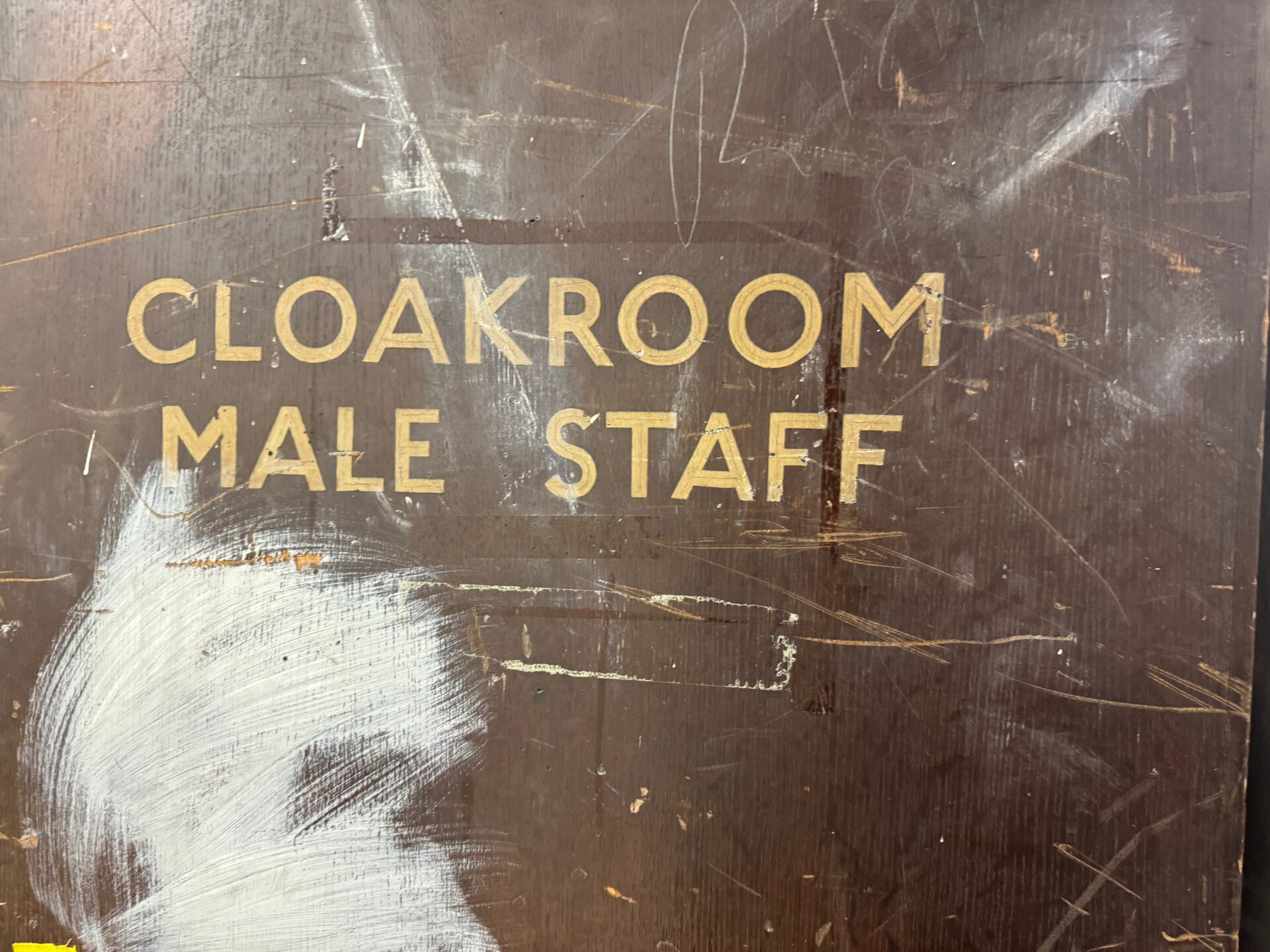
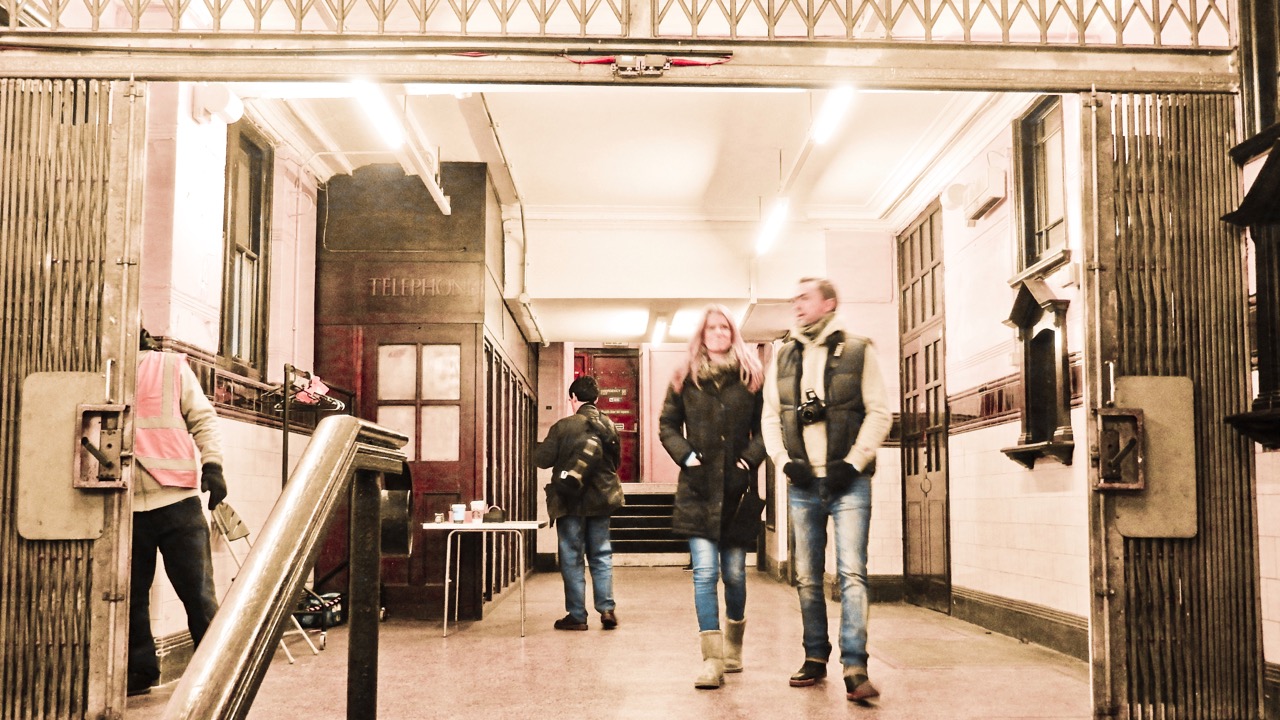
A cloakroom sign on a wooden door. The rooms here were added when the platform closed.
The rooms here were added when the platform closed

The other platform had closed much earlier, as the branch line was underused from the start. Through a flood defence door installed during the war, we saw the crossover lines where trains could be directed down one of two tunnels towards the Strand. Much of this platform had been filled in, and one of the tunnels was repurposed as wartime art storage and never returned to service. The filled-in track bed was used as accommodation and shelter during the Blitz but is now a concrete walkway. A corridor of rooms, once used as a cloakroom and later by a model railway group, remains empty and unused. It’s always fascinating to see how much under-utilised space lies beneath London.

As I wandered through these hidden spaces, I couldn’t help but wonder if a branch line from Strand might have gained popularity as tube usage surged in the current millennium. Could it have been viable with an extension beyond Strand to Waterloo and the south?

There are still unfunded plans for station improvements and a new entrance to ease congestion. Of course, the station has seen upgrades before. It was connected to the Central Line on 25 September 1933, the day after the British Museum station closed. Unfortunately, it’s unlikely there will be a Hidden London tour of that station, as the above-ground facilities have apparently been demolished.
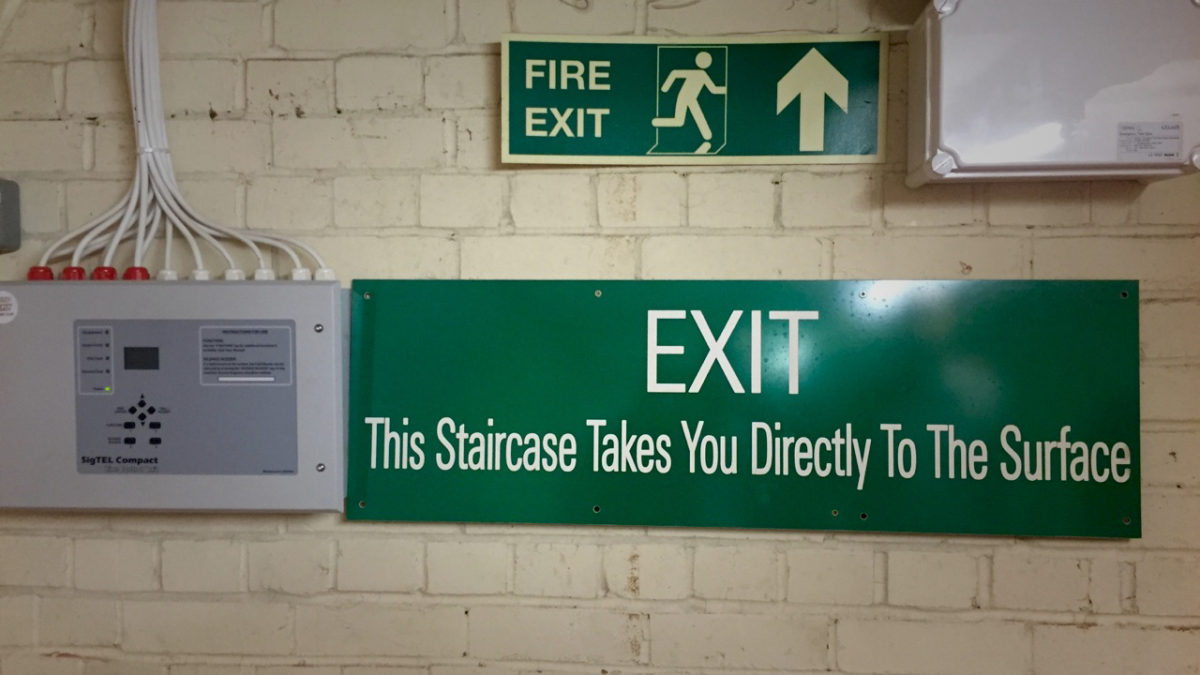
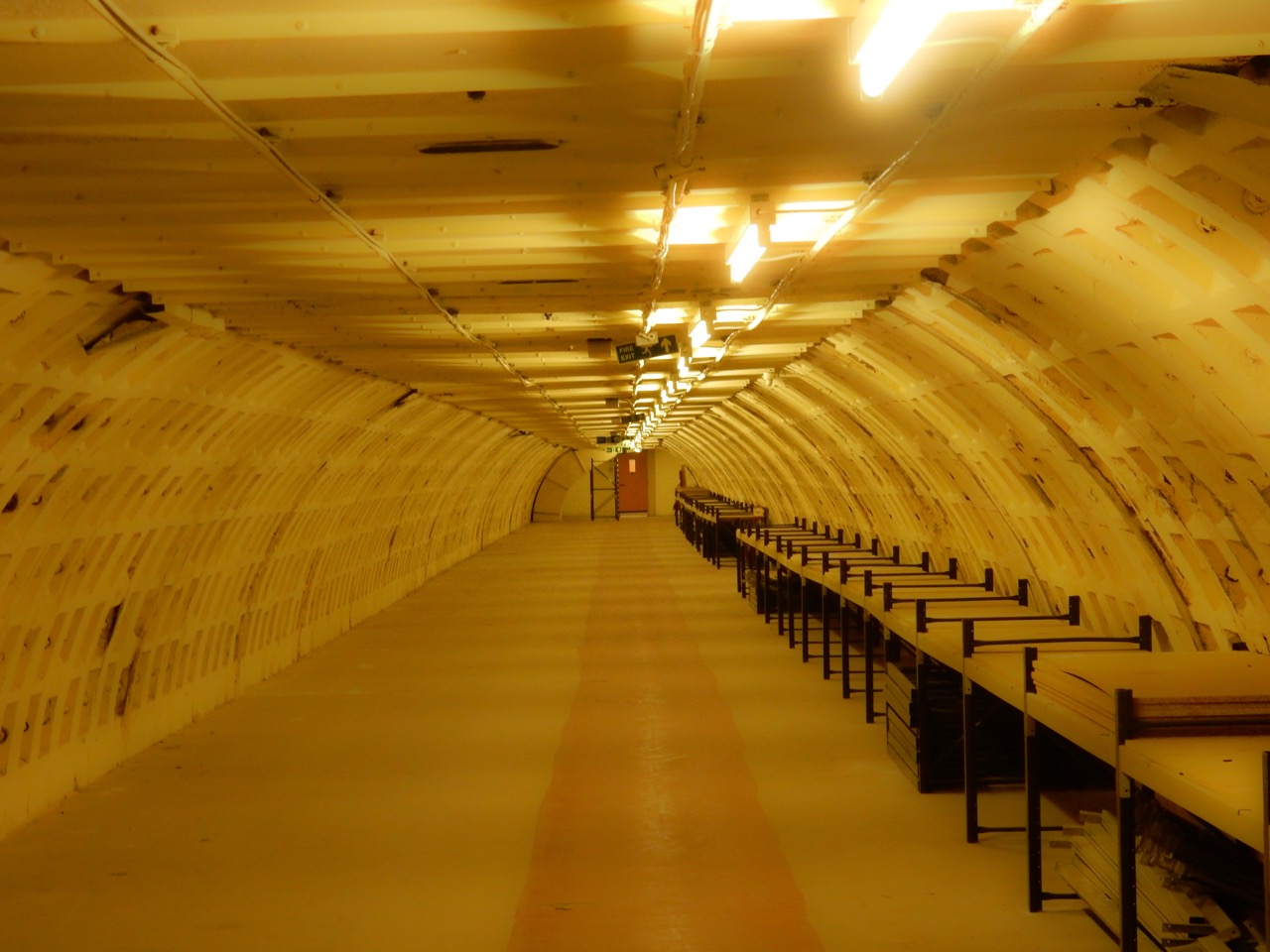
Hidden London: Clapham South Deep Level Shelter

Going down 180 steps at Clapham South was hard on the knees, but it was a fascinating glimpse of the London hidden below ground.

Each morning as I walk across the Thames, I look to my left and see the sights of St Paul’s Cathedral, the Gherkin and Canary Wharf. It’s an amazing – almost iconic – skyline.  Although radically changed by modern skyscrapers, can you imagine what it must have been like just over 70 years ago, when a hundred or more doodlebugs, or the V-1 flying bombs as they were more officially known, could be filling the sky and you didn’t know what their target was.1

Early in the Second World War, London had been bombed by the German Luftwaffe – a period known as the Blitz. Despite early attempts by the government to lock them, Londoners took shelter in many of the city’s Underground stations. In addition, parts of the Underground were used to store national treasures.  Today it’s on an unused branch line, but in the 1940s Aldwych tube station, which I visited once before, protected artefacts from the British Museum from the damage aerial bombing could inflict.

At the height of the bombing, the public demanded that the government provide more shelters. The government turned to the London transport authorities – who had the technical experience building below ground – to build new shelters. And, even though the bombing raids over London had subsided, a total of 8 deep-level shelters were built (although 10 had been commissioned). All the new deep shelters were built near existing tube stations: the unrealised dream being to bring them into service as railways post-war.

The shelters were eventually used for their intended purpose in the latter years of the war when, in June 1944, the flying bombs were sent to attack the city.

Last Sunday, as part of London Transport Museum’s Hidden London series,2 I visited the deep-level shelter at Clapham South. The above-ground pillar box can still be seen just around the corner from the existing tube entrance. The shelter is connected to the station, but the walls have long since been sealed, forcing visitors to descend (and return later) via an 180-step spiral staircase. The lift, it appears, is either not in working order or no longer fit for public use. It’s not easy on the knees but, somehow, not quite as many steps as it sounds.

Clapham South Deep Level Shelter

Below ground is a fascinating place. Wartime pictures of the shelter show the kind of Blitz-spirited Londoners that only seem to appear on old newsreel films.3 In reality, the space built for almost 8,000 people must have been cramped, crowded, smelly and – probably – very loud. Even with the welcome addition of the canteen-served jam tarts that were not subject to the ration book, I can’t imagine it was the nicest of places. Admittedly, the feeling of 120 feet of earth above you probably went a long way to making it a sanctuary from the horrors above the ground.

DSCN0755-7

The tunnels through which you are escorted on the tour are astonishingly clean & tidy – having been most recently used as a secure archive storage facility – but it’s clear from the remaining bunk beds that life would have been cramped. Row upon row of the stacked bunk beds could have given almost 8,000 people safety in the Clapham South shelter; your particular bunk was marked on the ticket required to access the shelter. Most people would have to bring their belongings down into the shelter each time they went; exceptions were made for people whose houses had been destroyed by the war. That’s 180 steps with mattresses and other personal items that you wanted to keep with you.

Post-war, the shelters were used as a hostel for visitors to the great exhibitions of the Festival of Britain in 1951, places for incoming migrants to stay until they found permanent accommodation or as army barracks. In later years, the Clapham South shelters were the aforementioned storage facility, while a nearby tunnel, which you don’t visit, is today used to grow salads under LED lighting.4

Walking across the Thames bridges in the August sunshine is a world away from the realities of wartime in the city: the Hidden London deep-level shelter tour is a small but important reminder of what people went through and a fascinating insight into the ingenuity of the city to protect citizens in more difficult times.

Hidden London

If you’re interested in the Hidden London series of tours, visit the London Transport Museum site to see when the next series is scheduled.

About BEWA 2016

BEWA (Blog Every Wednesday in August) is a project aimed at getting me writing in a blog style again. I wrote an introduction to kick the series off while the first proper entry championed an Olympic legacy.  The third discussed my fascination with location data, while what should have been the fourth entry was more of an Oops. There is a page with the #bewa collection (including those from last year).  Fingers crossed I am back next week. I’m sure @curns will mention it.

Footnotes

1 V-1 flying bomb, Wikipedia
2 Hidden London, London Transport Museum
3 Clapham South Deep Level Air-Raid Shelter, Subterranea Britannica
4 Growing Underground: A Visit To Clapham’s Deep Level Farm, Londonist

Hidden London: Aldwych Underground Station

I took another tour of a hidden London Underground station last weekend. This time, it was Aldwych (formerly Strand) station, which has a fascinating history. Originally planned as the terminus of the Great Northern and Strand Railway, even by the time it opened in 1907, it was a little-used spur of – what is today – the Piccadilly Line.  Closed in 1994, Aldwych can still be seen in films and TV programmes and, very occasionally, as part of a Hidden London tour.

Fearing that the station would be little used, economy was sought during construction. Only one set of stairs & passages to the platforms were completed. The eastern platform was not used for trains from 1914 onwards.

Fearing that the station would be little used, economy was sought during construction. Only one set of stairs & passages to the platforms were completed, and only about half the platform area (at the south end where the short trains would stop) were tiled. The remaining passages were left incomplete and never opened, all passengers using what would have been the exit passages to access platforms and lifts …

The Aldwych branch was never well patronised. Before the time of its closure only 450 people were using the branch each day. From June 1958 the line began operating only in rush hours as off peak traffic was almost non-existent. The line was considered for extension to Waterloo on many occasions throughout its history but due to financial limitations and lack of demand, this extension never came to anything.

There are a few more pictures in a Flickr album: https://flic.kr/s/aHsksZdTtV

The station was originally called Strand but was renamed Aldwych in 1915 when the nearest Northern Line station became Strand (now, that’s Charing Cross)

Footnotes

Source: Hidden London: Aldwych Closed Station, © London Transport Museum, p3/p18