Do you know your Iceland from your Greenland? If you are trying to get your hands on land, it would be sensible to know which land you are getting.
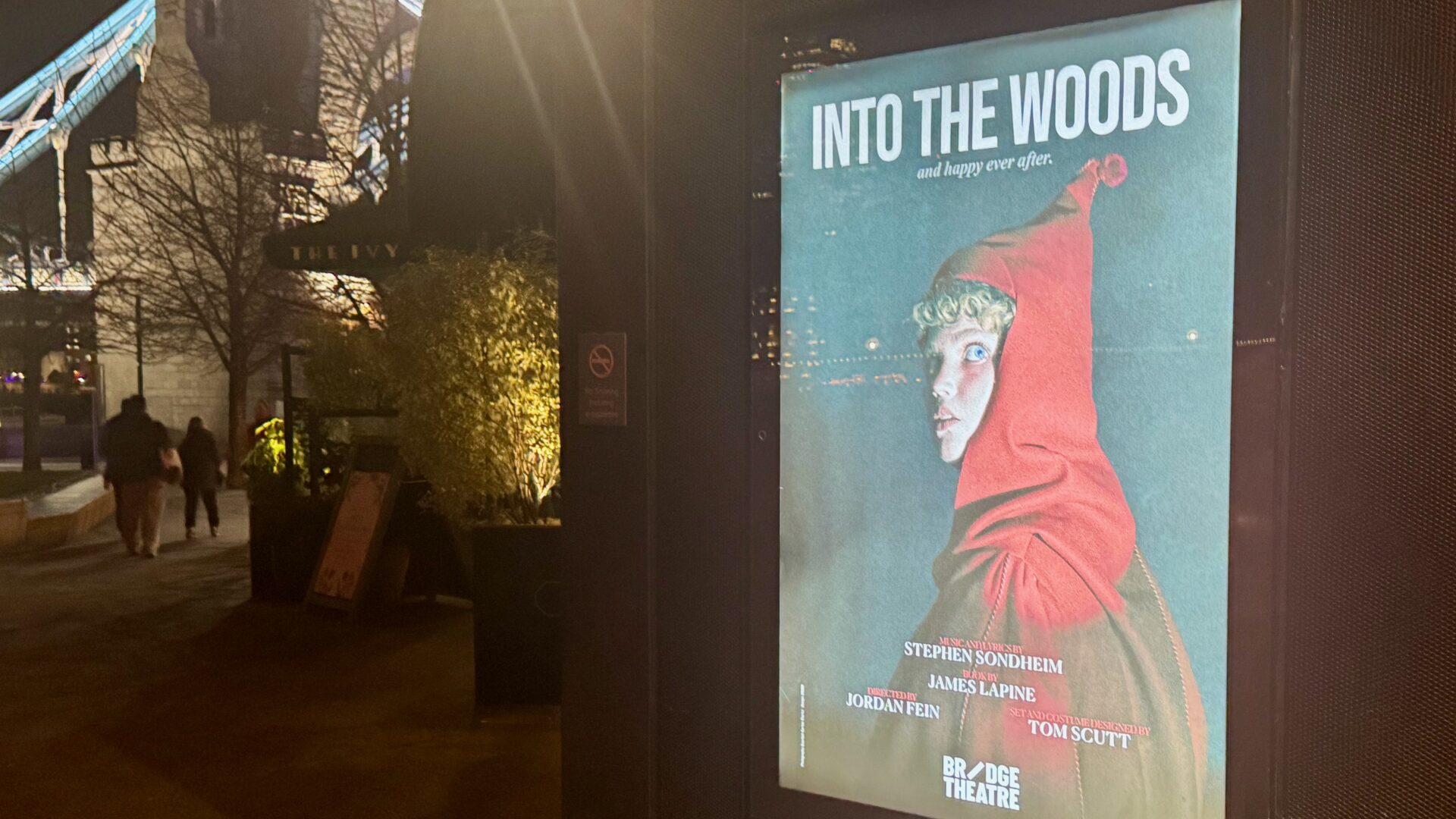
Monday, to the Bridge Theatre to see Into the Woods: visually impressive, with great performances. A revival that balanced the wit and the dark themes. Kate Fleetwood as the Witch is a joy. Delightful.
Wednesday, to see Jake Humphrey and Damien Hughes talk about High Performance. Essentially, it was an interesting 75-minute discussion trying to flog you a book. And it worked.
Thursday, to drink Beamish with people in central London. They served Irish crisps. Huw tried to say something in Welsh, but I didn’t understand.
Related: before we met in Covent Garden, we discovered the bowling alley near work has a bar that, it seems, nobody knows about.
Saturday, fixing email issues. And then to The Ivy Tower Bridge for their £19.17 two-course menu. Naturally, we didn’t just stick to that and ended up with a bigger bill. There’s a certain irony in going for the cheap menu and spending considerably more.
Sunday, to The Crazy Coqs for Behind the Mask, their Phantom of the Opera event. Quite different from the other events we’ve been to. We really enjoyed it. There were some incredible voices performing. Greg Castiglioni, who is playing in The Phantom of the Opera in Vienna, sang “Music of the Night” in German.
Media
With appropriately planned catch-ups, we were only one episode of The Traitors behind on Friday night, so we watched through to the end. The people I wanted to win, won.
Note to self for next time: get the printing ready, pay for it at home, and then walk to the library with the code that unlocks the documents. I think that would be easier.
The government has announced it will build a new railway between Birmingham and Manchester. It’s not HS2, honest.
It’s performance review time at work. We have a process that encourages reflection on the year, and I took time to prepare my thoughts. The effort felt worthwhile; for once, I had something proactive to contribute when the meeting itself came around.
I went for drinks. Discovered that younger people don’t know how the BBC is funded. Not much hope for the BBC if this is the opinion of future generations.
Related, sensibly rejected the suggestion to move on to a later-opening bar.
Got to Euston on Saturday morning and wished I owned a car as all services were suspended. Then, miraculously, my train left, and I was only ten minutes late.
The suitcase was delivered to Shrewsbury.
Saturday, the dish of “belly pork bites with black garlic glaze, chilli, spring onion, parsley and caramelised onion aioli” was delicious. If small.
Sunday, the lamb roast was the opposite: a huge portion. Also, very tasty.
Media
By the end of the week, we had caught up with the broadcast version of The Traitors and now we can’t run into spoilers. It’s very good, but bad for my blood pressure.
When in Shrewsbury for the weekend, we watched the semi-finals of the Johnstone’s Paint Masters snooker championship. I was so hooked, I started watching the final on the iPlayer on the train home on Sunday.
A reflective week of culture, transport mishaps, and quietly pleasing observations
Week commencing Monday, 5 January 2026
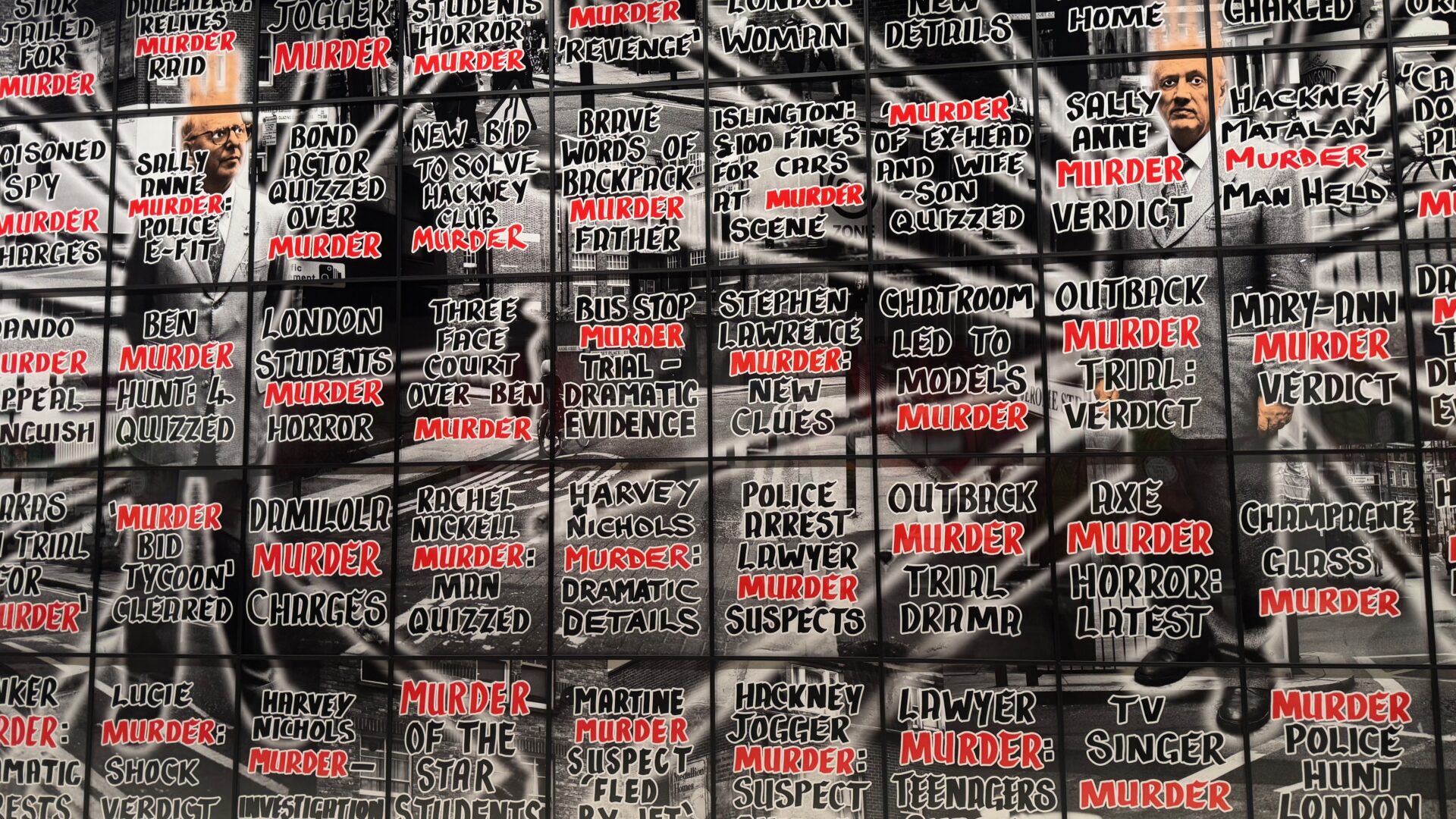
Tabloid headlines transform urban tragedy into a visual cacophony. Gilbert & George, London Pictures series (2011)
Quantified Self
This week: Stand 6/7; Exercise 3/7 and Move 6/7. (71%). Morning walks: 0/4. Office days 1/5. Total steps: 49,424. 18.8 hours in meetings.
Life
This year, I am tracking a new QS metric: the number of hours I am in calendared work meetings. I thought it would be interesting to see.
The story of Markdown reminded me how much simpler the web was when self-publishing began. I still write these notes in Markdown.
Monday’s pub quiz provided a high score for us, but no prizes for third. I was pleased with myself for identifying “A Kind of Hush” in the music round, but immediately irritated that I said it was by the New Seekers when it was, in fact, The Carpenters.
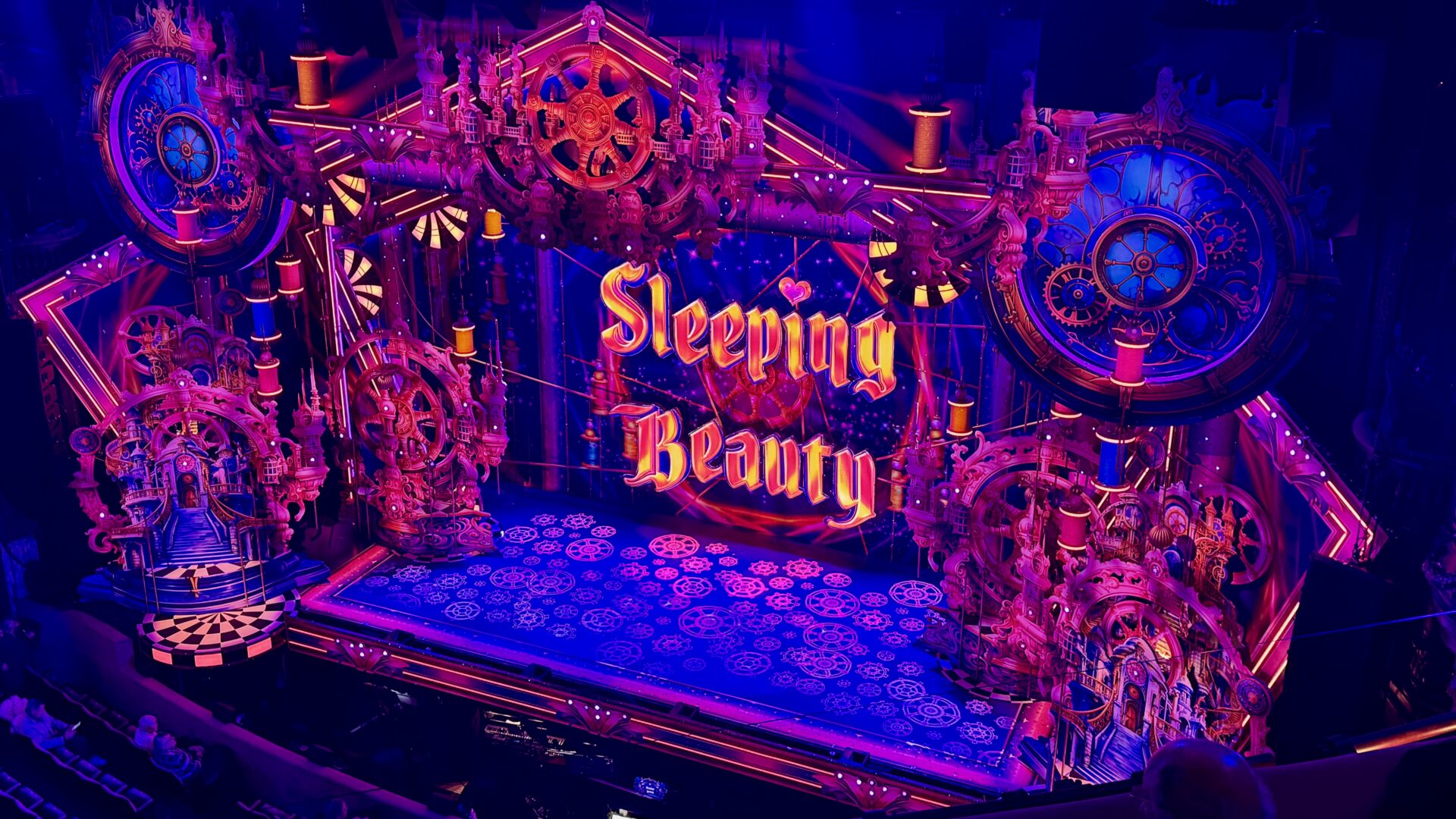
Tuesday, it’s bigger, better, glitzier, and (probably) more expensive than ever. It’s a smut-filled delight, anchored by the King of Innuendo: the Palladium panto, which I reviewed for you.
Thursday, people had said Daniel’s Husband was good, and I am delighted to have kept to my “don’t read any details” rule because this play benefits from that lack of pre-knowledge. But you can read my spoiler-light review.
Friday night, there was a tree on the line. We were diverted and then terminated early. As much as I love it, sometimes train travel is a frustrating pain.
Saturday, I said “good morning” to a bus driver when it was clearly afternoon, found out the coastal path is now named after the King, and had a lovely time by a wood fire.
By the wood fire, I talked about my recent radio stats post. PY thought an interesting additional view that would give better context would be to understand how much time we were spending with each type of audio. So, the chart’s here on page 11. Sixty-five per cent of our audio consumption is live radio, plus another 3% for catch-up.
Related, very glad I got to see the G&G exhibition. It’s big, bold, and probably not as controversial as it might once have been.
Media
Grantchester is back. There are almost as many murders here as in Midsomer. And the vicar is still allowed to interview suspects. Cosy fun nonsense.
We started series two of Blue Lights. I’ve forgotten much of the first season, so I can’t work out what’s new and what’s recurring. Definitely not cosy.
We started The Traitors. This is the first time I have watched the non-celebrity version. Don’t tell me.
A spoiler-light theatre review of Daniel’s Husband, where a cosy dinner party becomes something far more urgent.
Daniel’s Husband at the Marylebone Theatre, January 2026
I’ve been to see a play. I may as well make this the week of three reviews. My verboseness won’t continue for the year (although I secretly hope it will).
I try to enforce a personal rule — if not a philosophy — when it comes to theatre: the less I know about the plot beforehand, the better. When invited to a performance, I almost never want to know the plot or what the reviewers said. People had said Daniel’s Husband was good, but that’s about it, and I am delighted to have kept to my rule because this play benefits from that lack of pre-knowledge. Not only was I walking into this story completely blind, but it was also my first time visiting the Marylebone Theatre. So the whole thing felt new.
Almost no spoilers here, but stop now if you are going to see it and want the real experience.
Because I knew nothing of the plot, the play’s structure caught me completely off guard. It is very clearly a “play of two halves”. The first act is a witty comedy in which we are invited into the stylish home of Daniel and Mitchell for a dinner party.
If I’m honest, after a while I did wonder if that was it: an evening of light-hearted comedy, with a few intellectual arguments thrown in to amuse — in this case, about the heteronormative state of marriage. It’s light and breezy. Even when ‘mother’ arrives, it’s humorous, if a little awkward.
And then, the shift happens.
The second half is a dramatic illustration of the brutal reality of the legal status of unmarried partners when a crisis hits. It is emotionally quite powerful; laughter subsides, and maybe your heart breaks. It took me a while to process the second part.
The moment the play shifts from scene-setting humour to high-stakes drama is one of the most effective mood changes I’ve seen on stage. This transition is anchored by a monologue delivered by Daniel (Joel Harper-Jackson), perfectly pitched off the back of the first part.
Looking back, it’s clear what’s being set up in the first half. In hindsight, the basis of the conflict that’s so essential for drama becomes obvious, but it is nicely masked in the warm tones of a cosy life.
The cast is flawless across the board. Luke Fetherston is heartbreaking as Mitchell, watching his belief crumble in the face of a cold legal reality. Liza Sadovy, as Daniel’s mother Lydia, is equally brilliant; she starts as the basis for some of the laughs but transforms into a formidable force. I don’t think you can love her; you might hate her, but one of the smart achievements of this play is that you understand her even when you want to scream “no” at her.
I don’t want to spoil the plot, but the message is clear: don’t procrastinate life’s admin.
A gloriously smutty, nostalgic spectacle, irresistibly entertaining.
When Sleeping Beauty’s Castle Gets a Steampunk Makeover
It seems like I am in the mood to write reviews this week. So here comes another one. I do not expect this trend to continue all year.
Sleeping Beauty at the London Palladium – A 10th Anniversary
If you’re heading to the London Palladium expecting a sweet, Disney-fied retelling of Sleeping Beauty, you’ve clearly missed the memo of the last decade. Now in its 10th anniversary year, the Palladium pantomime (this year there’s a Sleeping Beauty plot somewhere) has faced a wave of headlines from outlets like Metro, branding it a “smut-fest” after reports of families walking out. But let’s be honest: if people are still shocked by the innuendo after ten years of this specific brand of comedy, that’s on them. This isn’t just a panto; it’s an institution with a well-established “adults-first” policy. Do your research. I really don’t have much sympathy for people who don’t know what this is. Although I do expect news outlets to run with and embellish this story every year.
What makes this year feel different is how self-referential the show has become. It’s been heading this way for a while, but this year’s opening retrospective is a masterclass in nostalgia, setting a tone that feels less like a fairy tale and more like the series finale of a beloved sitcom. Like the best long-running comedies, the jokes here are funnier because we’ve come to know the characters: we know Nigel Havers will be the charming punching bag, and we know Julian Clary will have a new, increasingly ridiculous entrance, and make a gag about somebody’s hand on it.
This “insider” feel is probably the secret to its enduring appeal for the regulars, but it does make me wonder: what do the newbies think? If you haven’t been along for several of the last nine years of lore, you might feel like you’ve crashed a private party.
Amidst this whirlwind, the show’s ringmaster is Rob Madge as the Diva of Dreams. While the rest of the cast seems content to let the plot drift out of the stage door in favour of sketches, Madge is the one who keeps the show flowing. They act as the essential “glue,” holding onto the limited plot and preventing the evening from devolving into a disjointed series of routines. Madge brings a modern, theatrical energy that bridges the gap between the “old guard” and the new.
The big draw this year is Catherine Tate as the boo-able Carabosse. While she delivers exactly what the crowd wants (including a show-stopping appearance of “Nan”), I had a nagging sense that she is underused. Tate is a comedy powerhouse, yet she often feels relegated to “special guest” status. Between the impressions and the sketches, you can’t help but feel she could have given even more if the script allowed her to go beyond her “greatest hits” reel.
There is no denying that Julian Clary is the heart of this machine. However, this year feels more like “The Julian Clary Show” than a balanced ensemble piece. In years past, the magic came from a heavyweight team; the presence of the late Paul O’Grady, the charm – and songs – of Gary Wilmot, or the triple-threat energy of Charlie Stemp provided a balance that kept the show from relying too heavily on one person. While Clary holds it all together with effortless camp, the absence of those contrasting “anchors” is felt.
Visually, the staging is bigger, better, glitzier, and (probably) more expensive than ever. From the neon sets to the “forest of thorns” in Act 1, the production values are impressive. However, some elements are starting to feel familiar. Paul Zerdin remains a master ventriloquist, but after a decade, his routine lacks “newness.” When a show becomes this self-referential, there’s a fine line between a “classic callback” and just running out of fresh material.
It’s still a 5-star spectacle with heights of staging wizardry. It’s loud, it’s proud, and it’s very, very blue. If you want a plot, go elsewhere. If you want to see the most expensive variety show in London anchored by the King of Innuendo, there’s no better place to be. It helps if you’ve watched the “previous seasons” to get the most out of the jokes.
Despite the rise of streaming and podcasts, traditional radio remains dominant in the UK.
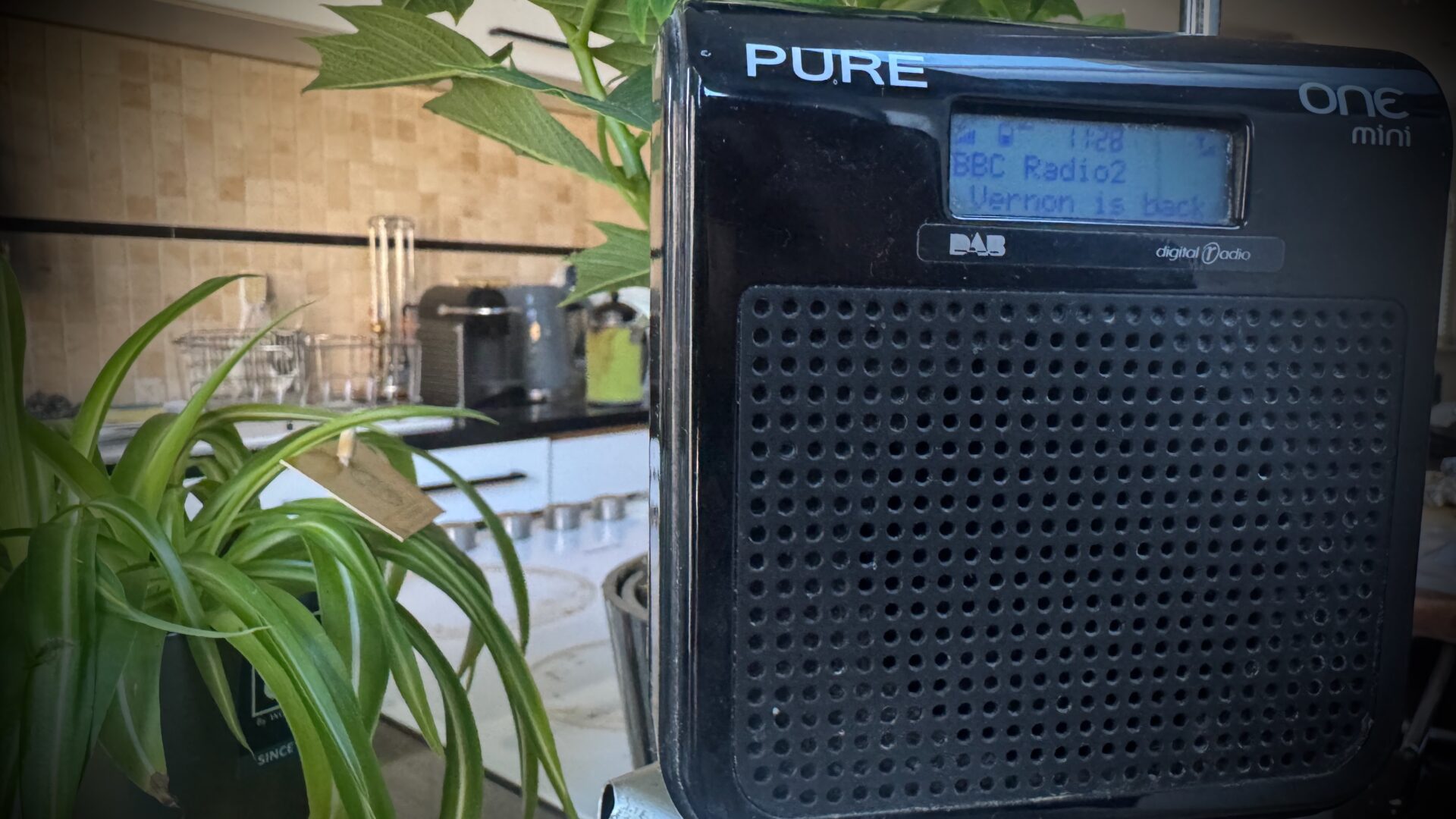
A DAB radio in a kitchen. Soulmates?
In my new-year nostalgia haze, I looked back at things I had written on this day (5th January) in years gone by. One post struck me more than the others. Fifteen years ago (2011), I answered a question posed by a Quora contributor: Will 2011 be the year that internet radio will pass traditional radio? By “internet radio”, I mean any kind of radio service listened to via the internet. I, like many others, said no. But I did find myself wondering whether I would answer it differently, all these years later.
The short answer is: no, I wouldn’t. We’re still a little way off the idea that internet radio truly passes traditional radio.
However, before looking at the radio numbers, I think it’s worth setting out a few things — if only so that we can come back in another fifteen years and see how the world has moved on.
According to the BPI, UK recorded music grew for an 11th consecutive year in 2025. For our purposes, streaming made up a record 89.3% of music consumption last year. I mention this simply to underline that streaming is now a real force in our lives, and that the streaming music services are major drivers of audio listening.
Audio consumption is still huge in the UK. Ofcom says that 93% of adults listen to some form of audio content each week, and that there has been growth across all audio streaming. Among younger people, this streaming trend is even more pronounced: 58%, up from 40% in 2019.
So, had the question been framed differently in 2011, I suspect we’d now be saying that most music is consumed via the internet. But music isn’t radio. And in spite of the efforts of Spotify’s AI DJ, and all those blokes with podcasts, the UK is still listening to things we would recognise as radio in 2011.
RAJAR’s autumn 2025 MIDAS survey tells us that around 39% of people listen to on-demand music each week, 24% to podcasts, 21% to music they own, and 10% to audiobooks. Live radio, meanwhile, still reaches a whopping 86% of the UK population every week.
RAJAR also tells us that AM/FM radio now accounts for under 30% of total radio consumption. So we’ve come a long way since 2011, when listening via a digital radio platform accounted for just over a quarter of all listener hours in Q1, with AM/FM making up the remaining 75%.
According to RAJAR, the most-used platform for radio is DAB, accounting for 42% of listening hours. Listening via smart speakers has been rising steadily and now represents 18% of live radio listening, while all online listening — including smart speakers, websites, and apps, and therefore what I am classing as “internet radio” — now makes up 28% of total listening.
So, fifteen years on, in the UK, internet radio’s share of all radio listening still sits below 30%. It is now more or less level with AM/FM, but DAB listening — which remains a remarkably convenient box with a simple, immediate, on-off button and no app to navigate — is the clear majority.
We still have some way to go before it becomes the year of truly connected radio, but the direction of travel is obvious. Come back in fifteen years for an update.
A gentle, celebratory start to the year, filled with shared rituals.
Week commencing Monday, 29 December 2025
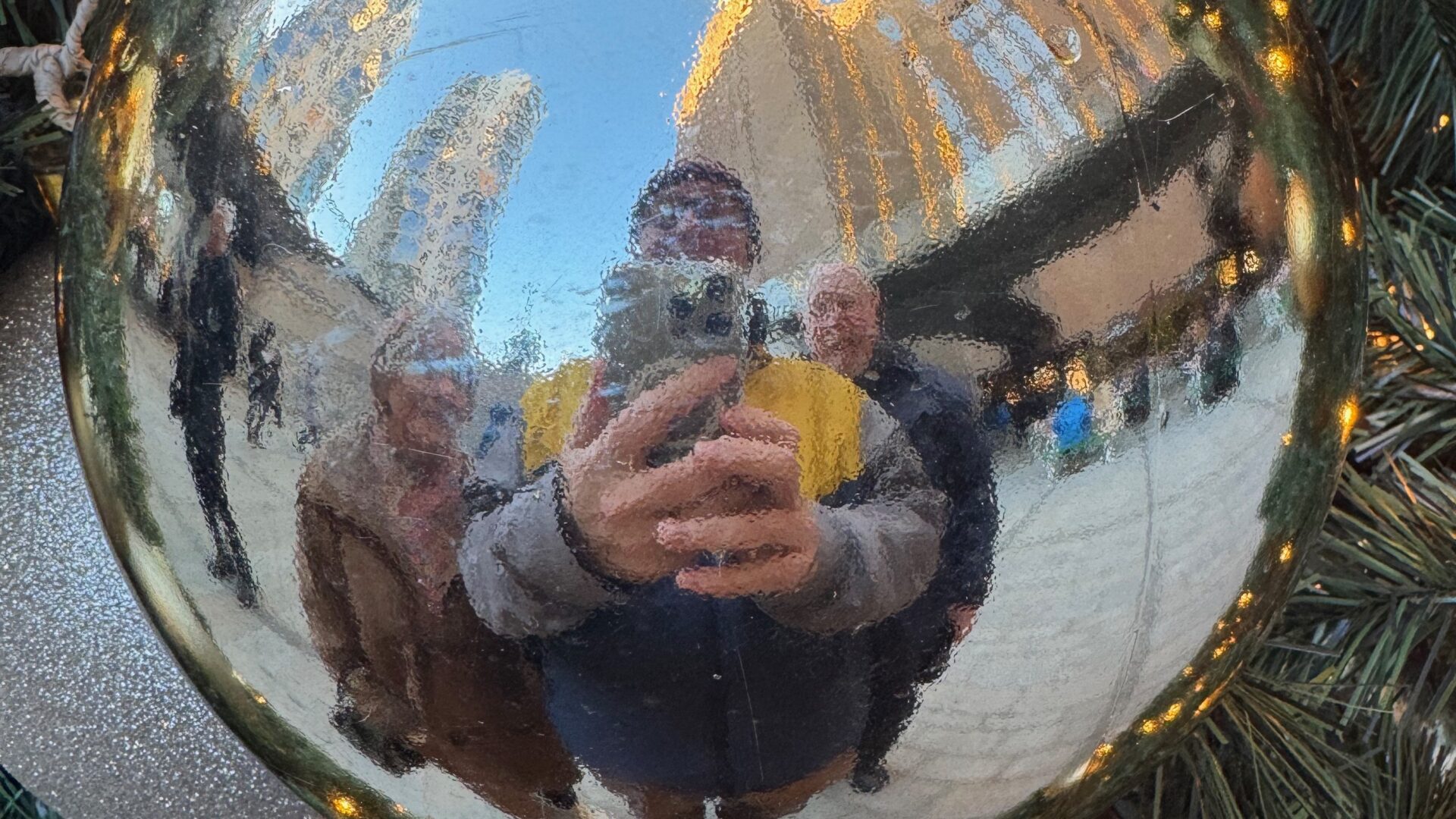
Battersea Power Station captured in spherical festive form.
Quantified Self
This week: Stand 7/7; Exercise 3/7 and Move 6/7. (76%). No work this week.Total steps: 62,837
Life
Hello 2026! Aren’t you looking fine?
Monday afternoon, we all walked to The Lockdown Bakehouse, where there was cake and coffee. When we returned, we watched Peter Ustinov in Death on the Nile.
Tuesday, a matinee performance of Disney’s Hercules (the musical). It’s the everyday story of the son of Zeus being stripped of his immortality as an infant, who must perform a series of heroic feats and prove himself a “true hero” on Earth to reclaim his place among the gods on Mount Olympus. You see this kind of thing everywhere, every day! Review: it’s not on the level of The Lion King.
Bong: I went outside so that I could usher in the New Year when Big Ben bonged for the first time in 2026. Champagne and music on television, plus we used the last of the indoor fireworks outside to create our own tiny display. People gradually drifted to bed over the hours to 3 a.m.
Related, I was in the kitchen by 8:30 a.m. to cook the breakfast I promised everybody (although people took a while to appear).
Friday, Battersea Power Station has been beautifully decorated for Christmas. We didn’t buy anything in the shops, preferring instead to stand and look at the turbine halls in their glittering glory.
Saturday, rather than doubling back underground, we decided to walk from Marylebone to Waterloo. It turned into a really pleasant route through Mayfair, across Piccadilly and down towards the South Bank. The sky was a clear blue, the air crisp but not cold, and the streets were busy enough to feel alive without being pre-Christmas crowded.
Sunday, we took the tree down. The room felt bare without it.
Media
NYE: Kiss Me, Kate, filmed live in 2024 at the Barbican. Adrian Dunbar, from Line of Duty fame, starred alongside Stephanie J. Block. Brilliantly done; I now wish I’d seen it live.
New Year’s Day: watched the new Knives Out film — Wake Up Dead Man — on Netflix. It’s full of odd characters and a plot with twists, but, strangely, Benoit Blanc is pretty much absent for the first third.
Sunday, Marty Supreme on the big screen. See it for the style and the performances, but make sure you have a comfy seat and don’t expect to fall in love with the hero. I wrote a fuller review.
The New Year is a season where it’s acceptable to simultaneously be looking forward with hope and dreams for the year ahead and look backwards at the year, or years, gone with a bit of nostalgia. Earlier in the week, I was looking back through my blog archives and rereading a few of my old film reviews. And, today, I thought, “let’s write a review of the film I just saw: Marty Supreme. The problem is, I have quite mixed feelings about it.
Marty Supreme Review
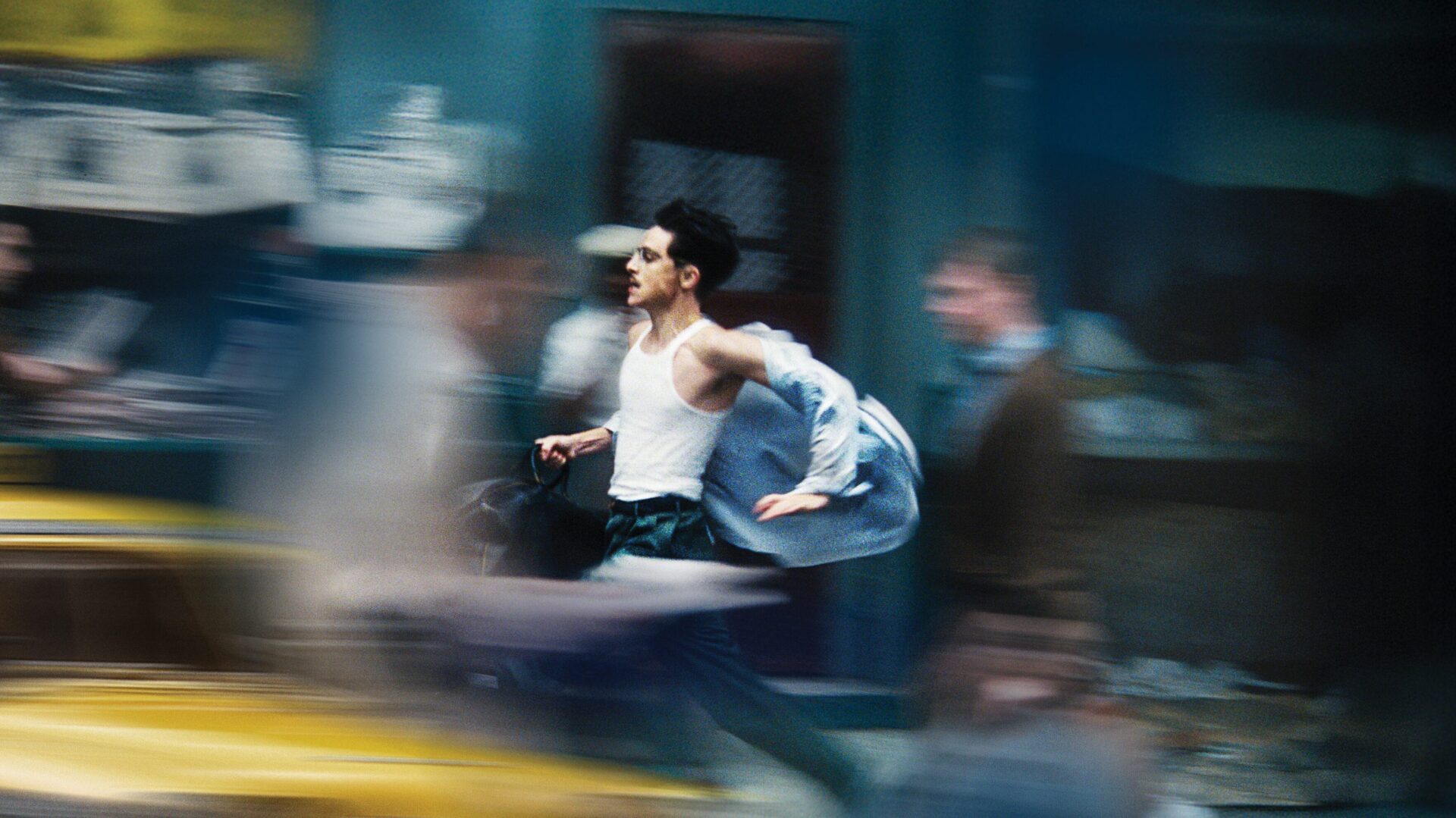
I get a bit of a block when writing about films this complex. Marty Supreme is a fascinating, stylish look at the world of competitive ping-pong. Who knew we cared about that in 2026? But by the time the credits rolled, I felt as exhausted as a player in a five-set match.
See what I did there?
When the movie starts, you really want to see Marty succeed in his dreams of being a world champion table tennis player. It’s not an unrealistic ambition; he has the talent and is playing in the right contests. Unfortunately, he has no backers and no money of his own. Competing for him is a challenge, not of talent, but of resources.
As the story progresses, however, any sympathy I had for his predicament starts to evaporate. Marty doesn’t just have a “win-at-all-costs” attitude; he becomes genuinely dislikable. The story turns from an underdog tale to that of a man who is his own worst enemy. He treats the people around him like tools to further his dreams rather than as humans, and I found myself less interested in whether he won the game and more annoyed by how he treated others. Which, in itself, is a bit of a feat as none of the others are likeable either.
The biggest hurdle for me was the ending. After two hours of Marty being a selfish narcissist, we are expected to believe he’s changed because of a choice he makes. But was it really a choice? Marty’s apparent growth feels forced by circumstance. If he hadn’t been kicked out of the tournament in Japan, would he have ever gone to that hospital? Probably not. It feels less like a man finding his true self and more like a man who ran out of other options.
The film is also filled with characters who feel as if they belong in a different movie, or at least, not in this one. The dog-owning gangster and his dog, Moses, felt particularly unnecessary. I am not sure how much the story needed their presence; the same impact could have come from other, underused, characters. Characters pop in and vanish without a trace. Maybe that’s the intention, but it feels disconcerting. Oh, and what’s the orange ping-pong ball bit meant to convey?
I generally enjoyed the film, but the length became an issue for me. Because there were no likeable characters to root for, the latter half of the movie started to drag. When you don’t care if the lead character wins or loses, you start to feel every minute of the runtime. I wonder if it would have been a better experience to have had a little bit less of it.
That said, the performances are superb; Chalamet conveys Marty’s ambition brilliantly. Gwyneth Paltrow’s portrayal of a trophy wife in a marriage she hates is similarly wonderful, but it doesn’t mean I’m rooting for her.
See it for the style and the performances, but make sure you have a comfy seat and don’t expect to fall in love with the hero.