This week: Stand 5/7; Exercise 6/7 and Move 7/7. (86%, great). Morning walks: 2/4 (days in the office don’t count). Office days 1/5. Total steps: 69,973
Life
Monday, a presentation from students suggested people may be turning back to linear TV. Food for thought.
Later, a quiet train journey back to London to be ready for an “in work” day on Tuesday. Joined a conference call for the last minutes of the commute to the office. I don’t like doing that, but I was a lurker rather than a contributor.
Met up with past and future, but no present, colleagues in White City. Weather very suitable for outside socialising. Beer was good but too drinkable. Glad of a late start the next day.
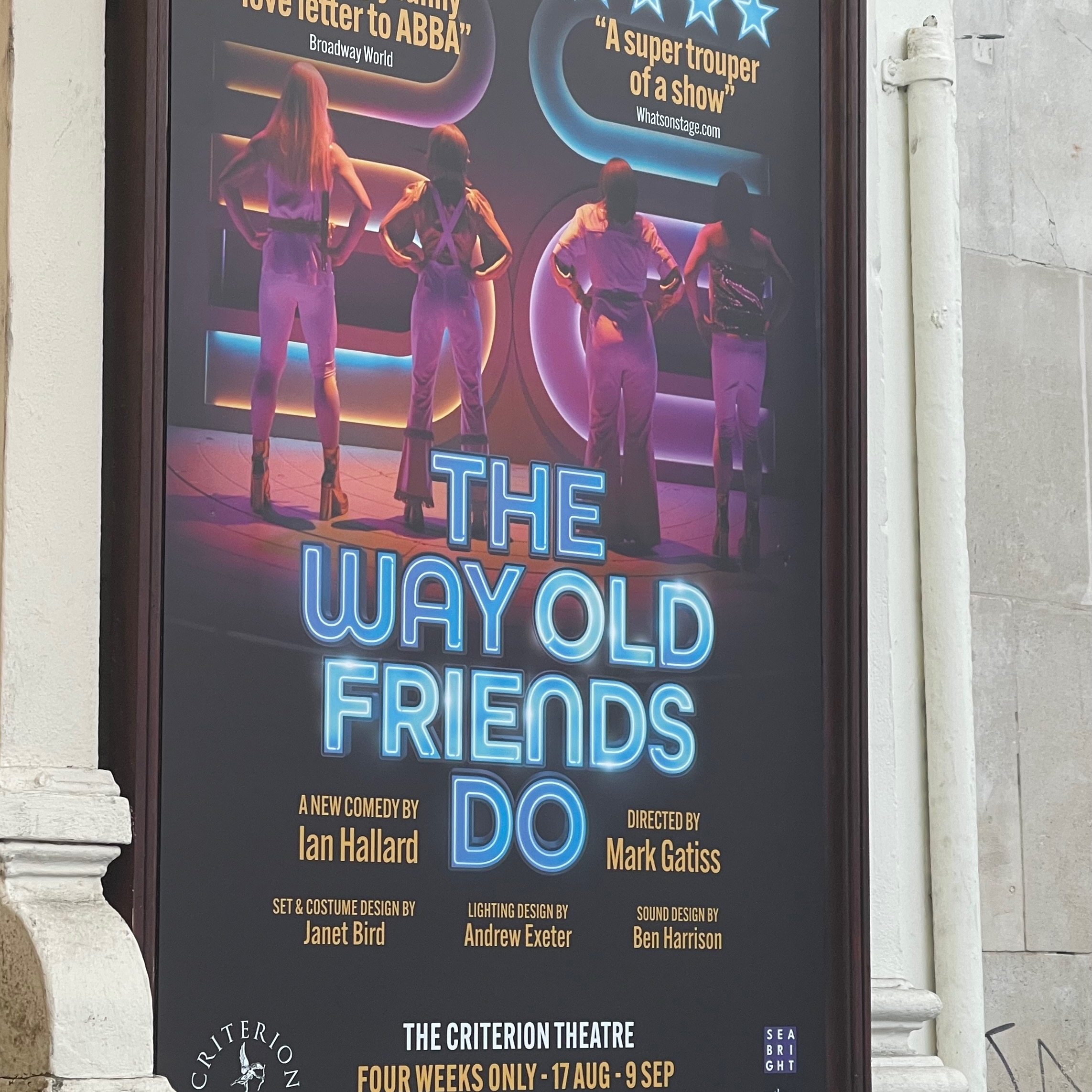
The Way Old Friends Do: ABBA song or play? We went to see the latter at the Criterion. I forgot how nice the auditorium is and that it’s an independent theatre trust. Act II was a little darker. The play was fun; getting caught in the torrential downpour while walking between Waterloo and Piccadilly Circus, less so.
Afterwards, bumped into old friends P&W, confirmed plans for Sunday which involved meeting PY & P after the volunteering shift for coffee (Redemption Roasters was lovely), a guided walk (fascinating) and dinner at Mele e Pere, which has, apparently, been open since 2012 but I swear it was called something else.
More old friends on Saturday when tentative picnic plans morphed into ‘at home’ picnic (at a table, sheltering from the rain). I want to make the lamb and harissa sausage rolls that were served but I am not good at any recipe that involves pastry.
Media
I finished the two sequels I mentioned last week. Both followed the adventures of the crime solvers at Cooper’s Chase retirement village. The Man Who Died Twice:
“More women are murdering people these days,” says Joyce. “If you ignore the context, it is a real sign of progress.
Within 24 hours of finishing the first, I finished the second (helped by a nice long train journey). The Bullet That Missed:
People drift in and out of your life, and, when you are younger, you know you will see them again. But now every old friend is a miracle.
Archive
To save the links getting lost in the future I checked the Internet Archive to see what they had saved for the posts linked here. If the source above no longer works, these should.
If you were expecting some kind of thrilling denouement to the train trilogy, sadly, Network Rail, South West Trains and South Western Railway look like they’ve managed the whole thing rather well, considering that to do the work, hundreds of trains had to be cut, and thousands of people had to change their plans.
The three greatest movie trilogies of all time, according to Empire magazine, are (at 3) Back to the Future, (at 2) the original Star Wars films and (top of the pops) The Lord of the Rings. Once I have sold the film rights to this site then my current thread of posts will be competing for the top spot.
If you’re not up-to-date, here’s a handy recap montage: last month’s #SOLS post was about the Battle of Waterloo (the station, not the Duke of Wellington battle) and, a few days later, my ‘Will Commuters Even Notice‘ became a (not-quite) best seller on Medium. Both discussed the state of the trains, major engineering works and the small matter of the change of franchise on the railway lines into London Waterloo station. Assuming all is on track (every pun intended), then Network Rail will give us our trains back on Tuesday morning.
If you see this series as ‘The Lord of the Rings’, then this is the thrilling conclusion to the story. If you think of this collection more like ‘Back to the Future ‘, then this is the weakest of the three, with a mixed plot including some strange wild west space theme. If you’re thinking that this series is more of a Star Wars classic, then you are sadly deluded, and I don’t know that you should read any further without seeking help.
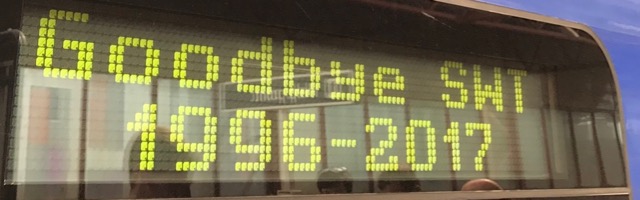
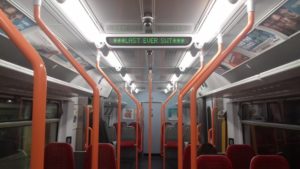
In the run-up to the engineering works, the poor people running the South West Trains publicity and Twitter machines went into overdrive, reminding everybody to prepare for delays. There were plenty of warnings on the trains (see the picture in my last post). My personal favourite tweet warned of the End of Days (which, if you think about it, makes this more Lord of the Rings than Back to the Future) and you really only get the effect if you click through to the actual tweet:
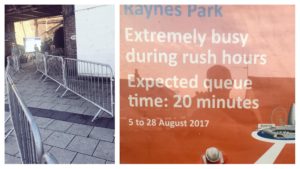
At my local station, we even got a sneak preview of the queuing system we’d be expected to stand in for 20 minutes each morning.
And then came Monday morning. The alarm went off 45 minutes earlier and, with some trepidation, I made my way to the station. There were some of those crowd control people I previously mentioned, lined up to help the masses form an orderly queue. But there was a problem with all the planning: there were no crowds. For most of the time, I’ve had a seat on a partially empty train at a time I was warned I’d have to queue. Pulling into Clapham Junction station at around 7am would usually find a platform crowded with commuters trying to find a space: this week more people got off the train at Clapham than got on. It was emptier leaving the station than it was on approach. People have vanished.
Response to the #WaterlooUpgrade on Twitter seems to have come in three main topics: those who are frustrated that the train timings have changed; those who campaigned for some money back because of the disruption (even after 14 months of warnings), and those who expressed shock that South West Trains were, suddenly, quite pleasant to ride at morning peak times.
Sadly, it wasn’t all free ice creams and a seat on a train. If you are completely changing the way you use the infrastructure around Waterloo station, I imagine you’ll find things that break when they previously didn’t. So, of course, there have been failures and problems and the temporary timetable extended every journey into Waterloo. Quite early on, there was a derailment which, in turn, meant extra days were added to the most severe service reductions on the last weekend. As Modern Railways said, “every sinew will have to be stretched to hold the service together”. (1)
And in the middle of it all, with not a great deal of fanfare but a few little touches, Stagecoach bowed out and handed the franchise torch to South Western Railways. A couple of stickers and a logo, or two, added in places. The announcements were updated, and my train was now a “South Western Railways service to London Waterloo”, but it looked, and behaved, the same as always. When railways are franchised to private operators, I believe it’s important to know who is actually running (and profiting from) the service. For the south west region, I think it’s going to take some time for the new company’s brand to land and, even longer, for people to know that it’s a totally different company. Still, in the midst of all the disruption, a launch party would have been inappropriate.
If you were expecting some kind of thrilling denouement to the train trilogy, sadly, Network Rail, South West Trains and South Western Railway look like they’ve managed the whole thing rather well, considering that to do the work, hundreds of trains had to be cut, and thousands of people had to change their plans.
Sadly, the #SOLS timetable means I am posting this when there are still 36 hours until the resumption of regular services, and anything could happen. Overrunning engineering works would hardly be something new. And unfortunately, there will be limited improvements to the old timetabled services until December, so it might look like this work was in vain. Plus, there’s the added pressure that, as part of the final stage of the London Bridge Thameslink works, South Eastern trains need to use some platforms at Waterloo from Tuesday. But, given what could have happened, there has been considerably less chaos than predicted, and I am grateful for that.
A challenge to the tired internet-versus-television story, arguing that the real divide is between connected and non-connected advertising.
A couple of months ago, the same data from the PWC Global Entertainment & Media Outlook popped up a couple of times in my Twitter feed. I meant to write about it then, but I’ve got around to it now as part of my BEWA plan.
The most retweeted factoid stated that “By 2018, Internet advertising will be poised to overtake TV as the largest advertising segment” and concluded with the line “We are approaching a major tipping point in the advertising universe“.
I’ve made a career out of Internet advertising for more than 17 years. I delivered my first online ad a couple of years earlier as an online companion to a traditional radio spot. When we first started, these kinds of comparisons were helpful, not only to reassure us that we’d made the right career choice, but also to convince our bosses that this really was a growing market and that they might help us by employing another person to help us figure out what to do.
As an industry, we were pleased when online ad spend eclipsed various forms of print, billboards and even those radio ads I’d spent years working with. I acknowledge it’s an interesting barometer and makes for some nice graphs for somebody’s next ‘speaking opportunity’.
But today, comparing the vast opportunities of ‘Internet Advertising’ as a single place of ad spend while breaking down ‘offline’ spend into its component segments doesn’t feel right to me. The IAB (using US-centric data) tells us that, in 2013, 43% of Internet advertising spend was search. Classifieds make up 6% of the Internet spend. There seems to be very little point in comparing these numbers to television.
Surely, it’s connected vs non-connected advertising. The tipping point is coming, but it’s not when Internet spend passes TV spend. It’s when spending on connected advertising surpasses non-connected advertising.
Footnotes
I don’t have access to the whole PWC Outlook, which may very well put these numbers into a more subtle context that 140 characters can not convey.
I have had the pleasure of eating at too many amazing places to remember. But, of the ones I do remember, it’s often a combination of fantastic food and an amazing dining experience that add-up to make it unforgettable: fresh Lobster on Hellshire Beach, Jamaica; dinner at Toronto’s CN Tower or Lightship Ten that used to be in St Katherine’s Dock; Steak at Palm West in New York; paella in that bar in El Cotillo, Fuerteventura; or, of course, the half-day eating experience that is The Fat Duck.
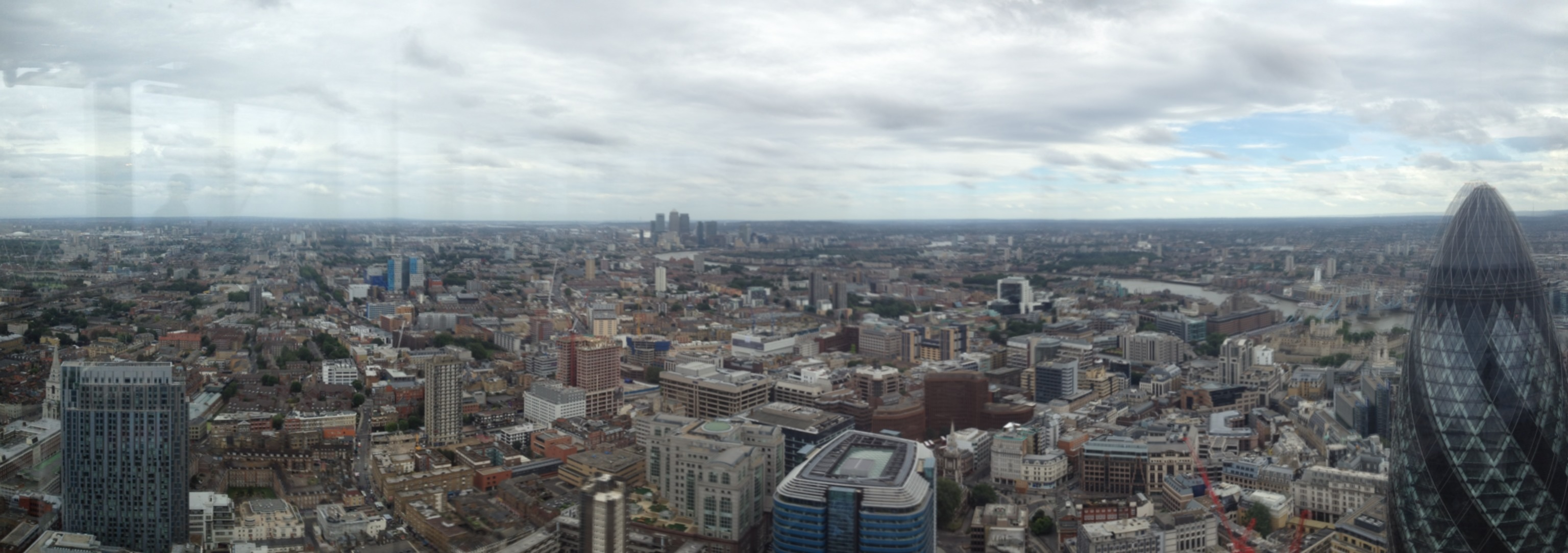
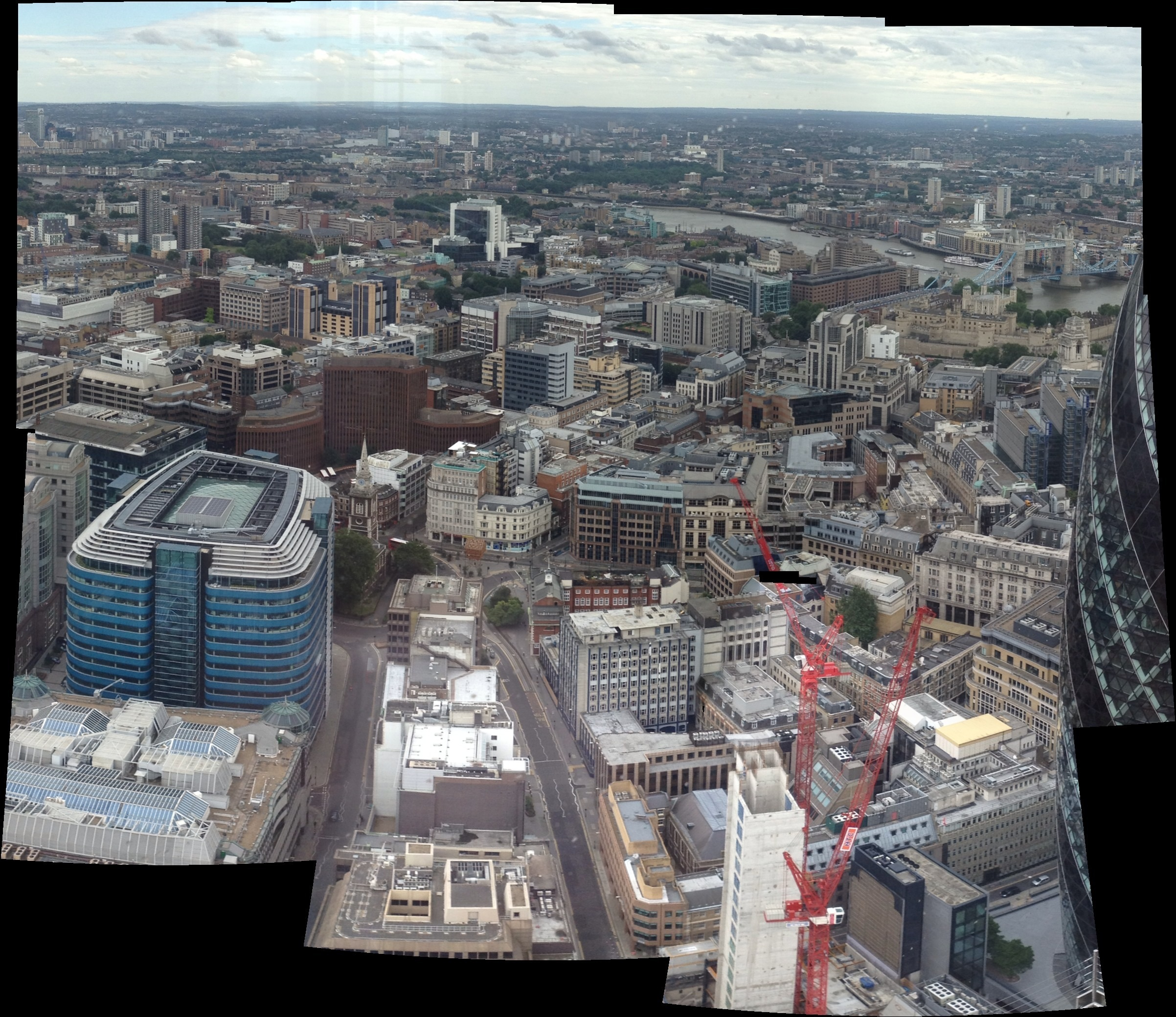
Now, today’s lunch venue needs to be added to those experiences. Recently opened on the 40th floor of Heron Tower in the City, Duck & Waffle has fantastic views across East London looking out towards The Olympic Stadium and Canary Wharf and is close enough to give you the impression you are looking down onto The Swiss Re building (the Gherkin). It’s a stunning setting for lunch and, this afternoon, was not too busy so we got a prime table – looking right out East. There aren’t really that many skyscrapers in London and even fewer restaurants with that kind of view: the only taller buildings are Canary Wharf and the Shard (and that’s not open yet).
Duck & Waffle Panoramic
Heron Tower Panoramic
Duck & Waffle’s Duck & Waffle
Duck & Waffle’s Scallops
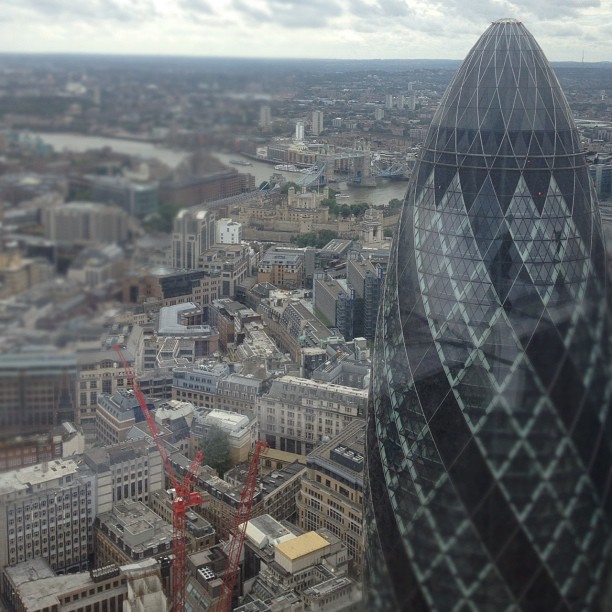
Swiss Re from The Heron Tower
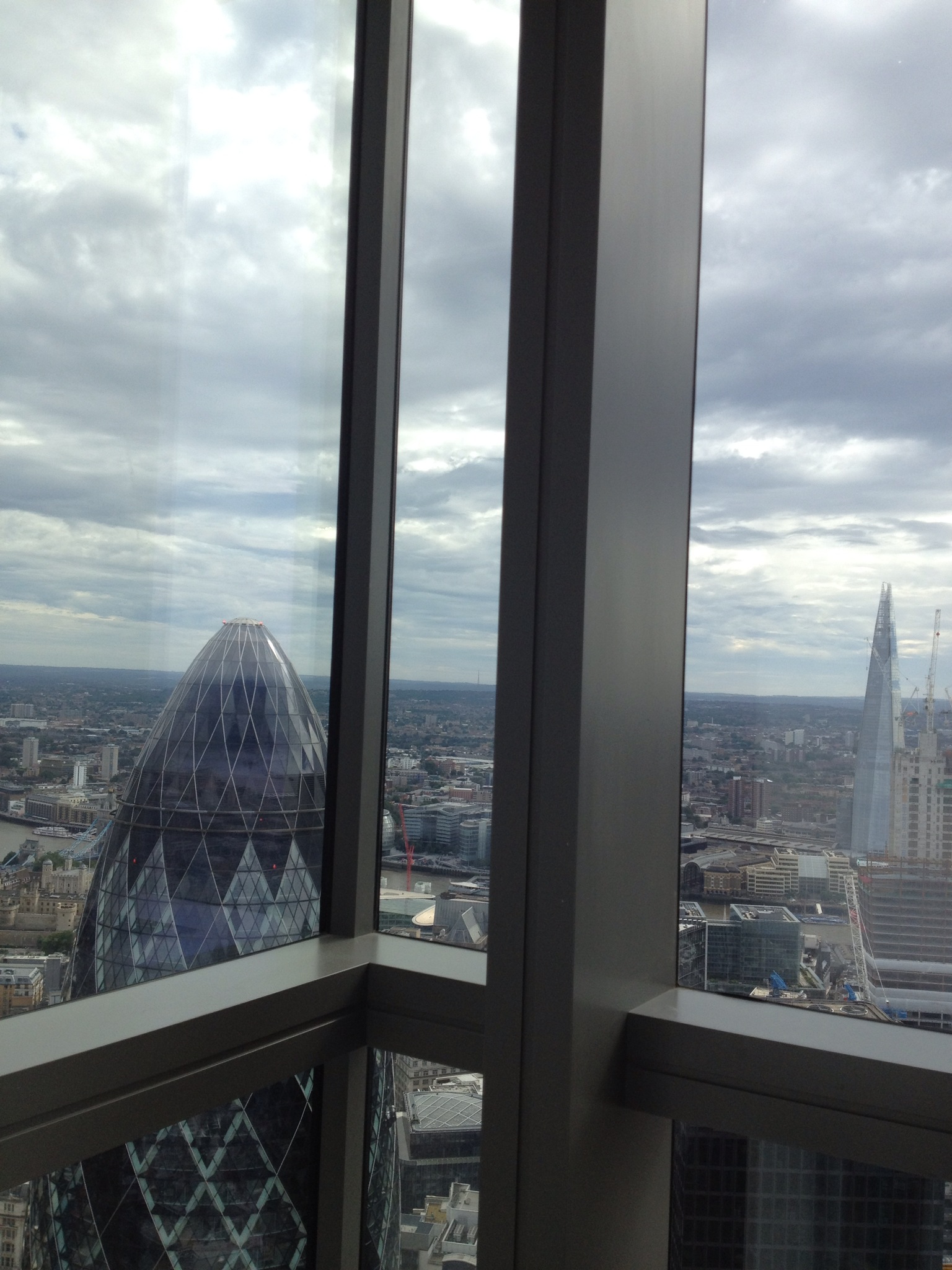
The Shard from The Heron Tower
Of course it’s not just the experience; the food has to be excellent too, and it was. The BBQ-spiced crispy pig ears might not sound to your taste but were crispy, meaty and – for somebody who never adds salt to food – nicely salted. If you don’t like tomato, a plate of English-grown heritage tomatoes will make you rethink it, with a broad range of tastes, colours and flavours, while scallop on apple with black truffle and lime was one of the most refreshing tastes I’ve ever eaten. The signature duck & waffle dish is a beautiful mixture of crispy duck and soft waffle.
It must have been good; I don’t think I’ve ever written about a restaurant here before. If you’re in London go before it becomes popular (in a couple of weeks they are about to open 24-hours) and, even if you’re not in the mood for food, try the house Manhattan, the bottled cinnamon smoke that’s a vital constituent is incredible, and you’ll need it: a stiff drink is required after the 30 second glass elevator ride up the outside of the tower.
I took a few pictures of the view (and the food), and they’re all over on Flickr (with a few on Facebook too).
Curns’ ad links is a collection of links about the digital advertising industry; generally focussed on the display advertising market with an emphasis on the technology to deliver great advertising experiences.
Brand Republic’s piece on a survey that says users think online advertising is intrusive, repetitive, unappealing & cheap. I’m not sure any surveys will ever get people to say that advertising is a good and positive thing, but on the upside, it reminds us to innovate with formats more and on the downside, is 1000 people a decent sample?
In-game advertising is not something that I have covered too much before, but it’s both big business and, generally, quite inventive. This overview from TechRadar isn’t saying a lot that’s new but it’s a great summary.
An interesting piece from Econsultancy questioning how engagement is defined. This is a useful conversation if advertisers and going to demand the engagement metric. Is the concept to become as flawed as the click for understanding users & their intent?
An interesting discussion on engagement as a measurement for display: publishers are only paid when someone interacts with the ad. Perhaps this will launch that quest for new, more engaging formats?
I’ve been saying for a while that online ad formats need to develop again. We need to move beyond the banner. This survey, which shows 18-24 yr olds find off-line media more impactful than online, somewhat backs me up.
Eric posted a comment about my entry Camp, and I have just noticed there has been a problem with the template that displays the comments. It should be fixed now, although I guess the spam comments will now show alongside the real comments.
I too rushed out and bought the Camp CD soundtrack, which I got in the mail yesterday, and it will be my soundtrack home in a few minutes! I got it from a cheap place in Canada – which was cool (although I guess it’s only cheap to me, used to paying overpriced UK CD prices.
I haven’t spoken of London’s traffic problems for a while now. This is because it’s a bad story and I am trying to be positive. I have not been overly delayed for some time (although every taxi I take tries to navigate Trafalgar Square, which is an automobile no-go zone at the moment).
I also realise that London is a big city, home to many millions of people who all travel. It stands to reason, then, that if the system should fail one day, movement will be difficult. I know that an integrated public transport system run (efficiently, effectively) for the people is a (very) long way off.
Still, it did amuse me to read that
“London’s road traffic is travelling at its slowest ever pace, averaging less than walking pace, according to a new report”.[Yahoo]