Weeknotes #154: here comes another one (year, that is)

A gentle, celebratory start to the year, filled with shared rituals.

Week commencing Monday, 29 December 2025

Distorted fisheye reflection in a gold Christmas tree bauble showing a person holding a phone taking a selfie, with Battersea Power Station's iconic chimneys and blue sky visible in the curved reflection, framed by green pine needles
Battersea Power Station captured in spherical festive form.

Quantified Self

  • This week: Stand 7/7; Exercise 3/7 and Move 6/7. (76%). No work this week.Total steps: 62,837

Life

  • Hello 2026! Aren’t you looking fine?
  • Monday afternoon, we all walked to The Lockdown Bakehouse, where there was cake and coffee. When we returned, we watched Peter Ustinov in Death on the Nile.
  • Tuesday, a matinee performance of Disney’s Hercules (the musical). It’s the everyday story of the son of Zeus being stripped of his immortality as an infant, who must perform a series of heroic feats and prove himself a “true hero” on Earth to reclaim his place among the gods on Mount Olympus. You see this kind of thing everywhere, every day! Review: it’s not on the level of The Lion King.
  • Bong: I went outside so that I could usher in the New Year when Big Ben bonged for the first time in 2026. Champagne and music on television, plus we used the last of the indoor fireworks outside to create our own tiny display. People gradually drifted to bed over the hours to 3 a.m.
  • Related, I was in the kitchen by 8:30 a.m. to cook the breakfast I promised everybody (although people took a while to appear).
  • Friday, Battersea Power Station has been beautifully decorated for Christmas. We didn’t buy anything in the shops, preferring instead to stand and look at the turbine halls in their glittering glory.
  • Saturday, rather than doubling back underground, we decided to walk from Marylebone to Waterloo. It turned into a really pleasant route through Mayfair, across Piccadilly and down towards the South Bank. The sky was a clear blue, the air crisp but not cold, and the streets were busy enough to feel alive without being pre-Christmas crowded.
  • Sunday, we took the tree down. The room felt bare without it.

Media

  • NYE: Kiss Me, Kate, filmed live in 2024 at the Barbican. Adrian Dunbar, from Line of Duty fame, starred alongside Stephanie J. Block. Brilliantly done; I now wish I’d seen it live.
  • New Year’s Day: watched the new Knives Out film — Wake Up Dead Man — on Netflix. It’s full of odd characters and a plot with twists, but, strangely, Benoit Blanc is pretty much absent for the first third.
  • Sunday, Marty Supreme on the big screen. See it for the style and the performances, but make sure you have a comfy seat and don’t expect to fall in love with the hero. I wrote a fuller review.
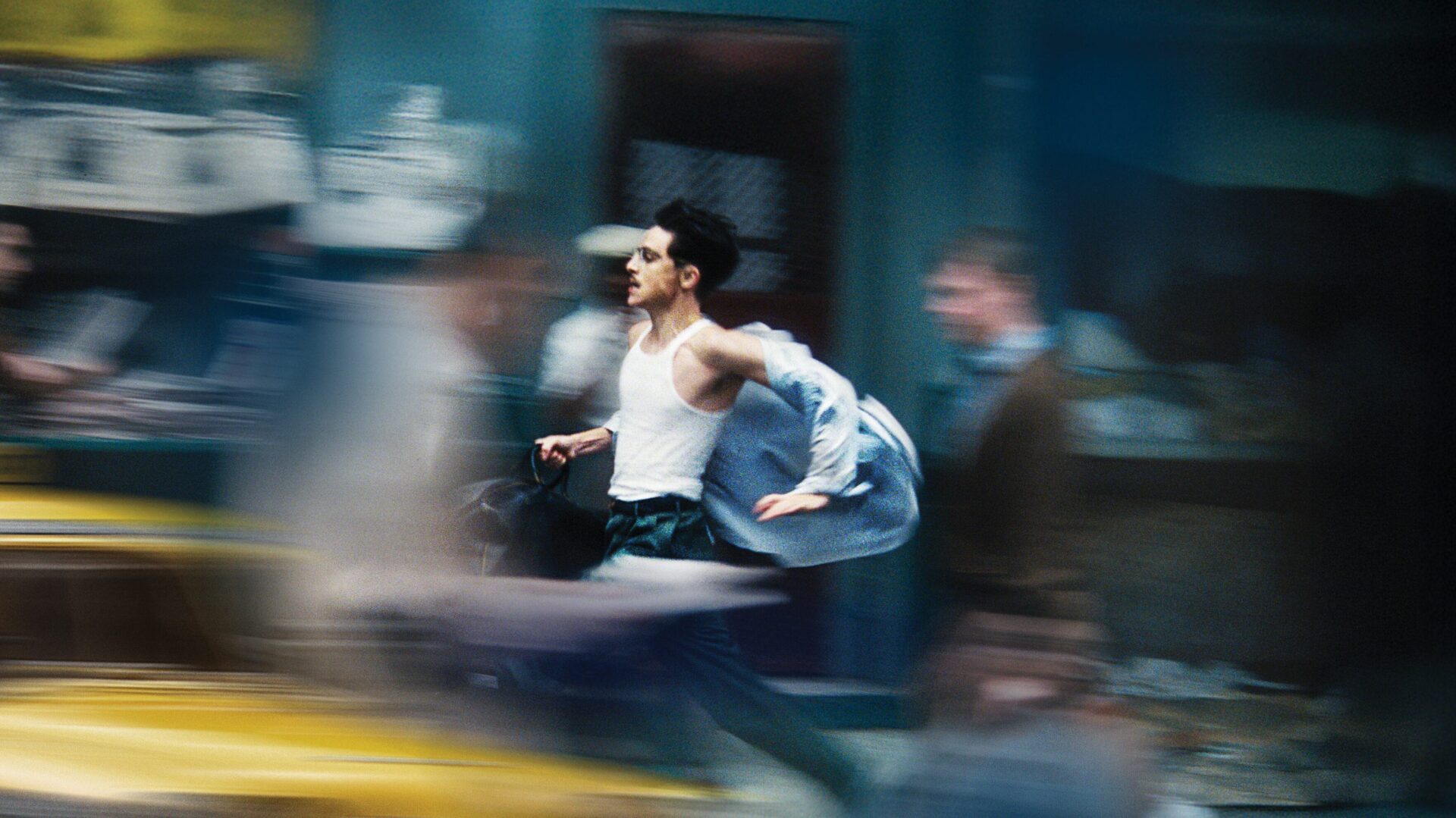
Marty Supreme

A stylish look at the world of competitive ping-pong, with a lack of likeable characters.

Motion-blurred photograph of a young man in a white vest and dark trousers mid-leap on an urban street, carrying a light blue jacket, with blurred vehicles and buildings in the background creating a sense of rapid movement © A24
Marty Supreme / © A24

The New Year is a season where it’s acceptable to simultaneously be looking forward with hope and dreams for the year ahead and look backwards at the year, or years, gone with a bit of nostalgia. Earlier in the week, I was looking back through my blog archives and rereading a few of my old film reviews. And today, I thought, “let’s write a review of the film I just saw: Marty Supreme.  The problem is, I have quite mixed feelings about it.

Marty Supreme Review

I get a bit of a block when writing about films this complex.  Marty Supreme is a fascinating, stylish look at the world of competitive ping-pong. Who knew we cared about that in 2026? But by the time the credits rolled, I felt as exhausted as a player in a five-set match. 

See what I did there?

When the movie starts, you really want to see Marty succeed in his dreams of being a world champion table tennis player. It’s not an unrealistic ambition; he has the talent and is playing in the right contests.  Unfortunately, he has no backers and no money of his own. Competing for him is a challenge, not of talent, but of resources.

As the story progresses, however, any sympathy I had for his predicament starts to evaporate. Marty doesn’t just have a “win-at-all-costs” attitude; he becomes genuinely dislikable. The story turns from an underdog tale to that of a man who is his own worst enemy. He treats the people around him like tools to further his dreams rather than as humans, and I found myself less interested in whether he won the game and more annoyed by how he treated others.  Which, in itself, is a bit of a feat as none of the others are likeable either.

The biggest hurdle for me was the ending. After two hours of Marty being a selfish narcissist, we are expected to believe he’s changed because of a choice he makes. But was it really a choice? Marty’s apparent growth feels forced by circumstance. If he hadn’t been kicked out of the tournament in Japan, would he have ever gone to that hospital? Probably not. It feels less like a man finding his true self and more like a man who ran out of other options.

The film is also filled with characters who feel as if they belong in a different movie, or at least not in this one. The dog-owning gangster and his dog, Moses, felt particularly unnecessary.  I am not sure how much the story needed their presence; the same impact could have come from other, underused characters. Characters pop in and vanish without a trace. Maybe that’s the intention, but it feels disconcerting. Oh, and what’s the orange ping-pong ball bit meant to convey? 

I generally enjoyed the film, but the length became an issue for me. Because there were no likeable characters to root for, the latter half of the movie started to drag. When you don’t care if the lead character wins or loses, you start to feel every minute of the runtime. I wonder if it would have been a better experience to have had a little bit less of it. 

That said, the performances are superb; Chalamet conveys Marty’s ambition brilliantly.  Gwyneth Paltrow’s portrayal of a trophy wife in a marriage she hates is similarly wonderful, but it doesn’t mean I’m rooting for her. 

See it for the style and the performances, but make sure you have a comfy seat and don’t expect to fall in love with the hero.

Here Comes Capital

I do find it heart-warming that, while the comments are in the main equally predictable, they show that people are still passionate about the radio station they listen to.

I tweeted earlier about an article in the Guardian that spoke about Capital FM’s UK roll-out. More specifically, it was written from South Wales, where Red Dragon Radio has been re-branded Capital. While I think most of the article trots out predictable arguments (networking is bad, local is good, and that name will never work) that, personally, I find nonsensical (there was networking under the old name, most speech wasn’t local under the old name and the old name wasn’t that station’s original name anyway- CBC anybody? Gwent Broadcasting anybody?) I do find it heart-warming that, while the comments are in the main equally predictable, they show that people are still passionate about the radio station they listen to.

Change is always a challenge for everybody, but in the end, if the music’s the kind I want to listen to and the ‘talkie-bits’ are funny and/or interesting enough, then it will succeed. And given that music is the key ingredient for a music station, it could be played from Mars as long as it’s well put together. Given that, I wonder how long they will continue to play different tracks for the London feed. Why bother?

For Global Radio, it is a relatively brave move (but probably less so since the Heart rebrand seems to have worked out quite well). Since the early 70s launch of legal commercial radio, the UK has lacked strong, national commercial radio brands, and Global now have several under its belt. The difference now is that they can launch a national brand with a set of technologies that actually work, allowing those stations to benefit from a little of both worlds: local presence and national recognition.

That’s not to say we shouldn’t have strong local brands too. What Orion Media are doing where I grew up in Shropshire (and the rest of the Midlands) is interesting: pushing the localness of their offering. Even there, however, there’s a good amount of networking.

To compete today, radio has to use all the technology it has available (and that inevitably leads to smart networking) and build a recognisable brand. It’s really interesting to watch.

Elsewhere: An Insiders View Of Government

The diary format is easy to dip into – and that had been my intention – but I found I was hooked and could spend many hours reading; it’s not a slimline book!

I just posted a review on Goodreads and Amazon of Chris Mullin’s account of life inside the Labour government.

A View from the Foothills

A View from the Foothills by Chris Mullin My rating: 4 of 5 stars

As an insider’s view of life as a Labour MP and, at times, as a junior Minister (transport and environment/Africa), this is a compelling read. The diary format is easy to dip into – and that had been my intention – but I found I was hooked and could spend many hours reading; it’s not a slimline book! The inner workings of government are fascinating: Mullin has a particular dislike for the poorly written speeches he was expected to deliver; the excesses of Ministerial cars and the fact that, as a Junior Minister, it seems impossible to actually get anything done. It’s interesting to see that a relatively small number of MPs – mainly those nearest the Prime Minister – can actually do very much at all; the rest are expected to tow the party line. Mullin was not that close to The Man, but he certainly has a different view than most of us. Of most interest historically, of course, are the discussions that led to the UK’s support of the Iraqi war, but if you’re interested in how much of government works, this is possibly better positioned than some of the bigger names.

View all my reviews

Curns’ Ad Links for 4 January 2011

The Grand Old Duke

A backstage tour at The Duke of York’s Theatre is a fascinating look at the old London theatre.

It is often said that those of us who call London home do not benefit from the great advantages that the capital city brings. People have been heard to suggest that Londoners do not use London. Well, glancing through a copy of this week’s Time Out, I came across the backstage tour of The Duke of York’s Theatre on St. Martin’s Lane and decided to go. The tour wasn’t very expensive and lasted almost two hours and I reckon it must be one of the best value guided events around.

It is a fascinating tour of the old London theatre that was built when the area was underdeveloped and helped transform that side of Charing Cross Road into the entertainment area it is today. It’s the theatre that first staged Peter Pan, the theatre that first saw actors agree to the formation of UK Equity, and it has seen many greats play its stage since.

I can now say that I have appeared on the West End Stage, and standing on the stage looking into the auditorium, I was surprised at how close theatregoers would appear to the actors. I was also struck by how small the stage area really was and by how big the under-stage area is. Also intriguing to know that Capital Radio once owned it.

A lesson learned, that’s for sure. I will be spending more time each week with the what’s on listings and trying to take advantage of some of the things this city has to offer.