Blog

Festival diaries 2026, day two

A breezy second day at Seaclose Park brought Scottish singalongs, polished pop nostalgia, a country detour, and the sensible decision to watch Calvin Harris from Ryde with a sandwich.

We were rested, just about, by the time we were on board the open-top shuttle bus that whisked us to Seaclose Park for day two. The breeze was quite extreme, but I quite liked it. PY less so. My festival hat was tied under my chin to make sure I arrived at the field with it still in my possession. We were much earlier today, and the bus was not even half full. Our original intention had been to see a Frank Sinatra tribute. We ended up stopping off at The Last Chance Saloon, where there were picnic tables in the morning sun, with Andrew Jones performing a mix of his own music and country classics. When coupled with the excellent coffee we found and the hash browns with maple syrup and bacon bits for breakfast, it was the perfect way to start the day: relaxed, comfortable, and with a great soundtrack. I almost didn’t want the walk to the main stage.

But to the main stage we did go, and I am very glad we did. When there was a quick snippet of Wellerman, I immediately knew who we were watching: Nathan Evans and the Saint PHNX Band. The mix of traditional Scottish folk music and modern rock and pop was a fantastic way to start the day, with the crowd jumping along. It seems important that the early main-stage acts start to pull people forward, and this performance did so. And it wouldn’t be the only time throughout the day that No Scotland No Party was sung out by a Scottish performer to a small but loud group of Scots.

In fact, next up was KT Tunstall, who did her own shout with No Scotland No Party just before she introduced a surprise guest, Jack Savoretti, with whom she performed Tempting Fate. I think the crowd was surprised and excited to see a guest. It says a lot about modern news that, within a few minutes of them finishing the song, there was already a headline: “Surprise as special guest joins KT Tunstall on stage at Isle of Wight Festival.” I really enjoyed Look at Me Now, which she wrote, but it didn’t make the cut for The Devil Wears Prada 2. It was a rock-inspired act to keep the crowd bouncing.

Next, an artist who achieved multi-platinum international superstardom in the 2000s and is one of only a few performers who can go by a single name, and everybody knows who they are: Anastacia. On the way to the hits I remember (I was holding out for Left Outside Alone, and I was not disappointed), we got a cover of Guns N’ Roses’ Sweet Child o’ Mine, which was definitely a crowd-pleaser. If I’d heard it before, I’d forgotten 2001’s Paid My Dues, but I just added it to my playlist. It seems an appropriate song for a performer who has survived the music industry for as long as Anastacia has.

We stayed with the main stage, although PY ran off to find me a beer between sets, for boy band Five, or should I write 5ive? Formed in the late 90s, they were down to four in 2001 when Sean left. When he came back after The Big Reunion TV show, J didn’t. In 2014, Abz left, leaving three of them for about ten years. But another TV show, Boybands Forever (reminder to self: watch this), reunited them, and they’re now on a world tour. What’s best about this history is that by now they have worked out that a setlist full of hits works, and it was a highly choreographed fifty minutes of nostalgic 90s pop hits: Slam Dunk (Da Funk), If Ya Gettin’ Down, Keep On Movin’, We Will Rock You, Let’s Dance. It might not be cool, but it was unexpectedly polished, and sometimes pop bangers are what you need.

The nostalgia fest continued when Rick Astley arrived on the main stage. Although he opened with one of his own 80s pop hits, “Together Forever,” he played a less pop-hit-heavy set, which really showed that he has a great voice. He told a story before performing a cover of Roy Orbison’s Oh, Pretty Woman, in which he claims he was asked to sing for the movie Pretty Woman, but he turned it down, thinking nobody would go and see it. Obviously, a lot of us were waiting for Never Gonna Give You Up, which came at the end of the set, but I don’t think anybody was expecting the cover of RAYE’s Where Is My Husband!, which came early on and was superb. I like it when it’s full of surprises. The set was very varied, full of good songs and a smattering of Rick’s personality.

We started walking back to look for some food. But after Rick, the changeover showed the worst of the Isle of Wight Festival, as getting away from the main stage is a crush of crowds shuffling for twenty minutes. By the time we reached the food stalls, the queues were enormous. We had the option to watch Rita Ora from the back of the field or get food. We took the first option for the opening few numbers, but quite quickly headed to a quieter area for a Greek gyro, a sit-down and some decisions to make about what would be next. From the back, Rita, not sure she can go by one name alone, sounded slick and polished.

Calvin Harris was the day’s headliner, but although I imagine it would be a crowd-pleasing set of huge hits, it would predominantly be a DJ set, and I am lacking the stamina to be in a dance music mosh pit. So we decided to head in the opposite direction and returned to The Last Chance Saloon, via Berlingo Flick’s folk set in The Intoxicated Tearooms. In the country venue, Chasing Twisters were performing a set of country hits, which was a perfect way to end the day, although I wasn’t tempted to join the line-dancing rows in front of the stage.

A little earlier than last night, back in Ryde, we allowed ourselves to stop off for a sandwich and catch some of Calvin Harris’ set on the television. All amazing hits and an impressive light show before an enormous crowd. Maybe we were the only ones who headed out. But he was just pressing ‘play’, wasn’t he?

Festival diaries 2026, day one

The first proper day of a festival is always a mixture of excitement and logistics. Will there be a queue?

While Thursday night might officially be the festival kick-off for those on the campsites, for us, Friday afternoon is the starting point. This year, it seemed a little later than previously, and we had a goal of catching 90s Northern Irish rockers, Ash, on the main stage just after 4 p.m.

We’ve always been very lucky with the shuttle bus to the festival site, rarely having to wait long in either direction. This afternoon, just after 3 p.m., the queue was snaking across the bus station, and we definitely wouldn’t make the first bus, so we got two of the handful of remaining seats on the next one. With the sunshine, I was glad I had a hat. There was a queue of traffic on the climb out of Wootton Bridge, which I feared would mean a crawl to the festival entrance, but we pretty much reached the speed you’d expect for a slightly old, borrowed-from-the-mainland bus full of festival-goers and a surprising amount of luggage.

Once again, I was impressed by the organisation on the way in: a quick bag search, a wristband connected, and the twenty-minute walk from the entrance to the main stage began. As always, the flags were fluttering, welcoming us. Almost immediately, we noticed a new venue, The Last Chance Saloon, opposite the Electro Love tent. Country and folk music are definitely growing in popularity.

First stop: a tap to top up empty water bottles; second stop: a photo with the festival sign; third stop: the bar for a pint, making sure we used the PayPal debit card to secure the 20% off food and drink. Over the weekend, I imagine the savings will add up. There was a big turnout for Ash. I didn’t think I was familiar with their work, but, surprisingly, I discovered Shining Light and Girl From Mars, which burst that theory. Also, a cover of Jump in the Line seems to be one of their live performance standards and was perfect for getting the crowd singing along. It’s a strange cover and seemed a little out of context initially, but by the end, I was singing along with everybody else.

We stayed around for Alessi Rose, a Derby-born English pop songstress who seems to be on the up-and-coming list. It was a great pop set, and I thought she balanced the idea that a lot of the crowd wouldn’t know who she was very well. She’s got a lot of youthful energy and managed to build a connection with the crowd. First Original Thought is already on my playlist.

The trek back to Electro Love is long, but sometimes necessary. A couple of years ago, we caught ‘Real Dead Ringer’, a Meat Loaf tribute act, and they were fantastic, so we were determined not to miss them this year. It was a very energetic performance, which must have been hard work in the tent. Another set of all the biggest hits, including Dead Ringer, Two Out of Three Ain’t Bad, Dead Ringer for Love, and I’d Do Anything for Love, was over too quickly, although it was nice to escape the heat of the tent and wander back to the main stage.

Before the walk, a pit stop for dinner from a Mexican food truck. The caramelised aubergine burrito I had was flavour-packed and delicious. I am just glad I picked up a fork, because it would have been impossible to eat otherwise. My festival seat, really a mushroom-shaped stool, has been a real bonus, allowing me to rest and keep my feet from hurting too much. And I don’t need to try to sit on the floor.

Wet Leg were already on stage by the time we’d walked back. They are considered a local band, as some band members have lived on the island and are products of the local Platform One College of Music. I knew none of the songs until Chaise Longue was performed. We managed to get a decent position about halfway back in the standing area, but they used a lot of stage smoke, so I ended up watching the screens just to see the band. Obviously, there was a lot of support from the crowd, which created a great atmosphere.

As that was finishing, we made an exit to the ‘This Feeling’ tent to see Finn Forster, another up-and-coming British performer. The set was really good. He’s a confident performer, and it was well worth the little detour to a stage we don’t often visit.

Then it was the Friday headliner and BRIT Award winner, Lewis Capaldi. There was quite a crowd, and we watched from quite a way back in a little bit of space we’d carved out near the bar. The crowd was definitely up for a show, and by his own admission, there were a lot of ballads, but nobody was bothered. After about half an hour, though, we decided that it would look even better on Sky Arts later and opted for the bus.

Weeknotes #177: beers, sales and barbecue

Quiet week grows into theatre, reflection, memorial, barbecue, and lunch.

Week commencing Monday, 8 June 2026

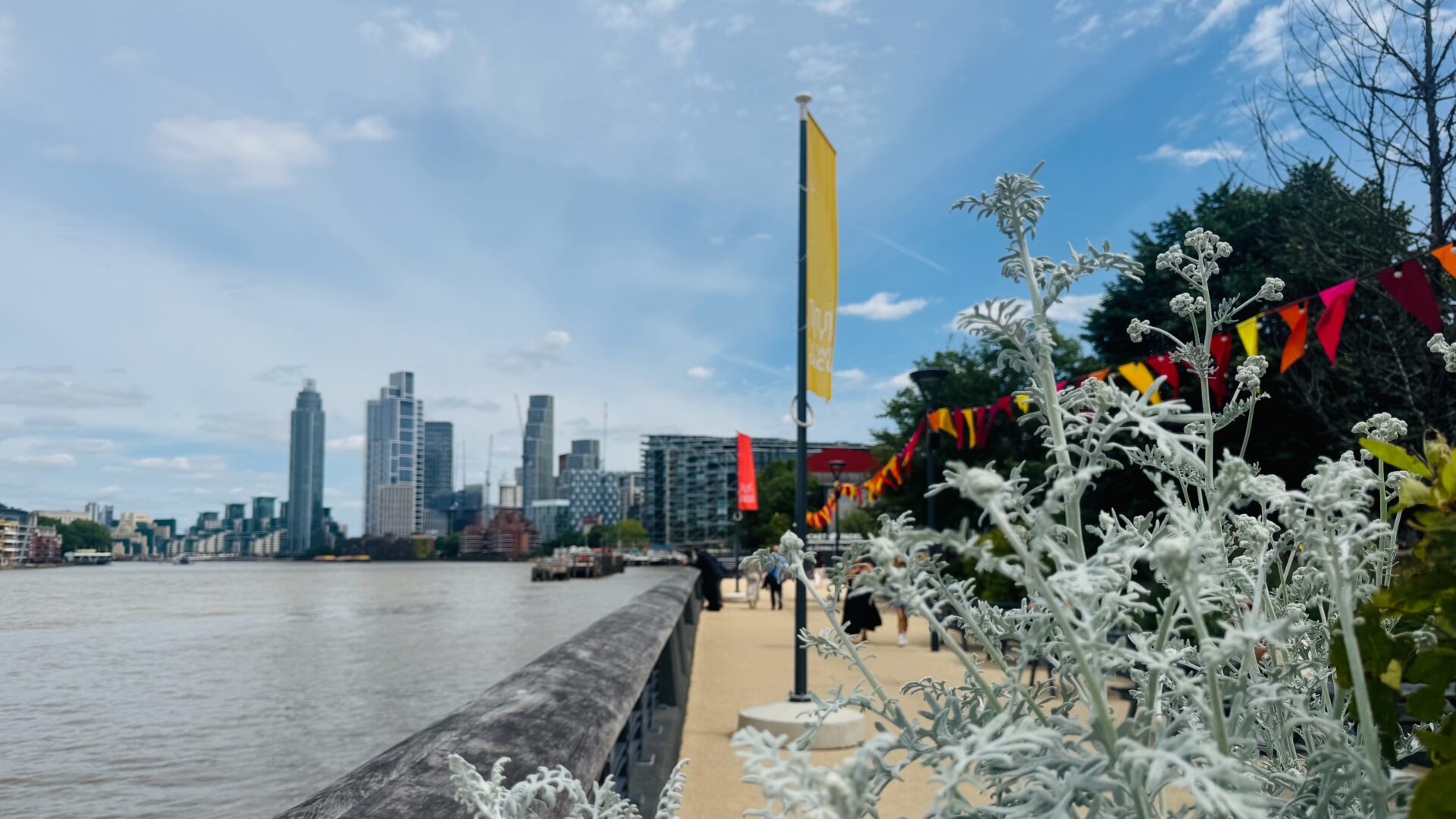
A riverside promenade along the Thames at Battersea Power Station, viewed on a partly cloudy summer's day. In the foreground, silvery-white dusty miller plants grow in raised planters beside a stone balustrade. A yellow banner on a lamppost and colourful bunting in red, orange and yellow hang along the walkway, where a few pedestrians stroll. Across the river, the Vauxhall skyline is visible, with modern high-rise residential towers rising against a blue sky scattered with white clouds.
Silver plants frame a sun-dappled Thames, Vauxhall beyond.

Quantified Self

  • This week: Stand 6/7; Exercise 2/7 and Move 4/7. (%). Morning walks: 0/4. Office days: 1/5. Total steps: 42,088. 13 hours in meetings.

Life

  • A quiet start to my week. My diary for Monday and Tuesday features a coffee pot and a plastic bag.
  • But I got out on Wednesday night to meet an ex-boss of mine. We chatted a lot about the product management space at the moment and the relentless pressure to use AI in everything, even if we’re not clear what it will do. There was broad agreement that, in some cases, AI has become a priority for companies, and product teams are being asked to demonstrate usage because leadership wants evidence that the business is becoming more efficient, innovative, and “AI-ready”, even before everyone is clear on where the real value lies. Interesting to get a consensus. A bit deep, but the beer was good.
  • Thursday, to The Old Vic for Glengarry Glen Ross, about desperate Chicago real estate agents trying to survive a brutal sales contest, where the best leads are fought over, and morality is the first thing to go to make a commission. The talking point is the gender switch, where characters written as men are played by women.
  • Related, I thought the gender switch was intriguing, but it mainly made me realise that anyone can be a ruthless salesperson when there’s money on the line.
  • On Friday, we were at a crematorium for a short memorial. It was very nicely done.
  • Saturday, a lovely barbecue in the garden. We got the BBQ out of the cupboard, which means it’s out now until the autumn.
  • The new Battersea Power Station had a wine festival, but we didn’t go for that; instead, we opted for a nice lunch by the river.

Weeknotes #176: lock, rock and rail

Theatre, music, museums and kindness outweighed boiler and train frustrations.

Week commencing Monday, 1 June 2026

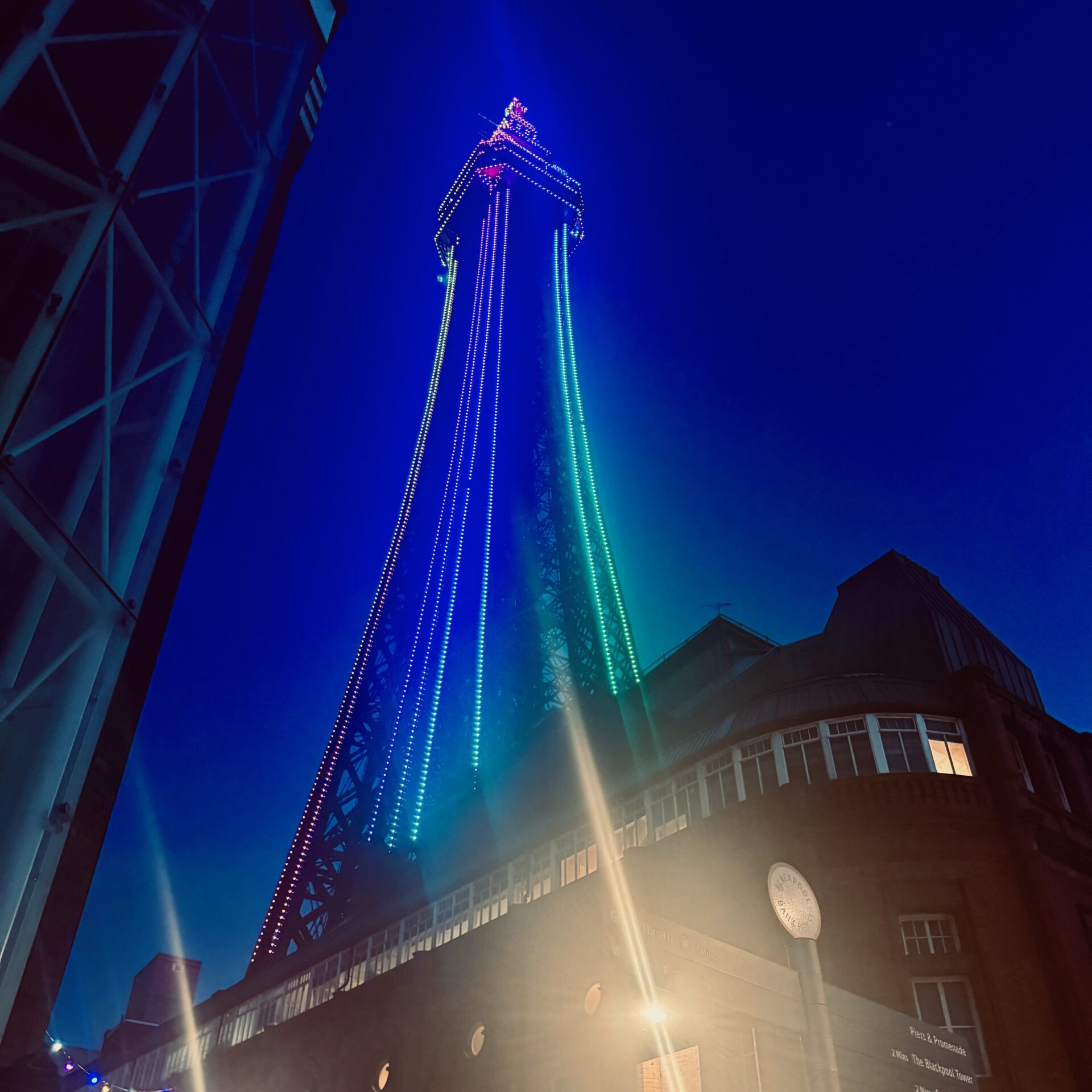
Blackpool Tower illuminated in rainbow Pride colours against a deep blue night sky, photographed from street level looking upward. Strings of LED lights in red, orange, yellow, green, blue and violet cascade down the tower's steel lattice structure. A warm streetlamp glows in the foreground, and the curved facade of a Victorian brick building is visible to the right, bearing a sign reading "Blackpool Promenade".
Blackpool Tower blazes in Pride colours under the Saturday night sky.

Quantified Self

  • This week: Stand 4/7; Exercise 4/7 and Move 4/7. (57%). Morning walks: 0/4. Office days: 1/5. Total steps: 62,668. 14.3 hours in meetings.

Life

  • Monday was definitely a day of two contrasting customer service standards.
  • First, British Gas was scheduled for the boiler service. I was up early to make sure I was ready for their text or call, which came just before noon. I emptied the cupboard around the boiler so they could get in to service it and watched their van arrive on the street. A few seconds later, I watched the van turn around in front of our house and drive off. It was followed by a text stating they couldn’t access the property. No follow-up call; nobody got out of the van.
  • Then, I called the insurance company about the jammed front door. They sent a locksmith, who took one look at the door, confirmed they had a replacement mechanism, got the required approvals, and, within twenty minutes, we had a new, fully functioning lock. And very friendly service.
  • I learned this week that news isn’t getting preserved in the Wayback Machine anymore because major media outlets are blocking it. This is bad for the future. Stop, and sign the petition.
  • We saw a ticket offer for Dark of the Moon at the Charing Cross Theatre on Wednesday — a new-ish musical based on a 1945 play, with a preposterous but interesting supernatural plot about a witch boy and a human girl whose love is undone by small-town intolerance, a theme that feels no less relevant today. The staging was clever, the score impressive given the pedigree of the songwriters, and Glenn Adamson as John the Witch Boy was the standout — all rock-god energy with real emotional range.
  • Related, I wrote up a full review on my blog.
  • Thursday, to the pub that’s opened up in place of Dear Grace. It’s called BloomsYard (without a space!). Fancy.
  • Friday was all about delayed trains on the way to Blackpool. I’ve written about that too.
  • Saturday, in Blackpool to see Beverley Knight’s Born to Perform tour. The show itself was two full sets with an interval, taking us on a journey through her career in soul and on to her musical theatre work. Every song had a story, which is just how I like to see artists, and she told them all beautifully. The whole room was on its feet by the end. A brilliant night.
  • Related, I wrote about the concert.
  • Sunday, to Showtown, a museum dedicated to Blackpool’s history as a holiday destination and a place to be entertained. It was a wonderful way to spend ninety minutes. On the way out, they asked us to write a review, so I did a longer one on my blog and a shorter version for review sites. I hope more people get to enjoy it.
  • Don’t ask about the train back. That was worse.

Media

Showtown: Blackpool History

A golden age of entertainment

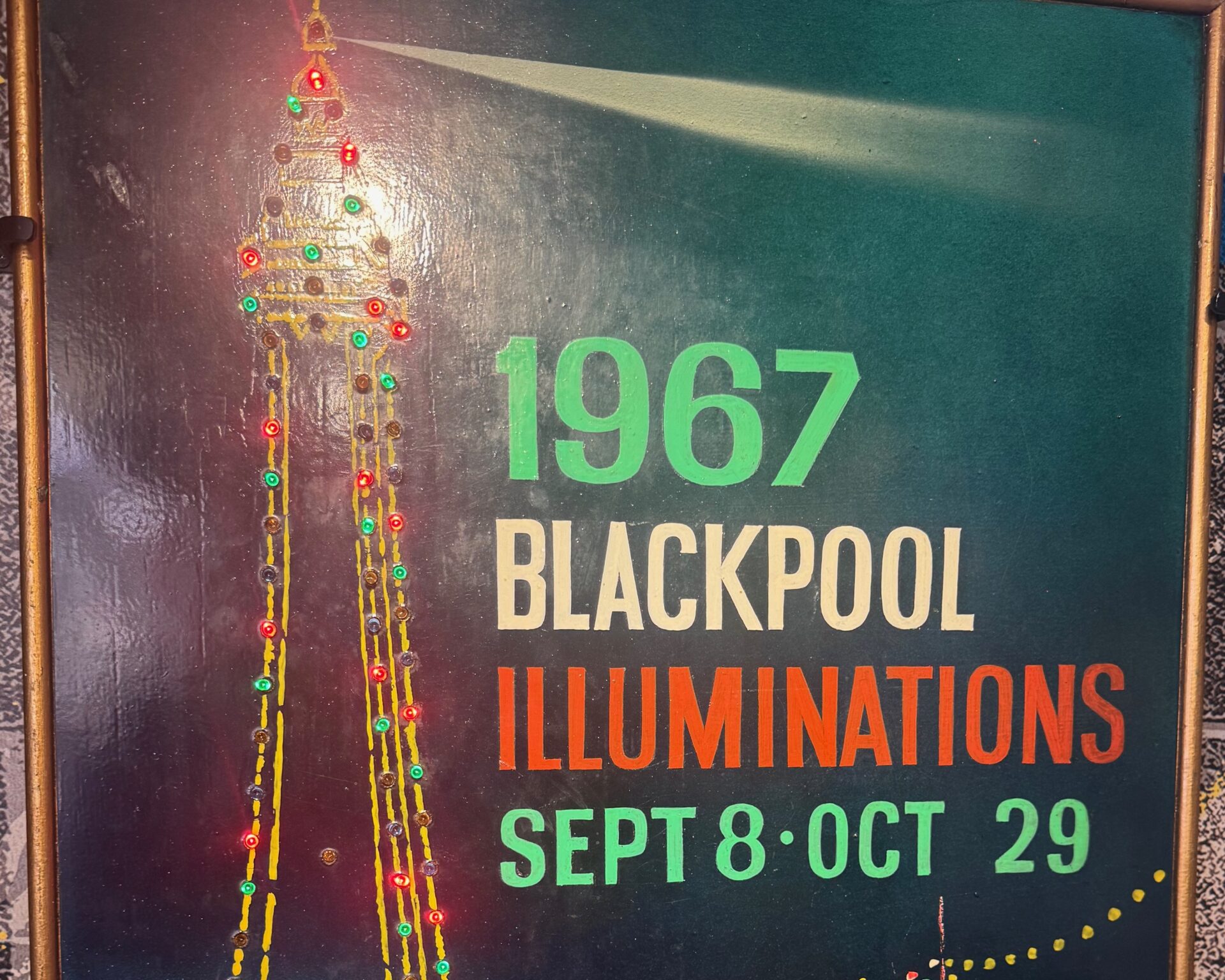
A vintage promotional sign for the 1967 Blackpool Illuminations, running from 8th September to 29th October. The painted board features Blackpool Tower adorned with strings of coloured lights cascading downwards, set against a teal background with a searchlight beam. The text appears in green, white, and orange lettering. The sign is displayed at the Showtown Blackpool museum.
Vintage 1967 Blackpool Illuminations poster, on show at Showtown.

These days, Blackpool isn’t quite the same as it was during the golden age of seaside entertainment, when comedians, singers, and variety acts filled theatres all summer. At least, that’s my assumption. I wasn’t around for the so-called heyday.

Back then, I imagine, the promenade was full of laughter, music, and the smell of chips and vinegar, with neon lights promising fun everywhere you looked. Most of that world has faded as holidays changed and entertainment moved on, but the Showtown museum, which we found almost by accident today, does a great job of showing why Blackpool was once one of Britain’s top holiday spots.

The museum is just off the promenade, tucked away (almost) behind the Tower. I don’t think many people find it by chance, which is a pity. The exhibition celebrates Blackpool as a place built on entertainment, escape, magic, bright lights, performance, and the belief that everyone deserves to have fun.

I really enjoyed visiting and would recommend it to anyone.

After you pass the entrance and gift shop and head upstairs past the handy lockers, the museum tells Blackpool’s story with a good mix of objects, films, photos, and interactive displays. It’s easy to get around, well laid out, and really helps you see everything Blackpool has offered over the years. One of the first things I did was look through a beachside telescope to see old photos from Wakes Weeks, which were especially interesting. There were lots of black-and-white pictures of people on the beach, all dressed in their best clothes instead of swimsuits. Those photos showed a time when whole towns would head to the seaside together, looking for the fun that Blackpool was made for: factories closed, bags packed, trains full, and everyone was off for a week by the sea with friends and neighbours.

That history meant a lot to me because Blackpool was part of my childhood too. My grandparents spent many holidays there during the Wigan holiday weeks, so we often visited as kids. One of our family traditions was driving through the Illuminations with Dad, watching the lights go by from the back seat. I was always excited to spot the illuminated trams travelling along the Prom. Seeing that story in the museum, with many of the famous Illuminations designs on display, made the experience feel personal.

The Illuminations section was one of my favourite parts. It treated something that might seem like a cheesy seaside show with respect. Of course, it is a contrived spectacle, but when I was eight, it was an exciting one. Blackpool has always known how to put on a show, whether that’s lighting up the promenade, filling a (Strictly) ballroom, hosting variety acts, or giving people stories to share on the way home while eating fish and chips.

I also enjoyed the displays about dance. Blackpool’s links to ballroom dancing, social dancing, and nightclubs (sometimes that early-90s late-night student favourite, The Hitman and Her, was filmed here) give the town a history that’s both glamorous and down-to-earth. You can even stick your head through a slot and try all the dances without moving a muscle. It’s not just about TV shows; it’s about people dressing up, going out, and having fun, especially when this was their one week off from factory work.

Showtown isn’t a large museum, so it’s easy to visit in about an hour. It wasn’t crowded when we went, which made it simple to get around and try out the interactive displays. There’s plenty to think about, lots to make you smile, and many things to try, all helping you appreciate a town that has spent generations entertaining people.

Visiting left me feeling even more fond of Blackpool. For all its jokes, kiss-me-quick hats, and neon lights, Blackpool has brought a lot of happiness to many people, including my family. Showtown shares that story with warmth and just the right amount of showmanship.

Beverley Knight: Storytelling Soul

Beverley Knight was Born To Perform

Beverley Knight performing on stage at a concert in Blackpool as part of her Born To Perform Tour. She stands centre stage wearing a black leather outfit with fishnet tights and heeled boots, holding a microphone. Behind her, a full band is visible, including keyboard, guitar, and drum players, beneath dramatic red stage lighting and a swagged curtain backdrop.
Beverley Knight owns the stage on her Born To Perform Tour.

I must have said it somewhere before: when I go to a gig, I like to hear the stories behind the songs or the recordings. It doesn’t matter if the setlist is simply a sequence of songs the artists thought would sound great, or if it’s a list where the songs become a story. Beverley Knight’s show at Blackpool Opera House tonight was very much the latter. I loved the energy of the evening, and judging by the audience, who were on their feet by the end, we weren’t alone.

The evening kicked off early. Around 5pm, we arrived at the Blackpool Opera House and were given a lanyard and a goodie bag. About thirty minutes later, a small group of us got to go into the theatre for the ‘soundcheck’—an extra experience you can add to your ticket. There were probably about forty of us. It wasn’t the actual soundcheck, but Beverley performed a couple of songs and answered questions from fans. People asked things like who she’d like to collaborate with, and someone even said hello who went to her school in Wolverhampton. It was great to hear some stripped-back songs and have a chat before we left for a drink and then came back for the main show.

The first half of the show was all about her journey in soul music. She opened with “Were You There” as a tribute to Sam Cooke, who has been a huge inspiration for her. That gave the start a real gospel vibe before she moved into her own story; singing in church, showing early talent in British soul, and going through the highs and lows of a long career. It was a great way to set the mood for the rest of the night.

Songs like “Flavour of the Old School,” “Made It Back,” and “Shoulda Woulda Coulda” tell the story of her early days. But BK’s career hasn’t always been a smooth ride. Some of her early records received a lot of praise from critics but didn’t get as much attention as they deserved. Later on, around the time of Affirmation, she found more success, but it also meant facing new pressures and making some compromises to reach a larger audience.

Every song shared a piece of her story, but the most personal moment came later in the first set. “No One Ever Loves in Vain” was especially moving. Knight sang it as a tribute to her friend Tyrone Jamison, who died from AIDS. That would be touching on any night, but on Saturday, 6 June, with Blackpool Pride happening nearby, it felt even more powerful. The song about memory, friendship, grief, and defiance really connected with the audience, who showed their support with cheers from all around the hall.

Of course, she performed some Prince covers. “Raspberry Beret” and “I Feel for You” made it clear how much Prince has influenced her and showed how she fits into the bigger soul and pop world. One of the highlights was hearing her talk about the songs, especially her memories of meeting and playing with Prince at his famous post-concert shows at Indigo O2.

It’s not common for a gig, but after the support act (the fantastic Gabriella Cilmi), the Born To Perform tour had two sets with a break in between. The second half focused on her theatre career, starting with “Memory” from Cats, which was a powerful way to kick things off. I don’t think I’ve ever heard a version so amazing and strong. After that, she performed songs from the shows that have shaped this part of her career: The Bodyguard with “Queen of the Night,” Sister Act with “Take Me to Heaven,” The Drifters Girl with “Harlem Child,” Memphis with “Love Will Stand,” and Sylvia with “March, Women, March.” It really showed how her voice has moved from soul music into musical theatre without losing any of its power. If the first half was about Beverley Knight, the soul artist, the second half was about Beverley Knight, the storyteller.

When she got to “I Am What I Am” and the final “fire” medley, the whole room felt like a party. The ending was full of energy and generosity, and the encore brought the night to a close with everyone back on their feet. “Soul Survivor” feels like the show’s message: a story of persistence, talent, and survival. After that, Gabriella Cilmi came back on stage to sing “Everything’s Gonna Be Alright” with Knight.

It was the perfect way to end the night. After a show that took us through gospel, British soul, loss, pride, theatre, and celebration, everyone left feeling warm and hopeful. This journey through BK’s career was more than just a greatest-hits show; it told her life story through songs and stories, with a voice that can fill a room with joy. Netflix should make this into a music documentary; it’s such an uplifting story.


Beveley Knight, Born To Perform Tour tickets are still on sale for dates across the UK.

Dark of the Moon

Adamson’s rock god lights the darkness.

The stage set of Dark of the Moon at the Charing Cross Theatre, bathed in deep blue light. Wooden barn-like structures flank either side of the stage, with a large, luminous full moon glowing at the centre between the buildings. Silhouettes of rooftops and distant mountains are visible in the background, creating an eerie, atmospheric night scene.
The dark of the moon has never looked so inviting.

I hadn’t heard of Dark of the Moon until we came across a ticket offer for tonight. Charing Cross Theatre is turning into a great spot for new (to us) musicals—we’ve seen Mythic, Violet, and Stiletto there over the past few years.

I don’t know the play Dark of the Moon is based on, but apparently it’s reasonably well regarded, according to The Internet. But I have to get this out of the way right at the start: the plot is preposterous. A witch boy falls for a human girl, strikes a deal to become mortal, and everything unravels when small-town prejudice and temptation intervene. It is a supernatural folk story, and I guess there is no rule that says it needs to be plausible. But it takes a bit of time to flip the switch that allows it to seem normal.

Richardson and Berney wrote this in 1945, and yet it doesn’t feel like a period story. Sure, the setting of a tight-knit Appalachian community closing ranks against what it doesn’t understand is not familiar (perhaps with the exception of some country music songs), but the dynamic is not. Intolerance doesn’t need a small town; it just needs enough people convinced they’re protecting something worth protecting. And that seems like a very contemporary theme to me.

What impressed me almost immediately was the staging. For what I believe is still an early-stage production, Libby Todd’s set is simple, but cleverly used. The village opens up to reveal its houses and shops, then closes back in to create a village square — or clears itself entirely to give the witches their performance space. Better still, the building rooftops serve as the witch world’s domain, a neat metaphor for the coven’s life high in the Smoky Mountains above the town.

The music and lyrics come from Grammy Award-winning, multi-platinum-selling songwriters Lindy Robbins, Dave Bassett and Steve Robson, and you can hear the quality in it. Ordinary Life, one of the opening numbers and recurring themes, sounds right out of the bluegrass country that I imagine when somebody says Smoky Mountains, yet it is also contemporary. Where some reviewers have found the blend of country, bluegrass and rock uneasy, I thought the rockier numbers integrated well. They bring a burst of energy at times. Certified Rockstar, in particular, is a genuine stand-out, a song that could hold its own in a much bigger show.

Much of the credit for that goes to Glenn Adamson as John, the Witch Boy. He is, possibly, best known for playing Strat in Jim Steinman’s Bat Out of Hell, and those echoes can be heard in the production. Adamson, in full rock-god mode, is captivating, and he brings to life John’s bewilderment at everything it means to be human, with the full spectrum of emotions, which keeps the character interesting even when the plot strains credibility.

One dramatic device did wear on me, however. A character from the past — a former witch, a kind of predecessor whose fate shadows the whole story — is sign-posted rather too heavily from early on. The telegraphing is so persistent that the eventual revelation lands with a “d’oh” rather than a gasp. I can’t remember the name you should be listening out for.

The ending. I won’t spoil it, but I left the theatre wishing the writers had taken the other path — the one I’d hoped for — even if that might have strayed too far from the source material. Perhaps my preference for the alternative ending means the show has done its job of making me care.

Nominated for thirteen Fringe Theatre Awards, and not without reason. A flawed but genuinely interesting piece of new musical theatre, with several star performances at its centre: I didn’t mention Barbara Allen (Lauren Jones), who is also fantastic.  Go and fill the theatre.

Weeknotes #175: Seaview and shuffleboard

Warm days brought sea views, friends and movement.

Week commencing Monday, 25 May 2026

Panoramic view of a sandy beach at low tide on a sunny day in Seaview, Isle of Wight. Rocky gravel foreground leads to a wide expanse of sand dotted with seaweed and wooden posts, with calm blue water and boats visible in the distance. A lone figure stands beside a small dinghy. Residential properties and a sea wall frame the right side.
Bank holiday bliss at sun-drenched Seaview, Isle of Wight

Quantified Self

  • This week: Stand 7/7; Exercise 5/7 and Move 6/7. (86%). Morning walks: 0/3. Office days: 1/4. Total steps: 54,340. 10.4 hours in meetings.

Life

  • Britain experienced its hottest day in May on record on the Bank Holiday, as temperatures reached 34.8°C. And it was hot all week. In my home office, the fan was needed when the room temperature exceeded 30°C.
  • Bank Holiday lunch in Seaview. By luck, the table had a direct view out to sea, and we could see all the boats moored by the sailing club and the RIBs shuttling people to and from their vessels. It was quite fascinating to watch the number of people, loaded up, being taken by RIB to their boats.
  • Wednesday, I decided to go to the gym. I only did an indoor walk, but it was a start. The gym was nice and air-conditioned, but it was also quite refreshing outside as the air cooled. I’d had the windows open upstairs, so we also had a lovely breeze through the house.
  • My memory message celebrating the 50th anniversary of the West Shropshire Talking Newspaper has been published. I must post it here when I get a moment.
  • A group of us played shuffleboard in a bar near the office. We didn’t play by the rules, even though they were set out on a board in front of us. We scored every puck; I think only the team with the puck closest to the far end of the board scores points for that round. It was fun.
  • Friday, people for dinner, snacks in the garden in the heat. I think they call them picky bits these days.
  • Saturday, I ended up going down rabbit holes trying to figure out if I could move all my emails and websites to European-hosted services. It turns out that it is more difficult than I imagined, and more expensive. Perhaps I’ll think about it some more.
  • Sunday, Next had a smaller version of the sofa we wanted to look at. The Crazy Coqs did Wicked and The Wizard of Oz, which, in turn, gave us 15% off for a drink afterwards.

Media

Weeknotes #174: no stress travel

Heatwave sunshine, island travel, good food, and calm disruption recovery.

Week commencing Monday, 18 May 2026

A dark green warning sign reading "Beware of traffic" with a yellow hazard triangle, mounted on a post amid long grass and dandelions at the edge of a gravel path. The path stretches into the distance through open meadows flanked by mature trees under a clear blue summer sky at Osborne House, Isle of Wight.
Rush Hour at Osborne House

Quantified Self

  • This week: Stand 6/7; Exercise 5/7 and Move 6/7. (%). Morning walks: 0/4. Office days: 1/5. Total steps: 57,681. 14.7 hours in meetings.

Life

  • At the start of the week, I noticed the sun, which was a good indication of what was to come by the end of the week. On Monday, I was frustrated that I wasn’t up early enough to get out for a walk and enjoy it, but by the end of the week,I was enjoying the heatwave.
  • Andy Burnham, the well-regarded Mayor of Greater Manchester, was, this week, confirmed as the Labour Party’s candidate for the Makerfield by-election, due to be held next month. Why would you want to go from something a lot of people think you’re good at to something nobody will like you for, no matter how good you are?
  • The Office for National Statistics confirmed that net migration to the UK fell to 171,000 in the 12 months to the end of December 2025. Despite the figures, research published on the same day found that most of the public believed migration had risen, with only 16% aware that it had, in fact, fallen.
  • Friday, I headed to the station for what was supposed to be a straightforward journey to the Isle of Wight: train to Waterloo, onward to Portsmouth Harbour, then the ferry. The train out of Raynes Park was slow through the early stops but picked up speed after Earlsfield, which seemed good.
  • Related, London Waterloo was not good. A tree had come down on the line somewhere near Walton-on-Thames, and the knock-on effect was considerable. Everything was delayed, nothing was clear, and the app eventually informed us that our tickets could be used tomorrow instead. We made a quick decision: forget tonight, go tomorrow, do something else this evening. No stress.
  • Hence, frozen margaritas in the evening sun on the South Bank. Lovely.
  • So, Saturday to the Isle of Wight. The beach was busy. We managed to get a table at The Dell, where we had a few drinks and watched the world – including a couple of cruise ships – go by.
  • Sunday, to Osborne House. Although we have visited the house in the last five years, it was subject to COVID restrictions back then, and this time, the upstairs apartments were open, which we’d not been able to see before.
  • The weekend highlight was dinner at the Smoking Lobster. We started with a delicious tomato salad and the monkfish bao buns. My sea bass main was seared skin-side, with just the right amount of flake on the fish side; PY’s tuna was cooked to perfection, pink in the middle.

Media

  • The final episode of Race Across the World. It makes me want to travel and see more of the world. They did 51 days’ travelling, which is impressive: 12,000 miles from Palermo, Sicily, to Hatgal, by Lake Khövsgöl in Mongolia.

Weeknotes #173: Seoul European songs

A witty week of quizzes, Eurovision, playlists and Korean food.

Week commencing Monday, 11 May 2026

Menu cover for Six by Nico's Seoul-themed 10-course tasting menu, featuring bold white typography on a dark grey background with a vibrant collage illustration of Korean cultural imagery, including the South Korean flag, traditional armour, street food, and Korean signage reading "Gyeongdong Market".
Six by Nico’s Seoul tasting menu — ten courses, one city.

Quantified Self

  • This week: Stand 5/7; Exercise 3/7 and Move 4/7. (57%). Morning walks: 0/4. Office days: 1/5. Total steps: 39,620. 17.5 hours in meetings.

Life

  • Pub quiz Monday, and we came seventh. PY asked me if I thought all pub quizzes were like the one at The Alexandra. I said that I assumed most British pub quizzes are like ours: mainly social, only partly a trivia contest, and predominantly an excuse to spend two hours in a pub arguing over the name of an actor nobody can quite place.
  • I admit I only came up with the last bit of that line while writing my diary this week. It didn’t actually cross my lips when I was asked.
  • I watched the Eurovision semi-final live on Tuesday. Of the six songs I thought were the best, San Marino (featuring an appearance by Boy George) and Estonia failed to qualify. We had to watch Thursday’s on catch-up.
  • Related, this is the most ‘political’ contest I can remember. I find myself thinking back to chiding Sir Terry Wogan for losing his sense of humour. How quaint that all seems. How I wish that were still the most political thing about it. So, I wrote something about it.
  • Relatedly related, to a small party on Saturday to watch the songs. A lovely evening, and what seemed like a nail-biting finish. Bangaranga!
  • ChatGPT made me a playlist for the Isle of Wight Festival, uploaded it to Apple Music, and explained why it had selected the songs: “It is less a tasteful critic’s guide than a data-led greatest hits tour of the line-up.”
  • Thursday’s dinner was at Six by Nico for the ten-course Seoul tasting menu. Everything was great, but the main courses were fantastic. Black pollock in a Seoul Korean sauce with mussel, clam and ssamjang was outstanding, and the Korean fried chicken — which sounds straightforward enough — was superb. I would happily have eaten considerably more of it.

Media

  • Race Across the World, episodes six and seven. At one point, I welled up a bit. Almaty looked very impressive. Mongolia looks deserted.
  • There was a lot of chatter in the news about the prime minister and whether he would be challenged. I really liked reading former MP Tom Watson’s take on everything, especially his description of how journalists can get themselves worked up about shenanigans: “You can hear the tremor in journalists’ voices whenever a Prime Minister starts to wobble. Nick Robinson’s voice climbed two semitones this week, and accelerated into that special Today programme register reserved for wars, resignations and arrests.”

Nil Points for Innocence

Eurovision, once a source of light-hearted entertainment, is now embroiled in political controversy.

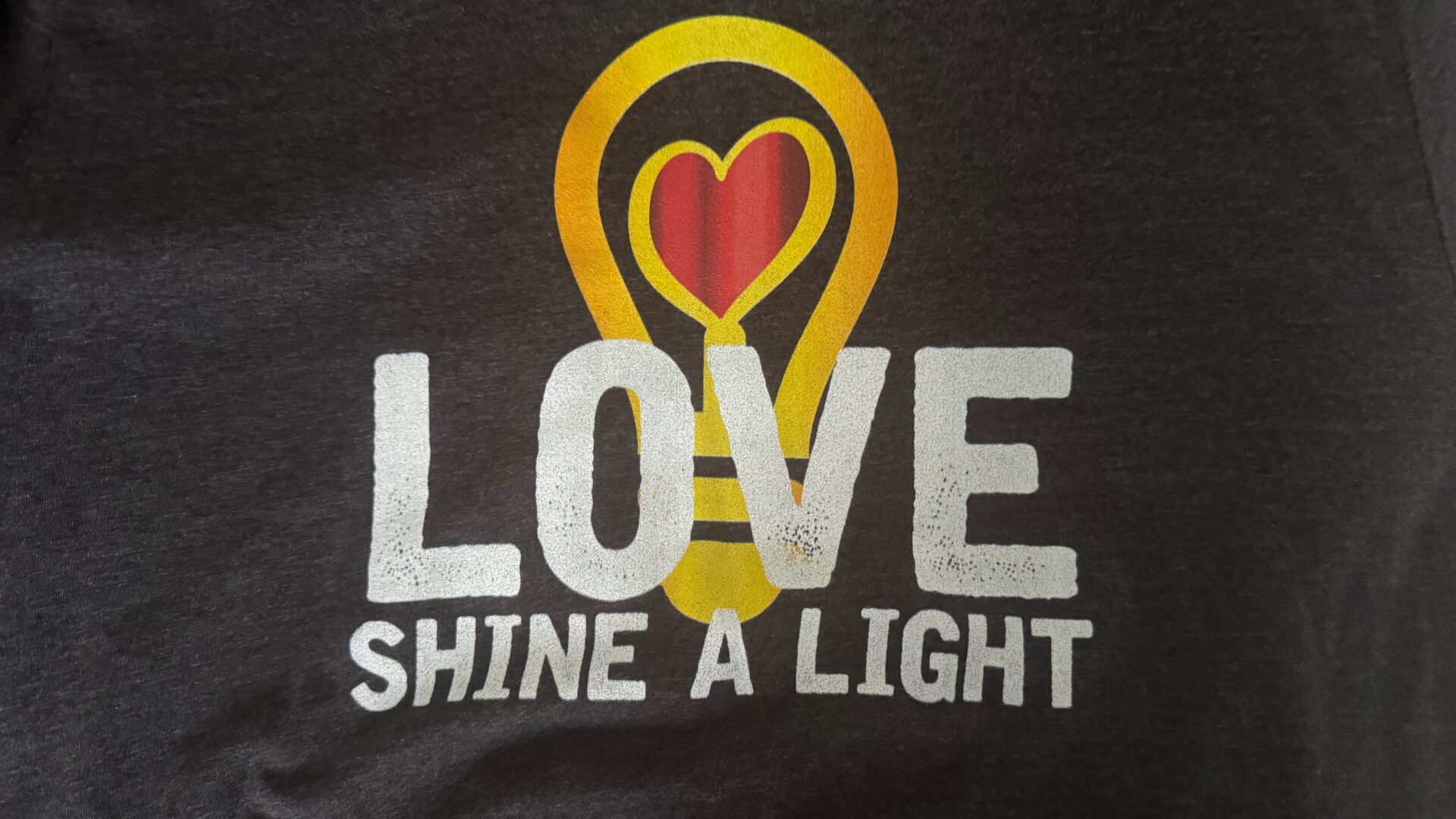
Close-up of a dark grey Eurovision Song Contest themed T-shirt. The design features a gold light bulb graphic in which the bulb's interior forms a red heart shape, with the filament stem extending below. In bold white text beneath the graphic are the words "LOVE" and "SHINE A LIGHT" — a reference to the UK's Eurovision-winning song performed by Katrina and the Waves in 1997.
Nul Points for Subtlety, Douze Points for the T-Shirt

Tonight, I’m going to a small party. We’ll eat, drink, and chat while 25 songs play in the background. As the night goes on, we’ll tune in more closely for the finale, when the world votes and someone wins a trophy. Yes, it’s Eurovision time.

For as long as I can remember, Eurovision has been a regular part of my spring, not because I take it seriously, but because I don’t. Or maybe I take it seriously in a not-so-serious way, if that makes sense. But this year feels a little different.

I remember watching Johnny Logan, Bucks Fizz, and Bardo (still my favourite) back in the 1980s. By the 90s, when Ireland kept winning, we’d throw parties in our university flats—mostly as an excuse to drink and laugh at the bad songs. That was the fun of Eurovision.

In the years since then, it’s got bigger. More countries, qualifying rounds, and adjacent cultural showcases. And, for the host country, a week or more of events, stadium-filling crowds, excitement, and expense. 

Back in the 80s and 90s, the big Eurovision controversy was what we called “political voting”—the idea that countries voted for their neighbours and friends instead of the best song. Terry Wogan talked about it more and more, especially after the UK got its first nul points in 2003, and it became the main story in the British media. By 2008, I was frustrated enough to write something in response. The Scandinavians had always voted for each other. We always expected Ireland to vote for the UK, and vice versa. It wasn’t corruption; it was just neighbourliness, shared musical tastes, and cultural ties. Eurovision academics (yes, they exist) have mostly agreed, finding that what looks like political vote-trading is usually honest voting based on quality and cultural closeness, not politics. Greece and Cyprus giving each other twelve points is no more suspicious than Ireland and the UK doing the same. As I called it then, it was “wonderfully silly entertainment in the best sense.”

Maybe, as we get close to the 70th show, that old innocence is gone. In 2021, I missed the show, but when I got home from dinner, I learned James Newman didn’t get a single point. In 2022, Sam Ryder’s Spaceman brought us a fantastic second place. Then, in 2024, I was annoyed to see people online go back to the usual complaints after Olly Alexander’s Dizzy didn’t do well, even though we almost won just two years earlier.

But 2026 in Vienna is a whole new situation. Five countries — Spain, Slovenia, Iceland, Ireland, and the Netherlands — have withdrawn from the competition (and, in some cases, won’t be broadcasting it) in protest at Israel’s inclusion, representing the largest politically motivated withdrawal in Eurovision’s history. The 2024 winner, Nemo, returned their trophy after Israel was cleared to participate. There is military-style security around the venue. There is organised booing whenever the contest’s executive supervisor appears on screen. Broadcasters cited a “blatant double standard” by the EBU, drawing comparisons to the swift 2022 suspension of Russia. I don’t know if I agree or not, but it’s a serious argument, and serious arguments are what Eurovision was never meant to be about.

The difference from our old complaints is striking. What we called “political voting” was really just people feeling warmly toward their neighbours. That kind of politics isn’t really politics; it’s just being human. This year, politics means something else. The contest is being asked to judge a war and decide whether singing for three minutes makes someone complicit.

I still believe in the silliness of Eurovision, in our cupcakes and cocktail menus and the terrible interval acts. But I find myself thinking back to chiding Sir Terry Wogan for losing his sense of humour over Denmark voting for Sweden. How quaint that all seems. How I wish that were still the most political thing about it.

Weeknotes #172: tables, darts and democracy

Volunteering, politics, table tennis and Wembley brought a lively week.

Week commencing Monday, 4 May 2026

Graffiti handwritten in white marker on the dark background of a Starlight Express show sign at Wembley Park. The text reads: "you have reached the end of the line… This Train Terminates here". To the left, the original sign features colourful beams of light streaking diagonally against a deep blue, star-filled cosmic backdrop.
Cheeky graffiti marks the end of Starlight Express at Wembley.

Quantified Self

  • This week: Stand 6/7; Exercise 2/7 and Move 4/7. (57%). Morning walks: 0/4. Office days: 0/4. Total steps: 35,862. 14.8 hours in meetings.

Life

  • More table tennis volunteering on Bank Holiday Monday. The competition moved into the knockout rounds, but the draw was announced late on Sunday night, so nobody was expecting a big influx of people supporting the teams playing. There were still four tables in play at all times, but there wasn’t a very big crowd, and neither of the positions I was given had much traffic.
  • Related, on my way on Monday, I saw a removal van at the Troubadour Theatre, which I assumed was there to pack up Starlight Express, as the show had finished the day before.
  • Wednesday, I attended a drinks event with some interesting people, but I really should’ve left after we’d had the drinks and not gone to the pub afterwards. We ended up across the road at Flight Club until midnight.
  • Polling day on Thursday brought some good news for PY, but early results pointed to a historic collapse in Labour’s support, so bad news for Keir.
  • On Friday, the scale of Labour’s losses became fully apparent. Across England, Labour lost nearly 1,500 local council seats but managed to hold on to my local council, Merton.
  • Saturday, back at Wembley. There was a new location, courtside, by the expensive seats. I wasn’t mad keen to spend time right down by the tables because one wrong move could throw somebody’s game, and that would have been bad.
  • Finals day opened with a bit of a show. We were in the arena for the rehearsals before the public was let in. There was a lot of pyrotechnics involved. It looked impressive when it was performed in front of what they said was a sell-out crowd. Certainly, the seats around us were very busy, which made the volunteering session go by quickly.
  • After the shift, we stayed until we were certain China’s women’s team had it in the bag.
  • On the way home, I noticed the graffiti on the Starlight Express signs. I thought it was quite moving.
  • Oh, and home for the men’s final. Thrilling game; China won. I can only imagine the noise in the arena. I was disappointed the BBC cut the feed before the medals.

Media

Weeknotes #171: same hello for everyone

Nostalgia, volunteering, food experiments, and sociable moments shape the week.

Week commencing Monday, 27 April 2026

Two photos from the ITTF World Team Table Tennis Championships Finals, London 2026, held at Wembley Arena. Left: Two players compete on a blue table; a player in a red shirt prepares to serve whilst their opponent in an England navy kit stands ready at the far end, with photographers and ITTF centenary branding visible in the background. Right: The exterior of Wembley Arena on an overcast day, dressed with large ITTF World Team Table Tennis Championships Finals London 2026 banners and a white hospitality marquee in the foreground.
World-class table tennis lands at Wembley

Quantified Self

  • This week: Stand 5/7; Exercise 4/7 and Move 4/7. (62%). Morning walks: 0/4. Office days: 1/5. Total steps: 46,862. 17 hours in meetings.

Life

  • I tried batch cooking on Monday. Unfortunately, my timings all went wonky. We ended up eating a pasta dish while some aubergine slices were cooking in the oven, and I spent most of the evening doing Tuesday’s dinner.
  • It’s a nogalia-fest this week. In Shrewsbury last weekend, I found a plastic bag marked ‘radio autograph cards’ containing about 100 DJ promotional cards from various radio stations in the 1980s, many from broadcasters I would never have heard. I thought they were an interesting time capsule, so I wrote about them.
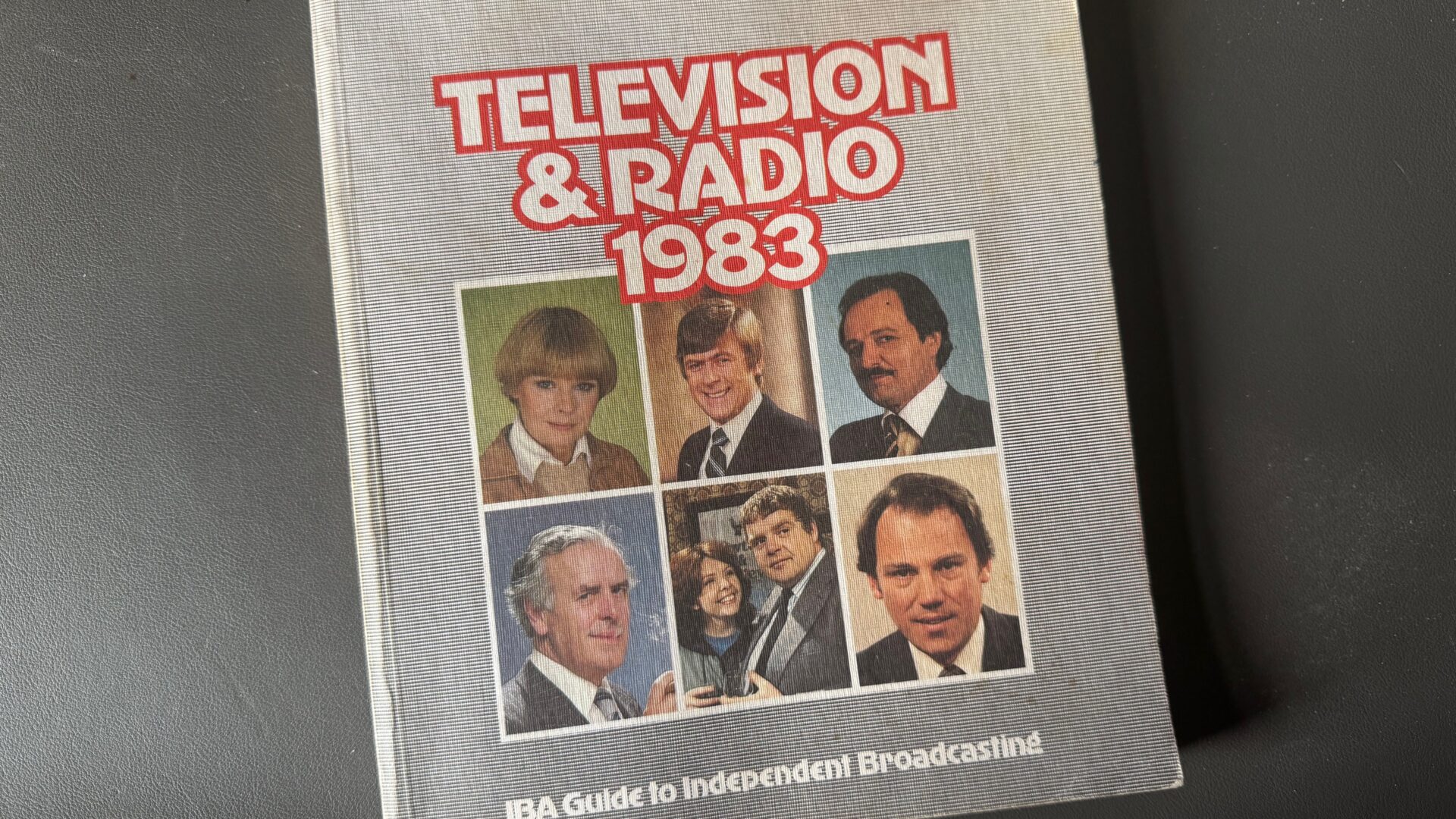
  • Then there’s the Television and Radio 1983 book: a snapshot of an era when the UK had just launched a fourth television channel and breakfast telly was heralded as the next exciting development.
  • Relatedly, the book mentions a television relay near Tintagel in Cornwall that was built using wind, solar, and batteries as an experiment, which struck me as a green agenda way ahead of its time.
  • Thursday, I avoided one work-related drink to attend another: the usual mixture of putting the world to rights and losing track of how many pints of lager had gone by.
  • It’s 100 years since a table tennis federation was formed. On Saturday, it was my first volunteer shift at ITTF World Team Table Tennis Championships Finals, London 2026 at Wembley. I was initially positioned far in the corner, near the practice courts, with a lady who knew all about the Chinese team, the world leaders in the sport, and was very excited whenever she saw one of their players. In fact, most of the crowd around me was.
  • Dinner with friends on Saturday night meant I was happy for the slightly later start for volunteers on Sunday. Unfortunately, or maybe fortunately, I don’t know any of the big stars who are getting all the fan attention, so if they came to sit where I was on the door, everybody got the same “hello”.

Media

Public service

I recently found more history in my parents’ loft: the 1983 edition of the IBA’s Television and Radio book.

A hardback book photographed on a dark surface. The cover reads "Television & Radio 1983" in large red and white bold lettering, with the subtitle "IBA Guide to Independent Broadcasting" along the bottom. The cover features a grid of six colour photographs of television personalities — three men and one woman in formal attire in the top row, and three further individuals, including a man and woman pictured together, in the bottom row. The styling and photography are typical of the early 1980s.
The IBA’s 1983 guide to independent broadcasting, preserved.

Following yesterday’s nostalgia fest, I recently found more history in my parents’ loft: the 1983 edition of the IBA’s Television and Radio book. They used to publish one of these every year, providing an insight into the world of independent, not commercial, television and radio.  Reading it now, it feels like a time capsule from a different era of broadcasting that seems familiar but, somehow, a bit off.

What’s most interesting about this edition is that it covers the birth of Channel Four (which came on air the month before publication, in November 1982) and the launch of TV-am, which followed in February 1983. It tells us that the senior presenting team at TV-am will be “informal and conversational”, while Channel Four is required to be complementary to ITV to avoid competing for ratings.  The book is full of material about ITV shows. It was the era of ‘Tales of the Unexpected’, ‘The Gentle Touch’, and ‘The Jewel in the Crown’, ‘World in Action’ and ‘News at Ten’. I think only the last of those remains on screen regularly.

The word ‘soaps’ is not used; they are referred to as drama serials, which feels out of step with how television executives would discuss them today. The book says that “a tremendous amount of skill and thought needs to be put into a drama serial to make it so abidingly popular’, and we still regularly have Crossroads and Crown Court on the telly, while the word Farm remains firmly attached to Emmerdale.

What’s clear is that this is from an era when television had to be a bit of everything: plays, drama, serials, science, religion, children, light entertainment, and the arts. Yet, in the book’s introduction, we learn that the pace of technology development is quickening and the arrival of direct broadcast satellite services “now seems a likelihood for the middle of the decade” – and what a change to the broadcasting landscape that would bring. We’d end up with channels dedicated to every conceivable genre of programming.

A double-page spread from the IBA Guide to Independent Broadcasting, Television & Radio 1983, showing the "ILR Areas" section. Each entry lists a local independent radio station with its directors, senior executives, address, frequencies, and a small regional map showing transmitter locations. Stations visible include Chiltern Radio (Luton/Bedford), Maidstone & Medway (contract advertised), Piccadilly Radio (Manchester), Gwent Broadcasting (Newport), Radio Trent (Nottingham), Hereward Radio (Peterborough), Plymouth Sound, Radio Victory (Portsmouth), Red Rose Radio (Preston & Blackpool), and Radio 210 (Reading). Station logos are printed alongside each entry. The layout uses pink section headings on a white background, with a two-column design across both pages.
The Original Broadcast Postcode Lottery

There are 47 local radio stations listed in the book; many were yet to launch, and the Humberside, Maidstone, and Reigate services had only just been advertised, with no contractors selected. One struck me as odd: Northside Sound was listed for Londonderry, and, given I consumed everything I could about the world of local radio at the time, I was surprised that I couldn’t recall it. The forums at Digital Spy suggest that “Northside Sound failed to raise sufficient capital for its launch,” and that the frequencies were served by neighbouring Downtown Radio. Back in 1983, I would have proudly said I could name every independent local radio station. Perhaps that’s not true.

The book is full of behind-the-scenes technical information; I think the technical standards were paramount and, possibly, more important than the content to the public service mindset. I read that a television relay near Tintagel in Cornwall was built using wind, solar, and batteries as an experiment, which strikes me as a green agenda way ahead of its time. The text service that used to accompany commercial television, Oracle, has a couple of pages devoted to it. In 1983, this was very much cutting-edge technology.

What strikes me most, however, is not the memory of programmes or services provided, but the tone of the book. It’s very much from the era when broadcasting was a public service. All the radio and television companies were contractors to the IBA, which was ultimately responsible for regulation and transmission and answerable to Parliament for everything broadcast. The market was not necessarily the primary driver for these services. The world has moved on; we now prize competition and choice over fewer, broader services. We have more ways to receive content than ever.  At over forty years old, this book is a wonderful snapshot of a time when television and radio were run for the public good.

Autograph cards

A collage of overlapping black-and-white DJ autograph cards and station promotional flyers from British independent local radio stations of the 1980s. Visible stations include Radio Aire, 2CR Two Counties Radio (signed "Love Sally"), Invicta Radio ("Right Across the County"), Radio Mercury, Northsound Radio, Red Rose Radio, Pennine Radio / Yorkshire Radio Network, Northants 96, Signal Radio, Radio Trent 945, and Leicester Sound. Several cards feature partial photographs of DJs and handwritten dedications.
Local radio in the 1980s

When I was in Shrewsbury last weekend, at the house I grew up in, I ventured into the loft to rummage through some tea chests still stored there. They’re proper old-fashioned tea chests and were used to pack our belongings when we moved in the early 1980s. They make great storage boxes in the loft, and still seem solid and robust to this day.

As I rummaged, I found a plastic bag all sealed with sellotape marked ‘radio autograph cards’. I have no recollection of this bag, so I opened it and uncovered almost 100 DJ cards; the kind of thing that radio stations would send out when somebody wrote in asking for a DJ’s autograph. To this day, there’s a box behind where I work containing radio cards from stations I used to listen to regularly. But this set was different.

What struck me about this group was that there are 14 radio stations represented in the collection, from Northsound Radio at the top of Scotland, via Pennine Radio, Radio Trent, Chiltern (Bedfordshire, Northamptonshire, Hertfordshire, Buckinghamshire), County Sound, Radio Mercury around London, to Invicta Sound on the south coast. None of those stations could be received where I lived.  There are cards from Red Rose, Signal and Beacon, which I could hear but didn’t listen to that often, but the vast majority were of people I never listened to on stations I never heard. And yet, the stations would still send these out to any radio fanatic who wrote a letter. As a kid, I thought it was amazing to get all the cards from across the country. 

I should note it’s not 100 unique cards; there is some duplication, but not a lot. They’re all more-or-less A6-sized, although I can’t work out why 2CRs are taller than all the others, and Pennine Radio’s smaller.  Although Pennnie’s are co-branded ‘Yorkshire Radio Network‘, which dates them back to sometime between 1987 and 1989, if this rather sparse Wikipedia page is to be believed. They are also the only ones where you can peel off the back and stick Tim Finlay, or any other presenter of choice, to something.

I suspect they are all from around that time. It’s fun to look back at them now and see what they tell us about the world in the 80s. 

The majority are black and white, but Invicta, Red Rose and some Signal cards are in colour, so cost is a major concern when you’re printing thousands of these things to hand out from reception or on roadshow days. Some are stiffer card or better paper stock, some have a bit of a glossy feel, while Mercia’s Jeff Harris is in full colour, but on a folded bit of paper with an ad for Prontaprint branches around the Coventry area on the front. Signal stuck an ad for Pennie Kitchen Studios (“North Staffs Biggest & Best Kitchen Specialists”) on the back of some of them, whereas Red Rose have a 7Up sponsor logo and a “photograph by Images of Preston” on theirs, which might explain how they can invest in full-colour cards.

  • Radio Autograph Card for 2CR's Sally Winter
  • Radio Autograph Card for Chiltern Radio's Bill Young
  • Radio Autograph Card for Chiltern Radio's Martin Collins
  • Radio Autograph Card for Country Sound Radio's mascot, Brewster Mouse
  • Radio Autograph Card for Invicta Radio's Roger Day
  • Radio Autograph Card for Northsound Radio's Mike Holloway
  • Radio Autograph Card for Red Rose Radio's Derek Webster
  • Radio Autograph Card for Radio Mercury's Ed Stewart
  • Radio Autograph Card for Pennine Radio's Tim Finlay

Many are blank on the back; I guess one-sided printing was cheaper. The Chiltern group cards have a mini biography on the reverse, and it’s how I know Martin Collins’ hobbies include water skiing and holidays, and that Paul McKenna was a 23-year-old bachelor when the photo was taken, with no mention of hypnotism. Radio Mercury uses the reverse to promote a list of available station souvenirs, from ballpoint pens and headphone bugs to “tee shirts” and “sweat shirts”, but sadly no prices, which would be fascinating to read today. The reverse of all the Invicta cards is laid out like a proper postcard with space for a message and an address, and a square in the top right for the stamp.  I wonder if, when rebelling on the pirate ships, Roger Day thought he might end up as a photograph on the front of a postcard? I wonder who got posted around Kent more, Roger, or Julie Jambuster (was that her real name)?

Roger Day wears a tie in that photo, as do a good number of the presenters, which I think shows that the 1980s still thought professionalism meant a tie. Signal Radio’s Alex Roland is sporting the uniform of most 80s radio presenters, the silk-effect bomber jacket with his name embroidered on the front. Red Rose’s Keith Macklin is in a suit, but perched on the side of a stand at what I assume is some local football stadium. Anton Andrews, of the same station, is photographed on top of a tank, his colleague Sally Moon, whistfully looking back, on a chair, while Derek Wbster is in front of a road sign, holding a map. I wonder what that had to do with his presentation of Just The Tonic? Red Rose’s John Gillmore is the only one to have a comedy photograph, with the front of the card showing his back and his beaming face printed on the reverse, “Yes, it’s Gilly!”

Of course, a good few people are pictured in radio studios. 2CR’s Sally Winter is in front of the control desk answering the phone, while Northsound’s Bobby Hain is also in front of a desk but not pretending to be on the telephone. His very thin tie shouts 1980s. Chiltern’s Tom Hardy, “lives in Luton and is Head of Music,” and his “family man” colleague, Bill Young, are both pictured with a pair of industry-standard Beyerdynamic headphones around their necks. Any self-respecting radio presenter of the period would have at least one headshot with those headphones in their collection. 

At the time, all the names would have been known locally, but I would have known very few of them. Some, like Mercury’s Ed Stewart and the aforementioned Roger Day, were big stars from other stations earlier in their careers. Others, like Chiltern’s Collins and McKenna, would go on to have national platforms, and more are very well-known names in the radio industry.  Only one is not of a real person. County Sound’s Brewster Mouse looks delightful in the photo on the card, but in a picture somebody posted to Facebook, it’s human-sized and dwarfs small children, and I can’t see how that wasn’t terrifying.

While I called this post “Autograph Cards,” very few are autographed, though a small number are. There’s a “best wishes” and a “love”, and most look genuinely signed.  County Sound’s Mark Walker either had a pen that matched the print’s blue colour, or it was part of the card.  

But, I think, the only card that truly meets expectations, a solid black and white photograph, decent paper stock, no sponsor branding and taken in front of the pile of station “carts” and, most importantly, is personalised with an “all the best Jonathan” is Northsound’s Mike Holloway.  I’m sorry I lived too far south to ever hear you across Aberdeen, Mike, but thanks for taking the time to make my day. Because I know for sure, whatever these cards look like now, back when I opened the envelope to see them, they were, to me, better than getting that missing Panini soccer sticker. 

Today’s question is, “Are they worth preserving?” They are a snapshot of a bygone era. There must have been thousands of these in circulation. What should I do with them?