Nil Points for Innocence

Eurovision, once a source of light-hearted entertainment, is now embroiled in political controversy.

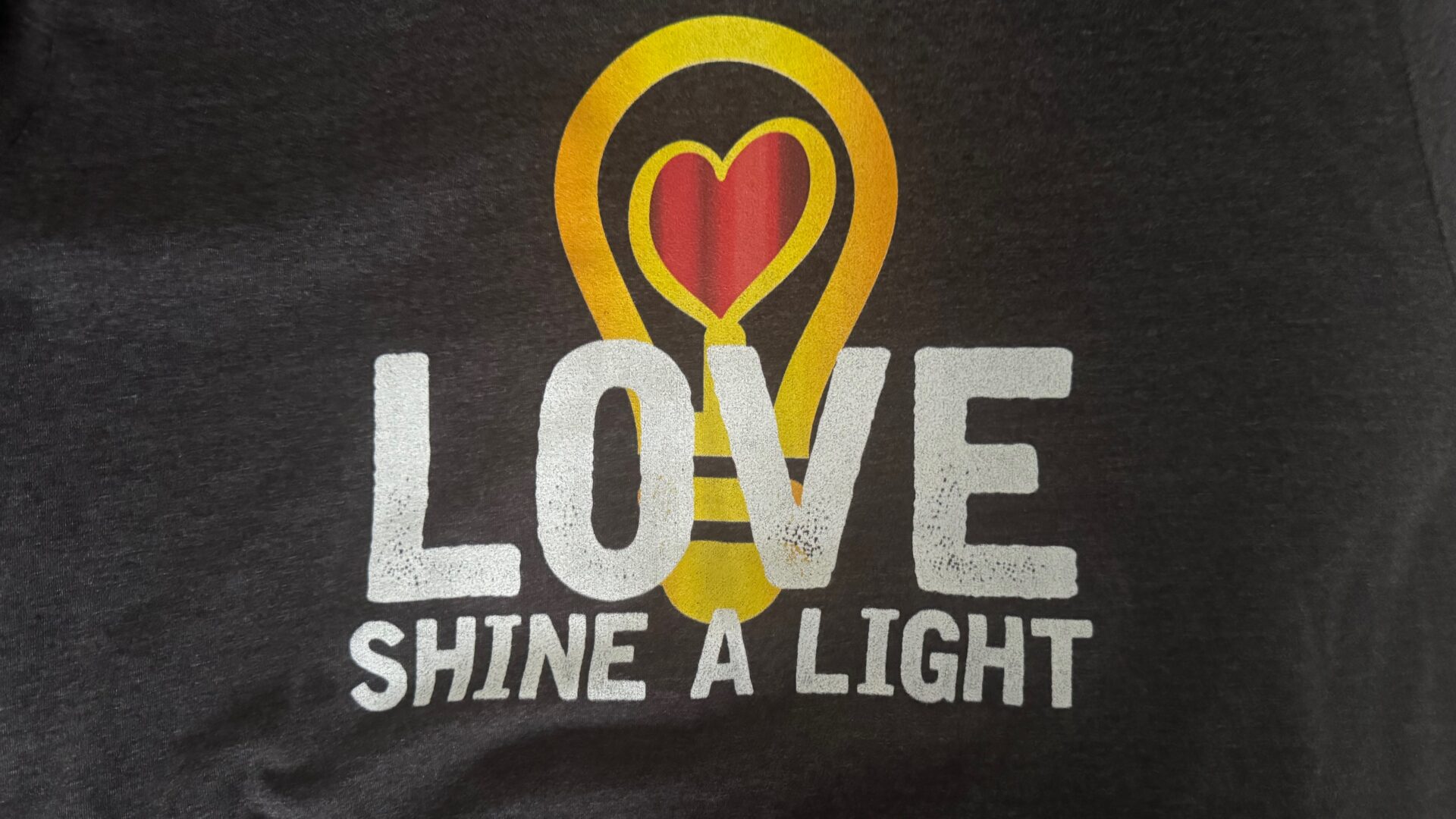
Close-up of a dark grey Eurovision Song Contest themed T-shirt. The design features a gold light bulb graphic in which the bulb's interior forms a red heart shape, with the filament stem extending below. In bold white text beneath the graphic are the words "LOVE" and "SHINE A LIGHT" — a reference to the UK's Eurovision-winning song performed by Katrina and the Waves in 1997.
Nul Points for Subtlety, Douze Points for the T-Shirt

Tonight, I’m going to a small party. We’ll eat, drink, and chat while 25 songs play in the background. As the night goes on, we’ll tune in more closely for the finale, when the world votes and someone wins a trophy. Yes, it’s Eurovision time.

For as long as I can remember, Eurovision has been a regular part of my spring, not because I take it seriously, but because I don’t. Or maybe I take it seriously in a not-so-serious way, if that makes sense. But this year feels a little different.

I remember watching Johnny Logan, Bucks Fizz, and Bardo (still my favourite) back in the 1980s. By the 90s, when Ireland kept winning, we’d throw parties in our university flats—mostly as an excuse to drink and laugh at the bad songs. That was the fun of Eurovision.

In the years since then, it’s got bigger. More countries, qualifying rounds, and adjacent cultural showcases. And, for the host country, a week or more of events, stadium-filling crowds, excitement, and expense. 

Back in the 80s and 90s, the big Eurovision controversy was what we called “political voting”—the idea that countries voted for their neighbours and friends instead of the best song. Terry Wogan talked about it more and more, especially after the UK got its first nul points in 2003, and it became the main story in the British media. By 2008, I was frustrated enough to write something in response. The Scandinavians had always voted for each other. We always expected Ireland to vote for the UK, and vice versa. It wasn’t corruption; it was just neighbourliness, shared musical tastes, and cultural ties. Eurovision academics (yes, they exist) have mostly agreed, finding that what looks like political vote-trading is usually honest voting based on quality and cultural closeness, not politics. Greece and Cyprus giving each other twelve points is no more suspicious than Ireland and the UK doing the same. As I called it then, it was “wonderfully silly entertainment in the best sense.

Maybe, as we get close to the 70th show, that old innocence is gone. In 2021, I missed the show, but when I got home from dinner, I learned James Newman didn’t get a single point. In 2022, Sam Ryder’s Spaceman brought us a fantastic second place. Then, in 2024, I was annoyed to see people online go back to the usual complaints after Olly Alexander’s Dizzy didn’t do well, even though we almost won just two years earlier.

But 2026 in Vienna is a whole new situation. Five countries — Spain, Slovenia, Iceland, Ireland, and the Netherlands — have withdrawn from the competition (and, in some cases, won’t be broadcasting it) in protest at Israel’s inclusion, representing the largest politically motivated withdrawal in Eurovision’s history. The 2024 winner, Nemo, returned their trophy after Israel was cleared to participate. There is military-style security around the venue. There is organised booing whenever the contest’s executive supervisor appears on screen. Broadcasters cited a “blatant double standard” by the EBU, drawing comparisons to the swift 2022 suspension of Russia. I don’t know if I agree or not, but it’s a serious argument, and serious arguments are what Eurovision was never meant to be about.

The difference from our old complaints is striking. What we called “political voting” was really just people feeling warmly toward their neighbours. That kind of politics isn’t really politics; it’s just being human. This year, politics means something else. The contest is being asked to judge a war and decide whether singing for three minutes makes someone complicit.

I still believe in the silliness of Eurovision, in our cupcakes and cocktail menus and the terrible interval acts. But I find myself thinking back to chiding Sir Terry Wogan for losing his sense of humour over Denmark voting for Sweden. How quaint that all seems. How I wish that were still the most political thing about it.
Eurovision Is Not A Serious Song Contest

So, what happened this year? Why are you so frustrated? Why are we suddenly upset about the bias? Simply because we did not do well? That’s a little childish, isn’t it?

Dear Sir Terry

This weekend was the Eurovision Song Contest; the annual spectacle of music, strange traditional costumes & dubious musical interpretation of songs (and, as you might say, that’s just the interval acts). It was as it has ever been: a pile of unconnected international pop pap presented as serious content. The most important thing, you must agree, is to remember your sense of humour. Over the years, you have urged us not to take it too seriously.

I wasn’t around for the 60s Brit-winners such as Sandy Shaw or Lulu. I don’t really remember the song contests of the mid-70s when classics from Abba and the Brotherhood of Man were born. I do remember Johnny Logan, Bucks Fizz and Bobbysocks in all their 1980s glory. When Ireland went on a winning streak in the mid-90s, we were holding Eurovision parties in our University flats. It was fun and an excuse – if one was really needed – to get very drunk and laugh at rubbish songs. Which we did with an international feel.

So, what happened this year? Why are you so frustrated? Why are we suddenly upset about the bias? Simply because we did not do well? That’s a little childish, isn’t it?

The Scandinavians always voted for each other (as they did this year). For goodness sake, we always expect Ireland to vote for the UK and vice versa (and we hope Malta does too) while we know the French won’t. Call it political, call it similar musical tastes, but that’s how it’s always been. It’s not going to change. But that doesn’t stop it from being wonderfully silly entertainment in the best sense.

The last 10 contests have been won by Sweden, Denmark, Estonia, Latvia, Turkey, Ukraine, Greece, Finland, Serbia and Russia. If we take the 90s as the point when Eastern Europe started to enter the content, then that makes it five wins to the new countries (Estonia, Latvia, Ukraine, Serbia & Russia) and 5 wins to the older entrants (Sweden, Denmark, Turkey, Greece & Finland).

Seems pretty fair to me. So, why have you started to lose your sense of humour?

Musak

Update on the voting from Popbitch: “If only traditional Western European countries had voted this year, the UK would have been third from bottom, rather than one of three with the lowest points”.

Euro Winners

A few more words on the Eurovision winners 2004.

So, to update. Voting was very political (as always). Terry was funny, and James Fox did not disgrace us, though it wasn’t the best song. There was a disproportionate amount of male singers, and some, like the French, resorted to gimmicks (a stilt woman) to try to draw attention to the song. I like the fact that all countries can now vote (even if they did not make it to the final) despite the fact that the voting process takes longer.

The apparent political dimension to the voting could pose interesting questions on the future for Europe, but I think I just choose to find it amusing. Ukraine won (Ruslana was her name), which must have had something to do with the fact that it was visually stunning, but I really do think Sweden deserved to win.

This year we found a whole new dimension to the contest by watching the extra coverage on BBC Three, although we did not get to watch the translated lyrics as subtitles – a feature I think just goes to prove that even the BBC don’t take it too seriously.

And what should I say to my Norwegian friends about another ‘nil points’?

Eurovision 2004

James Fox is Britain’s entry to the 2004 Eurovision Song Contest.

And so it comes to pass that another year has passed, and tonight is the Eurovision Song Contest. James Fox is our entry, but I don’t hold much hope based on the fact that voting is so political these days. I wasn’t aware of him on the television show that brought him to light (I think it was the BBC’s Fame Academy), but I got to hear him last November when he supported Liberty X at a charity concert I went to. He mainly performed cover versions (with a couple of original songs thrown in), which were fine but not fantastic, but he had charisma and a small but very vocal fan base (they probably sounded loud because I was stood right next to them).

I haven’t heard his song for this year’s contest, so it will be a first for me. As always, I look forward to the event for its more ridiculous elements. I’m sure Terry Wogan will have plenty to be sarcastic about. I do wonder if I will watch it (if anybody will watch it) when he stops commentating. PY and I are visiting friends to watch it. I think I will end up overeating and undoing all the benefits of the gym.