I was at Mum and Dad’s house all last week. I spent some time looking around, trying to figure out what’s changed since I actually lived there. Obviously, there are some very big differences, like the addition of the conservatory. The kitchen is different, though it’s in the same place with the same layout. But it’s really hard to remember the specifics.
In particular, I’ve been looking around my old childhood bedroom. There’s almost nothing left of that time. It’s been redecorated. Most of the furniture is different, though I did notice the curtains are the same blue-and-white stripes I used to have as a bedspread, so they haven’t changed.
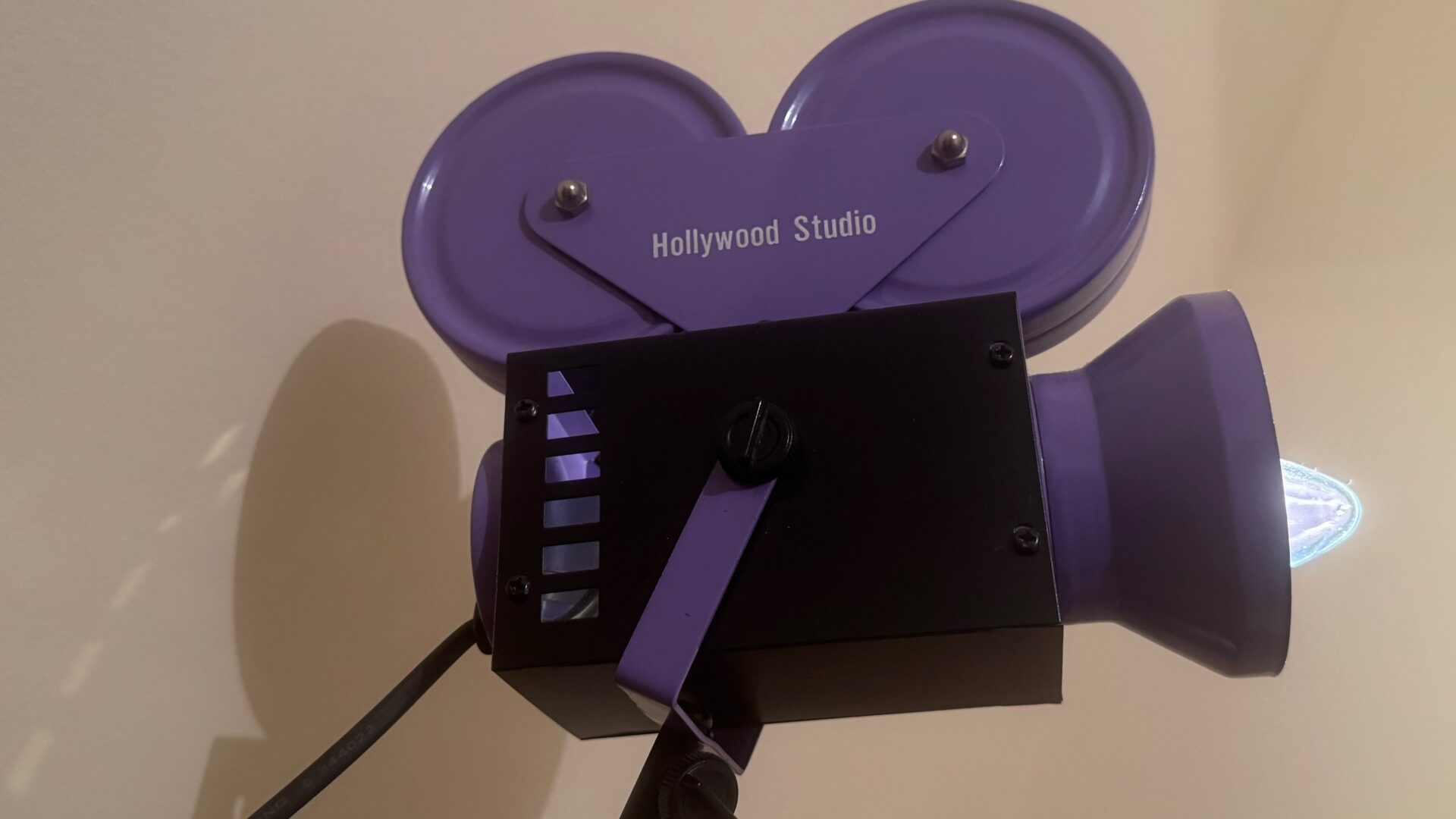
But if I look carefully, there are some clues. One of the bedside lamps is disguised as an old Hollywood studio film camera. I only had this during the last period I lived in the house, but it’s one of the few remaining things still on show and used every night.
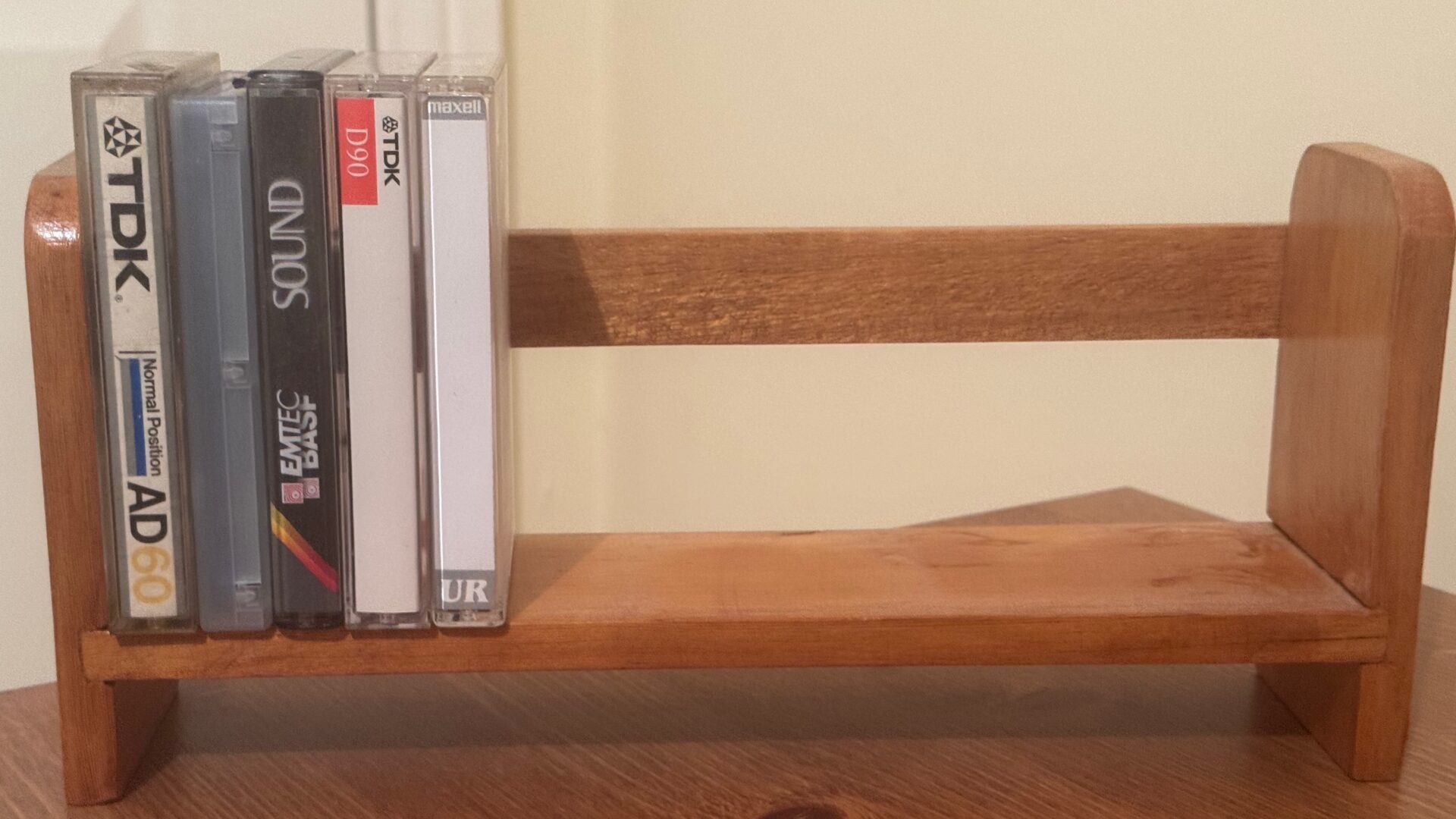
There’s also a wooden cassette rack I made in a school woodworking class, probably between 1984 and 1986, because I don’t think I did woodworking after that. It’s a very simple rack, but it still works for holding tapes. None of the tapes in the picture is original to my bedroom. I don’t even know what’s on them, but it’s a bit of a flashback to when we bought music on cassette.
Because I collected records to use on hospital radio, I was never the biggest cassette collector, although I did buy some music on cassette that I could take in my Walkman. But most of my tapes were like these: blank tapes where I curated my own mixes. That’s something that’s much easier to do today with a Spotify playlist.
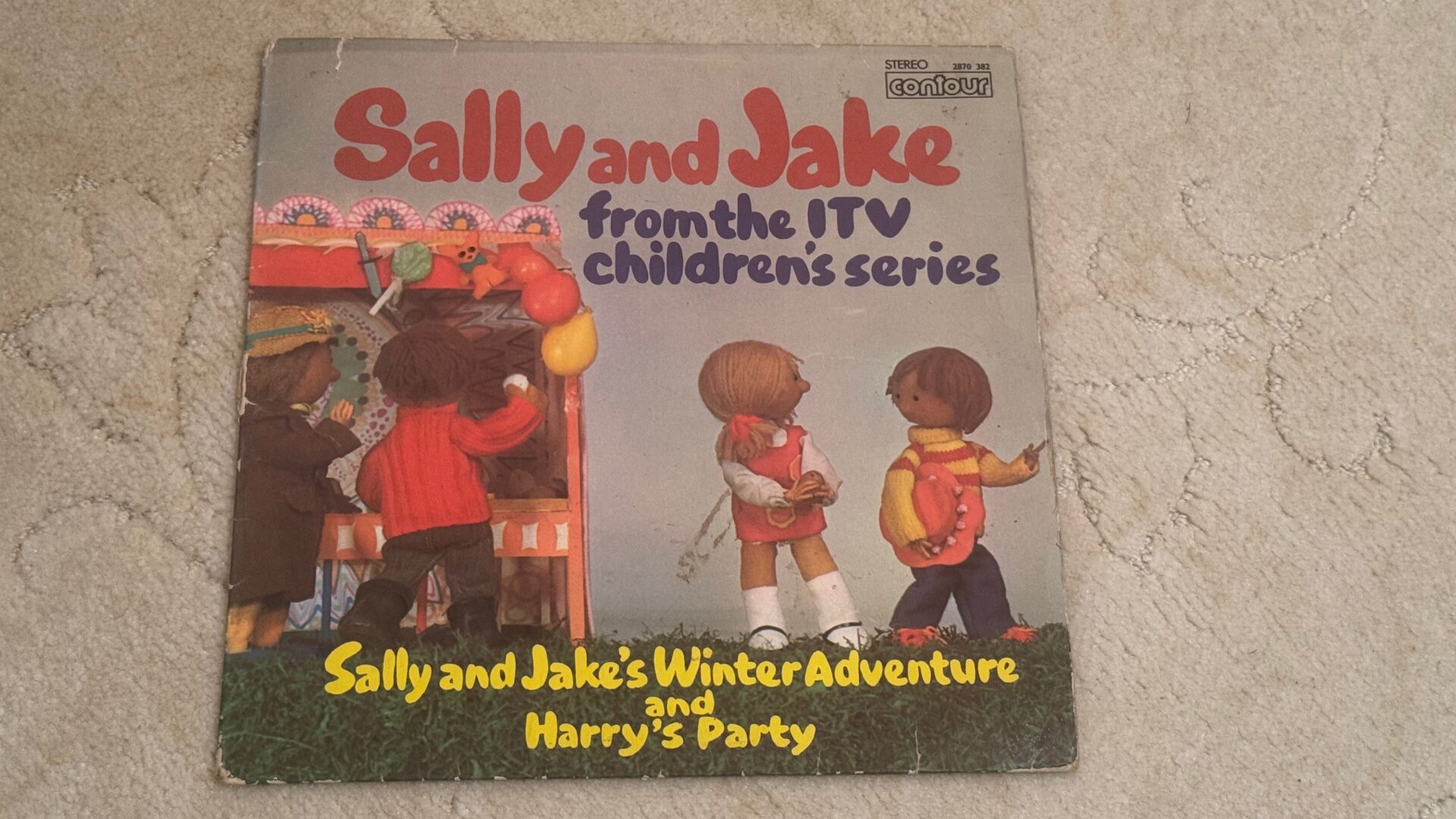
Beneath the cassette rack is a Sally and Jake record on a record shelf. All my life, I’ve had this record. It used to be in the cabinet with my parents’ records, but at some point it moved into the collection in my room, and it’s still there today. The most surprising thing is that I don’t remember watching the TV show at all. I only know the characters even exist because this record has been a constant in my life.
As a child, television was full of short cartoons. Paddington, Roobarb (and Custard), Ivor the Engine and The Wombles all ran for about five minutes before the evening news. In my memory, some characters, particularly Morph, appeared inside another show. Sally and Jake appeared in ITV’s lunchtime show Rainbow before receiving their own series in 1973–74, with short episodes lasting approximately ten minutes.
Sally and Jake were brother and sister, living in the fictional English village of Dimbledale. Their parents ran the village grocery shop, and their adventures featured an idealised world of village fêtes, camping, trips to the fairground and farm visits. Wouldn’t it be great if that was real life?
Their creators were Brian Cosgrove and Mark Hall, who subsequently established the animation studio Cosgrove Hall, responsible for another of my favourites, Danger Mouse, as well as Count Duckula and Jamie and the Magic Torch. The commission for Sally and Jake helped Cosgrove and Hall establish their production company with Thames Television.
Keith Hopwood, who was in Herman’s Hermits, remembers making this record at the same northern studio where 10cc recorded. He explains how he and Malcolm Rowe met animators Brian Cosgrove and Mark Hall, composed the music for Sally and Jake, and went on to produce both a single and an album, which may very well be this one.
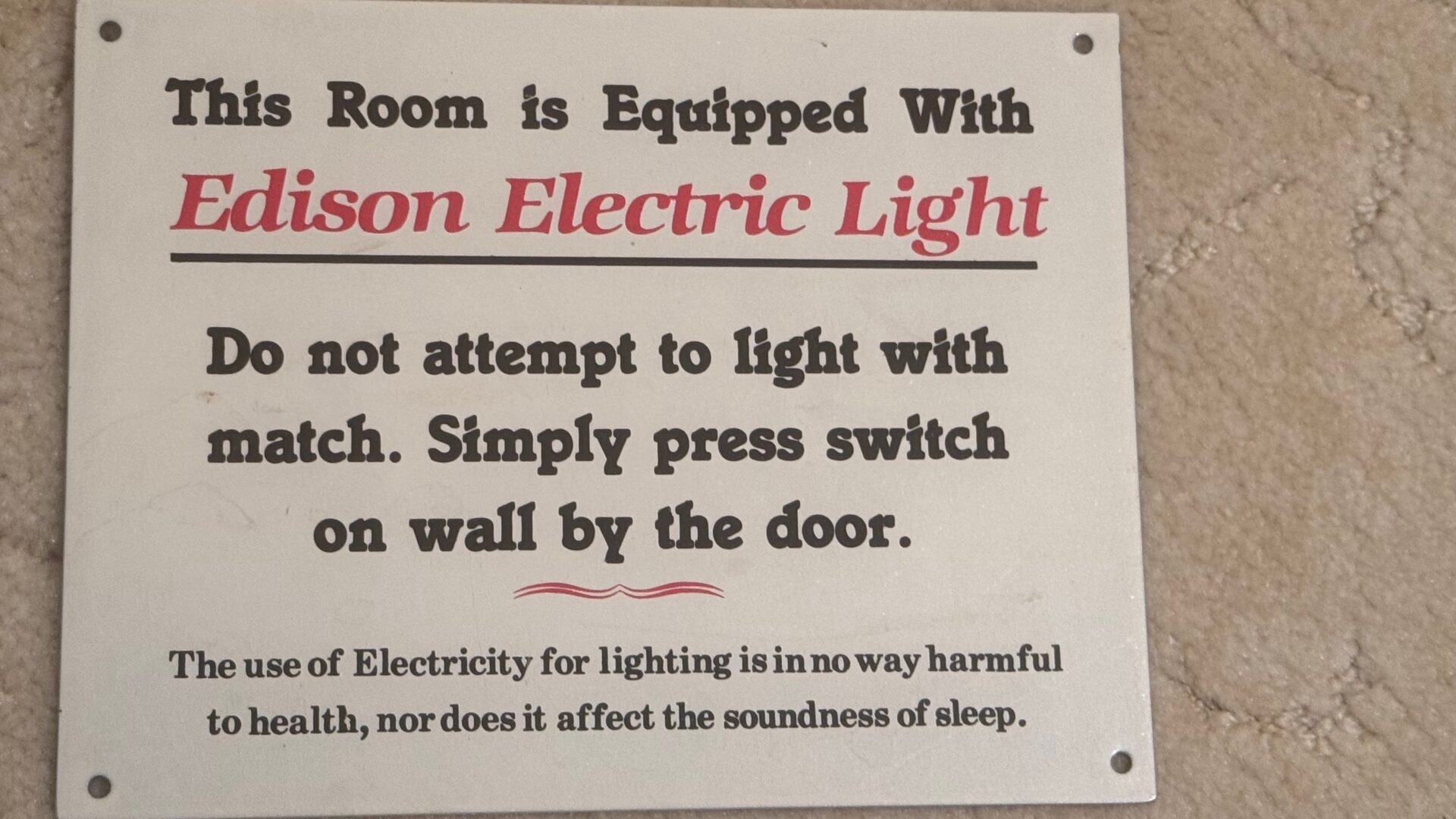
Another thing that’s stayed with me is a metal sign. As I mentioned before, when we first moved to Shropshire, we regularly visited the Ironbridge Gorge museums. It was supposed to be educational, and possibly was, but it was also a way of showing visitors the county we’d moved to. On one of those visits, I bought the sign, which hung on the wall next to my light switch for many years. I always assumed it was made up for fun. But it turns out it’s closer to real than I imagined.
It warns against lighting an electric bulb with a match and reassures readers that electricity won’t damage anybody’s health or disturb their sleep. I found that very amusing at one time. It transpires that the same wording appears in a 1975 photograph held by the National Library of New Zealand, which dates the sign it depicts to around 1900. Earlier versions say “turn key”, whereas mine says “press switch”, so the instructions have been modernised, but it’s less of a joke piece than I originally thought.
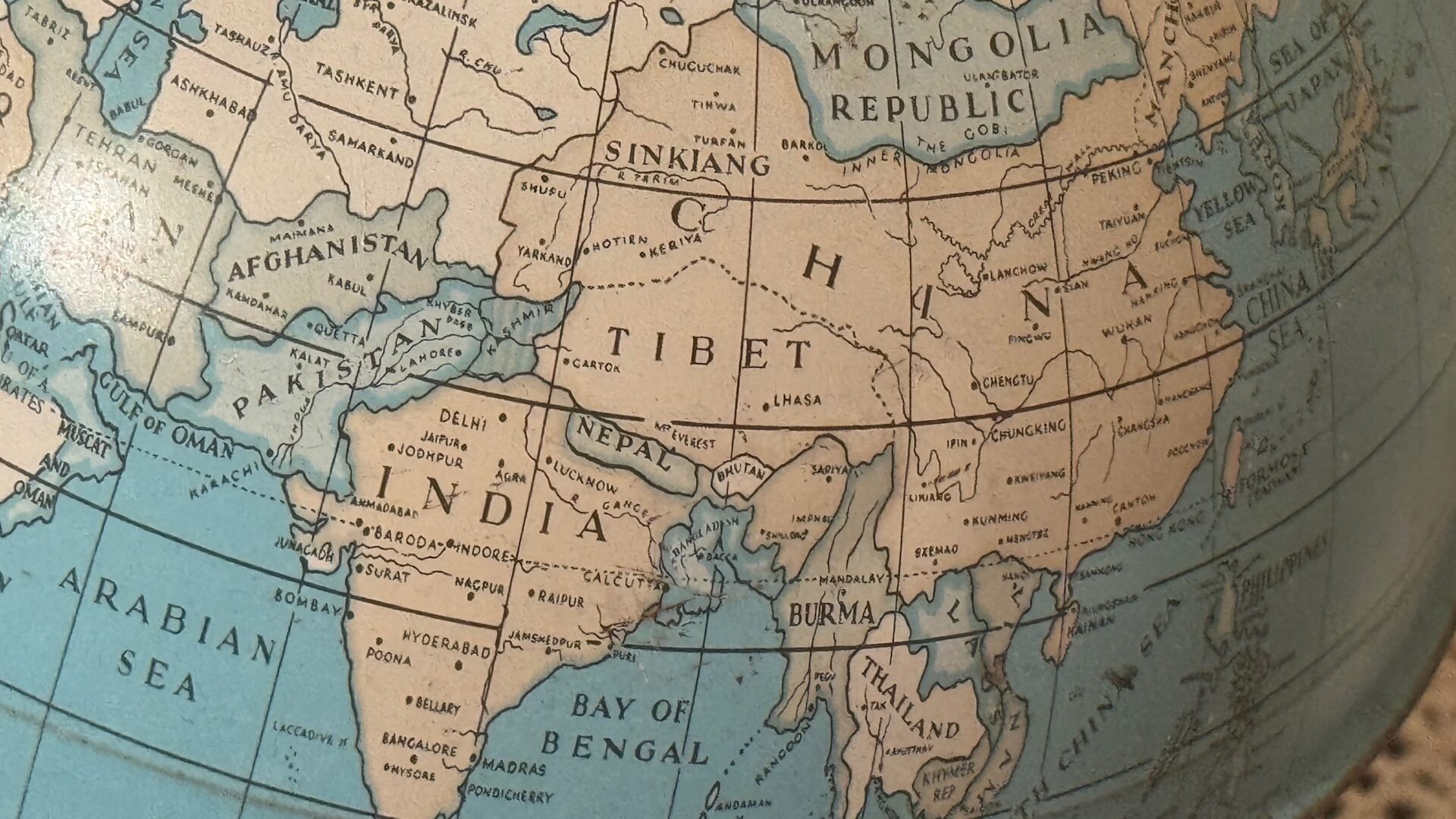
The fifth thing is my globe. At the end of the week, I learned a new term: meridian arm. It’s the curved band that holds a globe by its poles and allows it to spin. It gets its name because it traces a line of longitude (a meridian) from pole to pole. This is the globe I had as a child, and it has always been in my bedroom. Today it’s on the windowsill, which is why it’s a bit faded.
I wanted to understand how old it was, so I took some photos and asked an AI, which dated it to roughly 1972–1975. Its reasoning was that Bangladesh and Dacca appearing on the map placed it after December 1971. Sri Lanka replaced Ceylon in 1972, and Khmer Rep. was Cambodia’s name only from 1970 until April 1975, suggesting an upper limit. The map also shows U. of A. Emirates, which points to the early 1970s, while Dem. Yemen dates from 1970. Technology is amazing that it can do that all these years later.
So, I think that’s been with me a long time. Its meridian arm snapped at some point, but the glue has held it for more than 30 years.
I’m avoiding looking in the loft, where a lot more of my childhood stuff is probably still stored. Five things are enough to be writing about.