I randomly came across my old Posterous site on the Wayback Machine. Posterous was a lightweight blogging service around 2010–2011. I signed up early but hardly ever used it. I did find a couple of posts there, and they’re now logged in my archive.
Wednesday, after work, we went to Puttshack at Westfield for the team outing and a little miniature golf.
Related, I went first in our group because I knew I wouldn’t be very good, but it would at least give everyone else a chance to see what was coming and how they might tackle the obstacles. Team player!
Luckily (or sadly, depending on your point of view), all our work systems run on Google’s technology, so we weren’t affected by the massive Microsoft outage on Friday.
Friday, my Apple HomeView device arrived by courier. The driver was quite intrigued by what it was. He said he only carries heavy loads, but he’d been asked to bring this tiny parcel along. Let’s see if it can replace the Meta Portal.
Saturday, to the Courtauld. The collection spans several centuries, and the third-floor galleries bring together a remarkable number of familiar Impressionist and Post-Impressionist paintings. A hidden gem.
Related, the service at Skylon wasn’t as good as it should have been, but my food was delicious.
The service at the pub over Sunday lunch was superb. A lesson in how to treat customers.
Media
On Celebrity Race Across the World, one leg required contestants to take the same crossing to Sulawesi (a beautiful island in Indonesia), which let the trailing teams catch up. I can’t decide whether I feel cheated or not.
Just one episode of The Blame to go. I really see why everybody raved about it.
Forget travelling back to the past. I want to see the future, find out what extraordinary inventions we’re yet to imagine, and discover whether anyone ever finishes HS2.
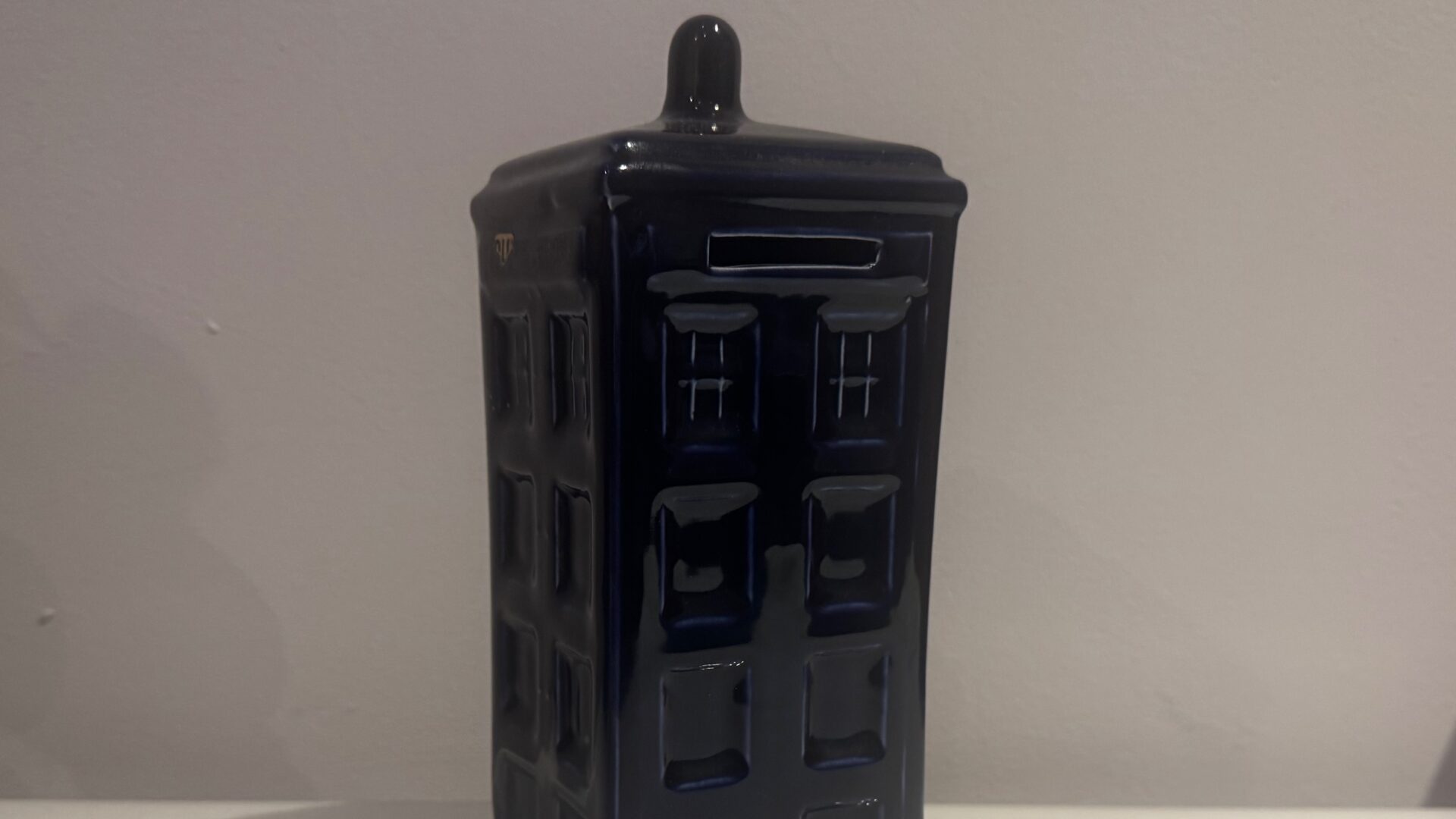
A miniature TARDIS that doubles as a money box. Bigger on the inside, presumably.
At some point, you will ask me a hypothetical question about time travel, because people always do. I always have the same answer, and it’s usually not the one people expect. I want to go to the future.
I suppose I understand the appeal of the past. All sorts of historical events would be interesting to observe, and there are people it would be wonderful to meet. But the past has already happened. We know how it turns out. Books, documentaries, photographs, and the entire Internet cover it. Admittedly, none of these would be quite the same as being there, but I don’t want to experience the Black Death firsthand, meet Guy Fawkes, or unexpectedly come across a dinosaur in a swamp. It might be fun to say I saw The Beatles at The Cavern Club before they were famous, but don’t most people from Merseyside over a certain age already suggest that?
The future, on the other hand, is a complete mystery. Isaac Asimov, Douglas Adams, Arthur C. Clarke, and even George Orwell had a go, and you may argue they were on the mark in some ways. But I can only judge those works from today’s vantage point, and I want to know what happens next. Does AI eat us all? Do we solve climate change? Does humanity finally make it to Mars? Do we discover life elsewhere in the universe? But, more mundanely, how do people live in 150 years? What are the gadgets? What’s the work like? I’ll never know.
Two blog posts I read last week brought this question back to mind.
In Why I’m Not Excited by HS2, Diamond Geezer describes visiting Colne Valley Viaduct, a remarkable feat of engineering that will one day carry high-speed trains across the countryside west of London. He’s impressed by the structure, but much less impressed by the idea of actually using the HS2 infrastructure. The project has been so often delayed that he wonders whether he’ll still be around when it finally opens.
At some point in your life, you start reading about the completion dates of this kind of big project and wonder whether you’ll see it come to fruition, even if simply to watch it from a comfortable chair, whether it’s your chair or a nursing home bed.
Meanwhile, Terence Eden has been writing about restaurant menu QR codes. He’s enthusiastic about the convenience of electronic menus, particularly when travelling abroad, and somewhat exasperated by people who complain about them. He points out that we don’t generally demand the return of enormous metal hotel keys, so why are we so upset about restaurants replacing folded paper with something more modern and useful?
The ability to sit down in another country, read a menu translated into English, see pictures of the food, order it and pay for it, all using a device in my pocket, is unbelievable. The younger me would have been astonished and excited. It’s jumped off the Tomorrow’s World screen, but we’ve really been waiting a long time for all the technology to come together to make this possible.
Imagine, back in the late-70s, thinking about everybody owning a telephone with no wires, a colour television screen, a camera, all the recorded music, a map of the entire world, and access to an almost limitless amount of information, in something that fits into a pocket. And if I didn’t think it was real science, I would have said it was fiction from an episode of Doctor Who.
Of course, not everything we imagined about the future has come true. Where are the flying cars, holidays on the Moon, and jet boots? Instead, we have self-service supermarket checkouts that get surprised when I add a tin of beans into the bag.
But that’s why I want to time travel forward. Almost none of the visions that came close to being real from either Doctor Who or Tomorrow’s World arrived as we imagined. They turn up in little increments; each seems a marginal improvement on what came before. One day you buy a mobile phone. Then it has a camera, and one year that camera seems better than an actual camera. Then the phone has the Internet. So, you stop carrying a camera, an address book, a diary, a map and a music player. And you find yourself standing in a restaurant, pointing the thing at a square of black-and-white dots to discover what the stew is.
By this point, the future isn’t as futuristic as it might have seemed.
The other thing about the future is that it keeps moving. George Orwell thought the mid-80s were the future. When I was young, the year 2000 seemed far too distant. It was a proper science-fiction date. By the time it arrived, I was 30, working, paying bills, and probably worrying about something else, though there were those few months when the Y2K bug made it sound like it would end the present.
I have no idea what 1980s me would have thought about 2026. Yet, I am here thinking about things that are coming in twenty or thirty years. But the future is 2100, and beyond. What’s that going to be like? Will we finally have jet boots? I’ll never know. I’ll be 130 in 2100, which is probably pushing my luck, even with all future medical advances.
And this is the part I find simultaneously fascinating and a little sad. I have already lived through technological changes that the younger me could never have imagined. But there will be another set of changes, probably even more extraordinary, that I won’t get to see. Somewhere in the future, people will be doing perfectly ordinary things with technologies that haven’t been conceived of today. They’ll take them for granted, complain when they don’t work, and perhaps wonder how we, their ancestors, ever coped without them.
I would love to know what those things are.
I don’t want to live forever. That sounds exhausting; my knees already hurt, and I suspect there would be an awful lot of software updates. But I would quite like the opportunity to pop forward occasionally, and have a look around.
I might make it, but I would love to see London in 2070. That seems a reasonable starting distance. Far enough away for something surprising to have been invented, but close enough that I might recognise the place. I’d want to see what people are carrying around instead of phones, whether artificial intelligence has turned out to be genuinely transformative or just another way of making customer service worse, and what the BBC has decided to do with BBC Three.
Then perhaps 2200. I’d be interested to see whether people still drive cars and whether London looks familiar in any way. What didn’t we anticipate? What social changes can’t we picture, and what problems will seem baffling because we haven’t yet invented the things that cause them?
I suppose the future might be disappointing. It could be worse than the present; there’s no guarantee. I know some of the things we take for granted will have disappeared. I’d love to know what they are. Now I am older; I see a world developing that will, eventually, carry on without me. But it’s still exciting.
So, if somebody ever does invent a working time machine, I won’t be asking to see the dinosaurs or attend the opening night of a Shakespeare play. If I arrive in 2043 and find myself standing on a platform at Euston, waiting for the first HS2 train to Birmingham, I won’t be happy. I’d like to go further forward. I want the jet boots.
When I get there, I would have to resist the temptation to look up the lottery results. Or perhaps I wouldn’t. The rules of time travel are rather vague.
I remembered in the shower that Monday was an office day, nearly missed British television’s 90th birthday and ended the week with mulled wine and fireworks in Battersea Park. Somewhere in between, I sang along to Paul Heaton.
Week commencing Monday, 2 November 2026
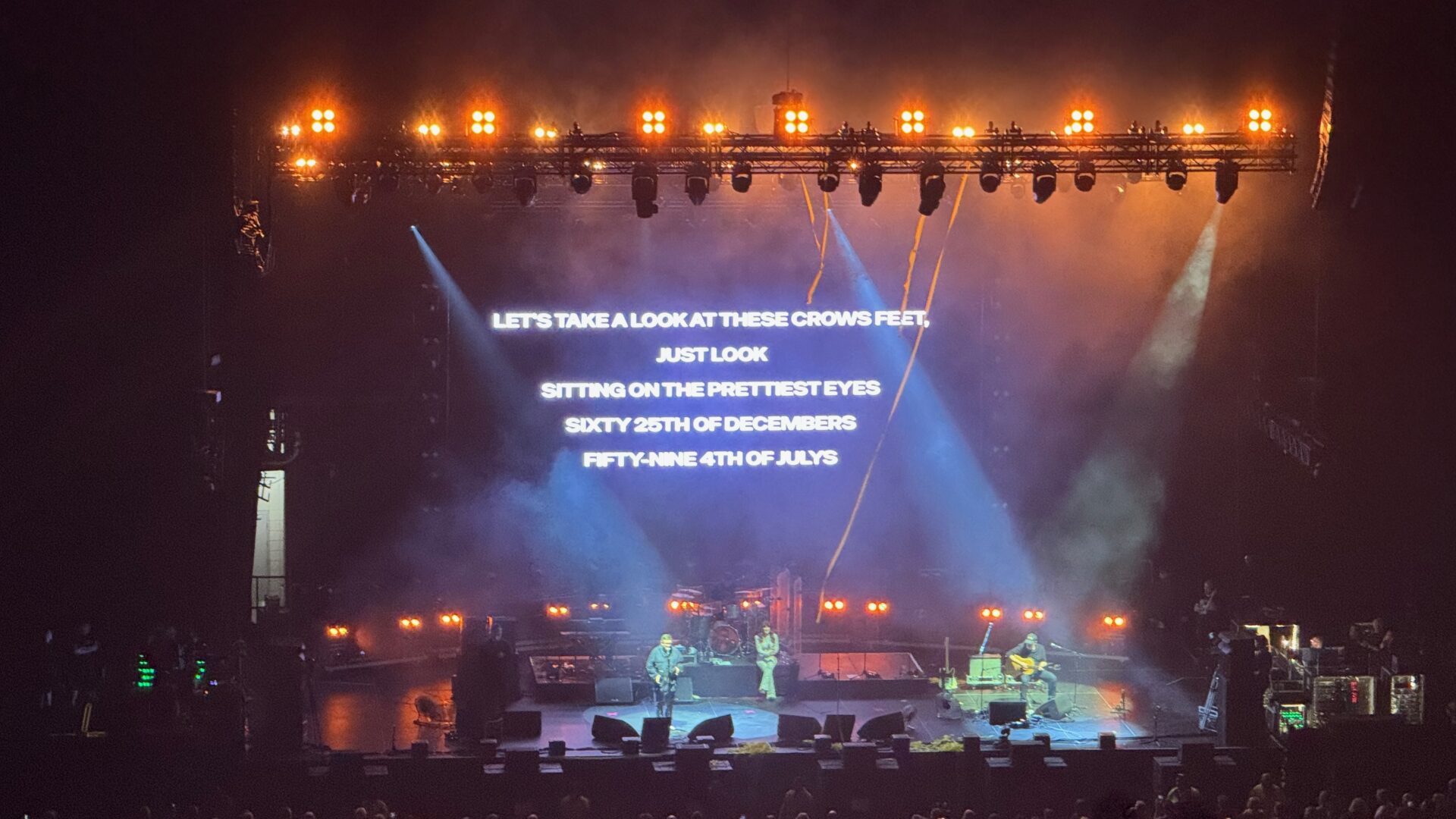
Paul Heaton, Rianne Downey, one huge room and a lyrics screen.
Quantified Self
This week: Stand 7/7; Exercise 3/7 and Move 5/7. (71%). Morning walks: 0/3. Office days: 2/5. Total steps: 49,039. 13.5 hours in meetings.
Life
Monday, I got up at my usual working-from-home time and was in the shower when I suddenly remembered that I needed to be in the office that day because I’d committed to attending one of the corporate roadshows.
Related, I did finish The Secret Hours on the train home. I really enjoyed being in the Slow Horses universe, but without the horses.
The US midterms brought historic breakthroughs for LGBTQ+ representation. New Hampshire Democrat Chris Pappas became the first openly gay man elected to the US Senate, one of a number of LGBTQ+ candidates to win seats in Congress and state legislatures.
Saturday night at the O2 to see Paul Heaton. The atmosphere was really good, with a capacity crowd, though it felt a little melancholic towards the end. The second encore was a bit of a sing-along. The words to The Prettiest Eyes and Caravan of Love were projected behind the band so we could all join in. He got a little emotional when he thanked everybody for coming.
Sunday, a sobering statistic from the Remembrance Sunday service. About a dozen Second World War veterans attended the service at the Cenotaph alongside nine former prime ministers. It may be the last year the veterans outnumber the former PMs. Living memory becomes history so quickly.
Related, when PY mentioned that story to me, I could name all nine former PMs in order. That’s the advantage of getting through most of them in the past ten years.
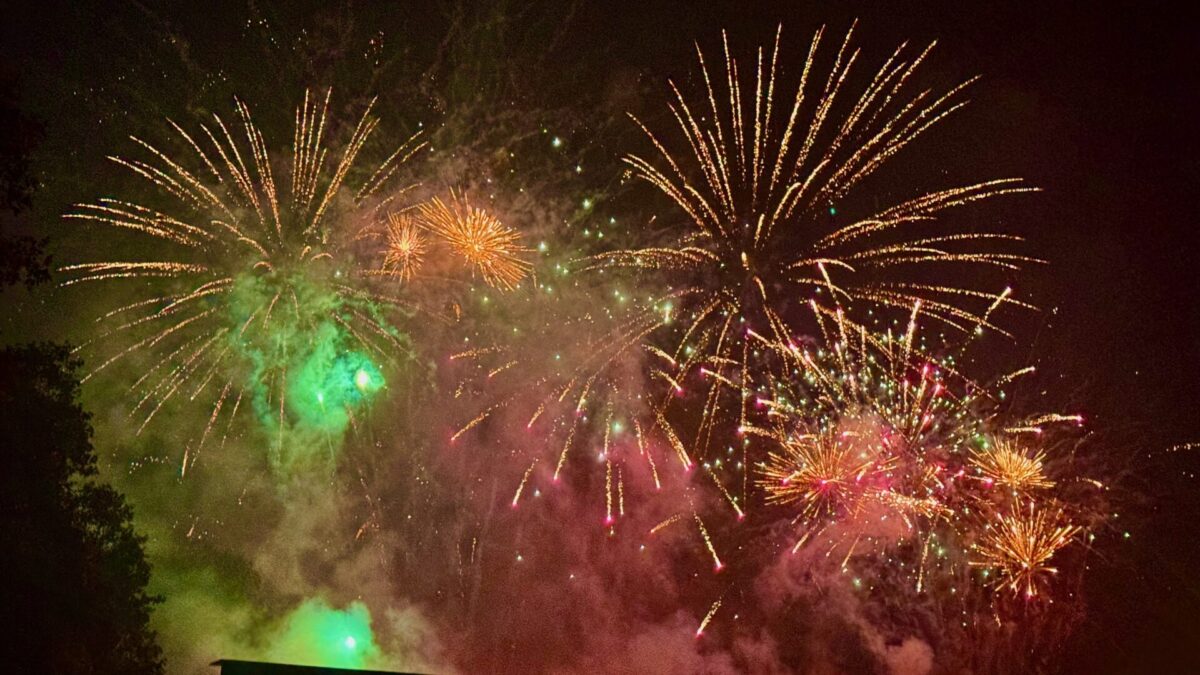
Ended the week riding the ghost train, then standing in the middle of Battersea Park with a mulled wine, watching the fireworks. A fun evening, but whatever happened to Bonfire Night?
Media
Resolved. We watched the final episode of series 5 of Slow Horses, which brought the story together quite well. As with all of these things, you need a willing suspension of disbelief for a lot of the plot, but even then there are moments when you go, ‘Nah, that’s a stretch too far.’ The argument at the end with the Mayor of London about whether there was a threat seemed a bit far-fetched. The rest of it was very well done. We still have a series in the bank.
Having finished one drama, we started The Blame, which I’d heard good things about, and Nocturne, an Apple TV drama about a serial killer. It’s a little dark. I’m not sure it’ll be my favourite, but it might be worth sticking with. We’ll see how that goes for the rest of the week.
BBC Four showed two editions of Top of the Pops, one from November 1983 and one from November 1984, with Limahl appearing almost exactly a year apart. From Only for Love to The NeverEnding Story, with The Cure, Depeche Mode, Eurythmics and Alison Moyet along the way. Quite a lot of pop history in 75 minutes.
Bonfire Night used to mean baked potatoes, bobbing for apples and standing around a huge fire. When did the fireworks become the main attraction, and where have all the bonfires gone?
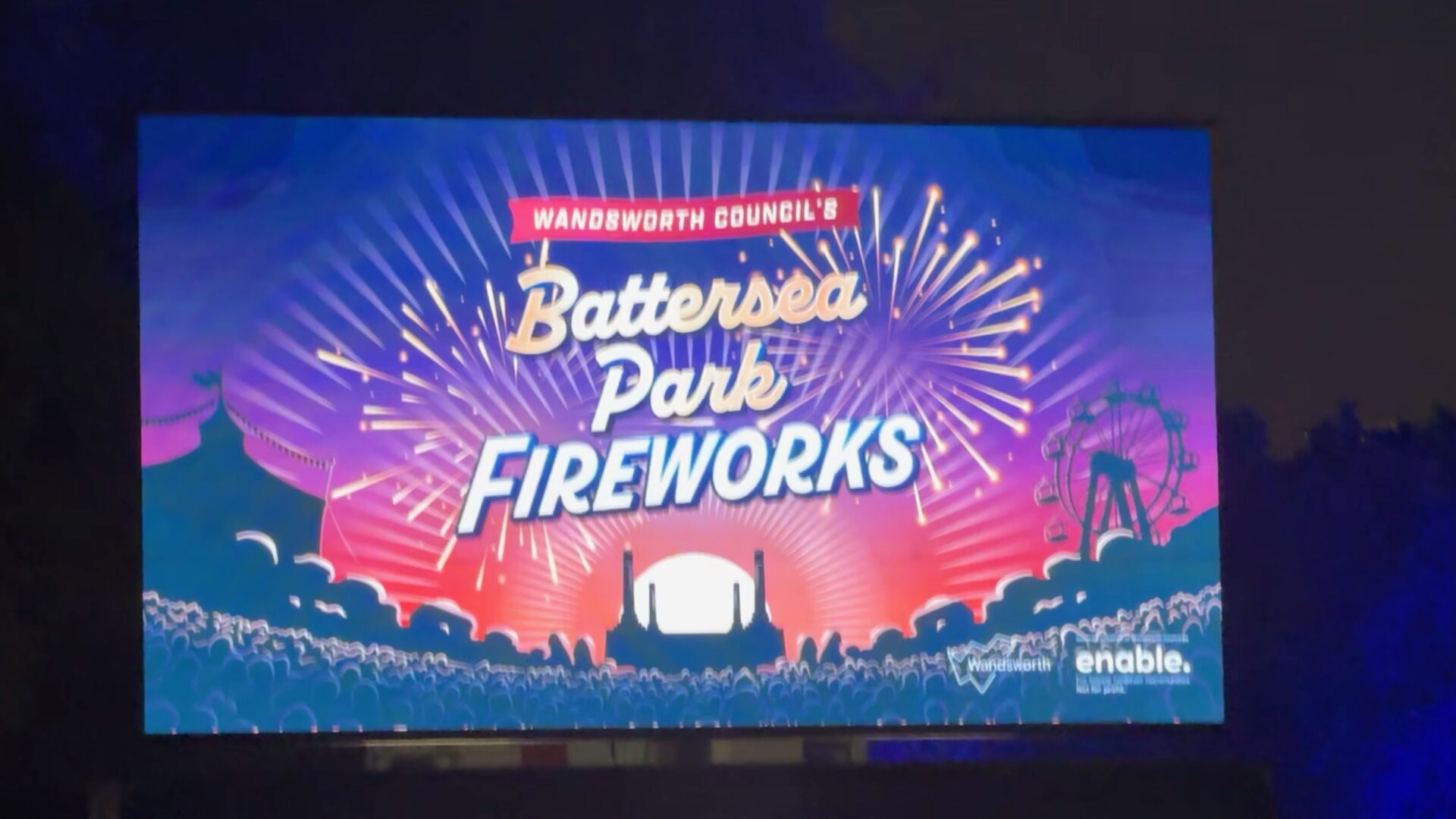
I went to the Battersea Park fireworks this evening. Although Guy Fawkes Night was last Thursday, most of the big displays around here took place over this weekend. When I was in Shrewsbury a couple of weeks ago, I saw a field with a pyramid of wood in the middle, obviously ready for Bonfire Night. That seems like an exception. These days, 5 November appears less about bonfires and more about elaborate fireworks displays. All day, I have been wondering when Bonfire Night became Fireworks Night.
Recently, so much of this blog has been childhoodnostalgia, so why not make this one the same? When I was growing up, Bonfire Night was different. We used to go to a family friend who had a large plot of land behind his house, and every year he’d have, what in my memory was, a huge bonfire. This wasn’t a professionally organised event with tickets or music; it was a big fire in a field, with people gathered around it.
There would also be baked potatoes cooked on the fire and bobbing for apples. I don’t remember the fireworks at all. There may have been a few rockets and Catherine wheels, but the bonfire was the main attraction, and we children ran around with hand-held sparklers. It was an excuse for people to get together on a cold November evening, eat something hot and stand around an enormous fire.
The bonfire itself was the event. Somebody had to collect the wood and build it, and somebody had to decide when to light it. There would have been a Guy, but I don’t remember any conversation about the gunpowder plot or the tradition of making a Guy. Children would construct an effigy of Guy Fawkes, generally from old clothes stuffed with newspaper, and wheel him around asking for a ‘penny for the Guy’. The money was, at least in theory, meant to pay for wood, or maybe a small box of fireworks.
When I first moved to London, there were occasionally children outside Earlsfield station collecting money for a Guy. I have no idea whether the proceeds ever made it into a communal fireworks fund, or whether it was just a sweet-money exercise. Either way, seeing this old custom still going on outside a London railway station marked the coming of winter.
Stand by.
Now, I am not a grumpy old man about it. But the whole event has changed considerably, at least around here. Bonfire Night is celebrated through large, organised fireworks displays, often run by councils. Tonight’s was all about Wandsworth council, which isn’t even my local one. In recent years, I have seen a bonfire, but increasingly I don’t. Tonight, apart from the fireworks, there was a fairground, a festival-sized food area with bars selling alcohol, and a focus on mulled wine. A Taylor Swift tribute act performed under a big tent, and a chap on a podium was doing something with lightning effects coming from his hands. All that is part of the draw, even though it’s secondary to the huge crowd standing in the middle of the park staring at the sky for twenty minutes. It’s so festival-like, Wandsworth held the show two nights in a row. Fireworks have become the main attraction, with displays more impressive than anything somebody could create in their own garden.
I’m not even sad about the shift from fire to bangs. There seem to be sensible reasons for it. Putting fire and explosives in the hands of normal people, amateurs when it comes to this kind of thing, isn’t really a recipe for public safety. I bet my childhood event didn’t have insurance; there was just a large crowd of friendly neighbours in a field. Today, anything locally organised needs insurance and safety planning. The practical difficulties of organising community events make it easy to see why things have moved on.
For most of today, I convinced myself that the traditional bonfire event is extinct; everything around here is about the firework displays. But this afternoon, on my Instagram feed, I noticed a few pictures of people planning something more traditional. It seems you just need to know where to look.
Sussex, in particular, seems to take Bonfire Night very seriously. In Lewes, bonfire societies organise the celebrations, with costumes, processions, and, of course, a bonfire. People carry flaming torches through the town. People from further away are discouraged from attending because overcrowding causes problems.
A quick search shows that other towns and villages, including Hastings, Battle, and Rye, have their own bonfire societies. Apparently, Lindfield’s bonfire costs around £18,000 to put on. That’s quite a lot of pennies for the Guy.
Elsewhere, Edenbridge in Kent has a tradition of enormous effigies. In Ottery St Mary in Devon, they carry flaming tar barrels through the streets. It’s a custom thought to date back centuries, and one that probably wouldn’t get very far if somebody proposed introducing it today.
So it seems I was wrong: the traditional bonfire hasn’t disappeared, but I may be in the wrong part of the country for events organised by locals rather than by a council.
I don’t suppose there’s much appetite for returning to the days when anybody with a pile of old furniture and a box of matches could organise a neighbourhood bonfire. And I am not suggesting that a few damp fireworks struggling to launch themselves into the November sky were somehow better than a professional display.
Still, I miss the idea of Bonfire Night being about the bonfire, and its smaller-community nature. The pleasure was in standing around a fire with other people, eating a baked potato and occasionally looking up to see something go bang in the sky. Tonight’s event was safer, more impressive and certainly better organised. But somehow the reason we stand in a field and burn things now is lost behind a display choreographed to a pop beat.
And I haven’t seen anyone asking for a penny for the Guy at Earlsfield station for a few years.
Oxford Street started going pedestrian while I was away. Meanwhile, an old tweet reminded me that I once appeared to have booked two hotels in two countries for the same nights. I still have no idea how that ended.
Week commencing Monday, 26 October 2026
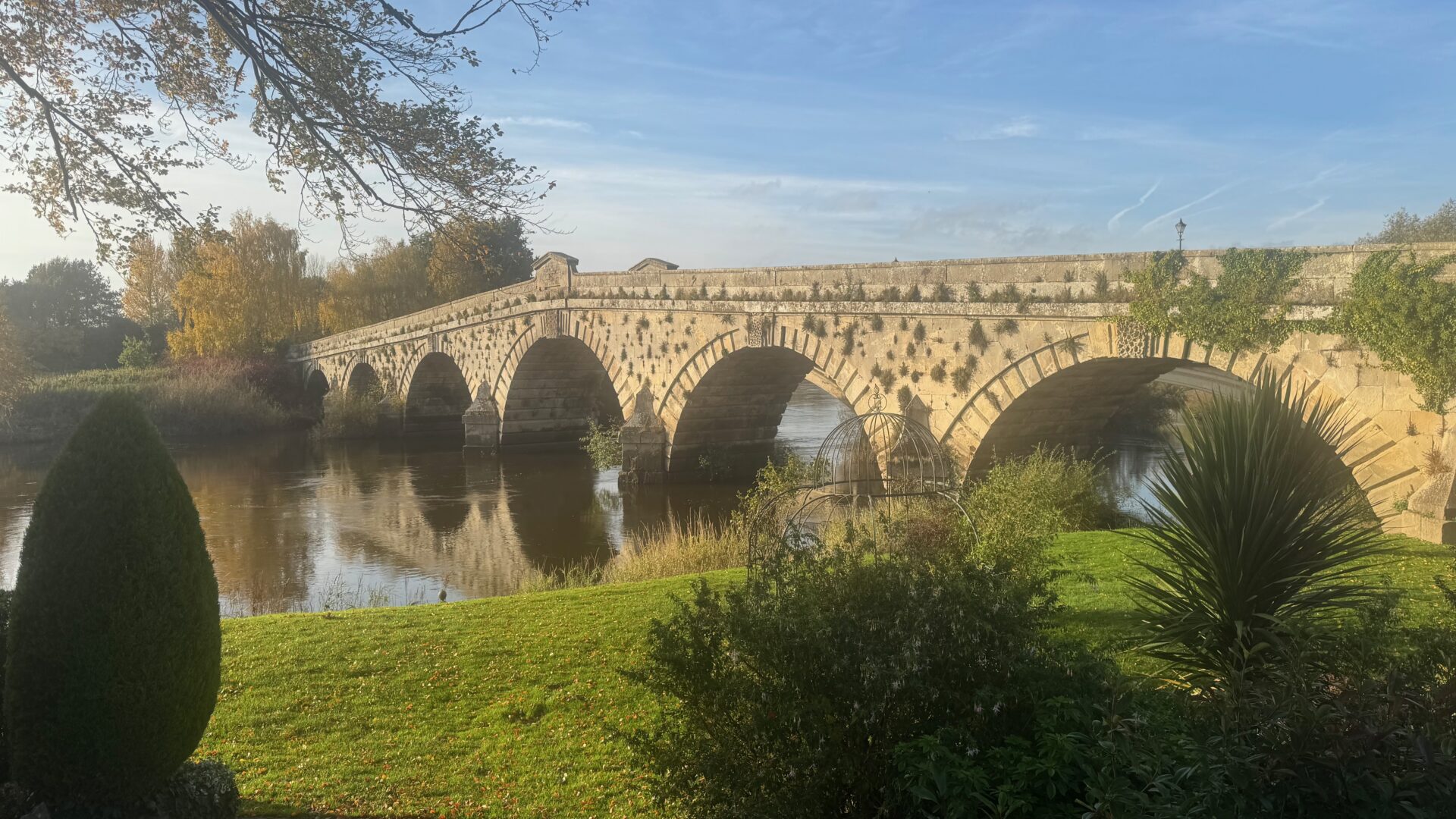
Autumn sunshine on Atcham Bridge, beside the Mytton and Mermaid.
Quantified Self
This week: Stand 7/7; Exercise 1/7 and Move 3/7. (52%). Morning walks: 0/5. Office days: 0/5. Total steps: 41,046. 13.8 hours in meetings.
Life
I was not in London for much of the week, but it’s worth noting that the Oxford Street pedestrianisation scheme started on Monday. When Londoners were asked what they thought, I filled in every survey in support of the scheme. So I ought to take a look when I get back.
Previously, I mentioned the app I built to look back on things I’d written on the internet in years gone by. It now imports tweets from my downloaded Twitter archive.
Relatedly, this week in 2008 I wrote that @curns “is back in London until he leaves early Tuesday & appears to have 2 hotel reservations in 2 countries for the same nights this week – oops!” I have no memory of this situation at all. I wonder what actually happened to me?
Relatedly related, my early tweets were written in the third person, which made sense at the time but is very odd to read now.
I introduced myself to Mum and Dad’s window cleaner, who seemed like a really nice man. But when he asked if I was “London or Edinburgh”, I wondered what he’d been told about me and my brother!
Mum and Dad took me to the Mytton and Mermaid for Friday lunch. I had halloumi fries to start and pork belly with apple and parsnip purée and a Stilton croquette. There was only one croquette.
Saturday, met the new dog, who is still a bit jumpy, and had a beef burger topped with spicy mac and cheese bites, nacho cheese sauce and jalapeños to celebrate J’s birthday.
Returning goods to Next on a Sunday took seconds. They already had the details. It’s remarkable how easy it can be to return something you bought online when a company gets its digital strategy right. And how rarely that happens.