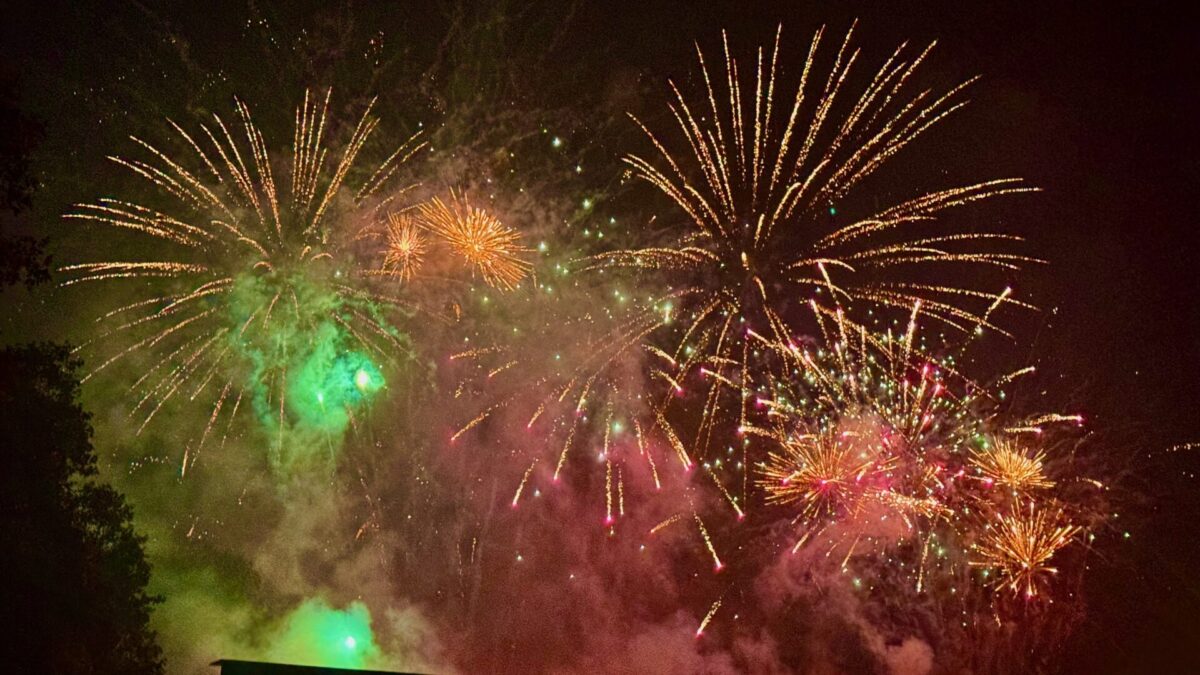
I went to the Battersea Park fireworks this evening. Although Guy Fawkes Night was last Thursday, most of the big displays around here took place over this weekend. When I was in Shrewsbury a couple of weeks ago, I saw a field with a pyramid of wood in the middle, obviously ready for Bonfire Night. That seems like an exception. These days, 5 November appears less about bonfires and more about elaborate fireworks displays. All day, I have been wondering when Bonfire Night became Fireworks Night.
Recently, so much of this blog has been childhood nostalgia, so why not make this one the same? When I was growing up, Bonfire Night was different. We used to go to a family friend who had a large plot of land behind his house, and every year he’d have, what in my memory was, a huge bonfire. This wasn’t a professionally organised event with tickets or music; it was a big fire in a field, with people gathered around it.
There would also be baked potatoes cooked on the fire and bobbing for apples. I don’t remember the fireworks at all. There may have been a few rockets and Catherine wheels, but the bonfire was the main attraction, and we children ran around with hand-held sparklers. It was an excuse for people to get together on a cold November evening, eat something hot and stand around an enormous fire.
The bonfire itself was the event. Somebody had to collect the wood and build it, and somebody had to decide when to light it. There would have been a Guy, but I don’t remember any conversation about the gunpowder plot or the tradition of making a Guy. Children would construct an effigy of Guy Fawkes, generally from old clothes stuffed with newspaper, and wheel him around asking for a ‘penny for the Guy’. The money was, at least in theory, meant to pay for wood, or maybe a small box of fireworks.
When I first moved to London, there were occasionally children outside Earlsfield station collecting money for a Guy. I have no idea whether the proceeds ever made it into a communal fireworks fund, or whether it was just a sweet-money exercise. Either way, seeing this old custom still going on outside a London railway station marked the coming of winter.
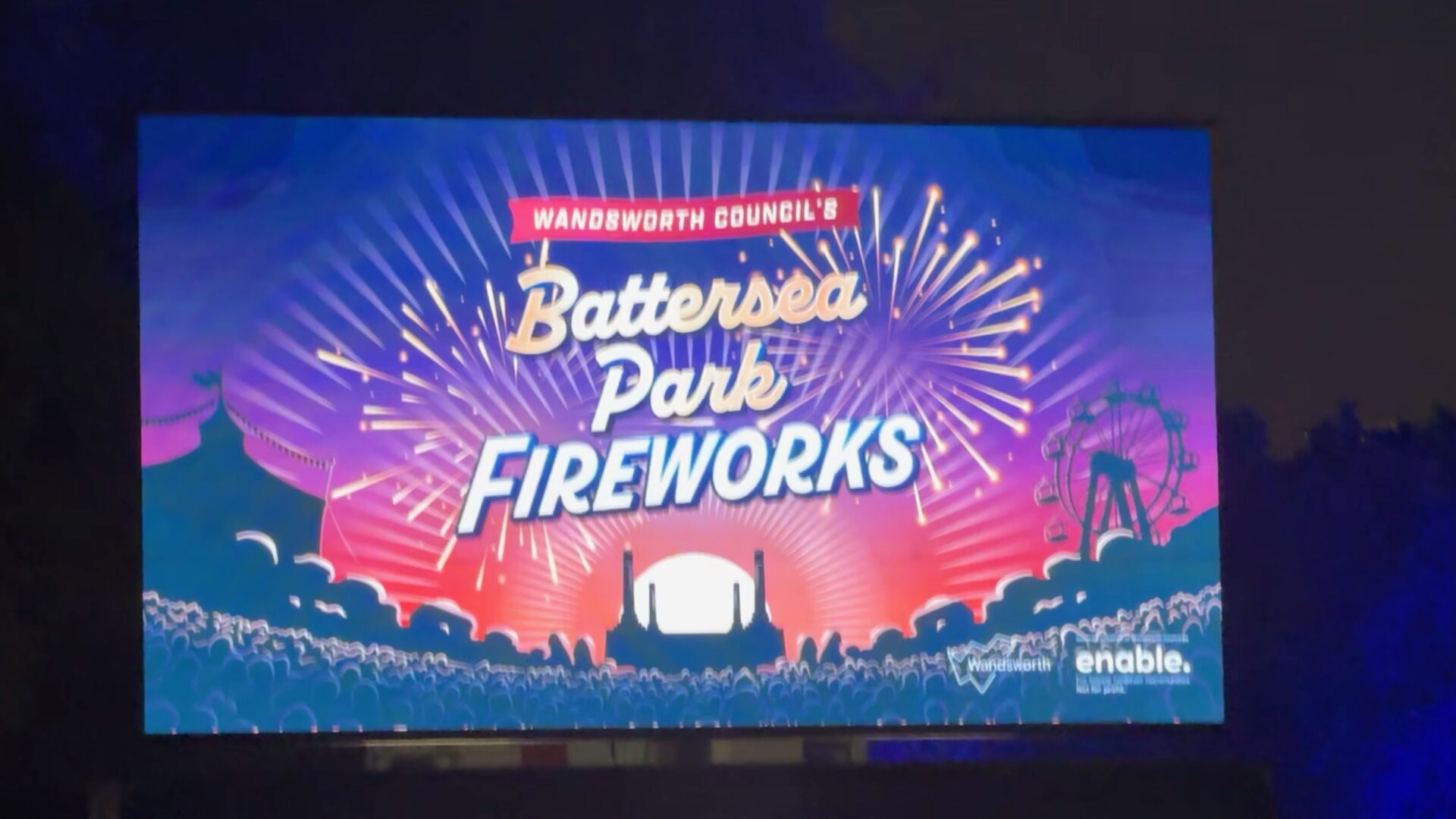
Now, I am not a grumpy old man about it. But the whole event has changed considerably, at least around here. Bonfire Night is celebrated through large, organised fireworks displays, often run by councils. Tonight’s was all about Wandsworth council, which isn’t even my local one. In recent years, I have seen a bonfire, but increasingly I don’t. Tonight, apart from the fireworks, there was a fairground, a festival-sized food area with bars selling alcohol, and a focus on mulled wine. A Taylor Swift tribute act performed under a big tent, and a chap on a podium was doing something with lightning effects coming from his hands. All that is part of the draw, even though it’s secondary to the huge crowd standing in the middle of the park staring at the sky for twenty minutes. It’s so festival-like, Wandsworth held the show two nights in a row. Fireworks have become the main attraction, with displays more impressive than anything somebody could create in their own garden.
I’m not even sad about the shift from fire to bangs. There seem to be sensible reasons for it. Putting fire and explosives in the hands of normal people, amateurs when it comes to this kind of thing, isn’t really a recipe for public safety. I bet my childhood event didn’t have insurance; there was just a large crowd of friendly neighbours in a field. Today, anything locally organised needs insurance and safety planning. The practical difficulties of organising community events make it easy to see why things have moved on.
For most of today, I convinced myself that the traditional bonfire event is extinct; everything around here is about the firework displays. But this afternoon, on my Instagram feed, I noticed a few pictures of people planning something more traditional. It seems you just need to know where to look.
Sussex, in particular, seems to take Bonfire Night very seriously. In Lewes, bonfire societies organise the celebrations, with costumes, processions, and, of course, a bonfire. People carry flaming torches through the town. People from further away are discouraged from attending because overcrowding causes problems.
A quick search shows that other towns and villages, including Hastings, Battle, and Rye, have their own bonfire societies. Apparently, Lindfield’s bonfire costs around £18,000 to put on. That’s quite a lot of pennies for the Guy.
Elsewhere, Edenbridge in Kent has a tradition of enormous effigies. In Ottery St Mary in Devon, they carry flaming tar barrels through the streets. It’s a custom thought to date back centuries, and one that probably wouldn’t get very far if somebody proposed introducing it today.
So it seems I was wrong: the traditional bonfire hasn’t disappeared, but I may be in the wrong part of the country for events organised by locals rather than by a council.
I don’t suppose there’s much appetite for returning to the days when anybody with a pile of old furniture and a box of matches could organise a neighbourhood bonfire. And I am not suggesting that a few damp fireworks struggling to launch themselves into the November sky were somehow better than a professional display.
Still, I miss the idea of Bonfire Night being about the bonfire, and its smaller-community nature. The pleasure was in standing around a fire with other people, eating a baked potato and occasionally looking up to see something go bang in the sky. Tonight’s event was safer, more impressive and certainly better organised. But somehow the reason we stand in a field and burn things now is lost behind a display choreographed to a pop beat.
And I haven’t seen anyone asking for a penny for the Guy at Earlsfield station for a few years.
