Weeknotes #35: an end and a beginning

Week commencing Monday, 18 September 2023
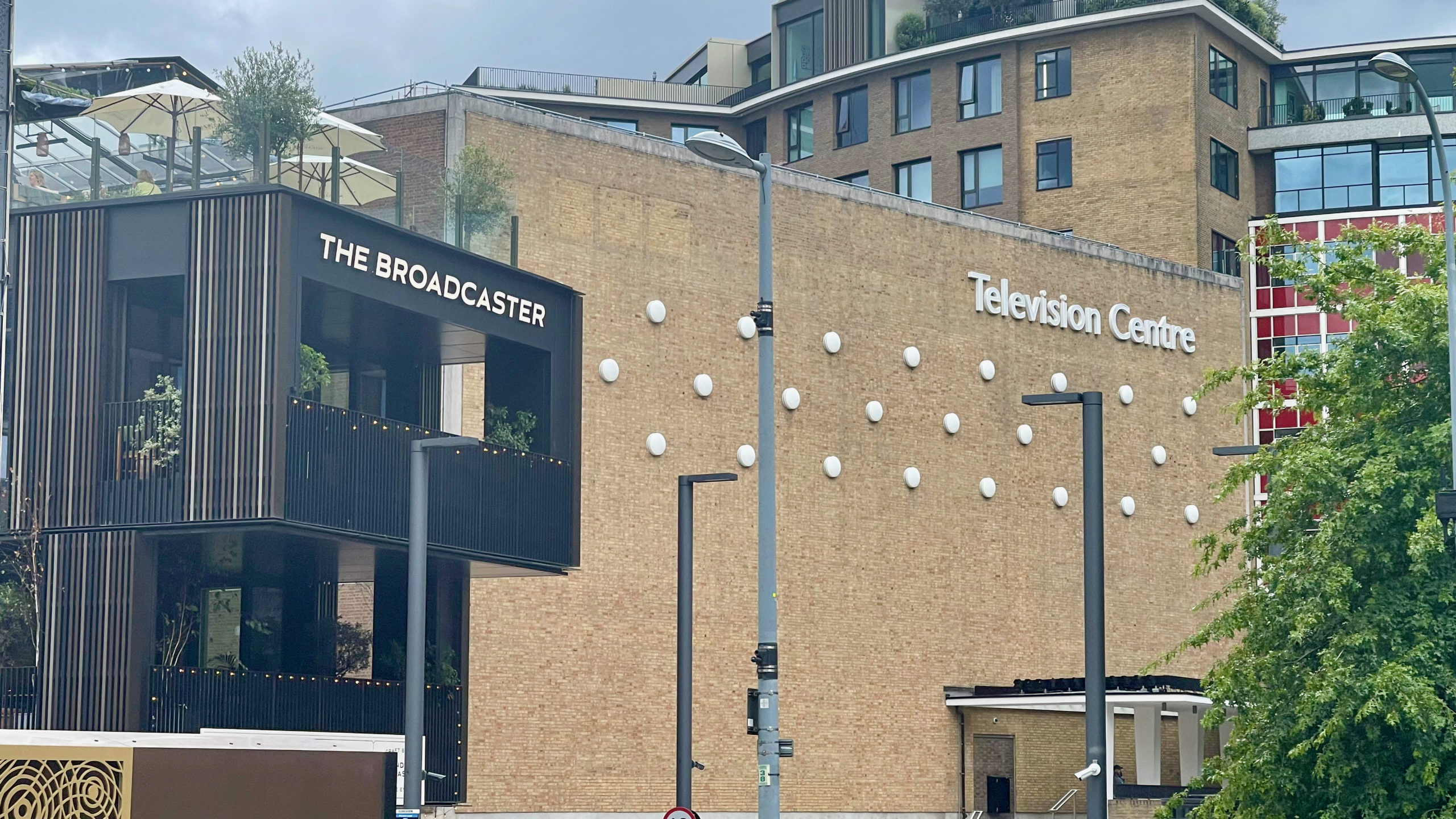
A view of Television Centre with The Broadcaster pub in the foreground.
Television Centre

Quantified Self

  • This week: Stand 5/7; Exercise 3/7 and Move 5/7. (62%, slipping). Morning walks: 0/1 (days in the office don’t count). Office days 4/5. Total steps: 62,418

Life

  • Monday, a nice few drinks with people who will soon be ex-colleagues. Have to admit to, quite a bit of, ‘why am I doing this?’
  • Related, noticeably cold on the platform waiting for the train home.
  • Tuesday, completing the circle. On my first day the trains were cancelled to mess up my arrival and, now, the same on the last.
  • Lovely final day where the developers showed me completed software and it was exactly what I imagined. Good stuff.
  • Nice words to end the day, handed back IT and then a nice email from my boss.
  • First day in the new one was a quiet day in the new – but familiar – office. I don’t like the crowded trains from Clapham. Home, a different way was marginally better. Thursday, trains the other way around were much more pleasant so that’s going to be my route.
  • Friday was much quieter but I did get to upgrade my phone to the new software, iOS17. I am not sure I can immediately tell the difference.
  • Lots of good advice from Merlin Mann: No one has ever died wishing they’d spent more time documenting their “minimalist desk”.
  • Back at The Crazy Coqs for Fleetwood Mac and Stevie Nicks and it was fantastic. I don’t know if it’s because there’s been a gap between shows or because I am not as familiar with all the music but I thought the evening was wonderful.

Media

Archive

To save the links getting lost in the future I checked the Internet Archive to see what they had saved for the posts linked here. If the source above no longer works, these should.

New People. New Trains.

I love the fact that years ago people were thinking 50 years ahead, but is it enough?

There’s almost a week to go until the end of September but today really is #SOLS day. Today’s view from my pulpit is, once again, about transport. Is it too much of a theme.

I’ve written a couple of times in recent weeks about transport in South West London. I’ve never lived in any other part of the city so I can’t comment on issues elsewhere. Although, as I previously noted, I commute into Britain’s business station, so I feel a certain amount of attention is needed in this part of the world.

South London is woefully underserved by London Underground with 250 stations north of the Thames and just 29 south1. So, for those of us South West, the major transport options are main line services into London Waterloo; trams if you’re heading around Croydon or the “misery” Northern Line2 through to the City or West End.

Back in 1974 I don’t think I could point to London on a map (being about 4 years old at the time) but somebody, somewhere, decided that about 50 years later a Chelsea-Hackney underground line might be a good idea and so started a process that leads to this day3.

The Draft Mayor’s Transport Strategy 2017 includes a plan for Crossrail 2: a line that is described as

a new proposed railway linking the national rail networks in Surrey and Hertfordshire via an underground tunnel through London 4

The line is predicted to allow 270,000 more people to travel into the central London the morning rush hour. This is equivalent to about 10% of the current capacity into London. It’s really quite a lot.

The scheme will also “unlock 200,000 new homes”5. That also seems like a big number equating to a lot of new houses. But it also seems like room for a lot of new people because we need houses for the growing London population. If a good proportion of these new houses are near the Crossrail 2 route then it should be assume that some of the people will utilise the route for their commute, after all, why not take the shiny new trains into the office?

So, if each of those houses has at least one occupier and half of those people use the new train for a commute then we have 100,000 additional south west journeys. Much of the new capacity is used-up instantly. And, assuming a single occupier properties seems on the conservative side don’t you think?

I love the fact that years ago people were thinking 50 years ahead and started to make plans. I love the fact the Mayor is promoting the project as a strategic plan. But, is it enough?

Footnotes

1 http://londonist.com/2016/03/alternative-names-for-london-s-tube-lines, Croydon Advertiser
2 Take The Drain, The Misery Line, Then The Viking Line, Londonist
3 Crossrail, History
4 What is Crossrail 2?
5 The Importance of Being Earnest: Making the case for Crossrail 2, London Reconnections

#SOLS

#SOLS is a project to get me writing on this site in 2017. You can read more about it in an entry from the start of the year.  Recently, a few of the pieces have been about transport in South West London but can also see what else I have written about in the #SOLS index.

Curns’ Ad Links for 24 September 2010

Our Country Friends

How many of us who live amidst an urban sprawl would rather be living in the countryside? I suspect it’s a conversation that keeps the wine bars of large parts of London alive. The quest for a quieter, simpler life is something many people search for. Indeed, it is something I have thought of many times. Move all my worldly goods to the South West and see what happens. Well, in truth, at this moment in my life I don’t actually want to do it. Sometimes, however, I wish I could lose the congestion and stresses of inner-city (or, in my case, suburban) living.

And why am I asking myself these questions? Well, last Sunday was the day The Countryside Alliance marched through London. I avoided the centre of town for most of the day but I did enjoy a lunch at Wandsworth Common. Seated at most of the tables surrounding us where groups of people who, quite evidently, had been on some part of the march. What intrigued me was why so many of them had taken a train out of central London to Wandsworth Common.

Of course PY, who seems to have a greater understanding of many of these things than I, claimed that many of those people sat there on Sunday afternoon were in fact local residents but they had been marching for the countryside cause – “Liberty and Livelihood”. Upon reflection, I think he was right. Many of them may have other houses in the country, perhaps even own large amounts of land. But what struck me most was a simple economics. If all the money they spent in the restaurants of Wandsworth Common each Sunday was spent in the countryside then rural communities would be booming. Not only that, but if they all went and lived outside the city and enjoyed the life they were marching to protect on a daily basis (rather than at weekends), then they would free up a great deal of housing stock in urban areas. Thus, the countryside benefits (it’s full of people spending money and supporting the “lifestyle”) and those of us wishing to remain (for the time being) city dwellers would also benefit from less ridiculous housing costs. Doesn’t everybody win? (Well, I know there is the matter of jobs, schools and other infrastructure etc. but you have to admit it’s starting point, if not wholly thought through. And more importantly it’s plainly hypocritical to march for something you don’t actively – economically – support).

For a more interesting read on tweed in the town, see here.