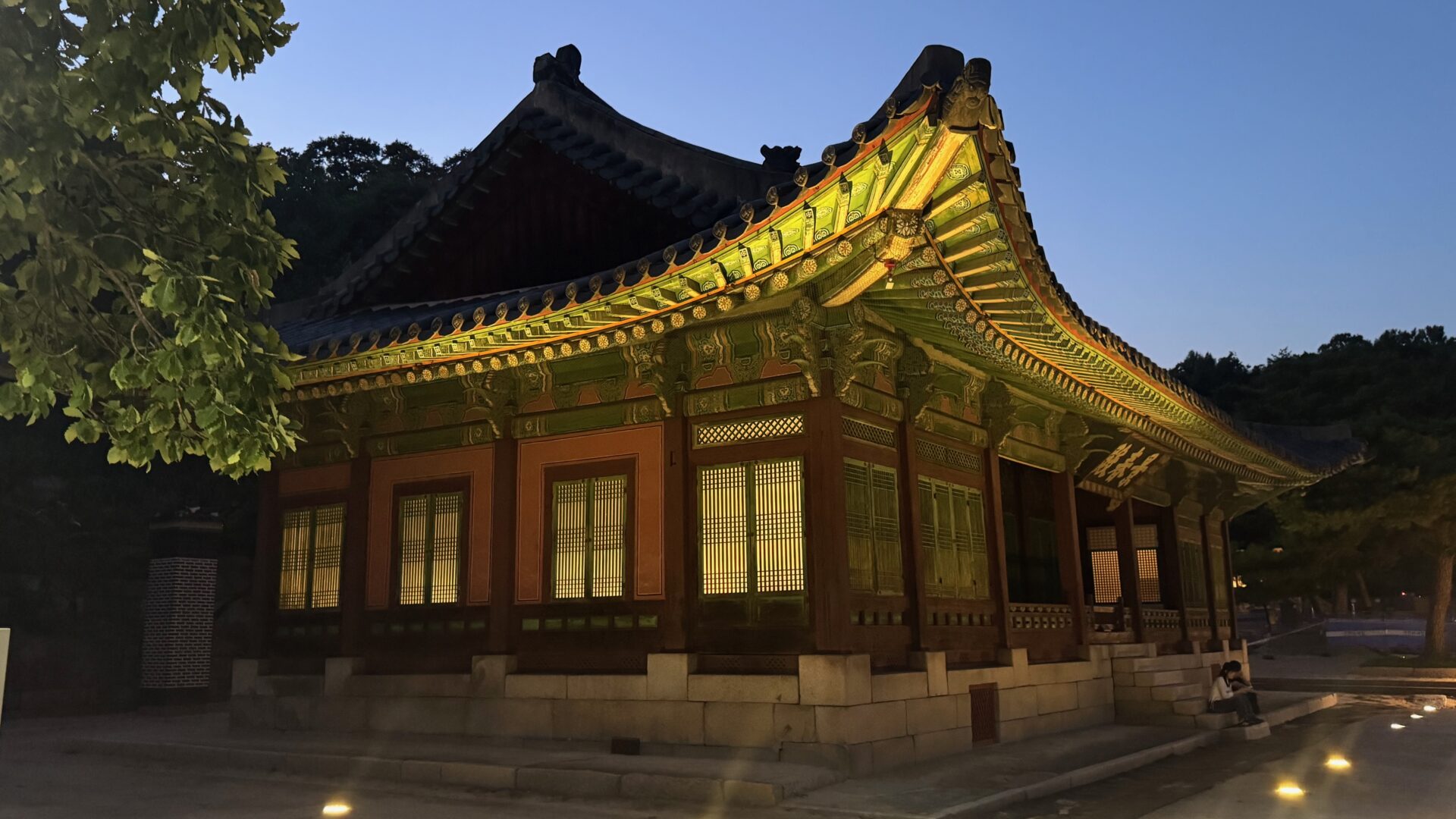
On our final full day in Seoul, PY surprised me by asking if I fancied trying noraebang, the local equivalent of karaoke. We don’t normally do karaoke, so I was a bit taken aback. Noraebang translates to “singing room”. Unlike the more familiar (to me) karaoke, where you perform in front of a crowd of strangers in a bar, a noraebang is a private, soundproofed room rented by the hour, or, in our case, by the half hour. I very much hope it was soundproofed for the sake of those around us.
At some point at the start of our half-hour in the room, PY tried to turn the volume down and instead slowed the song’s tempo. We didn’t realise this until we were about to leave. We were busy trying to sing Will You Still Love Me Tomorrow at a speed that gave us more time to think about the order of the words than was intended by the writer.
The remote control was a very large box, with a few bits taped up. As you’d expect, the buttons were entirely in Korean, and our translation apps couldn’t make sense of them under the subdued disco lights, and neither could we. We had all the other karaoke prerequisites: microphones, a private room, and we’d accepted we might embarrass ourselves (a little). What we lacked was the ability to choose a song. So I pressed random button combinations, and not much happened. At least I didn’t call the staff or set off any kind of alarm.
By this stage of the holiday, I thought we were getting quite good at navigating South Korea.
On day one, our first attempt to take the Seoul metro was less confident. We needed a T-money travel card, which sounded straightforward until we got to a station and couldn’t figure out where to buy one. After a long flight, with the heat and humidity becoming obvious, we retreated to Starbucks.
When I travel, I tend to pride myself on avoiding the recognisable big-name brands from home. I suspect I would have been disappointed in myself if someone had told me that one of my first stops in Seoul would be somewhere I could visit in Wimbledon. But familiarity, and air-conditioning, gave us time to regroup. I ordered a latte. Ahead of us, two large groups had ordered a colourful assortment of drinks. Mine was easy to spot: it seemed to be the only hot drink being made.
At the next metro stop, we found a 7-Eleven. Buying the travel card turned out to be easy. Then we went into the station, used a machine that spoke to us in English, added 10,000 won, and headed to a train platform. What had appeared a bit much at first was now done, and we could get on with the holiday.
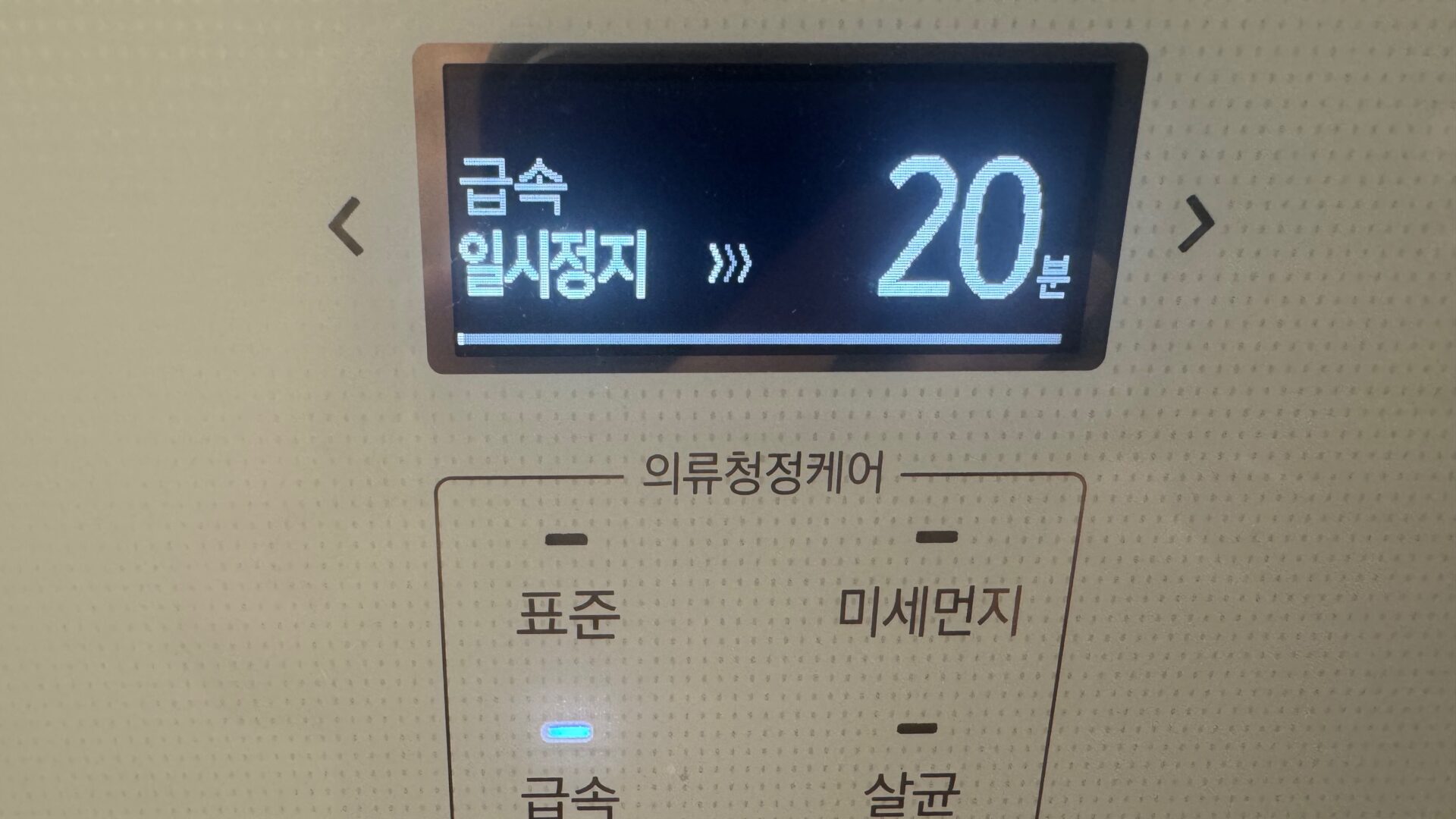
The hotel room had a washing machine, a small kitchenette (which we didn’t use), and an electronic steaming-and-drying cupboard. We weren’t sure what the cupboard device did, but it seemed worth trying simply because it was there, and who doesn’t like trying new technology? I spent about ten minutes photographing the symbols, pasting the images into an app, and pressing electronic buttons to figure out what it did and how to operate it. And I was glad we did, because Seoul was much more humid than I imagined, and it was good to get some washing done and dried. What an amazing machine; do we have these in London?
The hotel also had a roof garden. It took a little effort to find the way up, and the garden itself looked rather neglected, but the views were good. Operating the in-room equipment wasn’t the only challenge. Sometimes we just needed to find the right door to an unsignposted roof terrace.
At Kyochon Pilbang, even that was part of the fun. PY had arranged dinner without telling me much about it. We opened the entrance by pulling down a large brush, like ringing a bell, then were led through a series of doors that were impossible to spot if you didn’t know they were there. It really did seem like the wall had just opened. Beyond one was a five-seat counter where a chef prepared a delicious eight-course chicken dinner.
Across our holiday, screens did much of the work. At Jeju Airport, I ordered a spicy rice bowl from a machine in a busy restaurant. I didn’t speak to anybody. Orders came in, food came out, and tables filled again almost as soon as somebody left. It was impressively efficient.
But I did have to ask how to get water from the machine; elsewhere in the airport, a vending machine defeated us.
We wanted a drink. The machine had buttons, a card reader, and, I guess, a sequence we needed to follow. Whatever that sequence was, we didn’t figure it out. After successfully navigating flights, restaurant menus and public transport, we had reached the limit of our abilities at a machine selling cold coffee.
While screen-based ordering systems were common, I was surprised by how often technology appeared where I hadn’t expected it. At Bulguksa Temple, donation points with tap-and-go card readers sat within the temple building, and our guide sent meeting times to everybody’s preferred communication app, which meant repeating the same message across several different systems. It seems that keeping a coach party together requires as much knowledge of messaging platforms as it did of the places we visited.
Translation apps helped, although they had their limits. At a small Japanese restaurant in Jeju, we used one to choose dishes from the menu. Communication wasn’t easy, but dinner was outstanding and worth all the effort. We watched the restaurant prepare a grilled rice ball and brand it with a hot rod. We still didn’t fully understand everything, but it was fascinating to watch, and the Internet told us it was their signature dish.
But the noraebang remote was the least forgiving piece of technology we encountered.
We eventually got Madonna’s Beautiful Stranger playing at what seemed to be the correct speed. Then we somehow got it again and couldn’t find the cancel button. Extra minutes mysteriously appeared on the clock, and even now, back home, I have no idea whether I pressed a button to pay for them or not. PY selected Adele’s Hello, which didn’t seem like an obvious karaoke choice, but by then we were going with whatever came up on the screen.
The original frustration had become increasingly funny. More time appeared in the top right of the screen, but we decided we’d had enough. We left without mastering the remote, and although we had managed some singing, I don’t think we mastered that either. Perhaps you were in the next booth and heard us!
That same day, we had travelled back from Busan on a smooth, quiet high-speed train and taken the subway to our hotel because we knew how it worked and still had money on our travel cards. We had come quite a long way from that first retreat to Starbucks.
We could travel at high speed, but finding a karaoke song we wanted to sing was just a bit too much.