the Da Vinci Code

It’s very easy to get sucked into the world Dan Brown’s novel, The Da Vinci Code.

You may recall that I love my pulp fiction and, on the train, I finished the latest and greatest thriller, Dan Brown’s The Da Vinci Code. I picked it up in a sale in a bookstore in one of those three-for-two offers. Amazingly, I had missed all the buzz about it and it was only after I had started to read it that I looked around to see half of the people on the train reading the same book. It’s certainly grabbed the attention of London commuters. Anyway, time to review it for Amazon as I haven’t been keeping those up and my ranking has started to slip!

It’s very easy to get sucked into the world of Dan Brown’s novel, The Da Vinci Code. It’s a thriller from start to finish and one of those books that can have you hooked in just a few pages – you will be stealing yourself away to read the next chapter before you know it. Maybe you can see the blockbuster film or see the Ludlum or Grisham parallels but what makes this novel stand out from others is enormous amount of plot detail. Regardless of your opinion of Les Dossiers Secrets (or any of the premise behind the tale) the description of the artworks, relics and rituals in the novel is fascinating. Most importantly, however, the detail enhances the story rather than detracting from it. You may imagine that such vivid descriptions of paintings, churches or cryptology would slow the story-telling but the opposite is true: the finer points of this work add to the pace. It’s probably a novel you should re-read to see if you can decipher the codes when you know the answers and it’s certainly a novel that makes you want to delve into the history behind it. All in all, it’s a great suspense story that makes religious symbology entertaining.

The Whispering Years

It’s not dull or bland in any way, but perhaps because there’s a little of the 60s hippie left in Bob Harris, you feel the measured approach is entirely appropriate.

You really do get to appreciate ‘Whispering’ Bob Harris’ love of music through his autobiography, ‘The Whispering Years’. You’ll read in the blurb that he’s been married three times, has had to restart his career from scratch several times, and almost lost his record collection to a fellow Radio 1 disc jockey. What you may not get from reviews is a feeling of the genuine passion he has for the music and how big a role some of the greatest musicians of the last thirty years have played in his life. You feel as uneasy as Bob appeared to be over the fame that The Old Grey Whistle Test brought him, and you will feel somewhat betrayed when Radio One removed him (I’d forgotten he was the voice launched round-the-clock Radio One in August 1990). Throughout his career he stuck to his passion – the music – and shunned the computer-generated radio that dominates the airwaves today. His interview technique was considered ‘less than penetrating’ in the past, but that gentle approach serves him well in book form. It’s not dull or bland in any way but, perhaps because there’s a little of the 60s hippy left in Bob Harris, you feel the measured approach is entirely appropriate. If you love music (and not just progressive rock) or enjoy his radio programmes, then The Whispering Years will be engaging, fascinating and inspiring.

Buy Bob Harris’ The Whispering Years

Lucky Man: A Memoir

An absorbing and very well-written book that proves that people in the public eye are just like the rest of us.

Michael J Fox as Marty McFly

Lucky Manis not a typical Hollywood star autobiography. While it is peppered with references to the television shows and movies Michael J Fox has made it is – most definitely – not a name-dropping ‘look at me’ celebrity obsessed biography. Yes, it’s an insight – although not too revealing – into the inner sanctum of Hollywood stars, but it’s very much grounded in the real world. It deals with the highs and lows of a film career and the pleasures and pressures that brings. When reading the book you really do feel as if Michael J Fox has been able to take a step back and look upon his own career from outside. He’s able to analyse the fame, the money and identify both the good and the problematic that his career has brought him. However, from the beginning of the book, his upbringing and his rise to (and through) fame are placed in context by the Young Onset Parkinson’s Disease diagnosis. That diagnosis has allowed Fox to asses what’s important to him and write a book that shows him as a genuine, warm and open individual. There’s no sentimentality about the book, and he does detail how the disease effects him but, at no point, do you feel like an intruder into his private life. Despite the difficult nature of the Parkinson’s Disease descriptions, Lucky Man is an absorbing and very well-written book that proves that people in the public eye and just like the rest of us.

21 Dog Years: Doing Time At Amazon.Com

Daisey’s book is flagged as a comic tale; it takes a while for the comedy to warm up.

It’s quite easy to get sucked into Mike Daisey’s ‘21 Dog Years: Doing Time At Amazon.Com‘ as he moves from dilettante to corporate business development guy. On the journey, we learn he is one of the (mythological?) freaks that Amazon initially wanted to help launch and then staff its growing customer service division. We learn about the training, the call-time targets, the lack of windows, the Chicken Orzo Salad and Jeff’s obsessions.

Unlike Robert Spector’s ‘Amazon.Com: Get Big Fast‘, this is a tale from the inside, but how much is exaggerated for comic effect is unclear. For sure, life in an under-staffed call centre – where if you don’t work all hours you’re seen as letting the team down – is not the glamorous side of any business, and the world of fast-growing online booksellers can be no exception. The dreams that all would be multi-millionaires on the back of huge stock rises are also not unusual to any tale of this era. Perhaps the thought of sending the free books to customers on the database isn’t typical of the dot-com boom, but the frenzied ‘1-click Christmas’ period will be familiar to many in a start-up venture.

Daisy’s book is flagged as a comic tale, but it takes a while for the comedy to warm up. In fact, it’s only towards the end that I felt there were some laugh-out-loud moments, but don’t let that put you off. ’21 Dogs Years’ in well written and compelling. You really do want to know what Mike’s going to do at the end. Don’t look for an insight into business strategies of that time, but you will get a view of the craziness of life in the trenches of rapidly growing business.

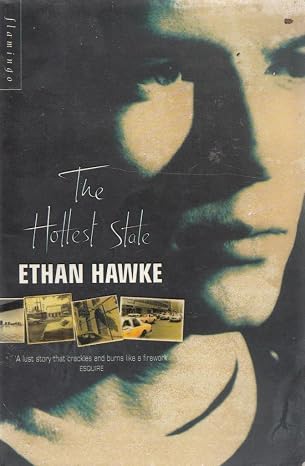
The Hottest State

As a reader you will observe William but you will not become emotionally attached.

Ethan Hawke’s Hottest State is a tale of obsessive love set in New York (and Paris) when William (’20 sexy, confident’) meets Sarah and they embark on a relationship which really is roller-coaster-like. Through it we explore William’s relationship with his mother, absent father, and with himself. It’s clever yet not distant, sensitive but not sentimental, but, ironically given the title, left this reader a little cold.The Hottest State is entertaining and well-written, but capturing that painful, gut-wrenching emotion that is obsessive first love must be hard for any novelist, and Hawke doesn’t quite pull the reader in. As a reader, you will observe William, but you will not become emotionally attached, and Sarah’s quirkiness – which initially seems endearing – eventually distances you from her, leaving William’s obsessive feelings a mystery. Despite those reservations, Ethan Hawke’s first novel suggests a promising career as a novelist.

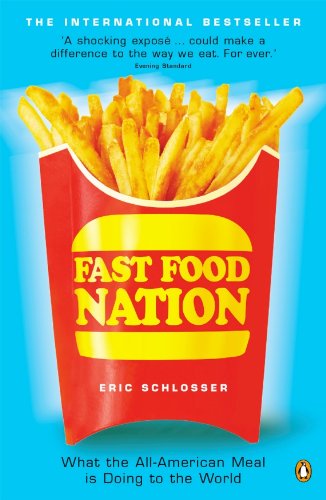
Fast Food Nation

It was not much of a surprise to find that so-called fast food is not the healthiest food in the world.

It did not come as much of a surprise to find that so-called fast food is not the healthiest food in the world. It was certainly no surprise to discover that the fast food chains are not the greatest employers in the world. It wasn’t unexpected to read that the big brands employ so many people that they wield great economic power.

What did, however, surprise and alarm me was the sheer influence Eric Schlosser claims the fast food companies have over the whole food chain and related economies. Is it really in the consumer’s best interests for the large food giants to have such a firm grip on the production of the raw materials that make up their final products? It is suggested that this power has knock-on effects on the health of (not only) consumers but on the shape of the entire economy.

Schlosser’s book is disturbing reading. It’s unashamedly populist in its approach, suggesting that economic gain and corporate profit matter more than consumers’ well-being. However, regardless of the author’s standpoint, much of the evidence he presents is damning, which makes it a compelling read. If you’ve ever eaten fast food, you should read it. It has certainly made me think harder about ordering anything “with fries to go”.

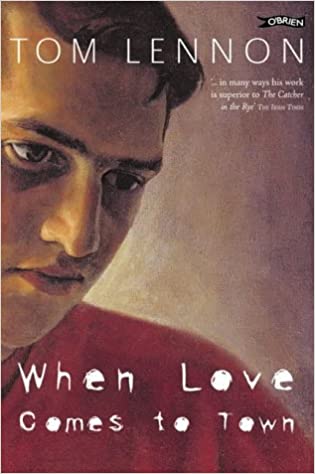
Elsewhere: When Love Comes To Town

My latest book review!!

When Love Comes To Town, Tom Lennon

Book cover for When Love Comes To Town

There are many fictional coming-out tales to choose from, so why this read Lennons?

Firstly, there aren’t that many set in contemporary Dublin. Secondly, there aren’t many told with the humour and compassion ofWhen Love Comes To Town. Finally, there are not that many that are such a good read.

Let me also be honest. There are few new takes on the coming-out dilemma, so don’t expect total originality.

Neil Byrne is a top-class student who has realised he isn’t like all his coupled-up (straight) friends. The story takes us through Neil’s tentative steps into Dublin’s gay nightlife and his introduction to the characters of The Scene. Neil’s first love and family’s reaction are all covered, and his confusion, pain, hopes & desires are well described.

The family’s response is not a model reaction, so don’t read this book if you are looking for a reassuring, positive take on the acceptance of loved ones to the news that one of their own is gay.

The book’s climax is certainly one of the more surprising aspects of the tale. In a dark moment, Neil realises what he needs to do to survive the next few years of his life in an intolerant community. This ending results in a fine piece of writing that conveys the emotion of the final scene remarkably well and, I suspect, brings a lump to the throat of many readers.

Given a less positive ending than many similar books, I found this to be a refreshingly honest story. It is certainly a welcome addition to the genre.

Click here to but it at Amazon | Click here to see this review at Amazon

Elsewhere: Where Are You Now, Miss Boo?

My review of the story of Boo – an interesting tale of a business with no financial controls.

I submitted another review to Amazon.co.uk today, and I was quite pleased with it. Having just finishedBoo Hoo(the story of online “active streetwear” retailer boo.com), I thought I would add another review to my small list. I was particularly fond of the last line:“Live hard, die young and leave a beautiful corpse” could almost have been written of Miss Boo.

I wait to see if it published as I wrote it.

My full review submitted to Amazon.co.uk earlier today:

What a fascinating book. Take two Swedes, a desire to be “cool”, and throw $135 million at them! Ernst Malmsten’s story of boo.com is a warning to all new enterprises everywhere: get some strong financial controls and make sure you stay in charge of your costs. Most of all, it tells us that there is no substitute for some experience when running a shop.

I was sceptical that Ernst et al. would hide behind others and not shoulder the blame. However, what comes through clearly is the founder’s vision, belief and desire to build a world-class product, as well as the management’s failings when developing that business. It is possible to read much by what is not said, as well as what story is directly told, and in that, an incredible tale unfolds before you.

The book is well written and highly addictive. As the inevitable end approaches, it becomes one of those books you pick up all the time, even just to read the next two paragraphs. As a story, it is thoroughly thought out, well-paced, and fascinating. As an insight into online business history, it may be one-sided and sometimes lacking, but it remains compulsive reading and a captivating look at a never-to-be-repeated economic boom (and bust) time.

Boo.com became synonymous with the “live the high life, party hard” culture that many cash-fuelled Internet start-ups went through (and spent). “Live hard, die young and leave a beautiful corpse” could almost have been written for Miss Boo.


Originally posted at musak.org | Wayback – original | Wayback