Public service

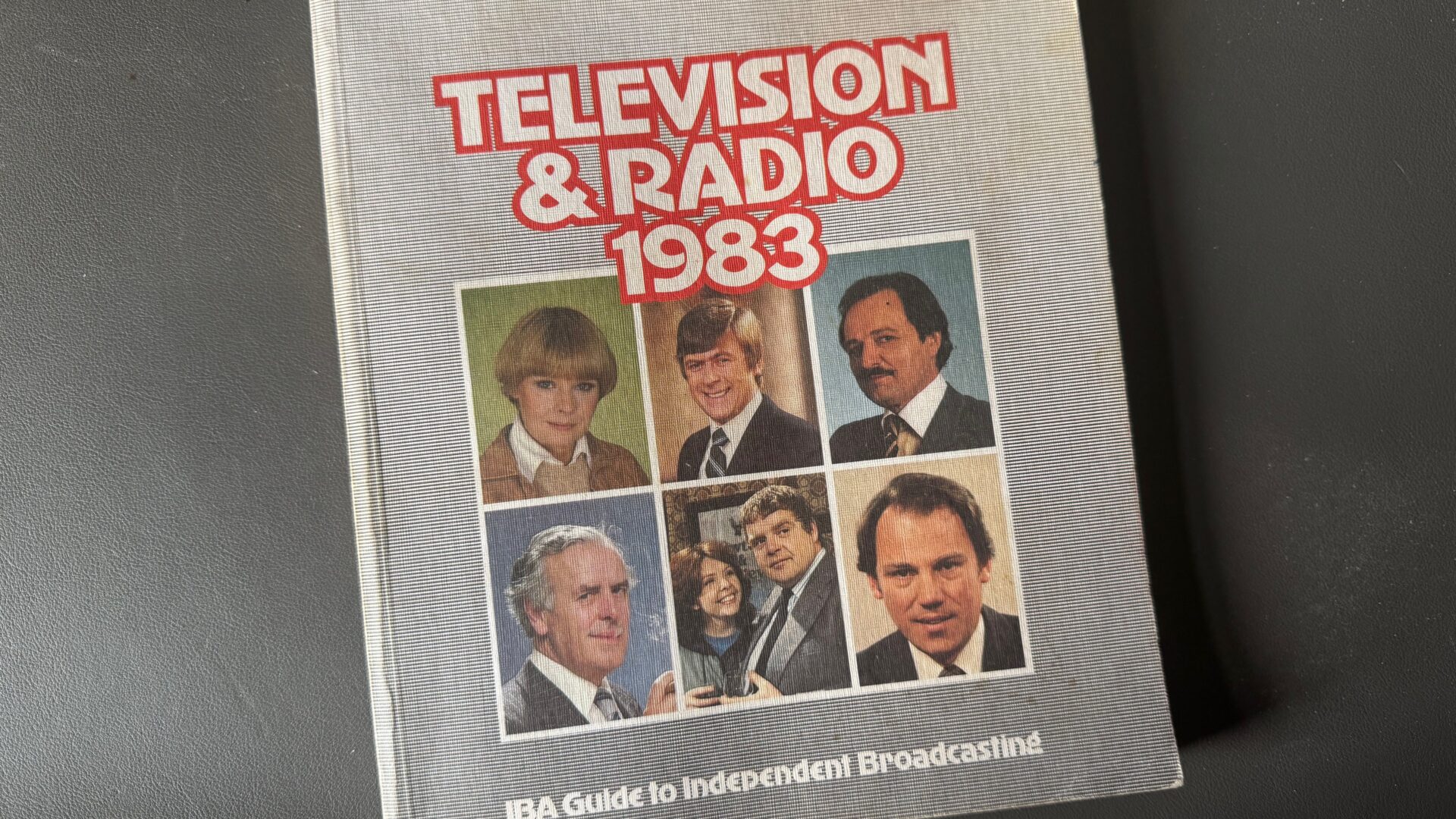
I recently found more history in my parents’ loft: the 1983 edition of the IBA’s Television and Radio book.

A hardback book photographed on a dark surface. The cover reads "Television & Radio 1983" in large red and white bold lettering, with the subtitle "IBA Guide to Independent Broadcasting" along the bottom. The cover features a grid of six colour photographs of television personalities — three men and one woman in formal attire in the top row, and three further individuals, including a man and woman pictured together, in the bottom row. The styling and photography are typical of the early 1980s.
The IBA’s 1983 guide to independent broadcasting, preserved.

Following yesterday’s nostalgia fest, I recently found more history in my parents’ loft: the 1983 edition of the IBA’s Television and Radio book. They used to publish one of these every year, providing an insight into the world of independent, not commercial, television and radio.  Reading it now, it feels like a time capsule from a different era of broadcasting that seems familiar but, somehow, a bit off.

What’s most interesting about this edition is that it covers the birth of Channel Four (which came on air the month before publication, in November 1982) and the launch of TV-am, which followed in February 1983. It tells us that the senior presenting team at TV-am will be “informal and conversational”, while Channel Four is required to be complementary to ITV to avoid competing for ratings.  The book is full of material about ITV shows. It was the era of ‘Tales of the Unexpected’, ‘The Gentle Touch’, and ‘The Jewel in the Crown’, ‘World in Action’ and ‘News at Ten’. I think only the last of those remains on screen regularly.

The word ‘soaps’ is not used; they are referred to as drama serials, which feels out of step with how television executives would discuss them today. The book says that “a tremendous amount of skill and thought needs to be put into a drama serial to make it so abidingly popular’, and we still regularly have Crossroads and Crown Court on the telly, while the word Farm remains firmly attached to Emmerdale.

What’s clear is that this is from an era when television had to be a bit of everything: plays, drama, serials, science, religion, children, light entertainment, and the arts. Yet, in the book’s introduction, we learn that the pace of technology development is quickening and the arrival of direct broadcast satellite services “now seems a likelihood for the middle of the decade” – and what a change to the broadcasting landscape that would bring. We’d end up with channels dedicated to every conceivable genre of programming.

A double-page spread from the IBA Guide to Independent Broadcasting, Television & Radio 1983, showing the "ILR Areas" section. Each entry lists a local independent radio station with its directors, senior executives, address, frequencies, and a small regional map showing transmitter locations. Stations visible include Chiltern Radio (Luton/Bedford), Maidstone & Medway (contract advertised), Piccadilly Radio (Manchester), Gwent Broadcasting (Newport), Radio Trent (Nottingham), Hereward Radio (Peterborough), Plymouth Sound, Radio Victory (Portsmouth), Red Rose Radio (Preston & Blackpool), and Radio 210 (Reading). Station logos are printed alongside each entry. The layout uses pink section headings on a white background, with a two-column design across both pages.
The Original Broadcast Postcode Lottery

There are 47 local radio stations listed in the book; many were yet to launch, and the Humberside, Maidstone, and Reigate services had only just been advertised, with no contractors selected. One struck me as odd: Northside Sound was listed for Londonderry, and, given I consumed everything I could about the world of local radio at the time, I was surprised that I couldn’t recall it. The forums at Digital Spy suggest that “Northside Sound failed to raise sufficient capital for its launch,” and that the frequencies were served by neighbouring Downtown Radio. Back in 1983, I would have proudly said I could name every independent local radio station. Perhaps that’s not true.

The book is full of behind-the-scenes technical information; I think the technical standards were paramount and, possibly, more important than the content to the public service mindset. I read that a television relay near Tintagel in Cornwall was built using wind, solar, and batteries as an experiment, which strikes me as a green agenda way ahead of its time. The text service that used to accompany commercial television, Oracle, has a couple of pages devoted to it. In 1983, this was very much cutting-edge technology.

What strikes me most, however, is not the memory of programmes or services provided, but the tone of the book. It’s very much from the era when broadcasting was a public service. All the radio and television companies were contractors to the IBA, which was ultimately responsible for regulation and transmission and answerable to Parliament for everything broadcast. The market was not necessarily the primary driver for these services. The world has moved on; we now prize competition and choice over fewer, broader services. We have more ways to receive content than ever.  At over forty years old, this book is a wonderful snapshot of a time when television and radio were run for the public good.

Autograph cards

A collage of overlapping black-and-white DJ autograph cards and station promotional flyers from British independent local radio stations of the 1980s. Visible stations include Radio Aire, 2CR Two Counties Radio (signed "Love Sally"), Invicta Radio ("Right Across the County"), Radio Mercury, Northsound Radio, Red Rose Radio, Pennine Radio / Yorkshire Radio Network, Northants 96, Signal Radio, Radio Trent 945, and Leicester Sound. Several cards feature partial photographs of DJs and handwritten dedications.
Local radio in the 1980s

When I was in Shrewsbury last weekend, at the house I grew up in, I ventured into the loft to rummage through some tea chests still stored there. They’re proper old-fashioned tea chests and were used to pack our belongings when we moved in the early 1980s. They make great storage boxes in the loft, and still seem solid and robust to this day.

As I rummaged, I found a plastic bag all sealed with sellotape marked ‘radio autograph cards’. I have no recollection of this bag, so I opened it and uncovered almost 100 DJ cards; the kind of thing that radio stations would send out when somebody wrote in asking for a DJ’s autograph. To this day, there’s a box behind where I work containing radio cards from stations I used to listen to regularly. But this set was different.

What struck me about this group was that there are 14 radio stations represented in the collection, from Northsound Radio at the top of Scotland, via Pennine Radio, Radio Trent, Chiltern (Bedfordshire, Northamptonshire, Hertfordshire, Buckinghamshire), County Sound, Radio Mercury around London, to Invicta Sound on the south coast. None of those stations could be received where I lived.  There are cards from Red Rose, Signal and Beacon, which I could hear but didn’t listen to that often, but the vast majority were of people I never listened to on stations I never heard. And yet, the stations would still send these out to any radio fanatic who wrote a letter. As a kid, I thought it was amazing to get all the cards from across the country. 

I should note it’s not 100 unique cards; there is some duplication, but not a lot. They’re all more-or-less A6-sized, although I can’t work out why 2CRs are taller than all the others, and Pennine Radio’s smaller.  Although Pennnie’s are co-branded ‘Yorkshire Radio Network‘, which dates them back to sometime between 1987 and 1989, if this rather sparse Wikipedia page is to be believed. They are also the only ones where you can peel off the back and stick Tim Finlay, or any other presenter of choice, to something.

I suspect they are all from around that time. It’s fun to look back at them now and see what they tell us about the world in the 80s. 

The majority are black and white, but Invicta, Red Rose and some Signal cards are in colour, so cost is a major concern when you’re printing thousands of these things to hand out from reception or on roadshow days. Some are stiffer card or better paper stock, some have a bit of a glossy feel, while Mercia’s Jeff Harris is in full colour, but on a folded bit of paper with an ad for Prontaprint branches around the Coventry area on the front. Signal stuck an ad for Pennie Kitchen Studios (“North Staffs Biggest & Best Kitchen Specialists”) on the back of some of them, whereas Red Rose have a 7Up sponsor logo and a “photograph by Images of Preston” on theirs, which might explain how they can invest in full-colour cards.

  • Radio Autograph Card for 2CR's Sally Winter
  • Radio Autograph Card for Chiltern Radio's Bill Young
  • Radio Autograph Card for Chiltern Radio's Martin Collins
  • Radio Autograph Card for Country Sound Radio's mascot, Brewster Mouse
  • Radio Autograph Card for Invicta Radio's Roger Day
  • Radio Autograph Card for Northsound Radio's Mike Holloway
  • Radio Autograph Card for Red Rose Radio's Derek Webster
  • Radio Autograph Card for Radio Mercury's Ed Stewart
  • Radio Autograph Card for Pennine Radio's Tim Finlay

Many are blank on the back; I guess one-sided printing was cheaper. The Chiltern group cards have a mini biography on the reverse, and it’s how I know Martin Collins’ hobbies include water skiing and holidays, and that Paul McKenna was a 23-year-old bachelor when the photo was taken, with no mention of hypnotism. Radio Mercury uses the reverse to promote a list of available station souvenirs, from ballpoint pens and headphone bugs to “tee shirts” and “sweat shirts”, but sadly no prices, which would be fascinating to read today. The reverse of all the Invicta cards is laid out like a proper postcard with space for a message and an address, and a square in the top right for the stamp.  I wonder if, when rebelling on the pirate ships, Roger Day thought he might end up as a photograph on the front of a postcard? I wonder who got posted around Kent more, Roger, or Julie Jambuster (was that her real name)?

Roger Day wears a tie in that photo, as do a good number of the presenters, which I think shows that the 1980s still thought professionalism meant a tie. Signal Radio’s Alex Roland is sporting the uniform of most 80s radio presenters, the silk-effect bomber jacket with his name embroidered on the front. Red Rose’s Keith Macklin is in a suit, but perched on the side of a stand at what I assume is some local football stadium. Anton Andrews, of the same station, is photographed on top of a tank, his colleague Sally Moon, whistfully looking back, on a chair, while Derek Wbster is in front of a road sign, holding a map. I wonder what that had to do with his presentation of Just The Tonic? Red Rose’s John Gillmore is the only one to have a comedy photograph, with the front of the card showing his back and his beaming face printed on the reverse, “Yes, it’s Gilly!”

Of course, a good few people are pictured in radio studios. 2CR’s Sally Winter is in front of the control desk answering the phone, while Northsound’s Bobby Hain is also in front of a desk but not pretending to be on the telephone. His very thin tie shouts 1980s. Chiltern’s Tom Hardy, “lives in Luton and is Head of Music,” and his “family man” colleague, Bill Young, are both pictured with a pair of industry-standard Beyerdynamic headphones around their necks. Any self-respecting radio presenter of the period would have at least one headshot with those headphones in their collection. 

At the time, all the names would have been known locally, but I would have known very few of them. Some, like Mercury’s Ed Stewart and the aforementioned Roger Day, were big stars from other stations earlier in their careers. Others, like Chiltern’s Collins and McKenna, would go on to have national platforms, and more are very well-known names in the radio industry.  Only one is not of a real person. County Sound’s Brewster Mouse looks delightful in the photo on the card, but in a picture somebody posted to Facebook, it’s human-sized and dwarfs small children, and I can’t see how that wasn’t terrifying.

While I called this post “Autograph Cards,” very few are autographed, though a small number are. There’s a “best wishes” and a “love”, and most look genuinely signed.  County Sound’s Mark Walker either had a pen that matched the print’s blue colour, or it was part of the card.  

But, I think, the only card that truly meets expectations, a solid black and white photograph, decent paper stock, no sponsor branding and taken in front of the pile of station “carts” and, most importantly, is personalised with an “all the best Jonathan” is Northsound’s Mike Holloway.  I’m sorry I lived too far south to ever hear you across Aberdeen, Mike, but thanks for taking the time to make my day. Because I know for sure, whatever these cards look like now, back when I opened the envelope to see them, they were, to me, better than getting that missing Panini soccer sticker. 

Today’s question is, “Are they worth preserving?” They are a snapshot of a bygone era. There must have been thousands of these in circulation. What should I do with them?

Weeknotes #170: theatre and towpaths

Sunny travels, theatre laughs, small gambles, and gentle everyday reflections.

Week commencing Monday, 20 April 2026

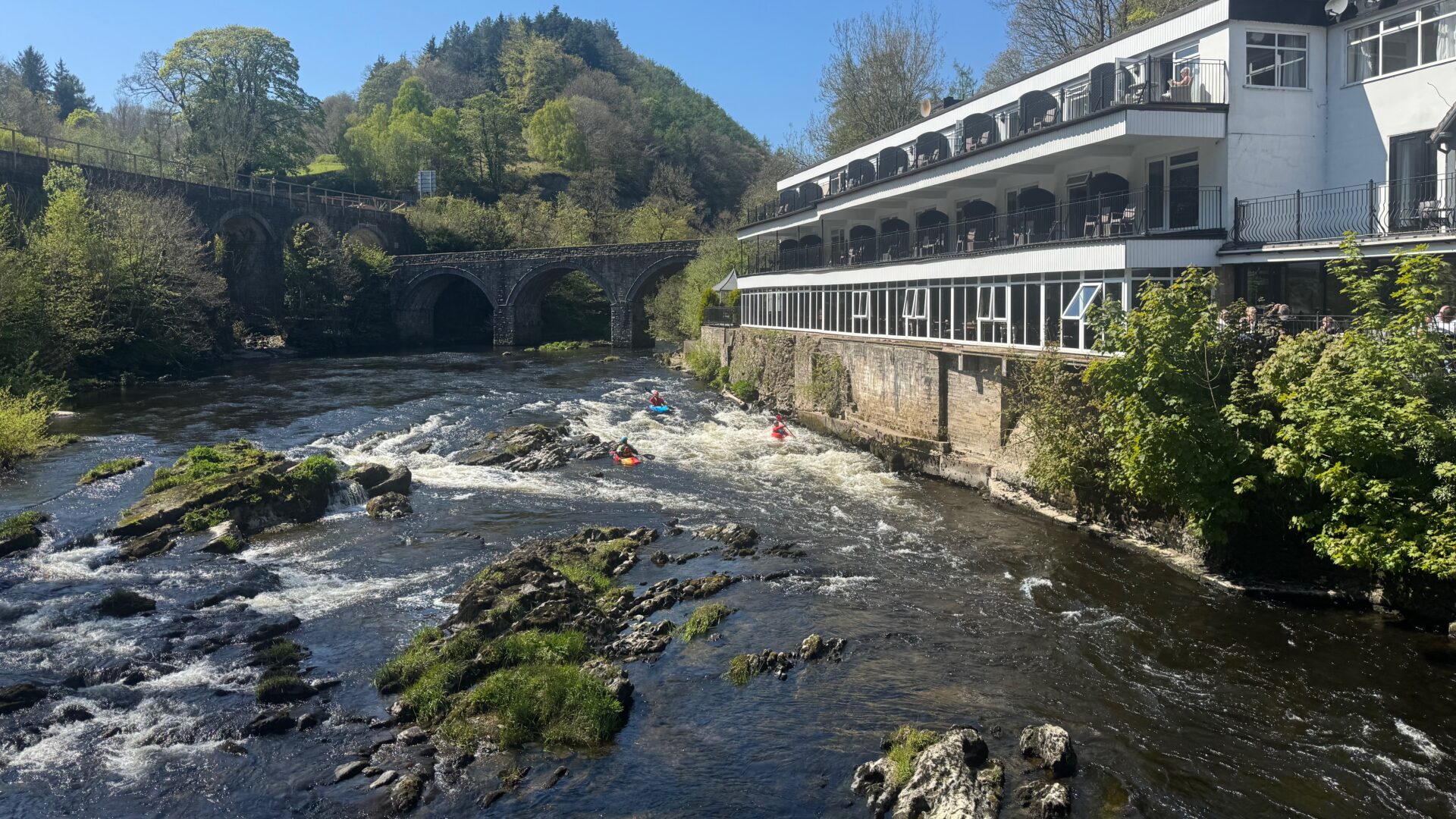
View from the Chainbridge, Llangollen, looking along the River Dee. Three kayakers navigate white-water rapids amongst rocky outcrops in the foreground. To the right, the white multi-storey Chainbridge Hotel sits alongside the riverbank, its tiered balconies and glass-fronted dining room overlooking the water. A stone arched bridge crosses the river in the middle distance, backed by a tree-covered hillside under a clear blue sky.
Kayakers brave the Dee as diners watch on, Llangollen.

Quantified Self

  • This week: Stand 7/7; Exercise 5/7 and Move 6/7. (86%). Morning walks: 0/4. Office days: 1/5. Total steps: 37,451. 17.3 hours in meetings.

Life

  • Out of a job (kind of): Tim Cook is stepping down as CEO of Apple. “Here’s to the mild-mannered, responsible and rapacious ones
  • Into a job: Sara Cox getting the slot she had been “waiting in the wings” for on Radio 2 Breakfast.
  • Quiz time. We took a gamble on the wipeout round, which didn’t pay off. That meant we were lower down the rankings than we should have been, but I think if you want to come in the top half of the standings, you absolutely have to take a bit of a risk on that round.
  • I’ve started photographing meals so that AI can work out my calories. I don’t think the numbers are accurate, but it’s much easier than logging everything.
  • Wednesday, to see Ancient Grease at The Vaults — an unofficial parody musical that mashes Grease with Ancient Greek mythology: sounds utterly ridiculous, and it is: Zeus and Hera doing the hand jive at Olympus Academy, the three Fates dressed in gold playing chaos merchants, and an evening’s worth of toga-related innuendo. No John Travolta, but some strong Australian accents!
  • I felt bad for the organisers of an internal work event this week; it would have been too much to rearrange due to transport strikes in London, so many seats remained empty.
  • Friday, I managed to secure an upgrade through the SeatFrog auction app, so I travelled to Wolverhampton with Avanti in Standard Premier. Gone are the days when you get a proper upgrade to first class for not a lot of money.
  • Saturday, from Shrewsbury to the Chainbridge Hotel in Llangollen. It was a beautiful sunny day for most of the journey, which is relatively straightforward until the very last stretch, where the road effectively becomes the canal towpath. I was entirely convinced we had taken a wrong turn until a small car park appeared at the end of it.

Media

  • Trying to stay up to date with Race Across the World. Don’t tell me.
  • A couple more episodes of series 1 of The Newsreader. I am enjoying it because I think they’ve captured the era very well.

Weeknotes #169: update my brush

Spring sunshine, seaside walks, better pubs, and small modern absurdities.

Week commencing Monday, 13 April 2026

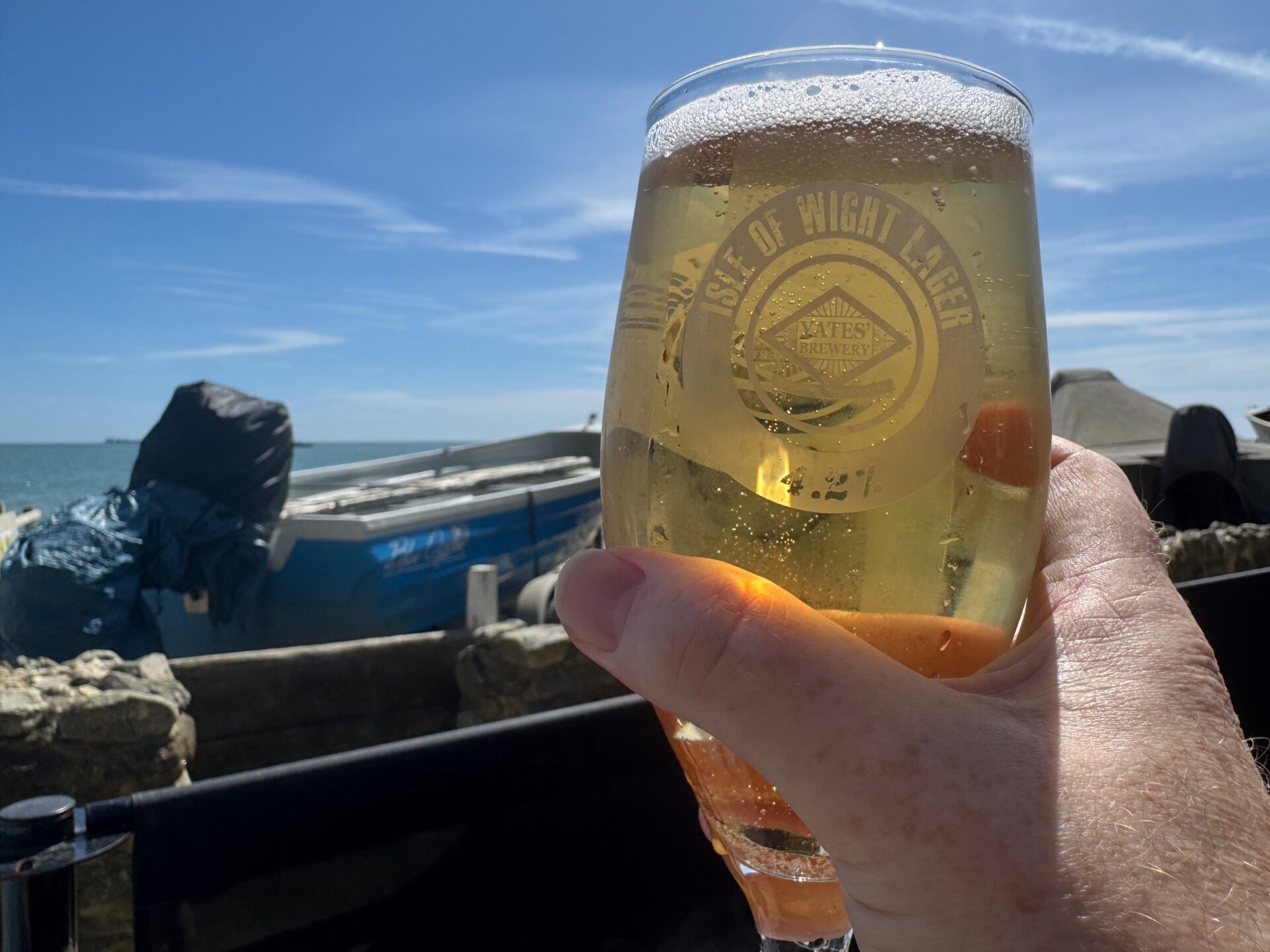
A hand holding a chilled glass of lager in bright sunshine outside The Fisherman’s Cottage pub in Shanklin, Isle of Wight, with fishing boats, the sea, and a clear blue sky in the background.
Lager and sunshine at the seaside

Quantified Self

  • This week: Stand 7/7; Exercise 6/7 and Move 6/7. (90%). Morning walks: 0/4. Office days: 1/5. Total steps: 63,071. 14.8 hours in meetings.

Life

  • Thanks to Stonewall campaigning, the law is changing to equalise the treatment of hate crimes for LGBTQ+ people, making them aggravated offences.
  • Related, although anti-LGBTQ+ hate crimes are recognised in law, hate crimes based on race and/or religion can carry higher maximum penalties because they are classified as aggravated offences. When a crime is considered an ‘aggravated offence’, the victim has longer to access justice, and the perpetrator will receive a stronger sentence.
  • Of all the things to happen in the modern world (1), I never really expected it would be my toothbrush that wouldn’t work until it had some software updated.
  • The Church in Wales’ governing body has approved a bill making blessings of same-sex marriages permanent.
  • Of all the things to happen in the modern world (2), it was inevitable that somebody would make a convincing AI radio presenter. I think a Top 40 countdown was an obvious place to start; the ‘chat’ is already formulaic. “Nexus James” is your AI host. I wonder how many options were presented before a human picked that one?
  • Related, within the first three songs I heard, I could already hear repeated production elements on Olivia Dean’s two songs in the top five. They need to work on that. Regardless, it has more depth than any Top 40 playlist on a music service.
  • Since our regular after-work place closed, we have a new go-to pub that we visited on Thursday. It’s a proper pub, it feels better, and it is less expensive. It has a range of areas where people can book a table. The covered bit at the back is only marginally open to the elements, but it seems to be the first part of the pub that closes at 11 p.m. Which is great news, because previously we have been in the pub when they have not called last orders until midnight or even 1 a.m., and both of those mean we all miss our transport home.
  • A beautiful day on Saturday saw a trip to Freshwater Bay, Isle of Wight, and then a walk to Yarmouth.
  • Sunday, lunch by the sea in Shanklin and ice creams by Ryde Marina. Maybe summer is here?

Media

Weeknotes #168: 17 years to fix

Busy travel, volunteering, and finally fixing a long-standing website issue.

Week commencing Monday, 6 April, 2026

Exterior of The Crabtree pub on a rainy day, showing a red brick building with a covered outdoor terrace, decorative iron columns, rattan garden furniture, and signage reading 'Craft Beer, Food, Coffee, Ales'.
Rain or Shine, It’s Roast Dinner Time

Quantified Self

  • This week: Stand 6/7; Exercise 5/7 and Move 5/7. (81%). Morning walks: 0/3. Office days: 1/4. Total steps: 55,303. 10 hours in meetings.

Life

  • The engineering works meant that trains returning from Shrewsbury were very busy. I am glad that I got to Moor Street early, as that enabled me to secure a seat. I would not have been able to sit in the aisle all the way to London, as some people did.
  • Tuesday, an after-work dash to the Co-op for a pizza for dinner because I had my first volunteer training session for the ITTF World Team Table Tennis Championships Finals, which come to London later this month.
  • Then, on Saturday, to the Copper Box Arena in the Queen Elizabeth Olympic Park for more volunteer training. We got a tour of the venue with some of the championship organisers; it was impressive how much detail they had already worked through—where walls would go up, how people would move around—and it was fascinating to hear.
  • Almost five years ago, in my second-ever weeknote, I wrote that I had a website that broke my rules about sustainable URL schemas. Somewhere around 2009, I’d upgraded musak.org and, in the process, broken most of the links within the site. I fixed this 17-year-old task on Friday, with guidance from ChatGPT. The task was simply waiting for the right moment to be resolved, and that moment needed AI to balance effort and output.
  • Related, this dead link, http://www.musak.org/entries/2003/07/another_russian_birthday.shtml, will now resolve to the right place.
  • My dentist now recommends Netflix shows as part of the service. Will I ever watch Younger or Jane the Virgin?
  • Sunday, for a “trio of meats” lunch: gammon, turkey and beef, Yorkshire pudding with stuffing. Delicious.

Media

  • The new Race Across the World has started, but it’s too early to have picked my winners.
  • I watched the first episode of The Newsreader, a critically acclaimed Australian drama set in a commercial television newsroom. It took me a while to get into the rhythm, but the major news event of the first episode is the Space Shuttle Challenger disaster in January 1986. Using that real event as its backdrop made the tension feel believable.
  • On Channel 5, Jane McDonald went to Nashville across two evenings, where she dives into the world of country music—without the cruise ship, for once. Part of the premise is that she’s in a Nashville studio recording tracks for her new album, Living the Dream, claiming she’s always been a bit country because her songs tell stories. It’s arguably one long advert for the album, but fun.

Weeknotes #167: Shrewsbury and Easter

Easter travels, good food, nostalgia, and small wins along the way.

Week commencing Monday, 30th March 2026

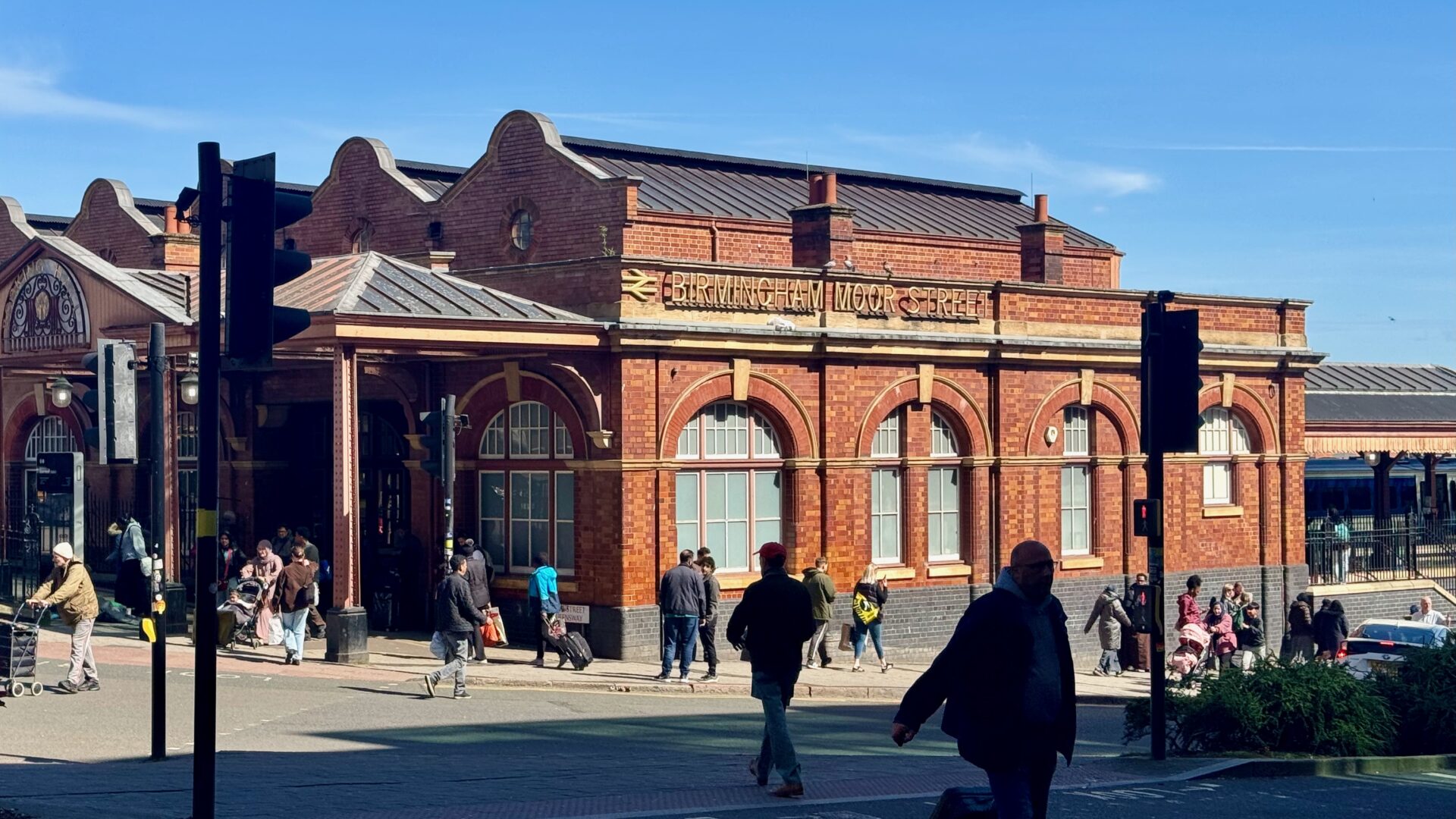
Birmingham Moor Street railway station, a red-brick building with arched windows and period details, seen on a bright day with people walking past and gathering near the entrance; the station served as a key part of Easter weekend travel.
Moor Street: essential stop on Easter weekend journey

Quantified Self

  • This week: Stand 5/7; Exercise 3/7 and Move 3/7. (52%). Morning walks: 0/3. Office days: 1/4. Total steps: 39,476. 13.4 hours in meetings.

Life

  • Middling at the pub quiz this month. Let’s move on.
  • Recording a message for the West Shropshire Talking Newspaper took me a lot longer than I anticipated because every room echoed too much.
  • After-work beers were nice on Thursday, but it was also nice that they finished early and I could get home to pack.
  • If you don’t ask, and because I did, they let me on an earlier train than the one I’d booked on Good Friday. Engineering works meant I had to go via Birmingham Moor Street station.
  • Friday, Saturday, and Sunday lunches were all in restaurants around Shrewsbury. All different and all very good.
  • I found things in the loft that I had not looked at for more than thirty years. Fascinating.
  • On Easter Sunday, an egg hunt around the garden, and then the Easter trail around Attingham Park.
  • Exciting: Artemis II launched successfully, sending astronauts on a crewed flyby of the Moon for the first time in decades.

Media