Engaged in social activities, theatre, and enjoyable media moments.
Week commencing Monday, 12 August 2024
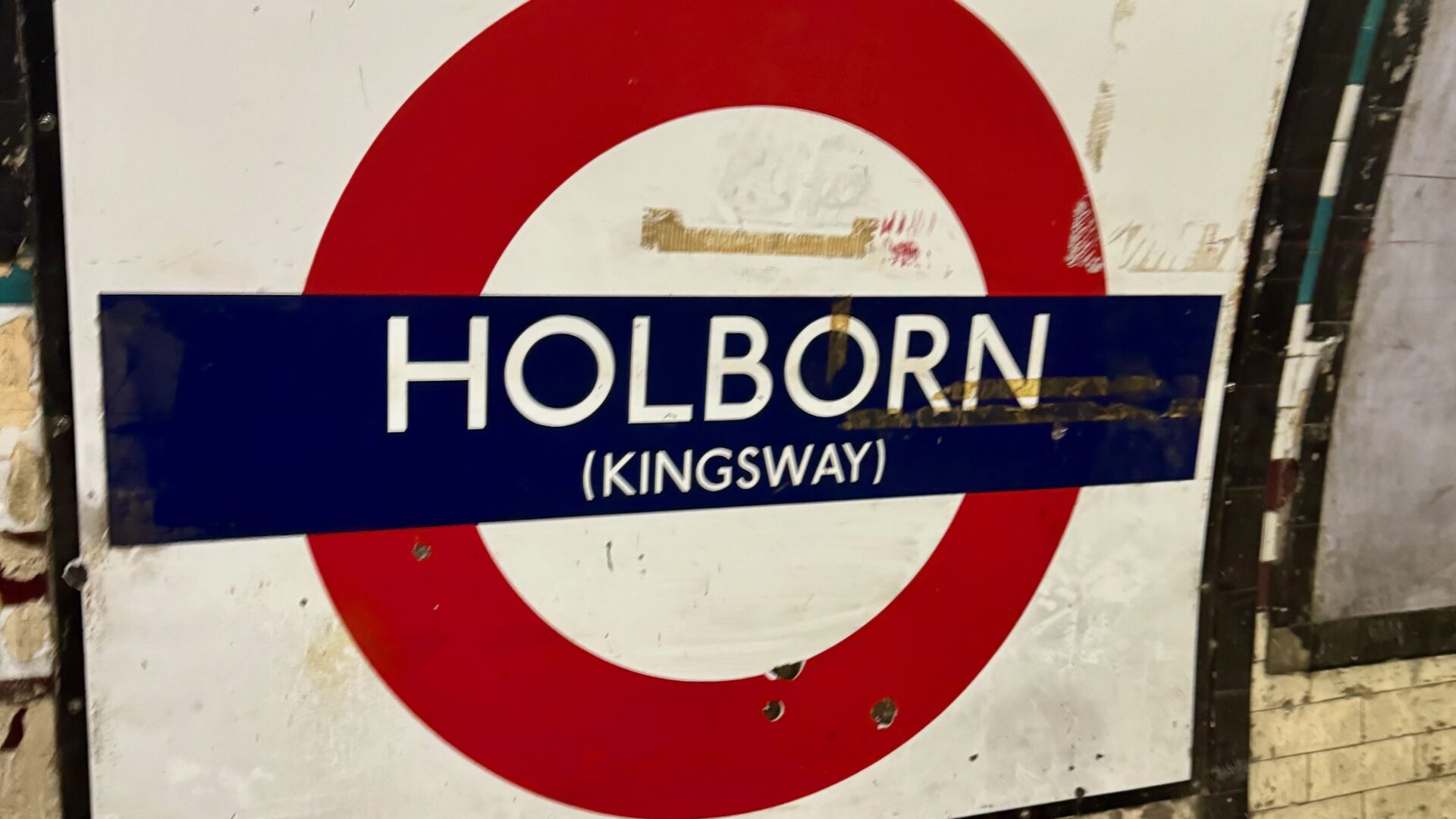
The only surviving one mentioning Kingsway
Quantified Self
This week: Stand 6/7; Exercise 4/7 and Move 5/7. (71%). Morning walks: 0/5 (days in the office don’t count). Plant diversity: 45. Total steps: 57,194
Life
Excellent internal presentation on the history of software. Shame I can’t share any of it.
Wednesday, really? We all jump now that management ask questions when I have been asking for weeks? This is how it works. But it shouldn’t be.
Wednesday, I learned that there is an optimal temperature to give blood, meaning the current hot spell requires the blood service to rent large cooling units at my local donation centre.
Thursday morning, I fear I came across as annoyed in a meeting where the team didn’t appreciate I was trying to protect them.
Drinks with old friends on Thursday. Always the best.
Saturday night, Next to Normal is a rock musical that explores the struggles of a suburban family dealing with mental illness. Not the usual West End musical jolly, but sensitively done.
Pre-theatre dinner was at Mildreds: I was determined not to have anything faking something traditionally meat-based. That ruled out the burgers and anything with their “chick+n” in it. Grilled Roman artichoke & hemp Caesar salad was wonderful.
Sunday morning, up and out for a 10 am Hidden London tour of Holborn station, where two platforms from the former Strand (Aldwych) branch line are unused and hidden from day-to-day operations.
Finally, bye-bye London’s Kiss 100. Back when we did silly things, my work email inbox played the jingle “1 Kiss will make it better”. It drove people mad.
Media
Home alone for a couple of nights. I could have watched anything. So I watched Death In Paradise. I enjoyed it.
Holborn is the only London Underground station with two hidden closed platforms, unnoticed by passing travelers.
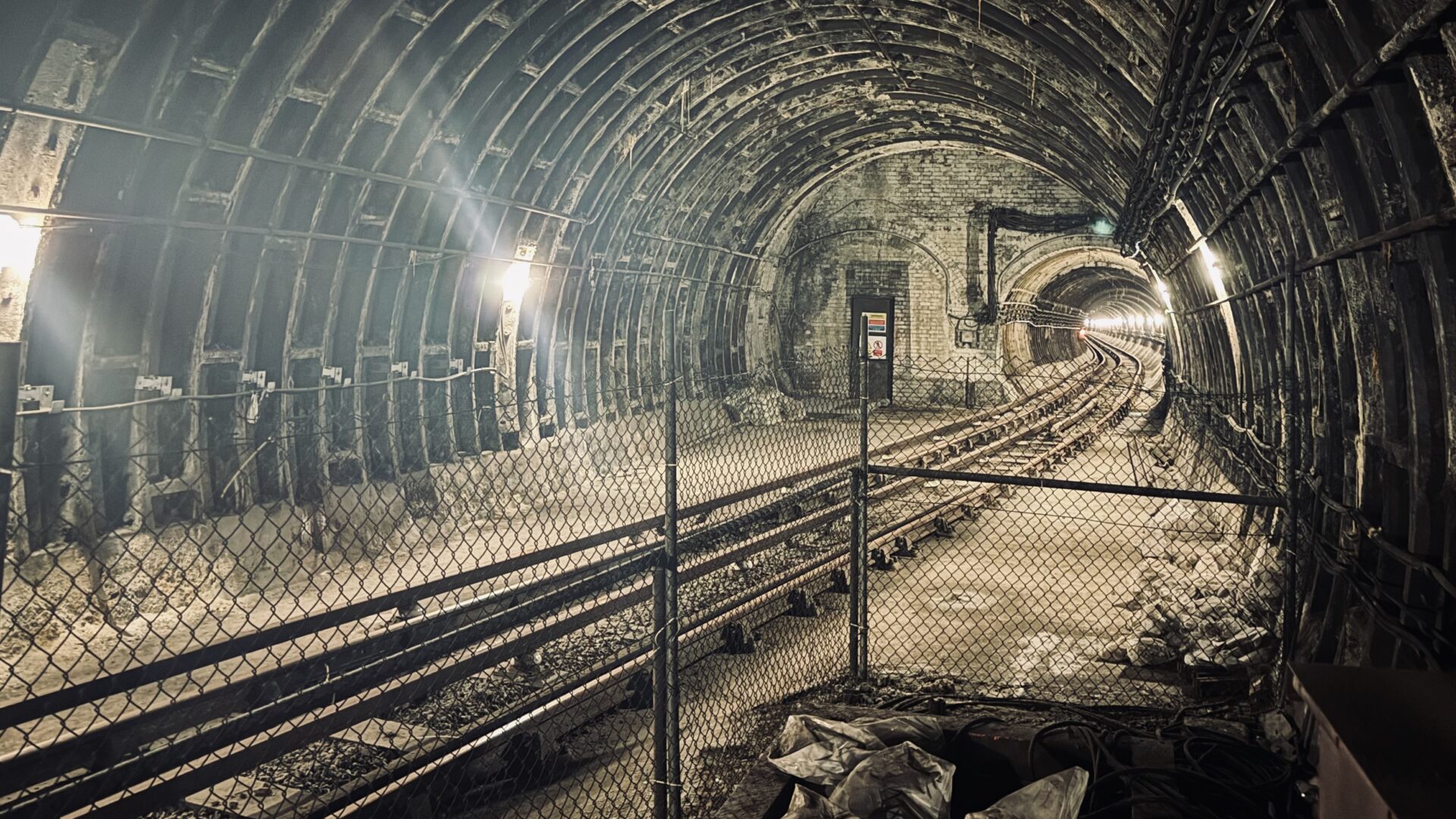
Branch line to Aldwych
In 2015, we embarked on our first ‘Hidden London’ tour, exploring the former Jubilee Line platforms at Charing Cross. It was fascinating to see these platforms, now hidden from public use, preserved in a time warp. It felt surreal to stand just beyond a ventilation grille, watching passengers and trains in the active station while feeling like both a spy and an archaeologist. The knowledgeable guides, who shared the rich history of London’s underground, made the experience even more engaging.
Since then, we’ve followed up with tours of other disused stations, such as Aldwych and Down Street, as well as behind-the-scenes visits to LU headquarters at 55 Broadway and unused parts of stations like Euston, Piccadilly Circus, Moorgate, Highgate, and Shepherd’s Bush. During the lockdown, we even took a virtual tour of the former tram tunnels under Kingsway.
During one of these tours, we learned that, at the end of the nineteenth century, London County Council initiated a redevelopment scheme in the Aldwych and Kingsway areas. This project aimed to clear slums, stimulate development, and create broad boulevards, which ultimately led to significant changes in the area. As part of this redevelopment, the Great Northern Railway management extended their planned railway to the Strand, naming it the Great Northern & Strand Railway. However, construction was delayed due to insufficient funds. When the plans finally materialised, Holborn station opened on 15 December 1906 on the Great Northern, Piccadilly, and Brompton Railway. The extension to the Strand came later and was eventually constructed as a branch line rather than a terminating station on what is now known as the Piccadilly Line.
Earlier this year, the London Transport Museum advertised a Hidden London tour of Holborn station, and I eagerly signed up. Today, we met a group of fellow enthusiasts around 10 am outside the station. It seemed everyone in our group had previously been on one of the ‘Hidden’ tours.
During the Aldwych tour, we learned that the branch line closed on 30 September 1994 due to the estimated £7 million upgrade costs, which would have supported just 450 trips a day. As the system was considered to be in managed decline, the expense couldn’t be justified. This closure left two platforms unused, and we had the opportunity to explore them.
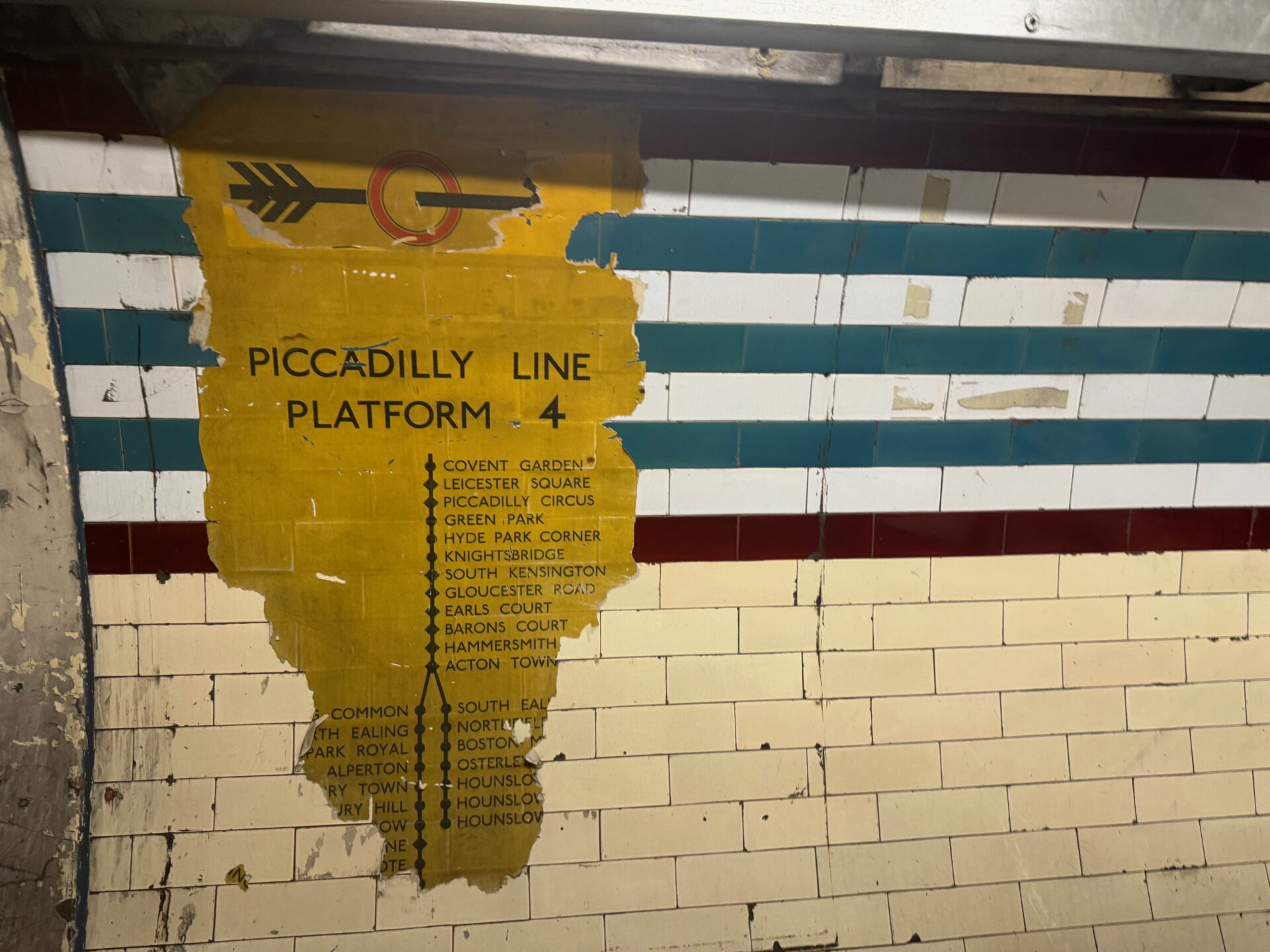
Pre-war Wayfinding on the Piccadilly Line
One of the platforms remains recognisable, featuring the sole remaining ‘Holborn (Kingsway)’ roundel attached to the wall. Like other disused platforms we’ve visited, it occasionally serves as a mock-up for experimental equipment and signage. After its closure, it was also used as a filming location, notably for the music video of the 80s classic “New Song” by Howard Jones.
We also learned about an experiment involving water pipes to cool the underground and saw test signage showing a ‘St Paul’s’ platform edge sign above the familiar Holborn roundel. Pre-war Piccadilly Line wayfinding signs were also on display, and we peered down the still-lit line to Aldwych. Sadly, the station’s ‘bird’s nest’ control room, once used for early CCTV tests, is no longer there.
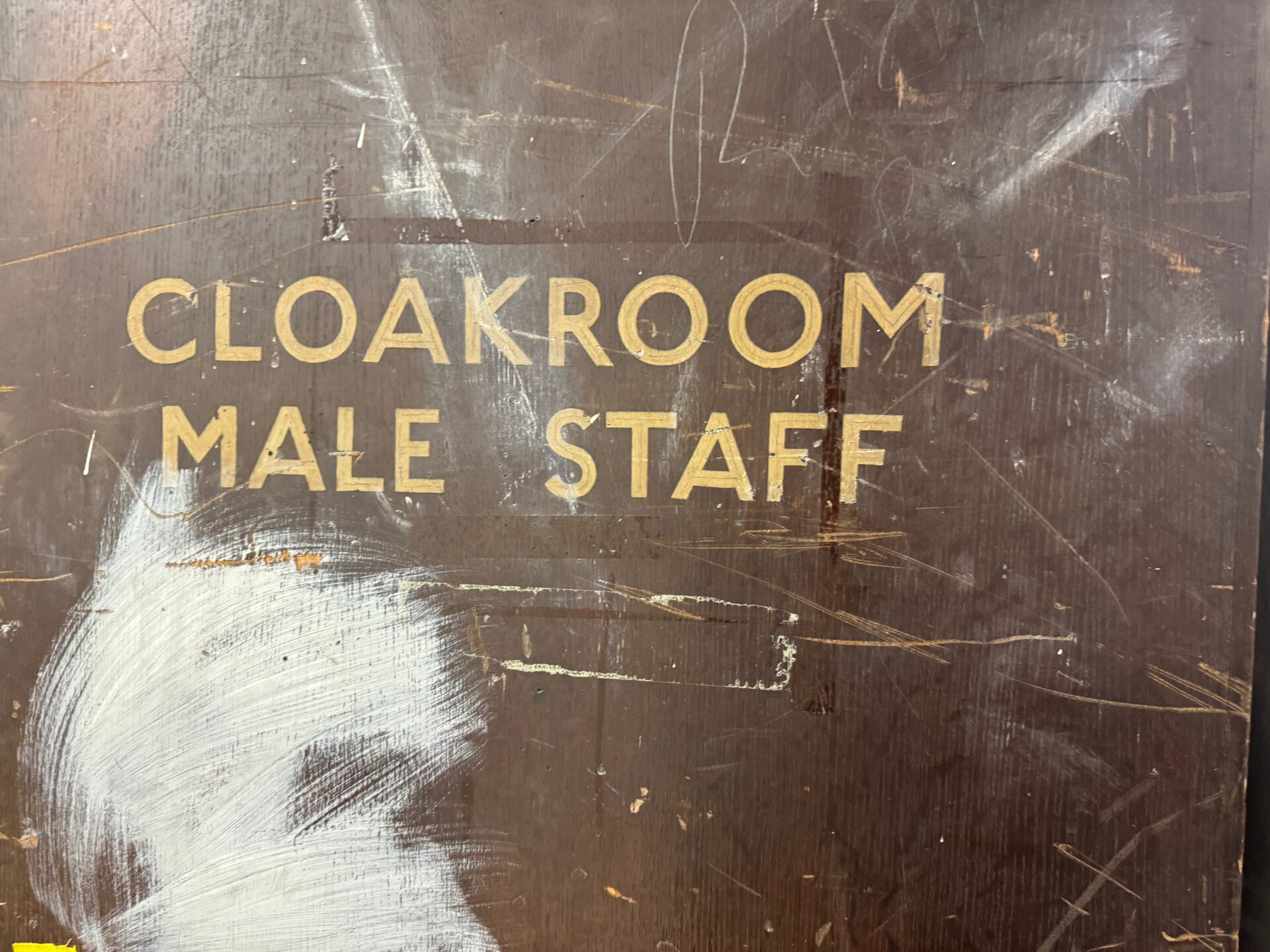
The rooms here were added when the platform closed
The other platform had closed much earlier, as the branch line was underused from the start. Through a flood defence door installed during the war, we saw the crossover lines where trains could be directed down one of two tunnels towards the Strand. Much of this platform had been filled in, and one of the tunnels was repurposed as wartime art storage and never returned to service. The filled-in track bed was used as accommodation and shelter during the Blitz but is now a concrete walkway. A corridor of rooms, once used as a cloakroom and later by a model railway group, remains empty and unused. It’s always fascinating to see how much under-utilised space lies beneath London.
As I wandered through these hidden spaces, I couldn’t help but wonder if a branch line from Strand might have gained popularity as tube usage surged in the current millennium. Could it have been viable with an extension beyond Strand to Waterloo and the south?
There are still unfunded plans for station improvements and a new entrance to ease congestion. Of course, the station has seen upgrades before. It was connected to the Central Line on 25 September 1933, the day after the British Museum station closed. Unfortunately, it’s unlikely there will be a Hidden London tour of that station, as the above-ground facilities have apparently been demolished.
Tribal Fusion has an interesting entry looking at the time clicks and conversions are recorded. Time differences appear to account for different types of response. I’d be interested to see some time-to-conversion analysis.(tags: onlineadvertisingadvertisingnetworkelsewhere)
Well, I’ll eat my words (as well as much of the food). It was marvellous, although I doubt I will convert.
I went to a barbecue today, which is no amazing thing (although spelling barbecue is, for some reason, one of those words that I should not even attempt to spell). Our hosts had a gas barbecue (something I have always been very sceptical of – it’s not real barbecue cooking, is it?). Well, I’ll eat my words (as well as much of the food). It was marvellous, although I doubt I will convert. There is something strangely masculine about fighting with coals rather than turning the gas on.
I suspect my life is turning into a bad episode of an Australian soap opera, for I am constantly saying we should have a barbecue. I am becoming obsessed. Yesterday it was kebabs on the barbie. Today, burgers. Or is it just a sign of summer? G’day.