Radio, what’s new?

Despite the rise of streaming and podcasts, traditional radio remains dominant in the UK.

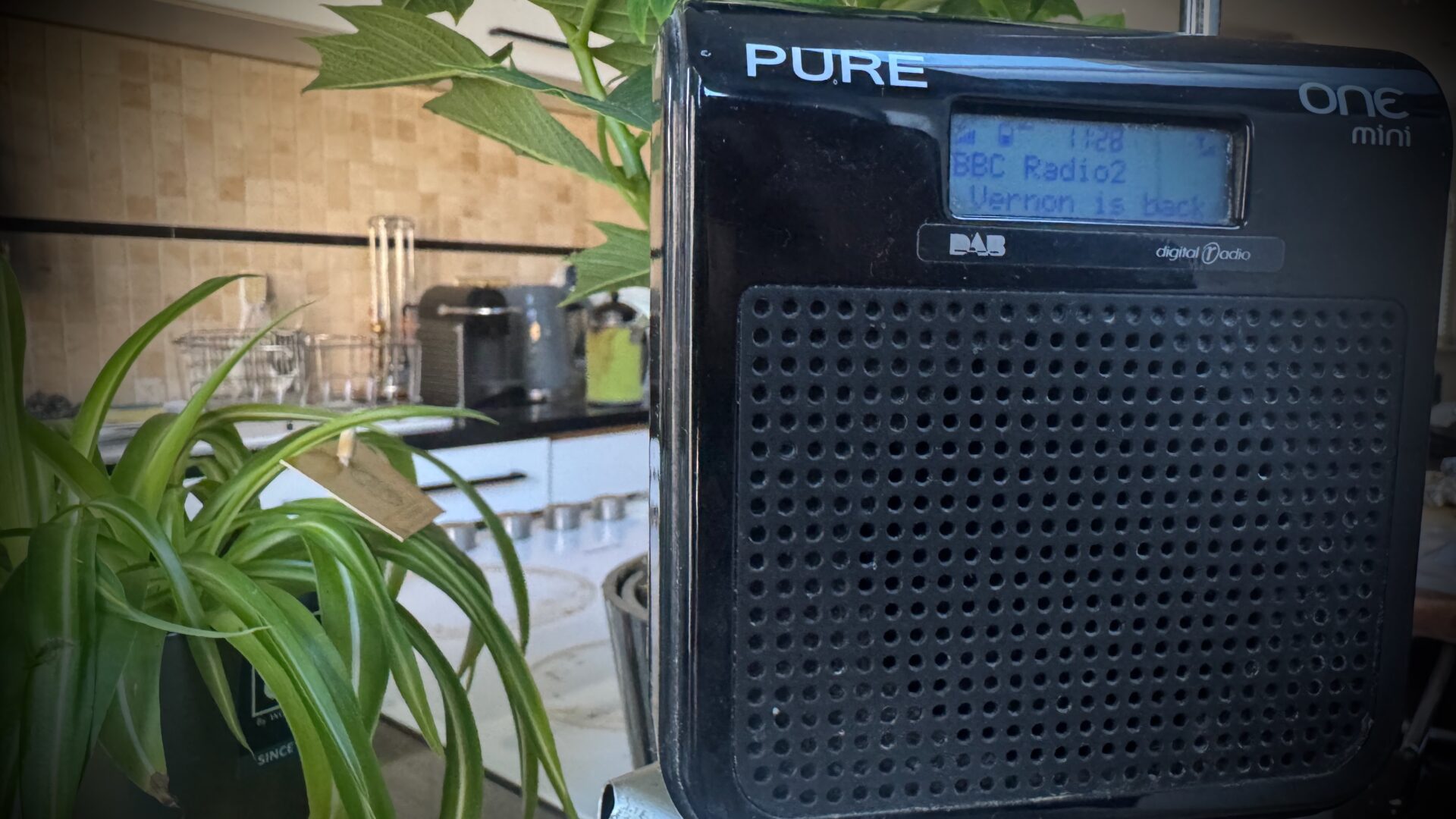
Black Pure One Mini DAB digital radio displaying 'BBC Radio2' and 'Vernon is here' on its screen, positioned next to a spider plant in a modern kitchen with cream tiled splashback and white worktop
A DAB radio in a kitchen. Soulmates?

In my New Year nostalgia haze, I looked back at things I had written on this day (5th January) in years gone by. One post struck me more than the others. Fifteen years ago (2011), I answered a question posed by a Quora contributor: Will 2011 be the year that internet radio will pass traditional radio? By “internet radio”, I mean any kind of radio service listened to via the internet. I, like many others, said no. But I did find myself wondering whether I would answer it differently, all these years later.

The short answer is: no, I wouldn’t. We’re still a little way off the idea that internet radio truly passes traditional radio.

However, before looking at the radio numbers, I think it’s worth setting out a few things — if only so that we can come back in another fifteen years and see how the world has moved on.

According to the BPI, UK recorded music grew for an 11th consecutive year in 2025. For our purposes, streaming made up a record 89.3% of music consumption last year. I mention this simply to underline that streaming is now a real force in our lives, and that the streaming music services are major drivers of audio listening.

Audio consumption is still huge in the UK. Ofcom says that 93% of adults listen to some form of audio content each week, and that there has been growth across all audio streaming. Among younger people, this streaming trend is even more pronounced: 58%, up from 40% in 2019.

So, had the question been framed differently in 2011, I suspect we’d now be saying that most music is consumed via the internet. But music isn’t radio. And in spite of the efforts of Spotify’s AI DJ and all those blokes with podcasts, the UK is still listening to things we would recognise as radio in 2011.

RAJAR’s autumn 2025 MIDAS survey tells us that around 39% of people listen to on-demand music each week, 24% to podcasts, 21% to music they own, and 10% to audiobooks. Live radio, meanwhile, still reaches a whopping 86% of the UK population every week.

RAJAR also tells us that AM/FM radio now accounts for under 30% of total radio consumption. So we’ve come a long way since 2011, when listening via a digital radio platform accounted for just over a quarter of all listener hours in Q1, with AM/FM making up the remaining 75%.

According to RAJAR, the most-used platform for radio is DAB, accounting for 42% of listening hours. Listening via smart speakers has been rising steadily and now represents 18% of live radio listening, while all online listening — including smart speakers, websites, and apps, and therefore what I am classifying as “internet radio” — now makes up 28% of total listening.

So, fifteen years on, in the UK, internet radio’s share of all radio listening still sits below 30%. It is now more or less level with AM/FM, but DAB listening — which remains a remarkably convenient box with a simple, immediate, on-off button and no app to navigate — is the clear majority.

We still have some way to go before it becomes the year of truly connected radio, but the direction of travel is obvious. Come back in fifteen years for an update.
Weeknotes #102: countdown

New Year activities, media, and reflections on personal moments

Week commencing Monday, 30 December 2024

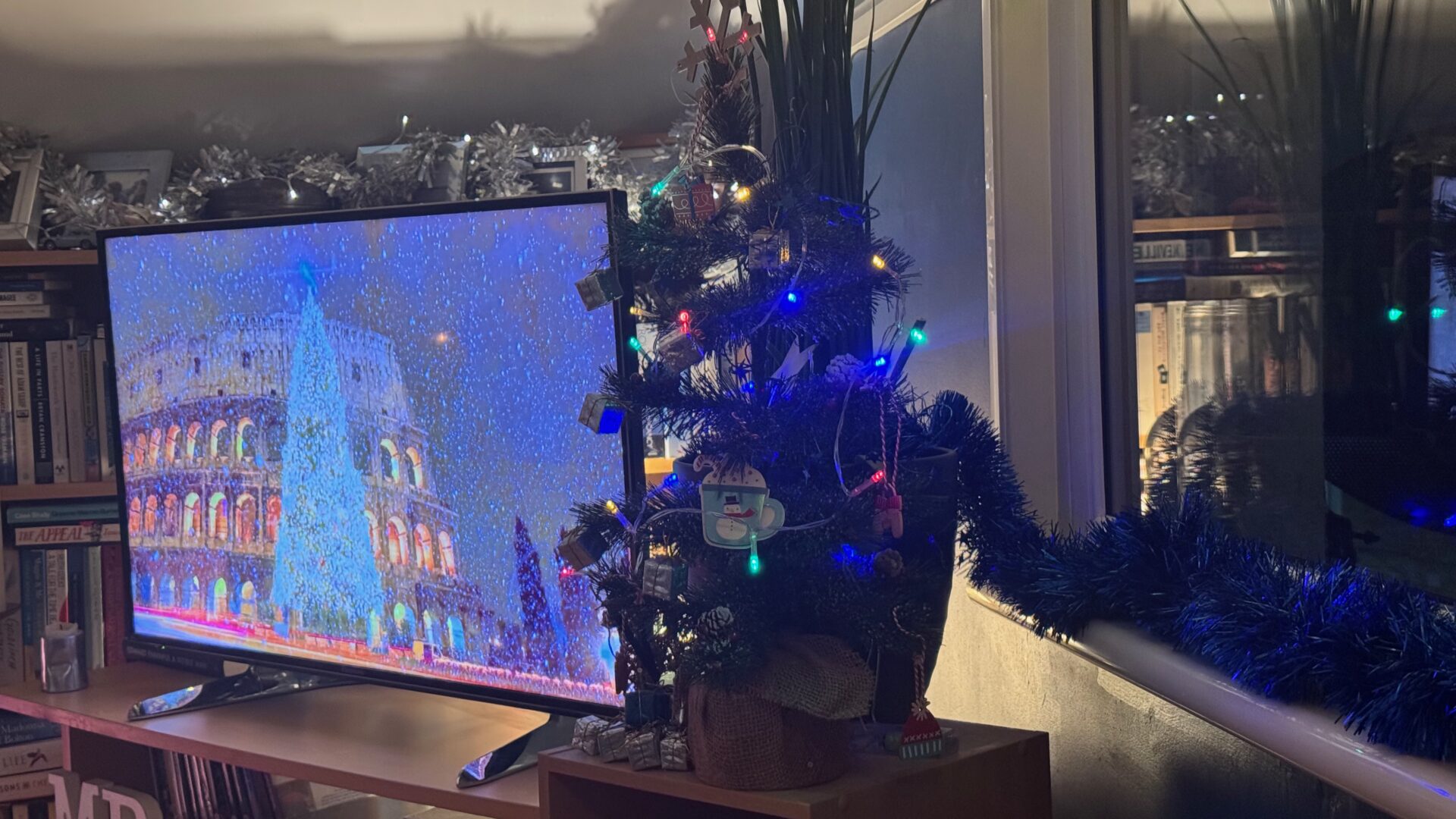
The image shows a small Christmas tree decorated with coloured lights and ornaments, positioned next to a TV displaying what the Colosseum in Rome lit up at night. Silver tinsel garland is visible along the top edge of the frame, and there bookshelves in the background.
Here comes 2025

Quantified Self

  • This week: I blame the holidays: Stand 5/7; Exercise 3/7 and Move 3/7. 52%. Office days 0/3. Total steps: 33,288

Life

  • The last one with a 2024 start date. I am filing it under 2025, regardless.
  • I worked Monday and Tuesday. Not many people in: quiet. Thursday was busier, but I got away for the first train south of the year.
  • Tuesday, while in my study, I switched on Radio 2 where it was Sophie Ellis-Bextor’s Kitchen Disco, which seemed a bit too much of a party for me starting at a screen for work. I let it play into Tony Blackburn and then into Bob Harris’ Sounds of the 70s, opening the show with the very sad news that DJ legend Johnnie Walker had died. JW had a remarkable presenting career spanning almost 60 years, from the pirates to today. While not the 70s party playlist scheduled, it was a show full of music and memories and seemed very fitting.
  • New Year’s Eve was with friends and a lovely evening was had. Somehow, the clock jumped from 1am to 3am remarkably quickly.
  • Queer (at the BFI) on New Year’s Day. Daniel Craig’s portrayal of a 1950s gay man grappling with loneliness and addiction is really good – different from Bond – but the ending confuses. PY found an explanation.
  • Friday we had an aborted walk on the Isle of Wight: the narrow country lane we needed to start the journey was busy with cars going too fast.
  • Sunday, it rained a lot. Just in case parts of Ryde flooded we left a bit earlier than planned.

Media

  • Radio 2 All Stars: Mark Goodier, Owain Wyn Evans, and Angela Griffin. She still worked in Burger King whilst starring in Coronation Street.
  • “The left’s greatest sin seems to be, and I speak as a sort of leftist, is that it would rather be right than effective”, Stephen Fry guesting on Triggernometry

Curns’ Ad Links for 5 January 2011

Elsewhere: Will 2011 be the year that internet radio will pass traditional radio?

There are habits to break. Others have mentioned the car radio, but broadcast receivers are also clock radios, shower radios, and kitchen radios. Many of these are part of a routine and are not easy or cheap to replace quickly. Why replace them if they’re still working well?

In the spirit of keeping things in one place. I just answered my first question on Quora, a question-and-answer website that’s hooked into your social network – via Facebook and Twitter. I imagine it’ll become overwhelming pretty quickly, as it needs much more engagement than Twitter, so if all the people I follow on Twitter start posting questions, I’m going to end up swamped with questions. Still, so far, so interesting.

The question: Will 2011 be the year that Internet radio will pass traditional radio? [link]. And my response:

I can’t see internet radio will pass traditional radio for quite some time.

There are too many broadcast radio (AM, FM, HD, DAB) receivers out there for this to happen quickly, and – even today – the number of FM receivers continues to grow as they are added to mobile phones, MP3 players, etc.

Right now, broadcast radio remains more portable (mobile data is inconsistent), and FM receivers can generally handle a poor signal quality in ways that data connections don’t seem to be able to do (at least, without resorting to continual re-buffering).

Then there are habits to break. Others here have touched on the car radio, but broadcast receivers are also clock radios, shower radios, kitchen radios, etc. I imagine a substantial number of these form part of a routine, and they’re not easy, nor cheap, to replace quickly. And why would you if it’s still working well for you?

(There are some interesting figures for streaming & mobile listening produced in the UK by the Absolute Network and analysed at James Cridland’s blog.)

You can add something to the answer by joining Quora and going here.

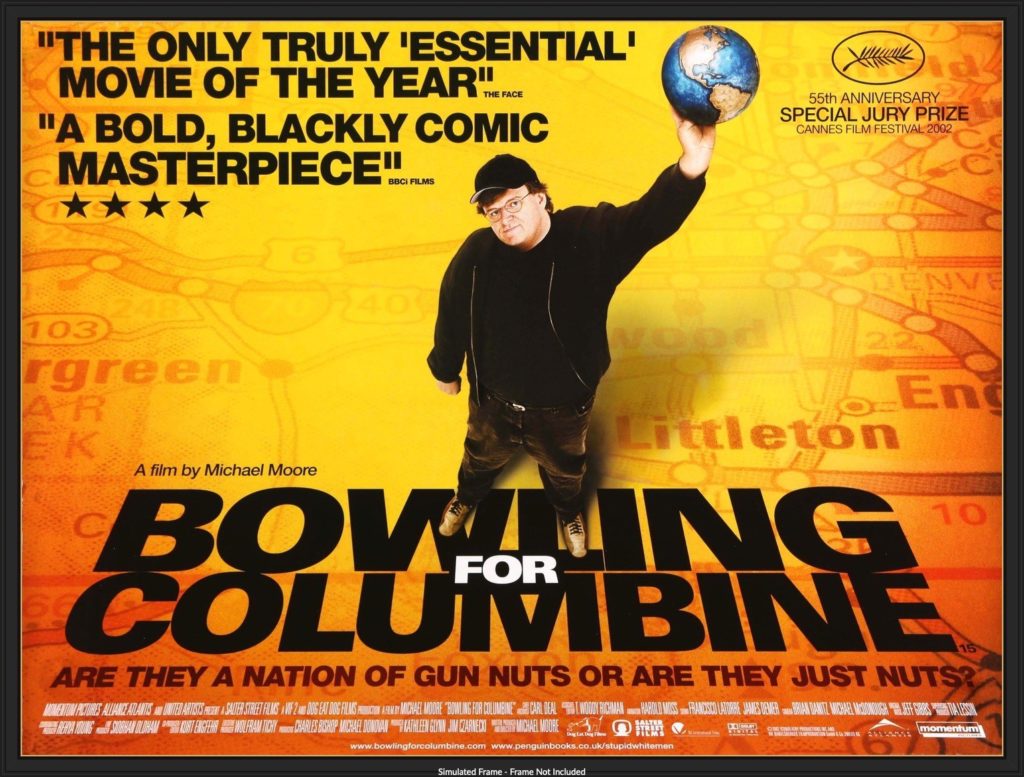
Bowling for Columbine

A film investigating America’s gun culture, contrasting it with Canada’s similar laws but lower death rates.

What a fantastic film! Michael Moore’s Bowling for Columbine is as good a piece of filmmaking as any I have seen for several years. It is also a documentary, which means, I guess, that few people will see it. Well, you should.

It’s an investigative piece that looks at the United States of America’s love of guns – in all their forms. While it appears many Americans think it’s a constitutional right to protect their family with a shoot-first mentality, Moore contends that this obsession with the freedom to bear arms results in unnecessary deaths (accidental and intentional). Contrasted with Canada, which has similar gun laws and ownership but considerably fewer deaths, it seems Moore may have a point.

The statistics played out on the screen are not always given a context, and some of his points are rather laboured, but Bowling For Columbine has some moments you’d think were fiction (the final K-Mart statement – I won’t spoil it), yet are horribly real.

And yes, the clip that’s been doing the rounds of the film shows Moore getting a free gun when opening a bank account, which appears very real. Funny, it really does appear that these things really do “only happen in America”.