Weeknotes #163: island haze weekend

Curved monitors, good food, island haze, and reassuring London reality.

Week commencing Monday, 2 March 2026
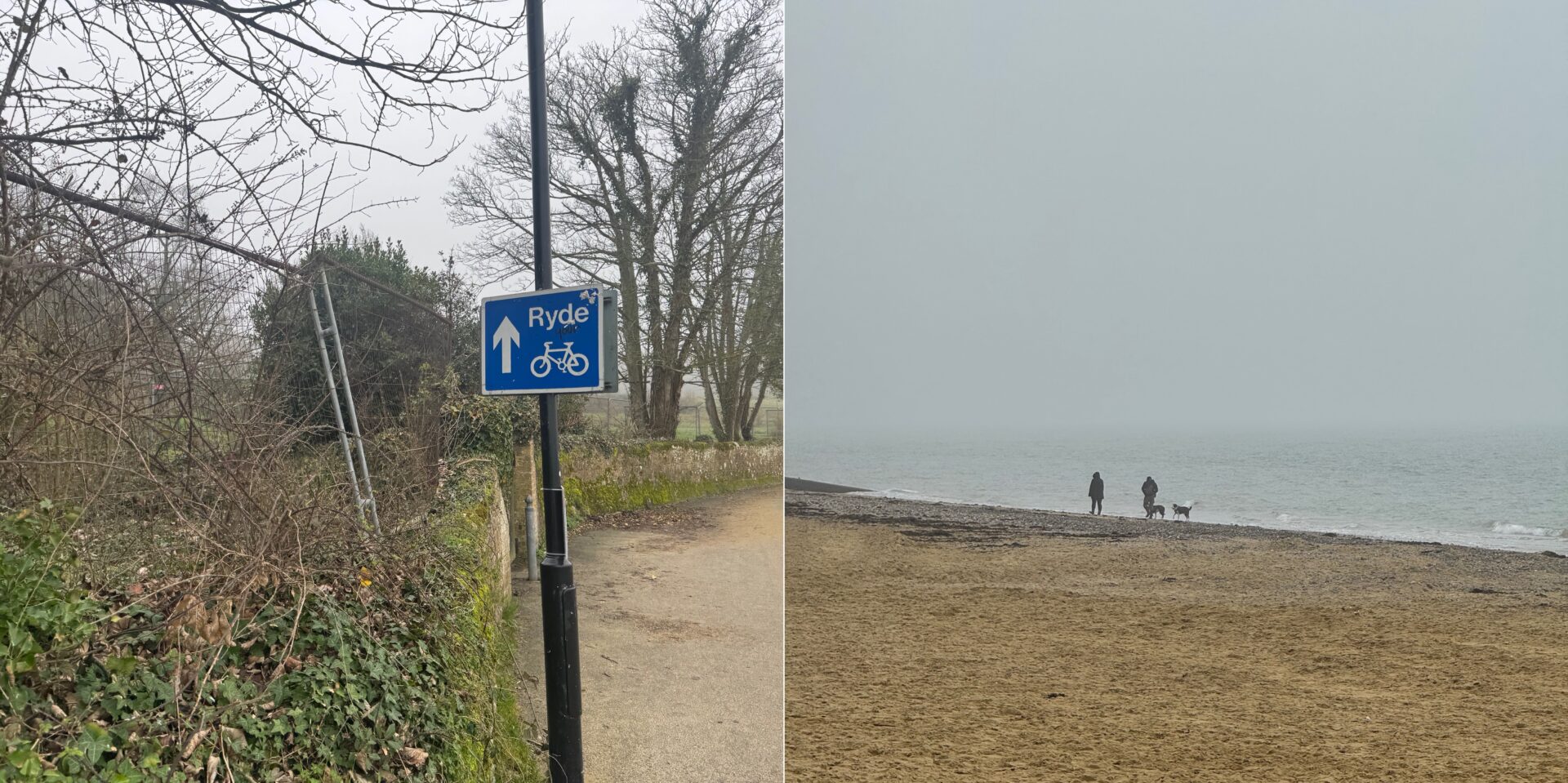
Two photos taken on a misty day on the Isle of Wight. Left: a blue cycling route sign pointing towards Ryde, mounted on a post along a tree-lined gravel path in winter. Right: two people walking dogs along a wide, sandy beach with a calm grey sea fading into thick mist.
Mist, sand, and cycling signs

Quantified Self

  • This week: Stand 6/7; Exercise 3/7 and Move 5/7. (66%). Morning walks: 1/4. Office days 1/5. Total steps: 45,134. 18.8 hours in meetings.

Life

  • Monday, a drone attributed to Iran struck an RAF base in Cyprus. Not a good start to the week.
  • Nearer home, the world thinks London is collapsing. Spoiler: it’s not. Really, all is good.
  • So, a nicer story from France: Inside France’s first LGBTQIA+ senior living residence.
  • My new monitor arrived. It’s large and curved. It replaces two separate monitors, which means that, technically, I have less screen space than before. It’s taking some getting used to.
  • The best bit was surprising PY with a new monitor set up in the other room.
  • My Uber arrived, and at nearly two in the morning I was home after a 20-minute journey that cost £29.93. Cheaper than I remembered from last time, though the hour made it a fairly expensive way to end a Thursday.
  • Friday, the aubergine chilli miso, paired with special fried rice, was excellent — the depth of the miso with the softness of the aubergine made for a really good combination of flavour and texture.
  • Saturday on The Island, BBC Two had given over the evening to One-Hit Wonders at the BBC. Three volumes, which seem like a lot when written down, but there are a lot of one-hit wonders.
  • Also on The Island, the sky was overcast, and the Solent had all but disappeared into a thick grey haze; Portsmouth, usually visible, had vanished.

Media

  • Go watch A Friend of Dorothy, an Oscar-nominated short film starring Miriam Margolyes and Stephen Fry. Twenty minutes of loveliness.
  • This week, another episode of Heated Rivalry. I found this one a little odd: everything that happened at the end of the last episode seemed to have been set aside entirely.
  • We picked up Blue Lights again. We do tend to spread series out rather than rushing through them. It is a bit like how television used to be, when you had no choice.
  • I only heard the Kyle and Jackie O Show briefly when I was in Australia a decade ago. As Australia’s highest-rated FM breakfast show implodes, I am hooked to Game Changers Radio.
Red Rose Radio: In memory of St Paul’s Church

Back at the end of January, Bauer Radio – one of the UK’s biggest radio groups – announced the closure of its studios in St Paul’s Square, Preston (home of Rock FM) and the transfer of broadcast operations to their studio centre in Manchester.

In many ways the story is just another small step in the consolidation of UK radio. Increasing shared programming and networking allows radio station owners to create the kind of big, modern radio brand you need to stand out in 2020 without the costs of maintaining lots of studio locations. It was reported that, in recent years, the only programme to originate in Preston was Rock FM’s breakfast show, fronted Joel and Gemma. The rest came from other locations in the Bauer group.

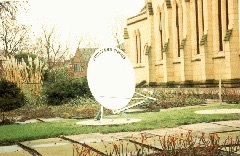
SMS satellite dish outside Red Rose Radio

But this isn’t just another studio move. Red Rose Radio was unusual because the founders commissioned a broadcast complex in an old church, where thick walls could help with soundproofing. Apparently, Red Rose Radio Limited paid £35,000 for the St Paul’s church and brought the conversion project in for £778,000. From my time at SMS, I have a very grainy scan of a photo of the company’s satellite dish outside the church. There’s a documentary on YouTube going behind the scenes of the station in 1993 where you can very clearly see the church architecture in the offices.

The whole story may have passed me by had I not been searching for some recordings that I have on cassette, stored in an old box at the back of a cupboard, on which I discovered a snippet of Red Rose’s closedown audio from the early years and decided to have a look what was the station was like today.

Back in the early years of UK commercial radio, stations would often launch with a broadcast schedule that did not operate around the clock.

On that tape, the station’s first Programme Controller, Keith Macklin, is delivering the ‘goodnight’ announcement that was played each evening. The audio fades a little in the middle but remains audible. From memory, I would have recorded it when the station used to closedown after the news at midnight. Back then I was a big fan of late night phone-ins on Piccadilly Radio, listening under the covers when I should have been asleep. On the same tape was another piece of audio, the engineering announcement that played every few minutes through the night. This was obviously later in the year because the broadcasting hours had been extended to 2am. Who knows what I was doing to get that recording; I can only imagine there was no school the next day.

I thought the closedown audio and the closedown of the studios seemed correlated. So, I upload that audio in memory of St Paul’s church, Preston.

The audio is also on Soundcloud. See other audio I have uploaded on the Listen page.

Defining Your Own Space

Singing along at the gym?

The BBC is reporting on an interesting piece of research about the way people are using personal music players to claim back something personal from a world where we are surrounded by advertising messages:

Through interviews with Walkman owners and now iPod buyers, he found that listening to music acts as a shield, aura or cocoon … Using headphones helps to keep the world at bay and reclaim some space.

BBC: More than just a pretty interface

Yesterday I listened to my own choice of music in the gym rather than watching one of the televisions hanging from the ceilings. It was a very different experience and – to be honest – I almost caught myself singing along. I had purposely chosen a lot of upbeat pop/dance to keep me going and it worked. While my usual fare of Sky News and Chart Show TV are interesting, this time I knew my whole musical selection would be good, and I would find the whole hour interesting and commercial-free.

But what about the aspect of the Walkman or iPod as a space definer? I think this is probably very obvious. I often ride the London Underground listening to music to cut me off from the rest of the people there. In the morning, it does give you a sense of your own space when you are sardine-squashed into a carriage. In the evening it keeps you occupied – less likely to be engaged in a conversation with somebody who you might find threatening.

A few weeks ago, cityofsound pointed me to Traffic Island Disks – an interesting radio programme looking at the music people are listening to as they wander around an area of London. It is very interesting listening to how people define their own spaces through the music they are listening to (it’s also a pretty good idea for a radio show).

Similarities At BBC Radio

Still passionate about radio, noting schedule shifts and age dynamics.

I don’t often talk about radio. It’s been one of my passions since I was a child, but there is not a great deal to say on a day-to-day basis. Yet, last week Lesley Douglas, the new controller of Radio 2, announced a few schedule changes that included Dermot O’Leary joining the network for a new music show.

I find this odd. For the last few years, I have been a Terry Wogan listener because I couldn’t stand most of the rest of the frantic morning shows, and he’s the best in the business. Last month, I switched back to Radio 1 where Chris Moyles surprised me and has been very, very entertaining. I do miss Wogan and I find it hard to make that choice in the morning.

Over the last few years, Radio 2 has been re-positioning itself to attract new younger listeners. This is good because it allows Radio 1 to be squarely aimed at the youth market. But where do the Radio 2 listeners go? The BBC doesn’t seem to be providing them with a choice – and isn’t that the BBC’s public service job? Radio 2 is becoming a thirtysomething station. The BBC introduced 6music which seems – to me – to be a thirtysomething station. Where do the fiftysomethings – who don’t want speech – go? The BBC is missing something here and while I, personally, like the changes to Radio 2 (and the imminent arrival of Mark Radcliffe to late nights – his true home – is to be celebrated by street parties in my opinion) where will I go when I start complaining about the loud music of today’s youngsters?