High bar for tech

Heading for the big technology graveyard.

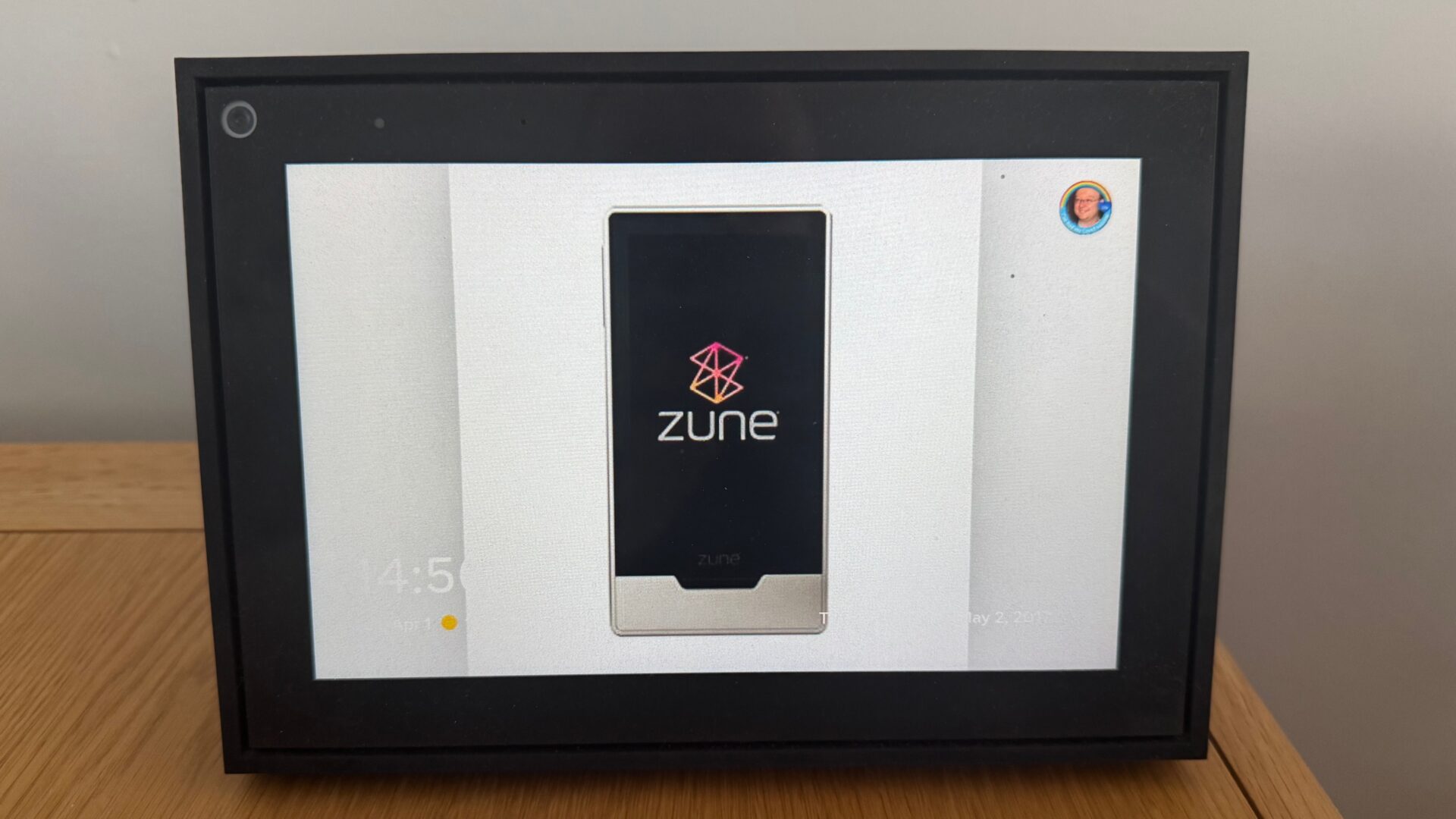
A picture of a Meta Portal device on a sideboard. The device screen is showing a photo of a Microsoft Zune music player.
Meta Portal

Facebook/Meta has always had a high bar for product success: when your potential audience is everybody in the world, products that seem successful to others are tiny to them. They’re not alone in that view; we used to joke that the Microsoft ad technology, shuttered while I worked on it, was a rounding error on a big Excel sheet somewhere, even though, by many standards, it made nice money. Big companies need a specific scale for their products to make working on them worthwhile. And, if the product is something you work on or value as a user, it’s always disappointing when you know it’s becoming obsolete and heading for the big technology graveyard.

And so, here’s a picture of a Meta (née Facebook) Portal, IMO the best thing Facebook produced. It’s a device from which you can make Messenger/WhatsApp video calls. Three sizes were produced: this is the smallest. At the start of the pandemic, I bought the larger one for my parents and this model for my brother and myself. In 2020, we sat and ate Christmas dinner with my Mum and Dad using the device, as rules prevented us from partying in person. When you activate it, it makes calling somebody simple: just press their social media avatar. At some point, support was added for Zoom and other video calling services.

I don’t know what they did, but the speaker’s also superb. There’s a portal app for Spotify, and it’s also a Bluetooth speaker. There are still times when one of us inadvertently connects to the Portal speaker instead of the Sonos devices in our living room, and I think the Portal fills the space with sound much better.

It’s also a fantastic digital picture frame. As it’s from Meta, it has access to my Facebook and Instagram photos. A mobile app allowed device-only albums to be created. It offered fine-grained controls for which pictures should be displayed. While my use of Facebook and Instagram might have waned, the photos they hold are still memories, and this device convinced me that a digital photo frame is the best way to surface memories. I hope the product team behind Apple’s – rumoured – home device understands that. The Portal made my photo memories accessible, and lots of friends who visited often commented on the pictures shown.

Now, a device with a microphone and a camera from Facebook, launched in 2018, sometime around the Cambridge Analytica scandal, had its work cut out to convince people it’s not illicitly listening or recording. The pandemic may or may not have given it a chance. I thought it was an excellent device for relatives who found video calling on phones or computers too complex. ‘Just press my face’ was a line I used on more than one occasion.

Sadly, although perhaps not unsurprisingly, its days were numbered. In 2022, The Verge reported that Meta would stop making Portal for consumers, and more recently, it appears to have been phased out altogether.

This morning, I went to my Portal app to add photos from last weekend’s trip to Paris. The app told me it had been discontinued since January. While I love my Portal, it is telling that it’s more than three months since I last used the mobile app to manage the device (although I should say, it’s one of the most stable pieces of technology in my house; I am not sure I’ve ever seen it crash or need an unexpected reboot).

So, the device’s days are numbered. Many companies would have just shut down the service altogether. Kudos to Meta for not doing that. The support page says,

We’ll continue to provide customer support for Meta Portal owners as usual until February 2032 … You can still use your Meta Portal to call family and friends until late 2031.

While that is disappointing, it does mean I could get ten years of use from it. And that’s more than a lot of technology.

(I’m amused that I managed to snap the picture just as the screen showed an image of another piece of long-gone dead technology: Microsoft’s Zune music player. I never had one, but I once posted a picture to Facebook, which is why it appears on the device).

Is Every Railway Project Is The Same?

When it comes to major UK railway projects, everything changes and everything stays the same, huh?

People who occasionally visit here may notice that I talk about transport and trains, in particular, quite a bit. But, I’ve not written anything about the failure of London’s big transport project, Crossrail, to open because, on a day-to-day basis, it doesn’t impact me. No part of my daily travel would use the new trains. I don’t think Crossrail will remove that many people on my daily commuter route into Waterloo, so the only thing I’m unable to do is try riding the new trains (and so, I will wait a while).

I have been following the news about the project and, last week, read the Evening Standard article that began

None of the nine new Crossrail stations are complete and testing of the £1 billion fleet of trains in tunnels has been “paused” due to technical issues, it has been revealed.

London Evening Standard

Today, the Blast From The Past links on this site point to a piece from 2004 in The Guardian titled “The £10bn rail crash”, on which I commented. My immediate thought was that it was a piece about Crossrail, but, of course, in 2004 Crossrail wasn’t the project it is today. No, this was a piece about the West Coast mainline.

Everything changes, and everything stays the same, huh?

Simplify The Site

Time to take stock – what’s this site all about?

Last night, while pounding the treadmill for thirty minutes and trying to avoid watching about crime and disaster on the news, I got to thinking about a couple of things I have written here over the last few days.

In Tuesday’s Link Dump, I noted that I thought I was lacking some passion. I don’t believe that’s true. I am still passionate about many things and, particularly, personal publishing online. I just don’t get to write about it or discuss it. I do seem to write a great deal here, though.

In yesterday’s post about Portion Distortion I mentioned something about re-designing this site and, after some consideration, I have decided to do a little bit of housekeeping here. This site has started to get a little out of control. I need to rationalise: keeping it simple will involve removing pages that I don’t think serve any worth and getting rid of some sections. I will also re-work the design. I suspect for some time there will be things in several layouts, but I don’t think anybody will be too upset.

The first casualty will be the gallery section – it’s hard to maintain, and it’s not where I store pictures that I want to share with people anyway. Perhaps Movable Type will incorporate some new image controls in a future version which will allow me to bring it back.

Britain’s Railways

The whole saga of the upgrading of the West Coast main line is outlined in today’s Guardian.

A very interesting item it today’s G2 about the ongoing saga of the upgrading of the West Coast Main Line, one of the key railway routes in Britain:

One of the most disturbing facets of the west coast saga is the failure of democratic government that it represents. Not just of a particular party, but the whole system of government.

and later,

And yet we cannot accuse our elected representatives of looking the other way. In mid-February and early March of 1995, after the consultants had delivered their report but while Railtrack and the government were still mulling over it, members of the House of Commons transport committee questioned Edmonds, Horton and the heads of some of the big signalling firms about the WCML project … Members of parliament had done what they were elected to do, conscientiously and thoroughly scrutinising a big plan by an unelected organisation with power over the lives and purses of the public. It had pointed out its weaknesses. And nobody paid any attention.

What the article does highlight is that, today, projects of national importance and public good like this one come second to short-term profit, power and – to some extent – ego. I wonder if we will ever see a situation where transport planning is for all our good rather than the few?