Each day I looked back through the photographs I had taken and tried to find one that summed what we had seen or done. Some days that was very easy because the day had a big goal – the Mt Fuji visit, for example – but other days it was much harder to select a single picture that summed up the visit.
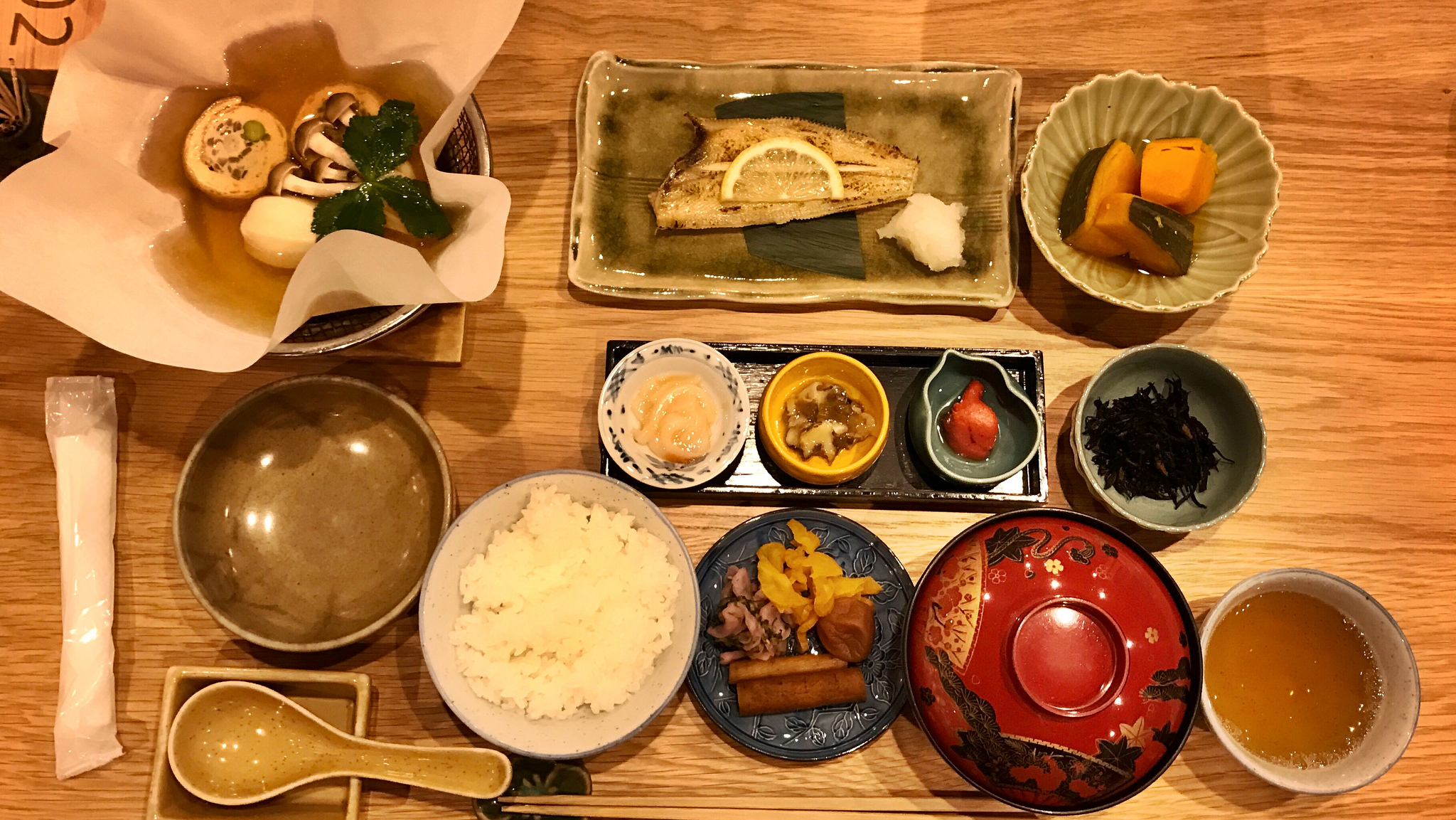
Looking back over the collection, however, I see that it’s a nice overview of our trip. However, there is one major element missing: food. I have not captured the variety of amazing meals that we had. Japanese cuisine was definitely one of the highlights of the trip; no wonder it has been given UNESCO heritage status in order to protect it from the onslaught of western dishes and fast food chains.
From conveyor-belt lunchtime sushi to a high-end fish-market fresh version; from teppanyaki (accompanied by a Japanese improvised comedy show) to high-end tempura and soba noodles, ramen, sake & delicious wagyu beef. In the UK it would all be in one restaurant labelled ‘Japanese’ but each place we visited specialised and was delicious. There were no bad meals, most were incredibly cheap and service was outstanding.
Breakfast seemed the most different to my British palate: fermented soy beans, dried and grilled fish, pickled things of all sorts (labelled vegetables, but I wasn’t always sure) and dried seaweed and all served – like every other meal – with white rice. I never saw another type of rice and didn’t really get an answer as to why it was always steamed white rice alongside every meal.
I can’t wait to return to try more.
—
My Japan retrospective (so far) is available in two earlier parts: Tokyo and Kyoto.